Top 10 3DPrint.com Stories of 2025: Kickstarter, Consumer Goods, Bankruptcy, & More

As Vanesa Listek wrote, last year was a major turning point for additive manufacturing (AM), as the industry is working to sort itself out. Customers want proven use cases and a clear return on investment, government spending is up, everyone is focused on reshoring, and investors are interested in specific market segments, as opposed to all-purpose platforms. 2025 was definitely a hard year for AM, but a lot of exciting things happened as well.
As we dive headfirst into 2026, here are the top 10 most popular stories 3DPrint.com published last year, running the gamut from shoes and bankruptcy to Kickstarter campaigns and more.
#10: LEGO’s Mass-Produced 3D Printed Element Came Home for Christmas
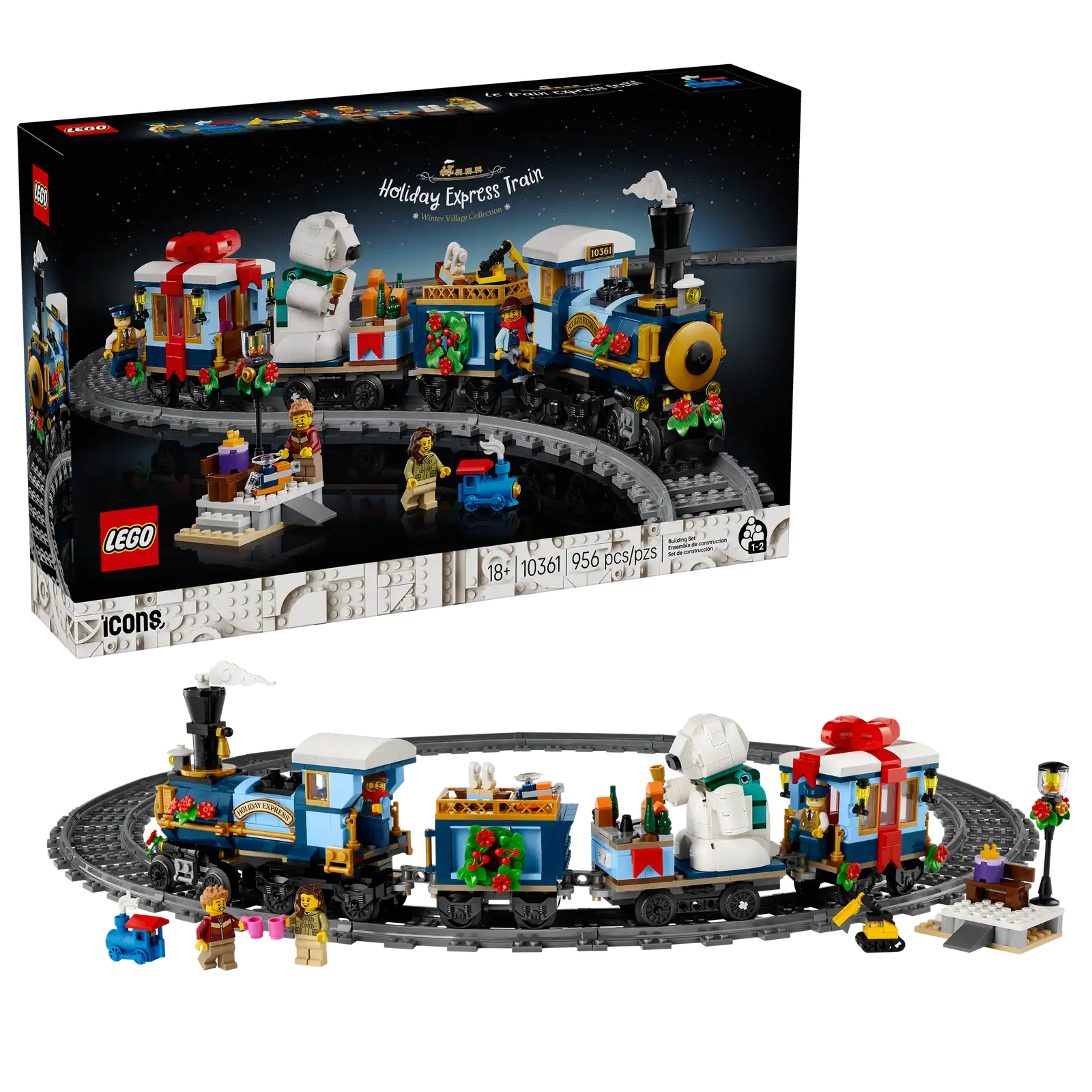
LEGO Icons Holiday Express Train set. Image courtesy of LEGO.
In September of 2025, LEGO announced that it would soon release its first mass-produced 3D printed element inside an upcoming LEGO Christmas set. As Vanesa Listek reported, by the end of November, the Holiday Express Train from LEGO Icons was officially available for purchase worldwide, and its miniature blue 3D printed locomotive showcased the company’s high-throughput polymer AM process to the world for the first time.
This was definitely not LEGO’s first time using the technology—the company previously released several 3D printed elements in limited quantities, including a drafting arm, duck, and pogo stick. But, the locomotive (a micro-version of the set’s main train, featuring spinning wheels and a functional chimney) marks the first time a 3D printed piece is being produced at scale by LEGO, and distributed through one of its standard commercial sets. This was a major win for 3D printing in consumer goods.
#9: Enabling and Scaling AM in Healthcare at AMS 2025

Image courtesy of 3DPrint.com.
At last year’s Additive Manufacturing Strategies (AMS) in New York City, the session I was most looking forward to focused on AM in healthcare. The Head of Global Programmes for ATscale, Satish Mishra, kicked things off with a presentation on the use of AM in assistive technology (AT). Over 2.5 billion people around the world need AT, but only one in ten people have access, and 3D printing can help change that. Naomi Nathan, the Head of Medical for Mobility/Medical goes Additive (MGA), moderated a discussion between Amy Alexander, Unit Head of Mechanical Development and Applied Computational Engineering within Mayo Clinic’s Division of Engineering (DOE); Materialise CEO Brigitte de Vet-Veithen; and neuroradiologist Jenny Chen, founder and CEO of the 3DHEALS network, about Enablers to Scale AM in Healthcare. Examples included positive peer pressure, solid examples that demonstrate the technology’s value, addressing the talent gap, and more.
Rajan Patel, the CEO of medical device company Kallisio, shared how patient-centric 3D printed solutions can redefine cancer care, with a specific focus on his company’s FDA-approved, patient-specific radiation therapy device, Stentra, It was developed in collaboration with the MD Anderson Cancer Center to reduce cancer patients’ chances of developing oral mucositis during radiation treatments. Kallisio partnered with Ricoh for the manufacturing, Materialise for software, and MD Anderson to scale the product. The final panel was about Policy for AM Healthcare. Mark Burnham, the Additive Manufacturing Coalition‘s Director of Policy; Lexi Gormley, Clinical Applications Specialist, Additive Manufacturing, Ricoh USA; Ankush Venkatesh, Intrapreneur, Additive Manufacturing, for Glidewell Dental; and Louis-Philippe Broze, co-founder and CEO of 3D design automation software firm Spentys, focused on the need for certification, advocacy, and reimbursement systems. Register for AMS 2026 to hear what this year’s AM healthcare session will talk about!
#8: Scaling Military 3D Printing with 3D Systems’ Mike Shepard
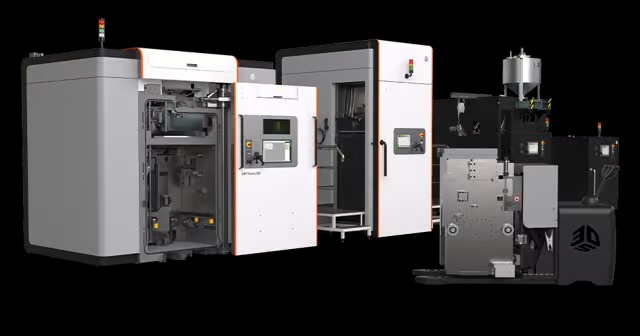
Image courtesy of 3D Systems.
According to an AM Research report, it was estimated that the U.S. Department of War (previously the Department of Defense) spent $800 million directly on additive in 2024, which is a YOY increase of 166%. As such, we cover many stories related to this sector, and Macro Analyst Matt Kremenetsky writes a lot of them. One in particular that was popular last year was his interview with Mike Shepard, VP of Aerospace and Defense at 3D Systems, who spent 16 years at the Air Force Research Laboratory (AFRL), one of the world’s most influential AM scalers, before joining the private sector. It was a good match for Shepard, as 3D Systems has been working with the DoW (previously the DoD) for years. Kremenetsky asked him how the same dynamics driving military AM efforts continue to show up in multiple branches of service, from the Navy to the Marine Corp, and how they could inform the AM industry’s work in other verticals.
“The first thing people tend to want to do is address the issue that’s causing the most pain. So, before anyone really knew what they were doing when it came to AM, they’d start with something mission critical. But you quickly find out, that’s an incredibly unhelpful move. You can’t run before you crawl and walk,” Shepard told him.
“Don’t try to do the hardest thing first. Instead, you have to try to find jobs that are going to help you really learn the new manufacturing processes, and learn every important lesson you have to learn when you’re first getting started, but with a low level of risk. That’s more or less the reason why DoD pivoted to starting with jigs and fixtures. After jigs and fixtures, the next thread is, can we make old parts in a new way?
“Those are the dynamics at work with the Navy’s replacement of castings, because the fleets have to last between 30 and 50 years, but the dynamics are similar for aerospace, and even for a lot of the Army’s ground vehicle systems.”
#7: Global Launch of 3D Printed Adidas Climacool Slip-On Shoe
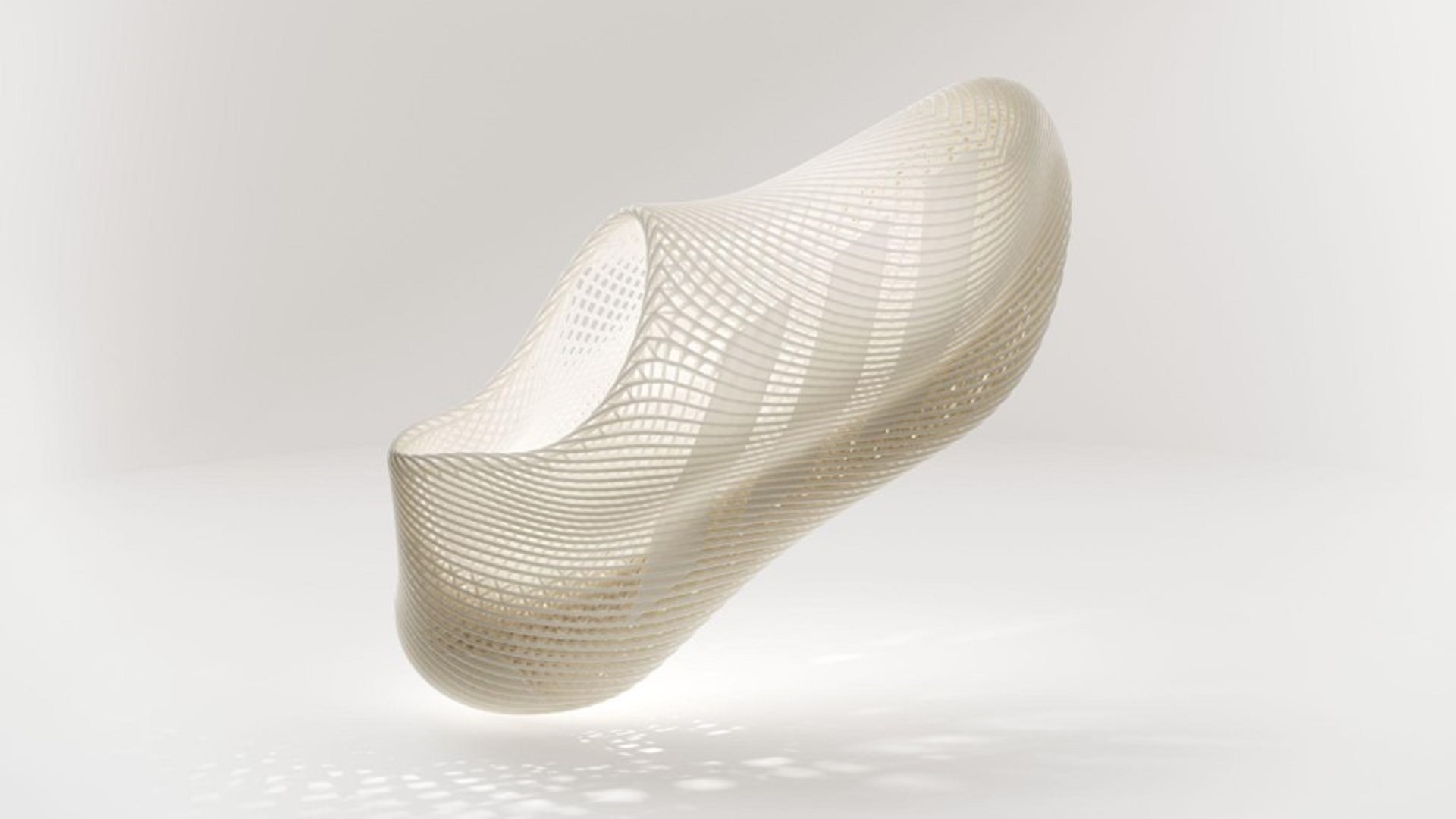
Adidas Climacool 3D printed shoe. Image courtesy of Adidas.
We’re back to consumer goods with Listek’s story on the 2025 global launch of the Adidas Climacool, a fully 3D printed slip-on sneaker designed for breathability, comfort, and performance. It was developed in collaboration with Carbon, and represents a turning point in the sportswear giant’s use of 3D printing. Manufactured with Carbon’s signature Digital Light Synthesis (DLS) technology, the single-piece shoe features lattice structures throughout, making the shoe functional as well as looking futuristic.
Adidas has been using Carbon’s technology since it debuted the Futurecraft 4D—the first shoe to feature a DLS-made midsole—back in 2017. This was the start of its 4D line, which eventually expanded into performance and lifestyle shoes like the 4DFWD, also featuring a midsole 3D printed using DLS. But the Climacool is its most advanced version yet: a seamless shoe, featuring an upper made with 100% polyurethane for increased breathability. This slip-on sneaker really shows how far 3D printing footwear has come since the early days.
#6: Analysis of Desktop Metal’s Bankruptcy
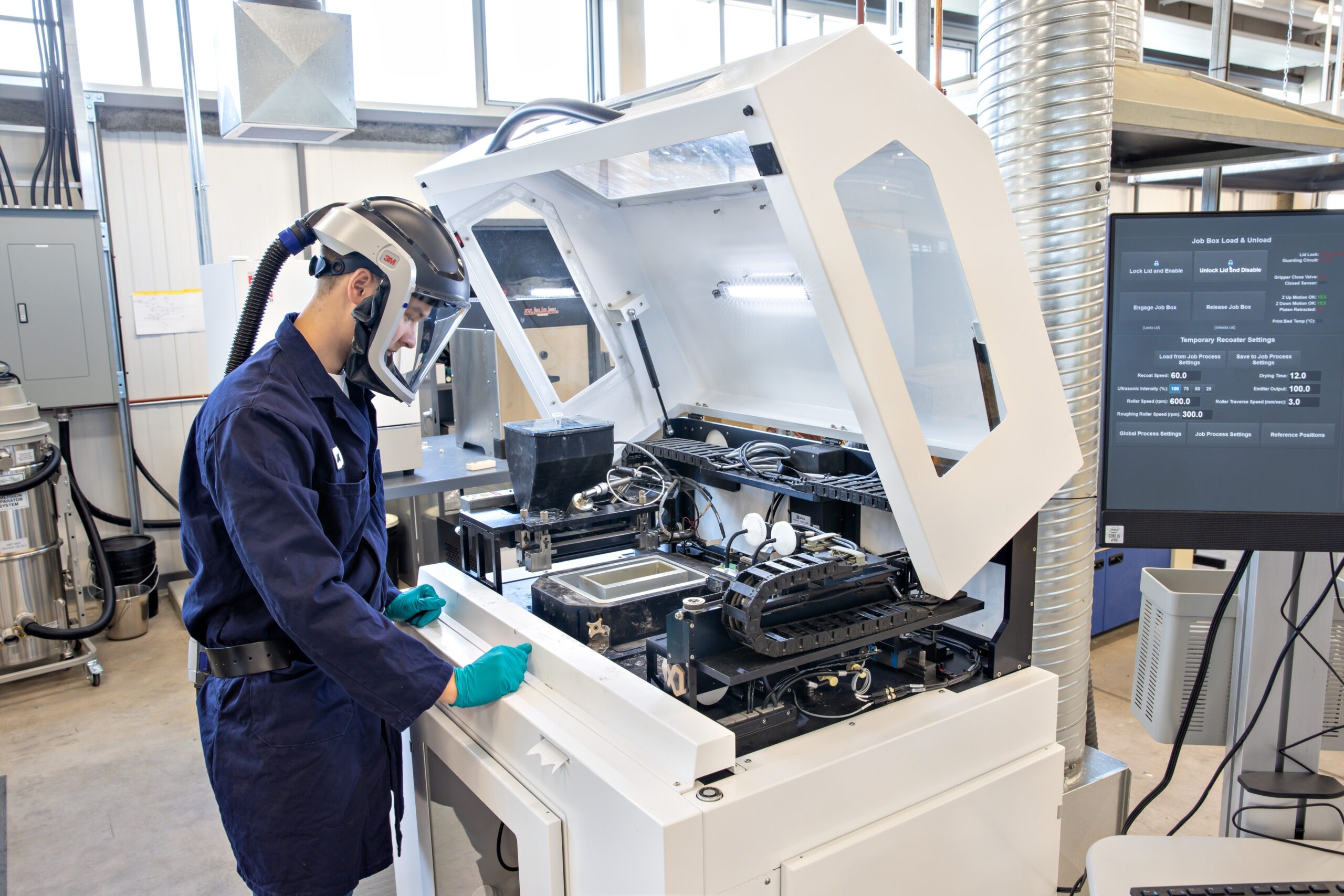
Inside the tech. Image courtesy of Desktop Metal.
It was one of the biggest stories in the AM industry in recent history: Desktop Metal, first set to merge with Stratasys in 2023 before the latter called it off, was then acquired by Nano Dimension. After lots of legal controversy, Desktop Metal officially became part of Nano Dimension in April of 2025, bringing plenty of debt with it. As Nano tried to figure out next moves, Cantor Fitzgerald analyst Troy Jensen said they “wouldn’t be surprised if bankruptcy is a potential outcome for Desktop Metal.” Months later, that’s exactly what happened. Our Executive Editor Joris Peels discussed the fallout in a popular piece titled “Desktop Metal Bankruptcy: Analysis & Karma Police.”
After letting some of its previous acquisitions go bankrupt as well, Peels posited that “Nano wants to shed as much of its formerly acquisitive self before emerging as a lean butterfly that is less conglomerate and more a cash-rich focused startup.” He also noted that DM’s bankruptcy could result in less interest around binder jetting, and that it could affect how the AM industry as a whole is perceived by the wider world. Luckily, we know now that some of its assets were saved, and even Desktop Metal itself is getting a second chance. But, we knew the limitations of binder jetting technology in general, and DM’s machines specifically, and didn’t publicize this knowledge well enough, which could have better insulated the industry from the fallout. So this is definitely a cautionary tale we’d all do well to remember.
#5: SUNLU’s 3D Printing Filament Dryer with Annealing Mode
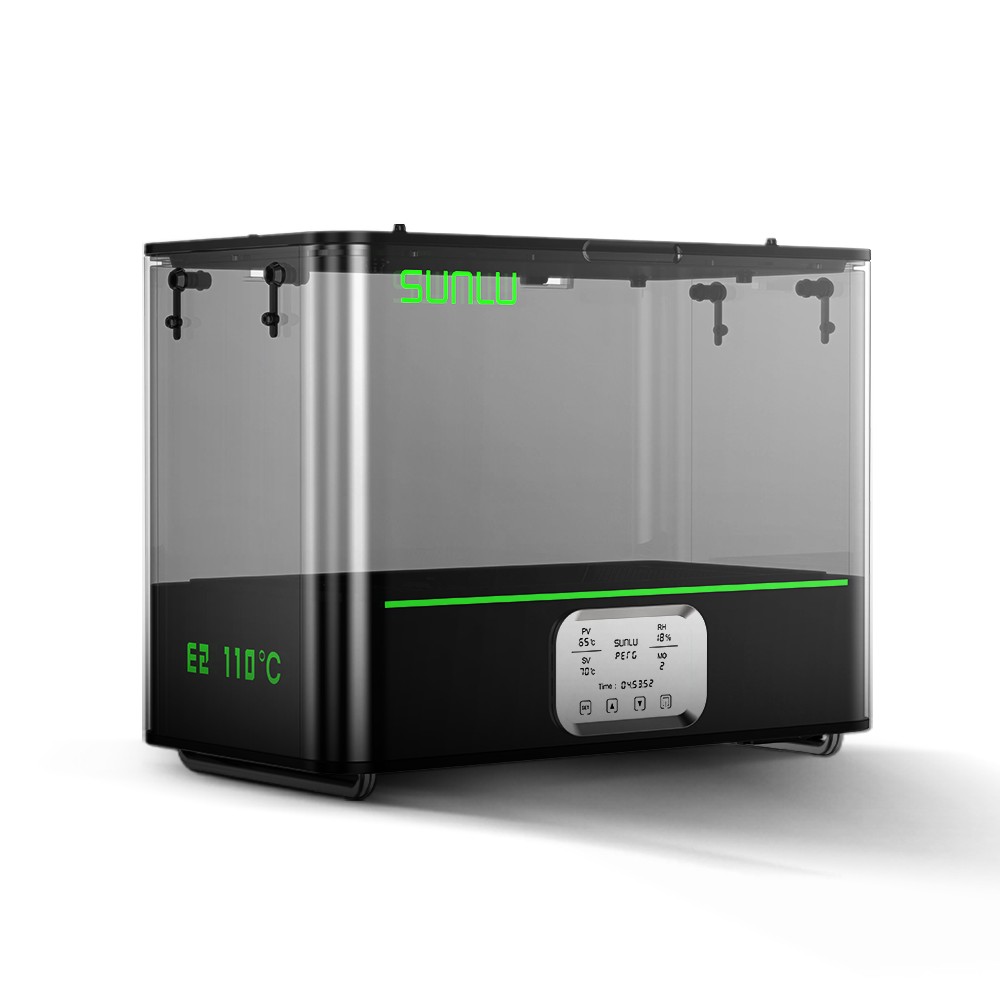
Image courtesy of SUNLU.
When it comes to material extrusion technology, you really need a filament dryer. Hygroscopic filaments, like ABS, TPU, PETG, and PC, absorb moisture from the air, which can result in stringing, breakage, and extruder blockages; even non-hygroscopic materials like PP are helped by temperature control. Especially for more common materials like PLA and PA, having dry filament can reduce print errors, and improve consistency and repeatability. Filament dryers have existed for years, but they’ve never been big sellers, which is what Chinese filament manufacturer SUNLU is hoping to change with its FilaDryer E2.
In his article on SUNLU’s filament drying unit, Peels shares several of its features. The 372 x 192 x 186mm chamber can accommodate two 1kg spools, or one 2kg or 3kg spools, and maintains a temperature of up to 70°C with ±3°C accuracy in an environment of 25°C (±5°C). It’s sealed with silicone plugs, has a touchscreen interface so users can pick their preferred drying cycle, and is UL, CE, FCC, UKCA, and ROHS certified. But the best part about the FilaDryer E2 is its annealing mode. By heating parts to their glass transition temperature, the process enhances uniformity and strengthens prints, but precise control is critical, which is what the FilaDryer E2 supposedly offers. This would be especially helpful for those who print end-use PETG and PLA parts.
#4: Prusa Core One 3D Printer Review

Prusa Core One. Image courtesy of Prusa.
We’re moving to the desktop for our top four stories of 2025, starting with Orville Wright’s review of the Prusa Core One. Building on the foundation of the reliable MK4 printer, the Prusa Core One is a next-generation modular design, featuring an upgrade path with an enclosure and components to create a CoreXY printer. After unboxing it, Wright noted that the Core One, with its 250 x 220 x 270 mm build volume, is “built like a tank,” with intentional gaps in the steel frame to house an integrated spool holder and accessories. A bonus to these gaps is reduced internal air volume, meaning the build plate is more consistent when printing high-temperature materials like Nylon, ASA, and PC.
A seamless startup process led to his first print: a 3DBenchy, printed in ASA. Wright says the small screen is user-friendly, but lacking in comparison to printers with touchscreens that feature a more modern UI. The Core One’s travel speed maxes out at 320mm/s, but quality was clearly emphasized over speed. The standard brass nozzle limits the printer’s capabilities with reinforced filaments, but a harder nozzle, like the Diamondback Nextruder, should help. Prusa has 3D printable replacement parts for just about every component on the Core One, which comes in both kit ($949) and assembled ($1,199) versions. But with its low operating noise, repairability, open source slicer, ease of use, and more, Wright says the Prusa Core One is well worth the price tag, great for hobbyists and professionals alike.
#3: Qualup’s Successful Kickstarter Campaign for Split3r Software

Front of a BMW M4 GT3 Scale 1/1, based on the BMW M4 GT3 Prototype by toddeppe. Image courtesy of Split3r.
French 3D printing company Qualup is known for its high-temperature material extrusion systems and volumetric sensors for precise printing. But as Peels explained, their 2025 Kickstarter campaign was for something very different: Split3r. In a nutshell, this automated software is supposed to make it easy for you to split large parts, so you can print them serially with one or a few smaller printers, or even distribute them over an entire print farm. Split3r automatically tracks parts, which you can then number, and it also allows users to split files by build volume and automatically create joints. The information can be exported to Cura, PrusaSlicer, Bambu Studio, and others.
For a €30 perpetual license for two PCs, and no subscription required, Split3r sounds like a pretty good deal for those who make large parts, like architects, cosplayers, and prop and furniture makers. Obviously, many others agreed, because the Kickstarter was successfully funded for €114,405. By digitally making build volumes infinite, form factor is no longer an issue for 3D printing large parts on desktop systems. Peels believes that this kind of idea “could boost 3D printing as a whole.”
#2: Massachusetts Teen’s Desktop Filament Extruder & Recycler

Image courtesy of Benjamin Callahan Davis.
A 16-year-old who got his first 3D printer in fourth grade made headlines—and over $80,000 in prize money—when he developed a desktop filament extruder and recycler. Benjamin Callahan Davis of Massachusetts developed a desktop recycling system, which uses both extrusion and pulltrusion, that is reportedly 45% more efficient than other systems. His low-cost setup helps produce filament, repair failed prints, and recycle waste, which could make at-home and even industrial printing, much more eco-friendly and economical. Currently, Davis’s machine can produce up to one kilogram of filament per hour, but he thinks this can be improved.
He explained to Peels what the difference was between his system and similar machines: “Firstly, the material to be recycled is prepared through shredding and drying. Then, the prepared material enters the hopper of the machine, where the compression auger feeds the materials through 3 independent heat/compression zones before extruding out of the nozzle at 2.00mm. Next, this rubbery, hot filament is fed through a water cooling system with filament pulling wheels at the end to pull the filament at a constant rate of speed. After, the filament loops around the machine and enters the pultrusion nozzle, where the filament is softened and pulled to 1.75mm. To cool the filament after pultrusion, an air cooling system is utilized, followed by another set of pulling wheels that provide the force necessary to pull the filament through pultrusion. Finally, the filament is spooled, and then it is ready for use.”
#1: Desktop Injection Molding Machine SALTGATOR’s Successful Kickstarter
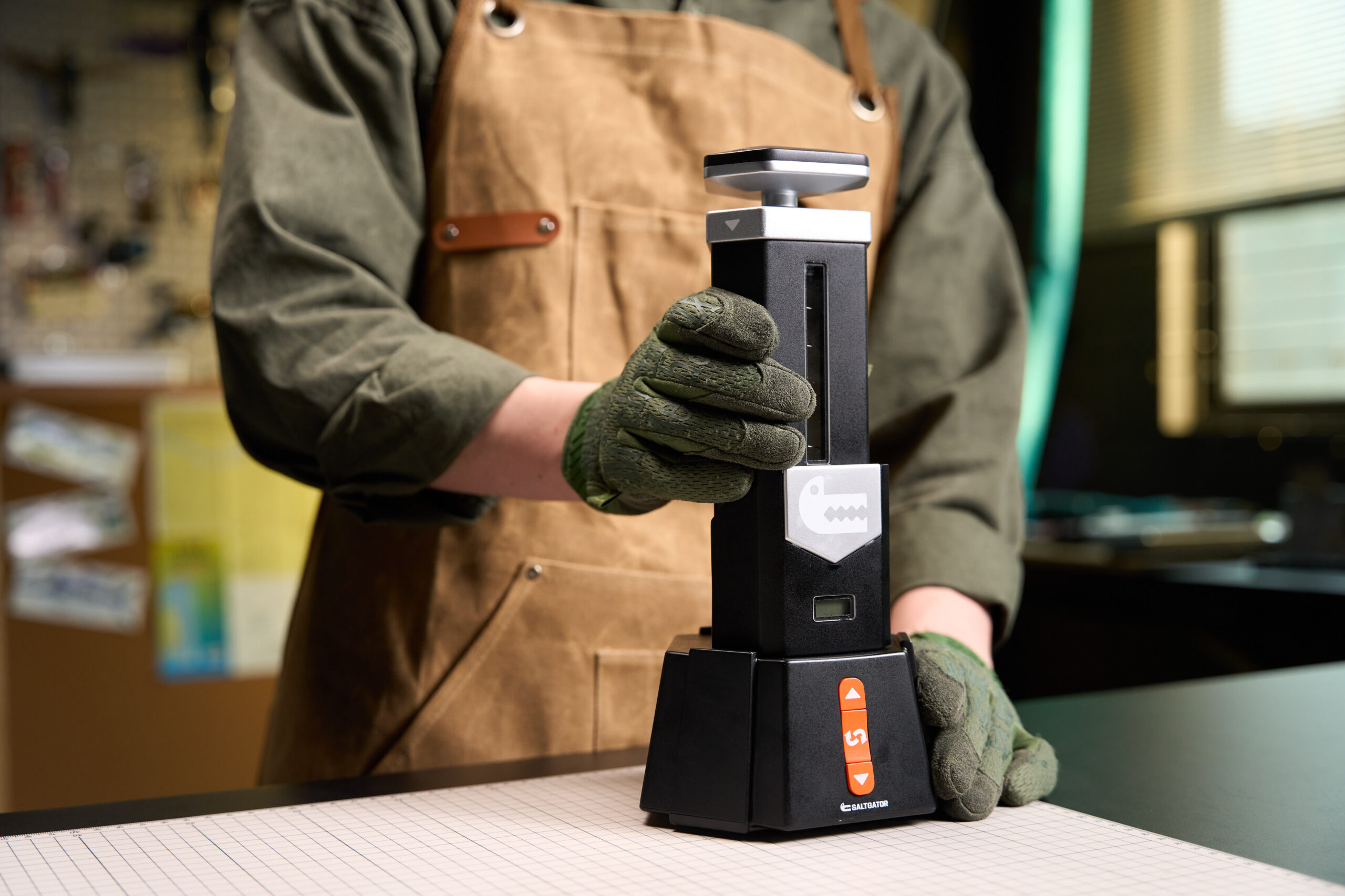
Image courtesy of SALTGATOR.
Finally, our #1 story isn’t about a desktop 3D printer, but a desktop injection molding machine optimized for 3D printed molds. Kremenetsky detailed the extremely successful Kickstarter campaign for SALTGATOR, a company based in Hong Kong and Austin, Texas that developed what it calls the first soft gel desktop injection molding machine. The compact system is priced at $399 and features a low-temperature melting point, making it perfect for 3D printing molds. So named after company co-founder Alex Kwow saw “a gator effortlessly cutting through both salt and freshwater,” the SALTGATOR counts custom fishing lures as one of its key applications.
In the wake of the latest generation of industrial-grade advanced manufacturing equipment, desktop 3D printers are not going “gentle into that good night,” as poet Dylan Thomas wrote. They’re actually improving in quality and lowering in cost, which makes them more relevant than ever. In addition to creating custom products, the SALTGATOR would also work well for prototyping products like soft robotics and wearables. Kremenetsky even noted that educational programs about advanced manufacturing could create curricula centered on “the use of integrated desktop ecosystems where injection molding, 3D printing, and CNC machines all play a role.” He also said, and I heartily agree, that the launch of products like SALTGATOR “continuously unlock the potential for more and more new life to be breathed into the landscape of product design.”
Subscribe to Our Email Newsletter
Stay up-to-date on all the latest news from the 3D printing industry and receive information and offers from third party vendors.
Print Services
Upload your 3D Models and get them printed quickly and efficiently.











You May Also Like
2026: The Year of the Low Cost Print Farm
The rise of high-speed, reliable desktop Material Extrusion and Vat Polymerization systems by Creality, Bambu, Elegoo, and Prusa Research, the onward march of Formlabs in Pro LPBF and VP, as...
3DPOD 287: 3DP/AM Market Data and Applications with Scott Dunham, AM Research
Scott Dunham models all the data at Additive Manufacturing Research. He has been predicting the growth of the 3D printing market in segments, materials, and applications for over a decade....
3D Printing Stocks in 2025: Performance and Market Trends
In 2025, the best-performing 3D printing stocks weren’t mostly the classic Western printer makers. Some of the strongest performers were digital manufacturing platforms and software-intensive players; these are businesses that...
Who Merged, Who Was Acquired, and Who Disappeared in 3D Printing in 2025
2025 was a year of change for 3D printing, with much of the year’s activity coming from mergers, acquisitions, restructurings, and company exits. Together, these moves indicate a broader shift:...