A Narrative of Transformation: Enablers to Scale AM in Healthcare.

I’ve always wanted to leverage innovation for impactful change in health systems, and my experiences spanning clinical medicine, public health, health economics, and the intricate world of health systems and policy have brought me to an exciting frontier: Additive Manufacturing (AM)/3D Printing in Healthcare. Now, as the Head of Medical at Mobility|Medical goes Additive e.V – MGA, I see firsthand how this technology can revolutionize health systems, yet the question is: How do we scale its impact?
At Additive Manufacturing Strategies 2025 (Feb 4-6 in New York City), I will be privileged to moderate the panel titled “Enablers to Scale AM in Healthcare.” This panel’s topic perfectly encapsulates the challenge and opportunity before us. I am eager to gain insights, perspectives and learn more from the carefully selected distinguished and experienced panelists – actually an all female panel, representing different areas of AM in Healthcare: Amy Alexander – Unit Head, Mechanical Development & Applied Computational Engineering, Mayo Clinic, Brigitte de Vet-Veithen – CEO, Materialise, and Jenny Chen – Founder and CEO, 3DHEALS.
No exhaustive list exists, and action on all fronts is required. We will explore more of these through the AM Strategies Conference 2025 healthcare session. From my point of view, some of the key enablers that need to be identified and strengthened to scale AM include:
- CollaborACTION: The sheer understanding that breakthrough innovations often arise from the convergence of diverse expertise, which is enabled through building strategic partnerships. Scaling AM in Healthcare requires strategic alliances—and here, I quote my favorite African Proverb: “If you want to go fast, go alone. If you want to go far, go together.” In today’s world, riddled with uncertainty, these partnerships take us further in scaling.
- Robust regulatory framework: Clear guidelines ensure patient safety and efficacy while fostering innovation. We need clear pathways to approve AM-based medical devices and applications that are agile and responsive to the rapid pace of technological advancement. This necessitates close collaboration between regulatory bodies, industry stakeholders, and researchers to develop rigorous and pragmatic standards and protocols.
- Standardization, and interoperability: Seamless data exchange and system compatibility. To scale AM, we need to explore and establish industry-wide standards for materials, processes, and data formats. This will enable the seamless transfer of designs, data, and knowledge across different platforms and stakeholders, fostering collaboration and reducing costs.
- Awareness – Education and Advocacy: Empowering healthcare professionals with the knowledge and skills to utilize new technologies effectively is paramount for successful adoption. We need to develop training programs for clinicians, technicians, and engineers on using and applying AM in healthcare. This will create a skilled workforce capable of integrating AM into existing workflows and driving further innovation. Changing mindsets and promoting a culture of innovation are also important. We also need to engage policymakers by showcasing the benefits of AM through compelling use cases and pilot projects.
- Value and cost-effectiveness: Rigorous evidence generation is needed to demonstrate AM’s value proposition in healthcare. We need robust assessments to quantify the clinical benefits, cost savings, and improved patient outcomes associated with AM-based interventions. This evidence will be critical in securing reimbursement from payers, driving adoption by healthcare providers, and influencing policy decisions that support the broader implementation of AM.
- Robust supply chain: A reliable and efficient supply chain is essential for scaling any healthcare intervention. For AM, this means ensuring the availability of qualified materials, reliable printing equipment, and skilled technicians across different geographical locations. It also involves establishing efficient logistics for delivering AM-based products to healthcare providers and patients, especially in remote or underserved areas.
- Viable/sustainable business models: scaling requires viable/sustainable business models that incentivize all stakeholders. This means exploring innovative financing mechanisms, such as value-based contracts and public-private partnerships, to support AM development, deployment, and utilization in healthcare. We need to create a market environment where industry and healthcare providers see clear incentives for investing in and adopting AM solutions.
- Investment in research and development: To unlock AM’s full potential in healthcare, we need continued investment in improving AM technologies, such as materials, bioprinting techniques, and software development. This includes funding for basic and applied research and initiatives supporting translating research findings into practice.
- Access and Ethical Considerations: We must proactively address access and equity issues, quality, data privacy, and the potential for unintended consequences. Open and transparent dialogue between stakeholders, including patients and the public, ensures that AM is developed and used responsibly and ethically. AM’s advantages should not be limited to affluent populations or developed countries, and conscious efforts should be made to address the affordability, availability, and cultural appropriateness of AM-based solutions in diverse settings. It also means developing strategies to build capacity and infrastructure for AM in low—and middle-income countries.
In conclusion, scaling AM in healthcare, especially in the complex realm of healthcare, is possible, but requires a strategic and multifaceted approach. By identifying and strengthening these enabling factors and working collaboratively and strategically, we can unlock AM’s full transformative potential and create a healthier future for all.
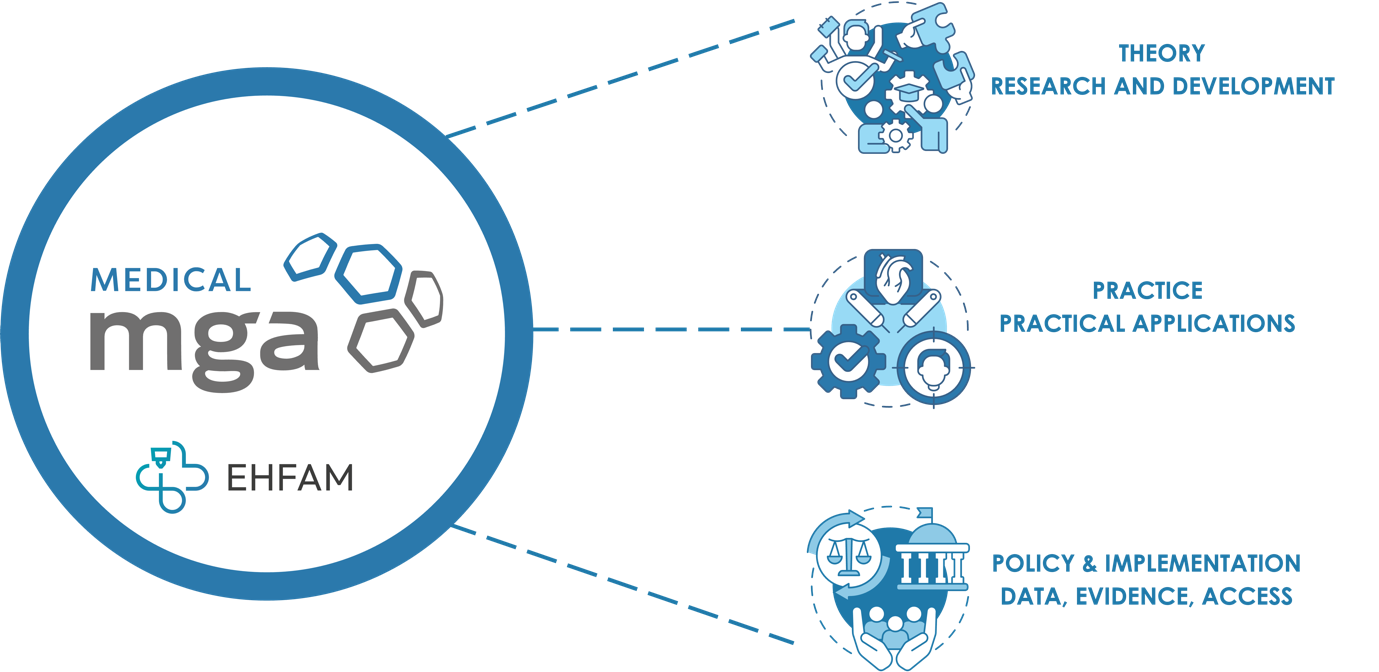
MGA Medical is a vital platform for bringing together various stakeholders: users, industry, academia, and policymakers to explore opportunities and address challenges to boost AM through a user-driven approach. It focuses on improving healthcare and well-being through AM. Our MGA Medical Working Groups work towards strengthening some of these enablers, and our main event, the European Healthcare Forum for Additive Manufacturing (EHFAM), taking place on June 26th and 27th, 2025, in Basel, Switzerland, continues to strive toward bridging theory, practice, and policy to Advance AM in Healthcare.
Subscribe to Our Email Newsletter
Stay up-to-date on all the latest news from the 3D printing industry and receive information and offers from third party vendors.
Print Services
Upload your 3D Models and get them printed quickly and efficiently.













You May Also Like
AM & National Competitive Advantage, Part One: the Real Problem with US Manufacturing
The problem with US manufacturing is the productivity growth rate. Depending on the source, US manufacturing productivity has either been flat or slightly declined since 2010. Before going any further...
Advanced Manufacturing at IMTS 2026: 3D Printing and AI and Drones, Oh My!
Last week’s International Manufacturing Technology Snow (IMTS) in Chicago welcomed over 90,000 attendees to the jungle that is McCormick Place. With over 1.17 million square feet of exhibit space, and...
Let the Games Begin! Xi Throws Down the Advanced Manufacturing Gauntlet
Sangmin Lee went to TCT Asia back in March and reported on the event for 3DPrint.com. He wrote two articles arguing that China’s AM industry looks “ready to scale.” This...
What 3D2GO Says About 3D Printing’s Growth in Southeast Asia
The Philippines offers an interesting case study in how 3D printing can develop in Southeast Asia, and Manila-based 3D2GO helps illustrate it. 3D printing in Southeast Asia doesn’t have to...