LEGO Unveils New 3D Printed Element

LEGO has been deeply investing in 3D printing for decades now. The company uses additive manufacturing extensively in its operations. Lately, the firm has been releasing 3D printed LEGO parts to customers. Initially, it unveiled a new “element” in LEGO speak, with a 3D printed drafting arm seeing limited release in 2019, and a 3D printed duck in 2022, as well as a Pogo stick also in the same year. Now the firm is releasing a new part.
 LEGO’s Senior Director, Additive Design & Manufacturing, Ronen Hadar, said on a LinkedIn post that,
“As a part of the LEGO® Icons set – Holiday Express Train – we are featuring our first large-scale AM produced element. The element is a functional train combining several LEGO® connectors and an internal functionality, only possible with AM. The elements were produced using the EOS P5 FDR platform, giving high accuracy and quality to the element, on par with our standard quality and safety requirements. This is only possible thanks to our incredible engineering teams. What an amazing job.”
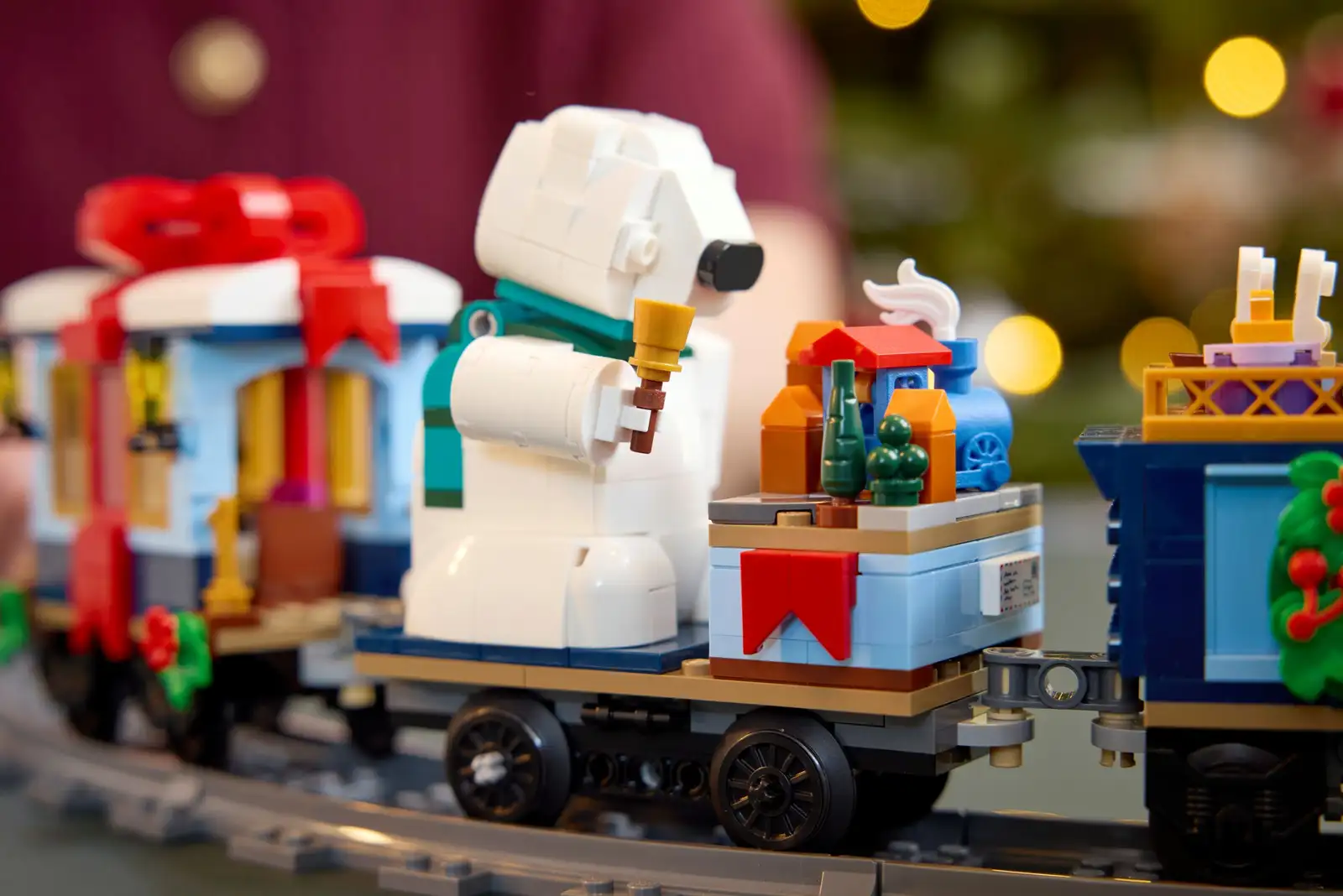
The first 3D printed LEGO part was released to a lucky few participants during an “Inside Tour” at LEGO. The next brick was released to 600 LEGO fans at the AFOL (Adult Fan of LEGO) Day, and the third brick was given to the initial backers of The Secret Life of LEGO Bricks. This time, the circle of fans will be larger, and you don’t have to be one of the “LEGO in crowd.” You can buy the set, to be released on October 7th, here for $130. The part in question is a train, and not the main train in the set, but a teeny, cute one.

The new versatile connector is probably going to make the train set a lot more valuable. It also shows how LEGO can use additive manufacturing to make new design directions possible. By releasing these sets in their thousands, it is also moving ahead with releasing additive to a broader public. Rather than use Evolve Additive, the company is again using powder bed fusion. It’s nice for Ronen to give a shout-out to EOS and the EOS P5 FDR printer. The 500 x 330 x 400 mm build system plays well with PA 2200, EOS’s proprietary Nylon 12 powder for 3D printing. There is a carbon-reduced PA, which has 45% less CO2 and is GMP compliant, a black PA 950 HD with high reusability, and the best surface finish.
Powder bed will always suffer from porosity, lack of uniform finish, and the ability for the part to take up dirt and other substances. If LEGO thinks that it can make a safe consumer part out of it at scale, then it is a big vote of confidence in the technology and EOS. It’s an especially big vote of confidence in Dye Mansion as well, since it’s their technology that has to safely dye the part and make sure that the surface is truly uniform. Additionally, LPBF for polymers always suffers from the fact that you can process relatively few materials with it. And making the powders adds cost when compared to filament and other materials. That has also made some hesitant to industrialize on top of it. LEGO is one of the largest users and molders of polymers worldwide. They, of course, have a lot of resources that others do not. However, their continued belief in polymer LPBF means that the technology will be seen as more viable and cost-effective than previously thought for consumer applications. We’re not yet seeing 3D printed parts in everyday LEGO sets, and these limited releases will probably be snapped up by collectors before ever end up under a Christmas tree. But LEGO is on a remarkable path to put 3D printed parts in the hands of many people worldwide.
Subscribe to Our Email Newsletter
Stay up-to-date on all the latest news from the 3D printing industry and receive information and offers from third party vendors.
Print Services
Upload your 3D Models and get them printed quickly and efficiently.













You May Also Like
The Manufacturing Race Behind the Drone Revolution
We are in the middle of a major manufacturing shift focused on the production speed and payload capacity of uncrewed aerial systems (UAS), or drones. A recent Manufacturing Dive article...
Kickstarter is Testing the Next Wave of Desktop 3D Printing
3D printers are raising serious money again…on Kickstarter, that is. Over the last few months, a new group of 3D printer campaigns has attracted millions of dollars and thousands of...
3D Printing News Briefs, October 1, 2026: Defense, Enclosures, & More
In today’s 3D Printing News Briefs, we’re starting with defense news, first from Massivit and then from AML3D. Then we’ll move on to U.S. manufacturing of a new large-format LPBF...
South Korea’s Lincsolution Lands Hanwha Defense Deal as Hanwha Invests Billions in US
I recently wrote about how the South Korean additive manufacturing (AM) firm Lincsolution is building an aerospace and defense hub, part of the company’s construction of “the largest AM facility in...