Q5D and Molrix To Supply US Army With Harness Robots

Q5D Technologies and Molrix will offer their advanced harness production manufacturing units to the US Army. One production cell will be used for the SkyFoundry project, while two further systems will be deployed to the US Army Materiel Command’s Tobyhanna Army Depot under a 20-month agreement. At the depot, they will be used for the maintenance and repair of existing goods.
SkyFoundry is one of the Army’s efforts to accelerate the adoption of additively manufactured and autonomous UAS across the military. Many units are now not working on qualifying and selecting but rather on scaling production. This indicates a fundamental shift in which the US military itself is looking to scale up its own production. I suspect that they will learn a lot in the coming years about actually producing drones at scale under austere conditions. And I think that this will be a very valuable set of lessons.
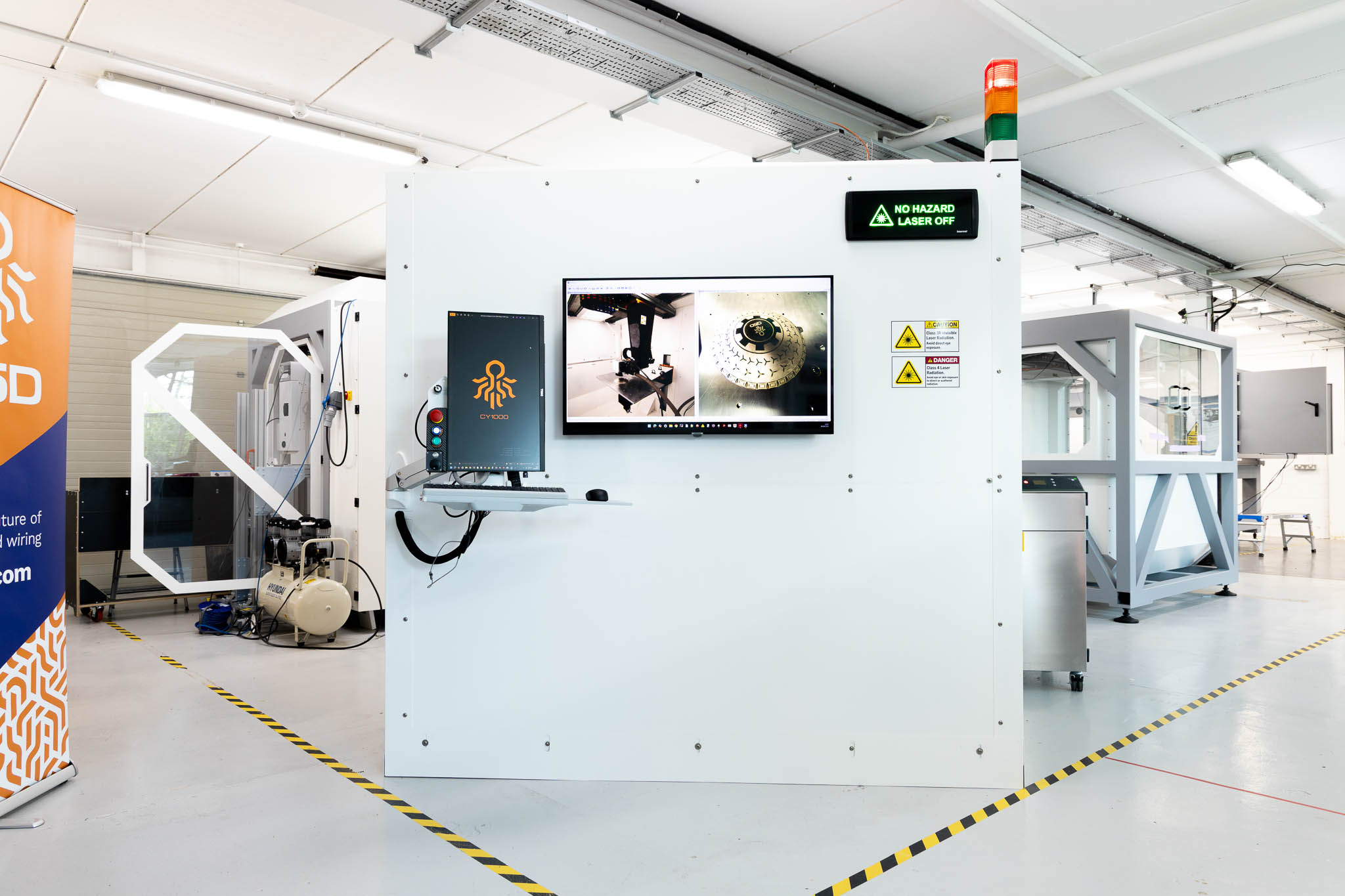
A Q5D automated wire harness manufacturing cell. The company’s robotic systems are designed to reduce wiring bottlenecks in drone production and defense manufacturing applications. Image courtesy of Q5D.
Imagine just the prosaic things like filament drying and material management. One other prosaic thing is wire harnesses. These Christmas trees of wiring look decidedly low tech. And traditionally, people have made them further and further from where vehicles are being made. But, in the Ukraine war, for example, a few large truck firms had issues building trucks because this one seemingly simple thing, harnesses, were not being made. Q5D has developed a cell-based robot that can print traces and polymers and assemble these harnesses. If we are to 3D print drones at scale, a lot of these drones will have traces, wire harnesses, and boards that need some assembly.
By automating this, the company could achieve more efficient production of these harnesses. You don’t want one soldier overseas to have to spend full time stringing together harnesses. I’ve done this work, by the way, when assembling printers, and it’s either mind-numbingly boring or kind of tactile zen, like pottery, depending on your mindset. But, either way, if you need to make 10,000 drones, which is what SkyFoundry wants to do, a simple manual operation can be a show stopper. Q5D can also print circuits, so that this functionality will become more prevalent in the future. Now, the company already wants to print and conformally mount the harnesses.
Q5D Technology CEO Stephen Bennington noted,

Stephen Bennington, CEO of Q5D. Image courtesy of Q5D.
“Modern defence increasingly depends on the ability to manufacture, repair and adapt systems quickly. Our systems are designed to help reduce manufacturing bottlenecks, improve repair turnaround times and support more scalable sustainment capability across rapidly evolving production environments.”
Q5D secured the contract through Molrix, a US-based engineering firm and integrator that resells and supports Q5D in the US.
Van Sullivan, Molrix’s owner, stated,
“Our partnership with Q5D brings advanced wire harness automation directly into U.S. Army production and depot environments. Molrix will provide on-the-ground installation, integration and operational support to help deploy these systems quickly and effectively across Army manufacturing and sustainment operations.”
General Edward Daly, former Commanding General of the US Army Materiel Command, stated,
“Defence readiness is no longer just about stockpiling equipment; it also depends on having the manufacturing capability to sustain and modernise systems as operational demands evolve. Advanced manufacturing and tactical-edge production are becoming central to military readiness and operational agility.”
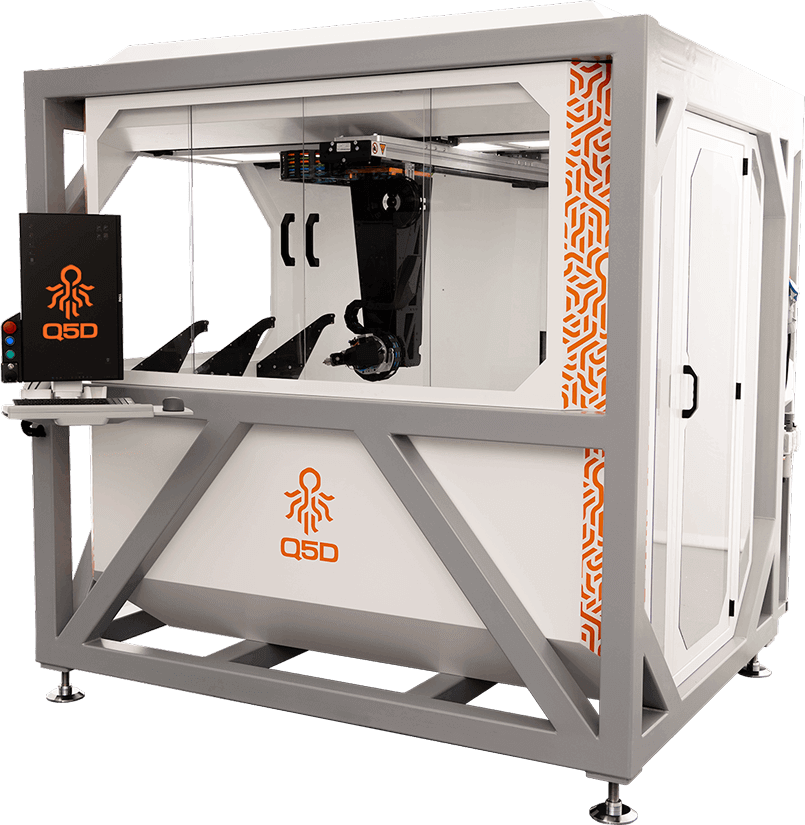
Q5D’s robotic wire harness manufacturing platform automates the production and installation of wiring systems for aerospace, automotive, and defense applications. Image courtesy of Q5D.
This seems like a very valuable activity. If the US military is to make tens of thousands of vehicles, then manufacturing efficiency, manual labor reduction, and automation will be a real need. Things like post-processing, resurfacing, tapping, and fastening will be key areas to reduce. Maybe you don’t mind having an employee who conveys things all day or makes harnesses. In an overseas base, such a person would be super expensive. Q5D is working on something really crucial and boring here and automating it. And automating boring things is exactly what robots are good at. At the same time, Molrix seems crucial here, too. They understand the landscape, know many of the key people involved, and know how to work with the government. Having partners such as Molrix is key to selling in the US if you’re a foreign firm today.
The intersection of additive manufacturing and drone production will be one of the topics discussed at the Additive Manufacturing Strategies UAS: The Present and Future of Drone Manufacturing event on June 30, 2026.
Subscribe to Our Email Newsletter
Stay up-to-date on all the latest news from the 3D printing industry and receive information and offers from third party vendors.
Print Services
Upload your 3D Models and get them printed quickly and efficiently.













You May Also Like
3D Printing News Briefs, October 10, 2026: Drones, WAAM, Ceramics, & More
We have a packed 3D Printing News Briefs for you this weekend! First, America Makes celebrated the recent National Manufacturing Day with 3D printed drones, and then it’s on to...
10 Years of Multi Jet Fusion: Onsite at HP’s Vancouver, Washington Facility
At this year’s RAPID event in Boston, HP Additive Manufacturing Solutions celebrated ten years in the additive manufacturing (AM) market. The company ushered in the milestone with several innovations, including...
PharmaTher Plans U.S. Network to 3D Print Medicines on Demand
3D printing medicines has often been tied to the idea of personalization, basically making a pill in the right dose, shape, or drug combination for a patient. PharmaTher is now...
3D Printing News Briefs, September 17, 2026: 3D Printed Boat, UAS Development, & More
We’ll start with maritime manufacturing in this week’s 3D Printing News Briefs, and continue on to defense 3D printing. We’ll end with funding for Tripo AI. Read on for all...