ETH Students 3D Print Experimental Rocket Engine


Students at the Swiss University ETH have built a Rotating Detonation Rocket Engine (RDRE). An RDRE burns propellant in a ring-shaped combustion chamber where a continuous supersonic wave detonation is propagated. With fewer parts, these engines could be highly optimized, smaller, lighter, and more efficient. JAXA, NASA, and the AFRL have been working on trying to get RDRE engines right, while RTX and Astrobotic have also worked on them. So this is truly cutting-edge work by this group of students. RDRE engines often use 3D printed components to reduce weight, optimize performance, and improve work. And true integration of 3D printing into RDRE engines could provide for a new generation of space propulsion that could outperform.
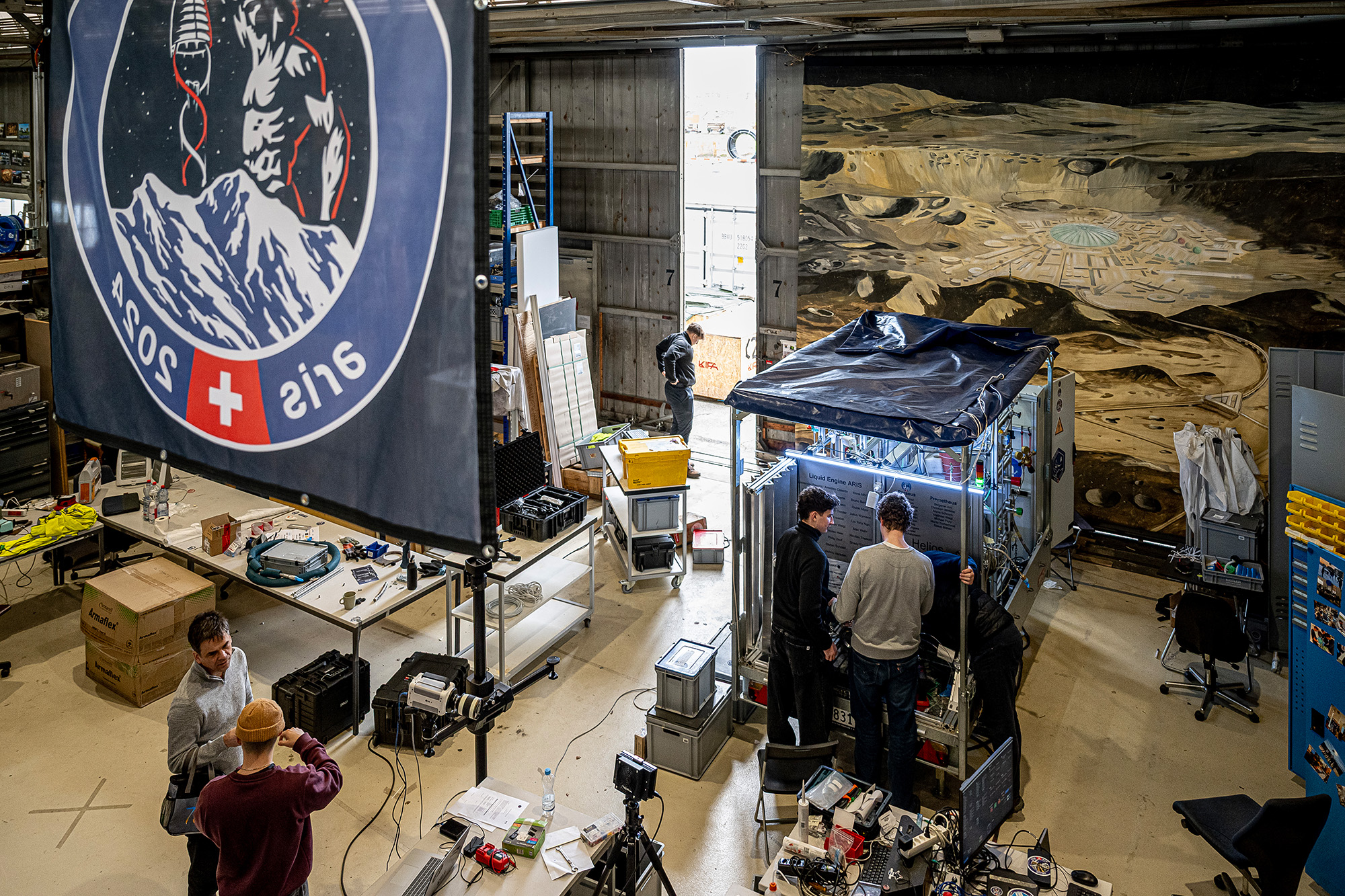
The engine and the test stand on the trailer were built here in the ETH hangar. Image courtesy of Daniel Winkler/ETH Zurich.
The students were part of the 19-member Pegasus team, which took part in ETH’s Aris space and rocket program with the goal of making a bi-liquid RDRE with 10% more power than alternatives. The team, tested at Dübendorf airfield, consisted of students in their second and third years of college, which is remarkable. The difficulty was in creating the right injector, oxidizer, and structure to ignite the reaction correctly, without being torn apart by the reaction’s pressure and temperature, which produce an explosive wave 20,000 times per second.
One of the students, Mattia Röösli, developed the injector. He said that “rockets fascinate me because they fly simply by accelerating fuel backward,” adding that “it’s a mistake to think you can fully understand the topic before you start.” He also said that “you don’t need to be exceptionally talented to develop a rocket engine after two years of study. You go step by step and help each other,” which is encouraging news for anyone who might want to try something similar someday.
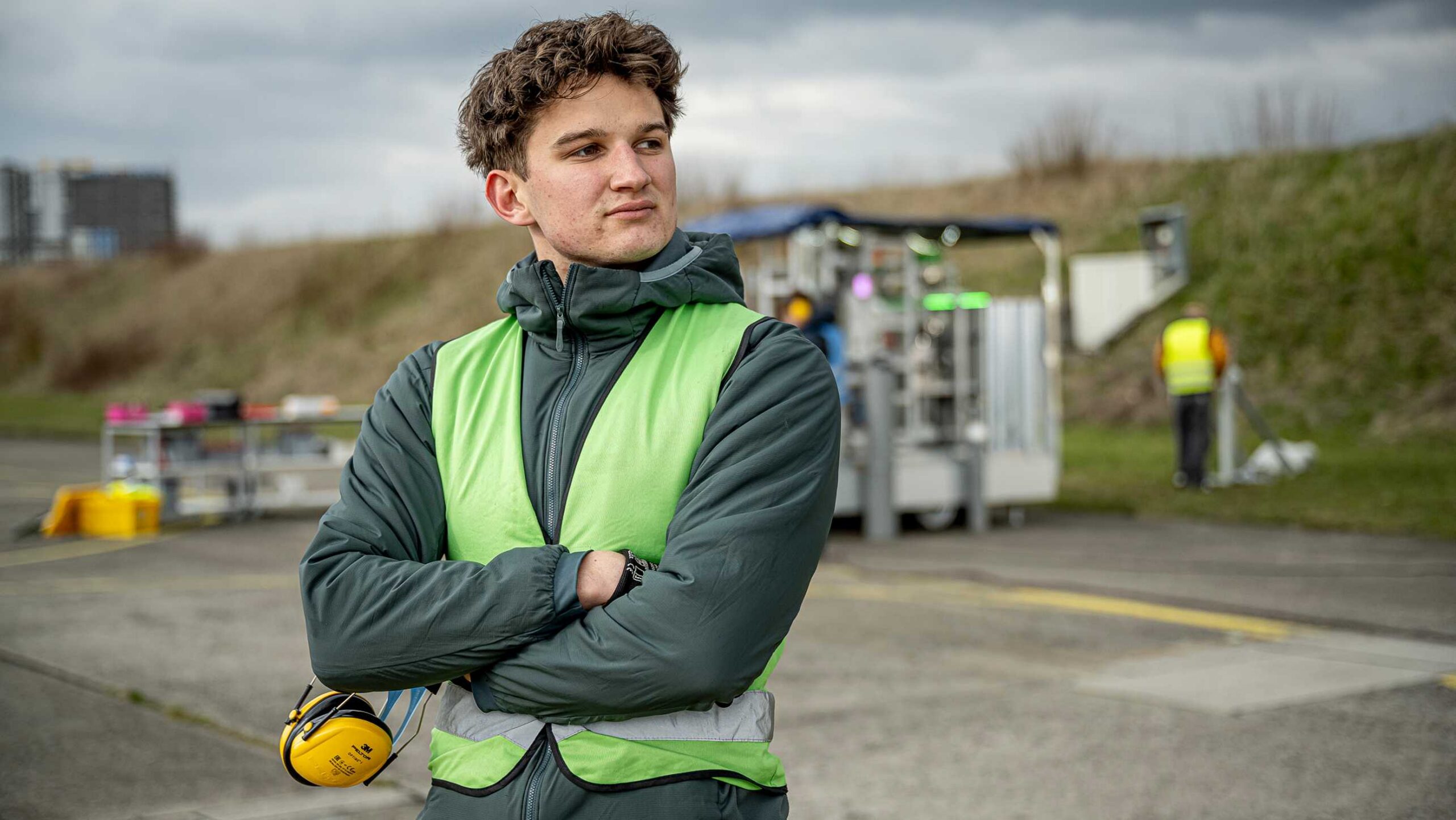
Mattia Röösli developed the injector, the centerpiece of the rocket engine. Image courtesy of Daniel Winkler/ETH Zurich.
Together with the team, they made LPBF prototypes of the injector. They were helped by previous students who acted as mentors. They worked on safety concepts, other parts of the design, and testing for months. After test-firing, they achieved three sustained detonation waves. I love that this young team gets to work on completely new, cutting-edge stuff.
This kind of work is expensive. A lot of 3D printing, prototypes, build time, and design work add up. Not many universities could fund something like this. But there are many wealthy large universities that could, and they don’t do anything remotely as exciting as this. I love the practicality of this. Imagine all the practical FEA, DfAM, and 3D printing experience gained on your own. Imagine just trying to get the printed parts to work, and the understanding that comes from how the machines operate. This kind of thing is invaluable when going on to work with actual rockets. This kind of project could really give you a practical understanding of what it would take to get your own rocket company off the ground. And imagine just how prepared these students will be when they hit the job market.
We know that additive engineering is a team sport. It’s not a bunch of people working on their own thing serially. Instead, people work together as a team, continuously evaluating and passing information back and forth. Systems, simulation, propulsion, and manufacturing teams are in effect integrated and working cohesively. The ability to work in a team, to value others’ work, to understand different fields, and to fight for your ideas without fighting with others is crucial in the complex world of space and rocketry. This is a skill, something that you learn from experience. Perhaps more universities could get into more practical work with the lowering costs of Additive and electronics? Perhaps they should do so to enable their students to do more practical work as a team, learning to build together.
Subscribe to Our Email Newsletter
Stay up-to-date on all the latest news from the 3D printing industry and receive information and offers from third party vendors.
Print Services
Upload your 3D Models and get them printed quickly and efficiently.













You May Also Like
3D Printing News Briefs, October 21, 2026: Digital Twins, AI CAD Service, AR Smart Glasses, & More
In today’s 3D Printing News Briefs, America Makes announced the winners of its MIAMI Project Call, and AM Europe released a new report. Artec 3D launched its new Artec Twins...
3D Printing News Briefs: October 17, 2026: Affordable Housing, Bone Implants, Rubber Gloves, & More
In this weekend’s 3D Printing News Briefs, we’re starting off with quality assurance in metal additive manufacturing (AM), a new 3D printer, and 3D printed housing. We’ll finish up with...
3D Printing News Briefs, October 14, 2026: Bolus, Aerospace Tooling, Water Filter, & More
In today’s 3D Printing News Briefs, we’re starting with medical news, as Myrava has received FDA 510(k) clearance for its 3D printed bolus. Moving on to aerospace and metals, AML3D...
Can India’s AM Push Help Make it a Viable Supplement to China?
Diversifying manufacturing supply chains to locales outside of China has nothing to do with actually cultivating “substitutes” to the Chinese economy. The real stakes are these: China is an irreplaceable...