3D Printed Origami By Matthew Lim

We’ve been excited about 3D printed kirigami and origami a lot on 3Dprint.com. We’ve written about self-folding 4D origami, soft robotics origami, soft robotic actuators made with origami and 3D printing, alternatives to lattices, minimal surface structures, tunable metamaterial tubes, Adaxis working with folding software, flexible inching robots, origami RF antenna, load bearing origami structures, insect wing inspired orgiami elements, origami inspired infill, the robogami 3D printed robot, an origami fish gripper, small origami surgical tools, 3D printed kirigami sensors, self-folding medical implants, Lawrence Livermore’s look at 4D 3D printed origami, stay in place bandages, smart fabrics, bone implants, DNA folding, and more origami structures. Since 2015, we’ve written about it constantly because the intersection of 3D printing and origami is so compelling.
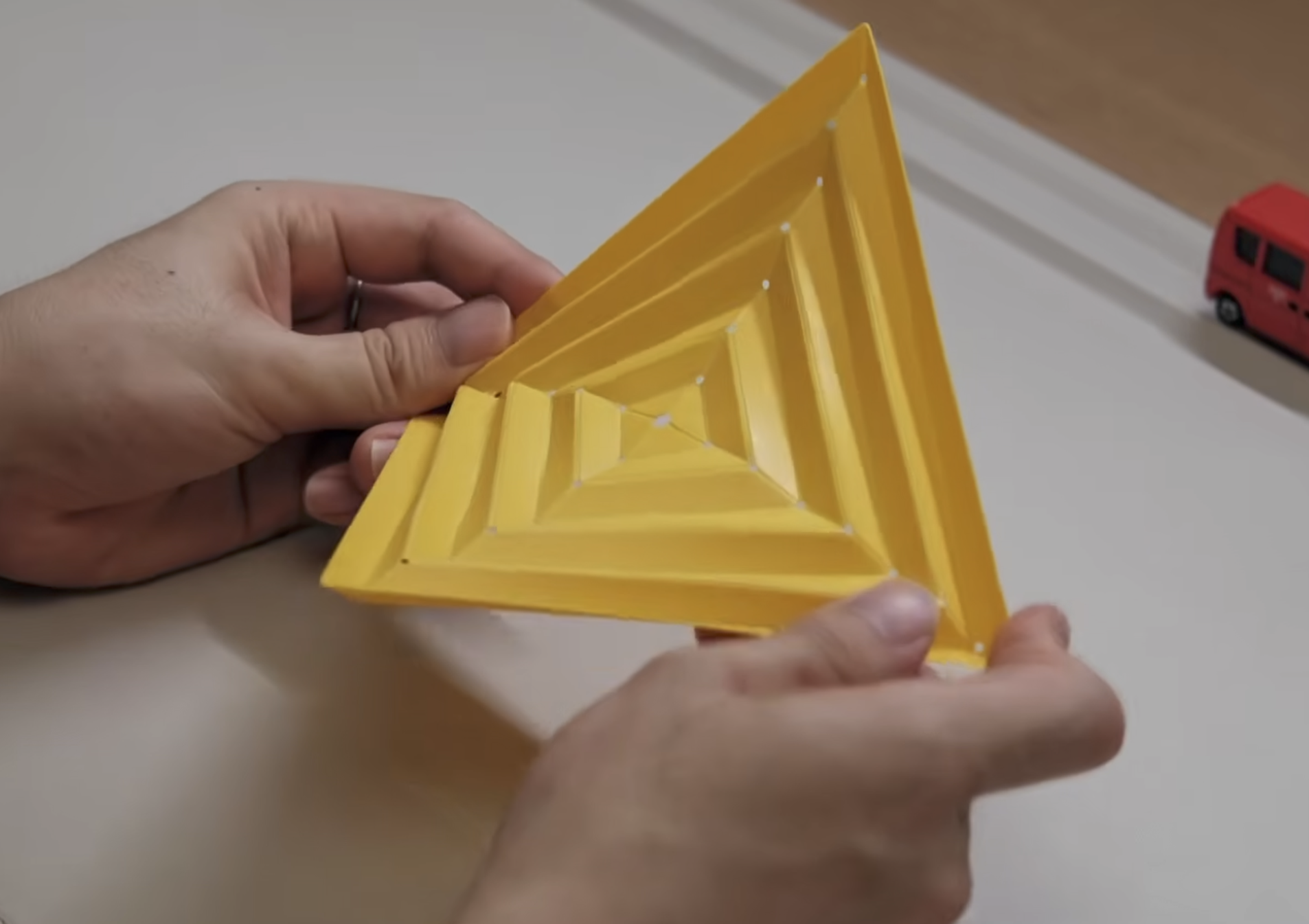
The combination could enable us to design new movable structures, components, assembly methods, 3D printing methods, and design approaches. Origami and 3D printing could make very compelling, efficient, complex components. Origami starts out flat but can be folded to create a more voluminous structure, making the prints often cheap and fast as well. A lot of people are 3D printing hexagonal NASA fabric, but apart from this, the response from the desktop 3D printing community has been limited. If a design has an origami element, it is most likely an origami aesthetic or a regular print based on an existing origami design. Notable exceptions are origami folding lid storage boxes and this lovely origami box. Now, Matthew Lim is blazing a new trail forward that we hope others will take up.
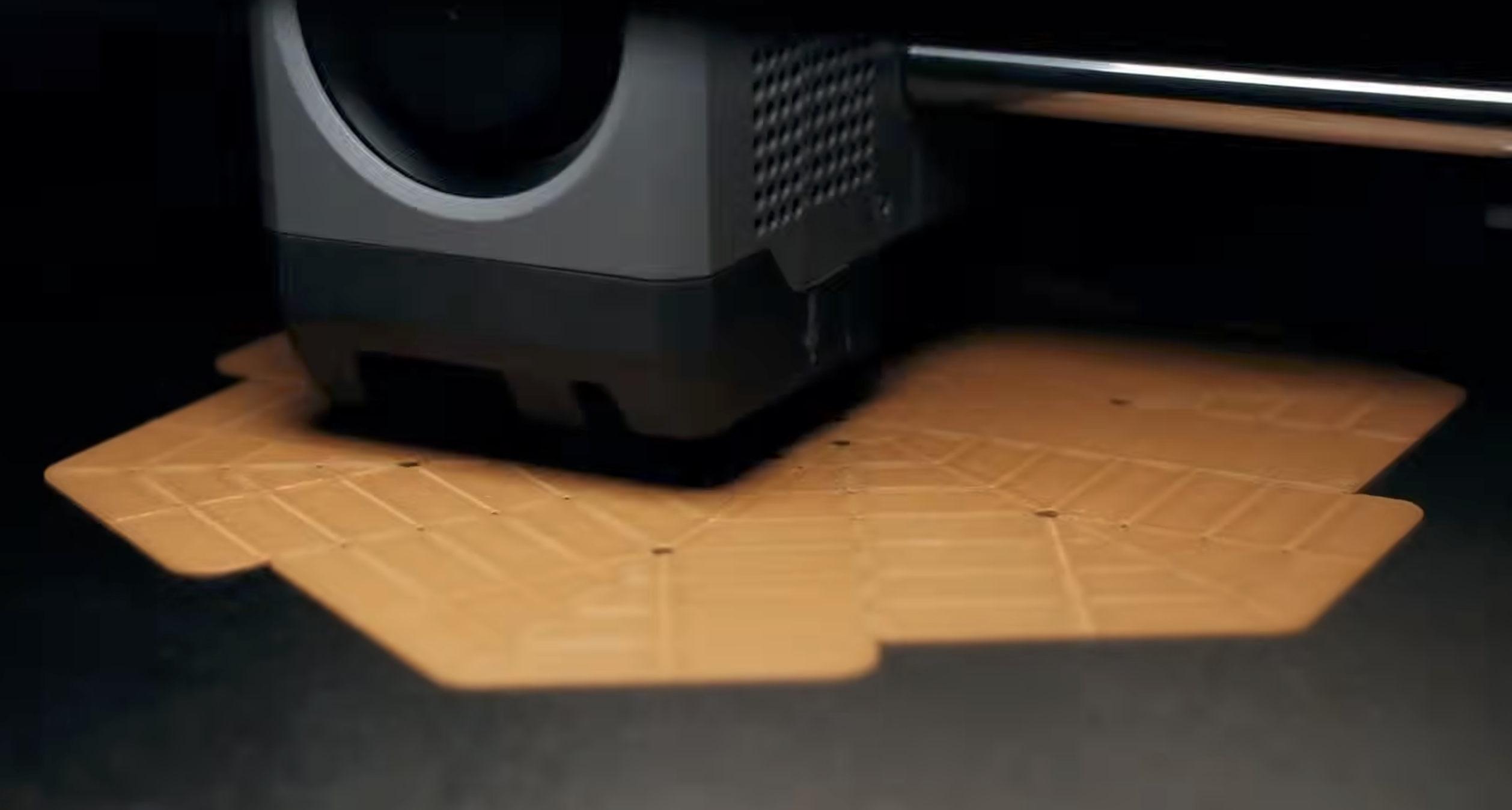
The YouTuber and Patreon member has designed elegant lamps, gadgets, and even a volumetric display. His creations are always well done and contain a lot of research and work behind simple shapes. Matthew has 3,600 Instagram followers, and his YouTube channel gets between 30,000 and 200,000 views. Matthew is just the type of engineer/maker/innovator who typically does not do well in today’s social media. It’s much easier to make a 3D printed unboxing video and repeat some drivel loudly; it’s also much more profitable and will get you many more views. Through researching and making things sporadically and doing deep work, Matthew makes it harder to get attention, views, and grow. He has therefore turned to Patreon to enable people to obtain downloads of his designs, with a pack costing around $11 and a subscription costing around $9.50. Followed by a few and catering to fewer may be a good business model. Now, of course, it would be handier for everyone if he just shared everything on Printables. But the Patreon-fueled maker business model is underexplored and could lead to many more niche, well-thought-out products emerging.

In this case, Matthew has made some lovely origami models, including a Hyperbolic Paraboloid, Satellite Flasher, Waterbomb Tessellations, Kresling Spring, and a Pajarita Bird. Included are STL files, but also CAD models, print settings, and a build guide. The offering seems complete. Matthew is not making much money this way, but this approach could tempt others. So far, in connected communities such as tabletop gaming, D&D, and the miniatures community, people can earn thousands to tens of thousands of dollars a month from subscriptions in return for STLs and designs of miniature figures. Beyond these communities, it’s hard to make money, especially if you do different things, such as Matthew does.
For now, his designs seem ready to be transformed into products such as cases, fidget spinners, keychains, packaging, and more. I hope that more people support Matthew. Beyond this, I hope more product designers will look at the fertile ground that is the intersection of 3D printing and origami. Cheap to print parts that make for changeable, larger parts, which could be a good business. At the same time, a lot of engineering challenges could be solved through origami.
Images courtesy of Matthew Lim
Subscribe to Our Email Newsletter
Stay up-to-date on all the latest news from the 3D printing industry and receive information and offers from third party vendors.
Print Services
Upload your 3D Models and get them printed quickly and efficiently.













You May Also Like
3D Printing News Briefs, October 10, 2026: Drones, WAAM, Ceramics, & More
We have a packed 3D Printing News Briefs for you this weekend! First, America Makes celebrated the recent National Manufacturing Day with 3D printed drones, and then it’s on to...
10 Years of Multi Jet Fusion: Onsite at HP’s Vancouver, Washington Facility
At this year’s RAPID event in Boston, HP Additive Manufacturing Solutions celebrated ten years in the additive manufacturing (AM) market. The company ushered in the milestone with several innovations, including...
PharmaTher Plans U.S. Network to 3D Print Medicines on Demand
3D printing medicines has often been tied to the idea of personalization, basically making a pill in the right dose, shape, or drug combination for a patient. PharmaTher is now...
3D Printing News Briefs, September 17, 2026: 3D Printed Boat, UAS Development, & More
We’ll start with maritime manufacturing in this week’s 3D Printing News Briefs, and continue on to defense 3D printing. We’ll end with funding for Tripo AI. Read on for all...