3D Printing & the Autonomous Era: Defense Tech’s Latest Mutation

When we last checked in on the broad defense tech landscape and the role of the additive manufacturing (AM) industry in that environment, it became clear that the connecting thread amongst the latest developments in 3D printed weapons systems is self-disruption. Whether one looks at the government budgets that are largely responsible for funding military technology, or the private enterprises competing for said funding, the central process taking place is a story of status quo leaders trying to adapt before they die.
Autonomous weapons systems — military drones — aren’t the explanation for why this change is happening, but they are probably the most immediate single catalyst enabling the change. At 3DPrint.com and AM Research, we’re taking great efforts to make sure we stay on top of this constantly unfolding story. A primary example is our UAS Additive Strategies: The Present and Future of Drone Manufacturing webcast taking place on June 30 from 11:00 a.m. to 2:30 p.m. Eastern, which you should register for now if you haven’t already done so.
Drones for All Occasions
One thing to point out about the webinar is that, given the need to balance time constraints with the objective of delivering the most valuable available information, the content will focus, more or less exclusively, on aerial drones. This is the first time we’ve done this webinar, so who knows if it’s just a one-off or the beginning of a regularly occurring event, but I would guarantee that, in any possible future versions of UAS Strategies, the ‘A’ will stand for ‘Autonomous’ rather than ‘Aerial’.
That is, drones on land and at sea are already on their way to becoming just as significant as the drones we’re all most familiar with, the ones that fly. Indeed, the Defense Innovation Unit (DIU) recently asked for proposals (due midnight June 13) from companies capable of supplying uncrewed surface vessels (USVs) (drone boats) for the Indo-Pacific region. This is a perfectly logical result of the fact that Iran is relying in no small part on USVs in its gambit to control the Strait of Hormuz, although it’s worth pointing out that the DIU has been periodically asking for such proposals for years.
There isn’t one single factor that’s pushing militaries more and more in the direction of drones: it is, perhaps, precisely that they simultaneously solve many different challenges involved in the logistics of contemporary combat, which accounts for the widespread shift towards autonomous systems. Ukraine, for instance, has shown that a nation can hold its own against a much larger, much more populous adversary by offsetting manpower disadvantages with drones. In a nation like the US, that same dynamic suggests that drones make far more sense than conventional weapons when facing a future where recruitment numbers will likely never be what they once were.
From a production standpoint, meanwhile, the newfound credibility for low-cost systems validates the processes of companies with much smaller operational footprints than those maintained by traditional contractors. And, because this new class of smaller companies disproportionately leverages digital manufacturing techniques that facilitate profitability at a much lower scale of output than is historically the norm in the defense sector — at the same time as those techniques also imply the ability to pivot more seamlessly from one product mix to another — such companies allow governments to commit to readiness while taking on less financial risk than has previously been the case.
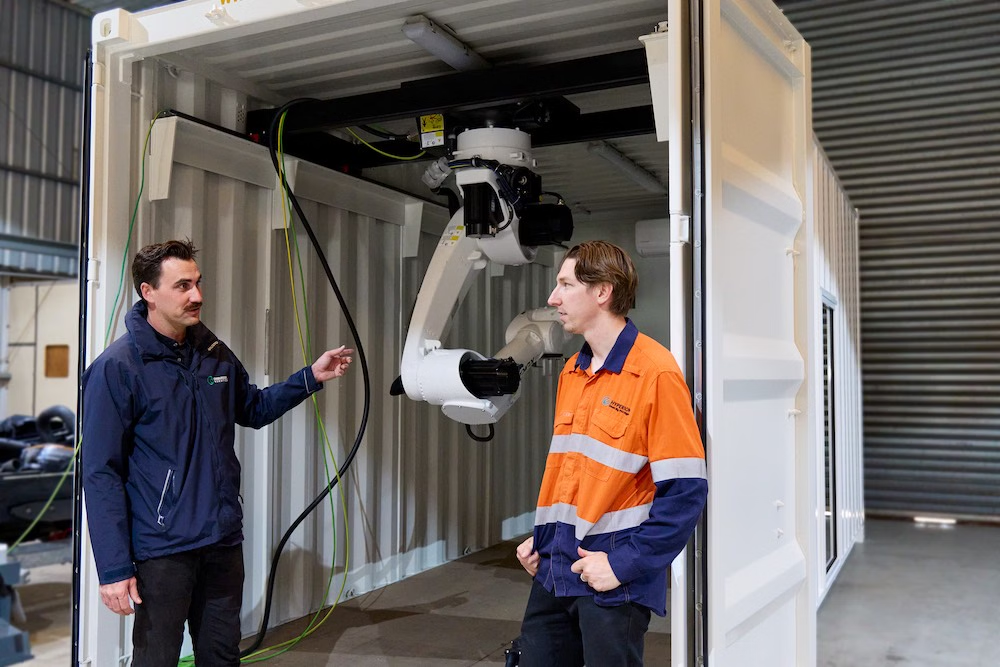
Hyperion Systems CEO Joshua Wigley shows TitanCell. Image courtesy of Hyperion Systems
This is why a company like Australia’s Hyperion Systems, which both makes and uses robotic arm 3D printing cells, can plausibly serve both the construction and maritime markets, among others. Hyperion just launched a USV called the Astra 460, made with recycled polymer. Another company in the Indo-Pacific, Voltage Materials of Hawaii, also just launched its own USV made from recycled polymer, specifically a material that has been validated by the Advanced Structures and Composites Center at the University of Maine — an institution that also possesses similar amounts of expertise in both maritime and construction.
Construction and shipbuilding are two of the most capital-intensive industries, but now, with enough expertise, a robotic system that costs less than a supercar and a skeleton crew of engineers is a reasonable starting point for launching a single company that can supply both houses and military vessels. So ‘autonomy’ may, most concretely, refer to the weapons systems themselves. But, interestingly enough, that implies autonomy in another, equally important sense, as well: supply chain autonomy.
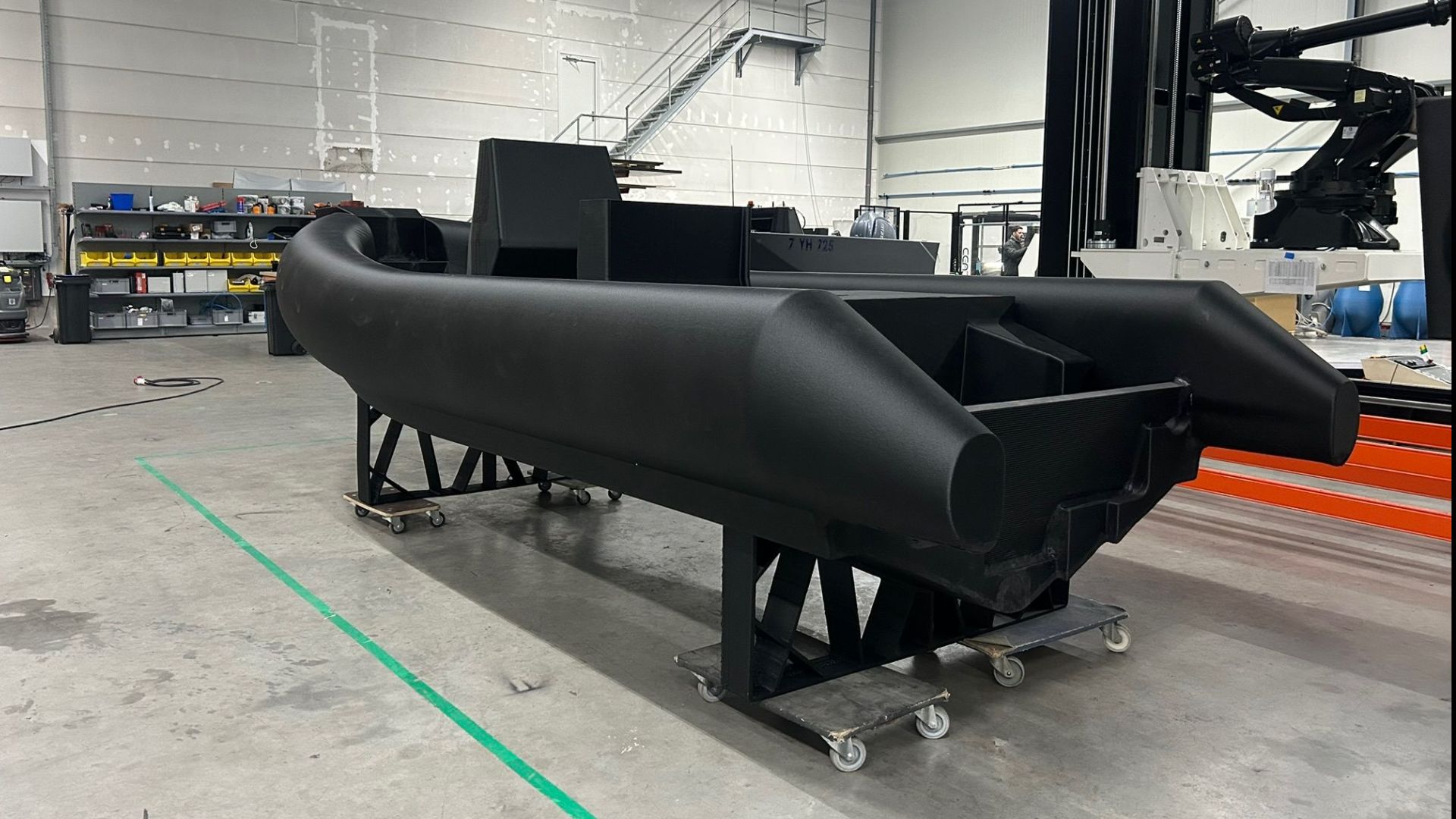
3D printed boat. Image courtesy of Voltage
Hormuz Today, Malacca Tomorrow
In the post linked to in this post’s first sentence, I mentioned that, in April, Singapore’s foreign minister said what all global strategists had already been thinking, that Hormuz is “a dry run” for the Pacific, i.e., for potential conflict between the US and China over the South China Sea and the Malacca Strait. Obviously, this is why the US military is so concerned with the Indo-Pacific, even as the Pentagon is so rapidly depleting its hardware in Southwest Asia.
Here, it’s important to remind everyone that the US weapons supply chain is still unable to exist without Chinese suppliers. Two striking figures in this regard are: 41 percent of semiconductors in US weapons systems come from China, and China is responsible for supplying 91 percent of critical minerals in the US Navy weapons supply chain. In terms of the topics most important to shaping US-Chinese relations, I would imagine that China’s position is something along the lines of, “You can buy Chinese hardware for your weapons, or you can support Taiwanese independence, but you can’t do both.”
That’s probably somewhat of an oversimplification, but Pete Hegseth did sing a completely different tune on Taiwan at this year’s Shangri-La Conference than he did at last year’s. However, concerning the US position, I don’t think the idea is to just acquiesce to China, once and for all, but rather to tread lightly and maintain the status quo for as long as possible while the Pentagon builds up as many contingency plans as it can, with both US suppliers and those of American allies.
Returning to Australia, this is why the southernmost locale in the Anglosphere is more important to the US than ever, and why it has to build up its own autonomy, both in the sense of its weapons systems, as well as in the sense of the production processes that churn out those weapons systems. Aurora Labs, another Australian company that is both a supplier and user of digital manufacturing hardware, just received a A$1,000,000 grant of matching funds from Australia’s Department of Defence, which will facilitate the company’s purchase of a metal 3D printer, part of the Australian government’s Sovereign Industrial Priorities Stream.
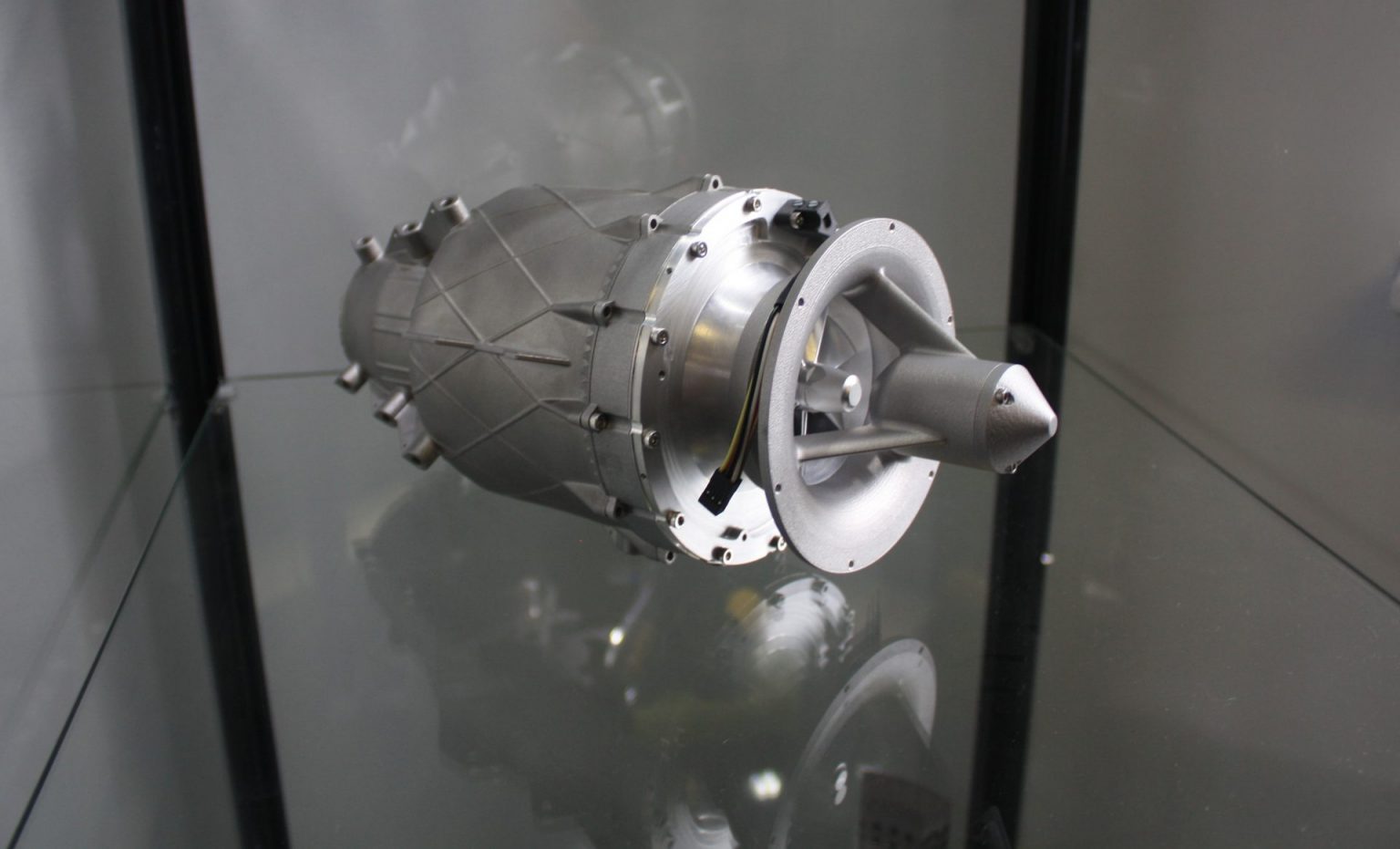
AU2 Turbojet Engine. Image courtesy of Aurora Labs
Aurora will use the printer for micro gas propulsion systems for interceptor drones, at the same time that the company has just entered into an agreement with MBDA, a joint venture between three of Europe’s largest aerospace contractors, Airbus, BAE Systems, and Leonardo. Fascinatingly, even though Aurora also makes its own metal 3D printer, it notes that it will use its own 3D printers for R&D and off-the-shelf systems for commercial production. The primary rationale is that this will allow Aurora to ensure complete IP protection, demonstrating the extent to which protection of industrial autonomy is being embedded into the next generation of defense tech.
Minerals are Critical
Finally, the obscure reality that all industrial autonomy ultimately rests on materials-processing capabilities looks poised to become less and less obscure as the emerging new world order continues to assert itself. That theme rose to the forefront once again in the last week or so with the announcement from US critical minerals supplier IperionX that fasteners made from the company’s titanium powders exceeded the strength of steel counterparts tested by US Army GVSC DEVCOM, the Pentagon’s primary hub for ground vehicle research.
Earlier this year, I wrote about how American Rheinmetall ordered 700 prototypes from IperionX for US Army ground vehicle systems. It’s possible these aren’t the same components that were tested, but assuming they are, IperionX has demonstrated how you can actually make money off of having third parties validate your technology.
In any case, the truly significant point is that the US Army appears to be making headway in securing domestic sources for critical minerals, sources that specifically design their products in alignment with circular economics. This is important not just for the US, but for allies like Japan, India, and, yes, Australia, the three other countries that, with the US, form the Quad Partnership, which at the end of May signed an agreement to cooperate on critical minerals supply chain development.
Recycling is a central pillar of that agreement, which pledges to invest $20 billion in critical mineral security across the four nations over an undisclosed period. Eventually, I think we can expect that other nations will join in, too, specifically the EU nations, assuming the US and the EU are finally able to seal the deal on the trade agreement that’s been in the works for nearly a year now.
Thus, the facts on the ground reveal that autonomy doesn’t mean every nation goes it alone, but rather that every nation needs to cultivate some sort of equilibrium between domestic resilience and reliable partnerships with other, domestically resilient nations. Automation as a force multiplier is the nucleus of this new governing philosophy, which stems from the need of all nations other than China to figure out how to work with China without being overly beholden to it. It’s not at all clear how all this will work out. One result I think we can anticipate, though, is that investors will be incentivized to throw as many things at the wall as they can to see what sticks, which tends to be a tailwind for the AM industry.
Subscribe to Our Email Newsletter
Stay up-to-date on all the latest news from the 3D printing industry and receive information and offers from third party vendors.
Print Services
Upload your 3D Models and get them printed quickly and efficiently.













You May Also Like
3D Printing Financials: $28M in China, U.S. Deals and a Metal AM Comeback
Money continues to go into additive manufacturing (AM). From a $30 million raise for a Chinese metal 3D printing company to new funding for naval AM and a European company...
Metal 3D Printers for the Desktop Are Finally Starting to Feel Like Desktop Products
FDM 3D printing is becoming increasingly accessible, yet metal 3D printers designed for everyday desktop use remain rare on an ordinary workbench. The real challenge is not making a metal...
3D Printing News Briefs, September 12, 2026: Rebranding, Cybersecurity, Project Call, & More
We’ve got a lot of business news from ATLIX to start off this weekend’s 3D Printing News Briefs, with a new identify for its additive manufacturing (AM) portfolio and some...
Phillips Federal Becomes Exclusive Phase3D Reseller for North American Defense Market
Phase3D is demonstrating a unique combination of technical maturation via intensive R&D, and commercialization through broadening its accessibility to potential users. Just last week, the company received an Air Force...