3D Printing News Briefs, July 9, 2026: RIMPAC 2026, Software, Housing, & More


In today’s 3D Printing News Briefs, Massivit continues its focus on aerospace and defense manufacturing, and Meltio is collaborating with Phillips Corporation for RIMPAC 2026. Moving on to software, AMIS introduced a direct connection to HP Multi Jet Fusion systems. We’ll finish with news about additive construction in Australia.
Massivit Launches RapidWings Platform for Aerospace and Defense Manufacturing

According to a new AM Research report, the market for additive manufacturing in drones could reach nearly $900 million by 2034. So it makes sense that Israeli large-format additive manufacturing (AM) leader Massivit has been undergoing a strategic refocus on the aviation, aerospace, and defense industries. Now, it’s taken things a step further with the launch of RapidWings, a new turnkey composite manufacturing platform designed to help aerospace and defense manufacturers save millions of dollars and months of production lead time. Massivit has seen increased demand for manufacturing services from the defense industry, and RapidWings will help with this. It’s a global network of regional Joint Manufacturing Alliance (JMA) partnerships with local, on-demand production facilities, which will embed the company’s proprietary Cast-in-Motion (CIM) technology to speed up composite tooling lead times. JMA partners will maintain operational control of their business and customer relationships, while adding the capability to accept more orders.
“Defense is a necessity worldwide. By cutting manufacturing times, RapidWings’ proprietary technology could save defense and aeronautical companies months and millions,” said Massivit CEO Yossi Azarzar. “RapidWings marks a strategic milestone for Massivit as we pivot from providing industrial 3D printers to delivering a much-needed Defense manufacturing platform that overcomes bottlenecks and empowers manufacturers to scale.”
RapidWings is already operational in Israel, and is working to scale its operations around the rest of the world.
Phillips Corporation & Meltio Supporting NPS CAMRE at RIMPAC 2026
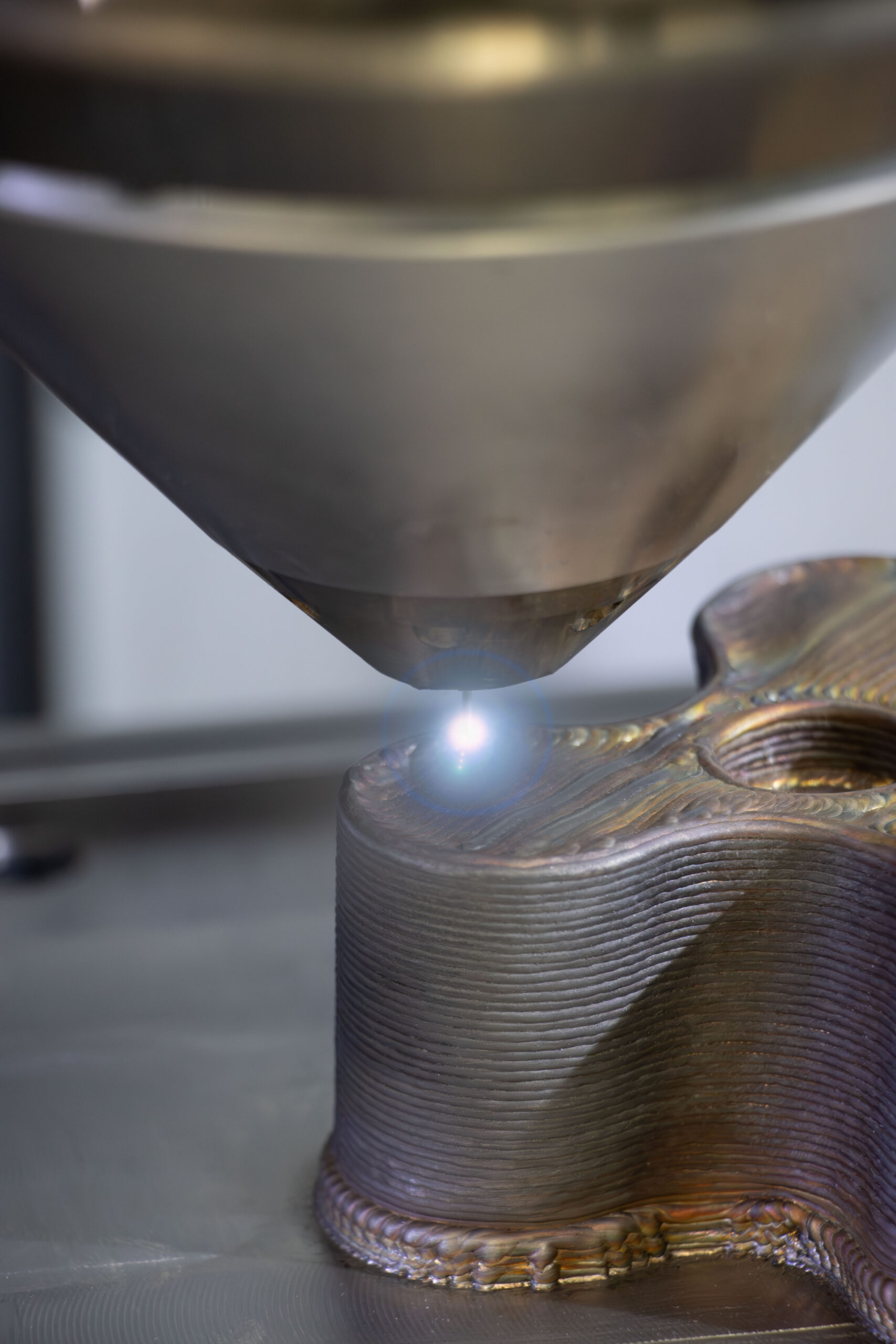
The biennial Rim of the Pacific (RIMPAC) is the world’s largest international maritime exercise, meant to enhance interoperability, strengthen partnerships, and demonstrate readiness throughout IndoPacific. At this year’s event, which runs through July 31, Phillips Corporation will participate in support of the Naval Postgraduate School’s Consortium for Advanced Manufacturing Research and Education (CAMRE) experiment. It will deploy a containerized hybrid manufacturing system aboard the USS Essex in order to evaluate expeditionary production and repair capabilities in operational environments. The system is a Haas TM-1P CNC platform that’s integrated with Meltio Blue wire-laser metal deposition technology. By combining both additive and subtractive manufacturing in one platform and workflow, the system makes it possible to repair and restore worn parts, produce new metal parts, and perform precision machining much closer to the point of need in austere, distributed environments.
Brian Kristaponis, President of Phillips Additive Manufacturing Solutions, said, “RIMPAC provides an opportunity to evaluate how advanced manufacturing can help solve real sustainment challenges for the fleet.
“When critical parts are unavailable through traditional supply channels, the ability to manufacture or repair components closer to the point of need can help improve readiness and keep systems operational. We are honored to support the Naval Postgraduate School, CAMRE, FLEETWERX, and the U.S. Navy in this important effort.”
AMIS Introduces Direct Multi Jet Fusion Connection with Pro + Runtime 3.5.1
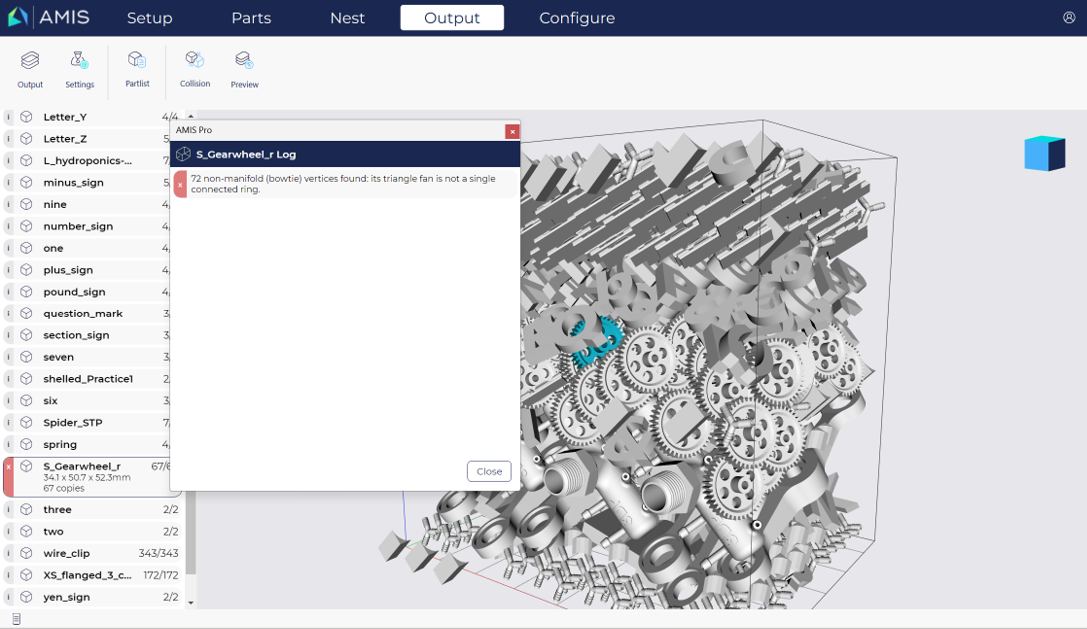
Software company AMIS, part of Hybrid Software Group, develops high-performance build-preparation software for industrial AM. It recently announced the release of AMIS Pro + Runtime version 3.5.1, which introduces a direct, production-ready connection to HP Multi Jet Fusion (MJF) systems. AMIS Pro uses Q*Nest technology to offer high-density nesting and efficient slicing, and a new file processing pipeline is at the core of this new release. In addition to a slew of fixes and improvements across nesting, slicing, and part handling, this latest version also enables the connection to MJF, along with a fully rewritten file healing engine to ensure more predictable, consistent results. The algorithm for file healing now includes automatic compliance checks that are aligned with HP requirements, which decreases the risk of geometry-related build failures. Users will get immediate visual feedback in the interface on parts that aren’t valid, can’t be repaired, and are acceptable, but not optimal. All told, this should help improve automation, reliability, and transparency.
“v3.5.1 is an important milestone for AMIS. We’ve focused on solving one of the key challenges in additive production: making workflows not only efficient, but also predictable and trustworthy,” said Kris Binon, Managing Director of AMIS.
ModuTek Overcoming Barriers in Rural Communities with 3D Printed Housing
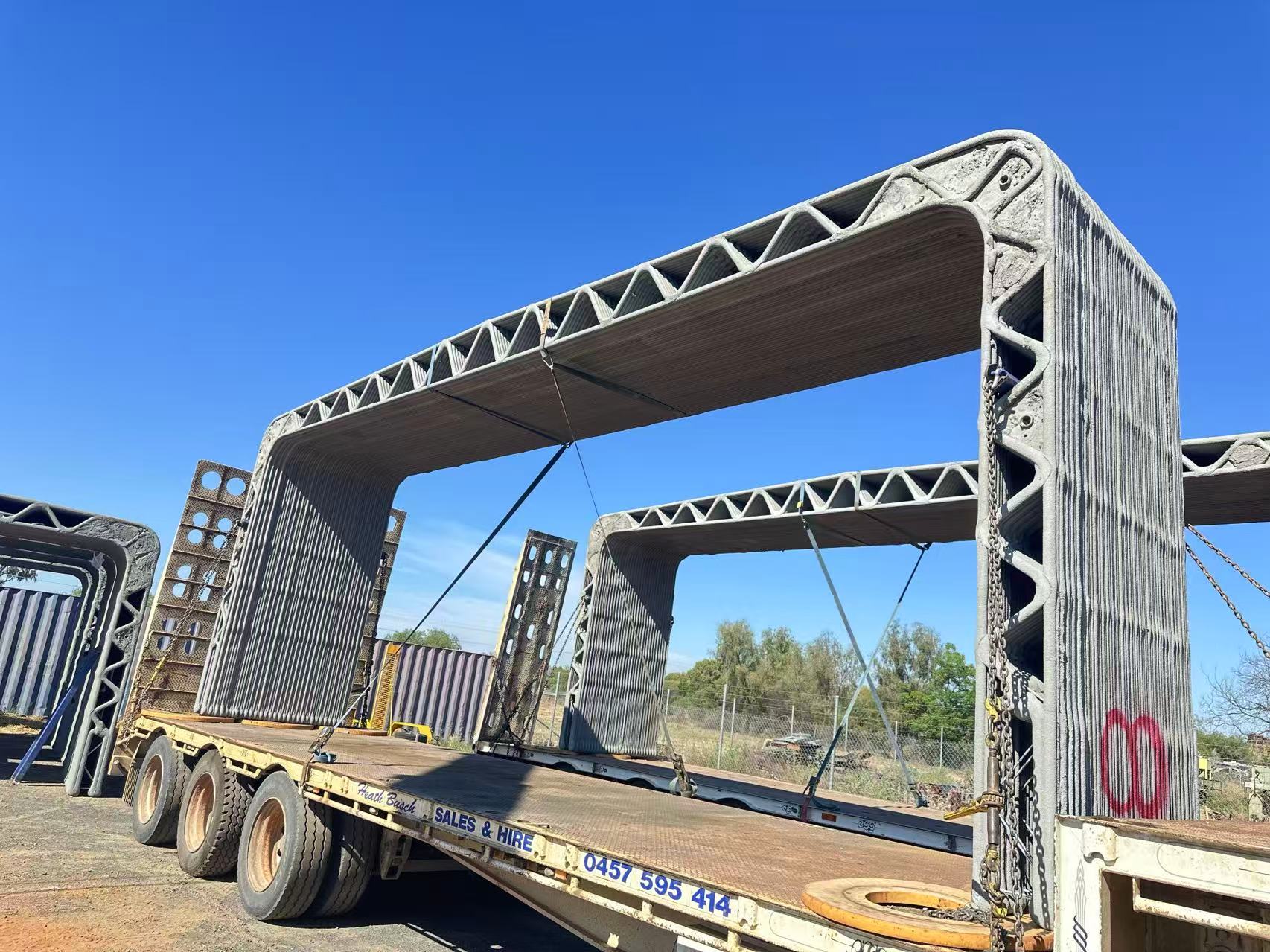
Home to roughly 4,000 people, Cobar is located in the heart of New South Wales. Like many other towns in Australia, it suffers from a lack of housing, and because it’s so rural, there are obstacles to addressing this, including the distance materials have to be delivered and a lack of skilled workers. Melbourne-based ModuTek hopes to overcome these barriers with a trial of its new 3D printing system. The team says it can print roofs and walls onsite, with some parts of the structure taking only four hours to complete. Once they chose Cobar as the first trial site to test the feasibility of their technology for rural housing, ModuTek reached out to local builder Peter Tegg. In turn, he introduced them to Traditional Owner and Wangaaypuwan Elder Tyrone “Uncle Tyrone” Griffiths, who was born in Cobar. His input as a community member has impacted the company’s design approach, and he wants to see more innovation like this supported in towns like Cobar. But, he also thinks that local management of housing is important in terms of addressing long-term housing needs. Overall, the trial has shown that 3D printing housing reduces the need for skilled labor, and that it can be done in rural areas.
“Our focus was, can we in a very remote region build this innovative style of house in the actual location itself [in] Cobar?” Tegg said.
“The reflection was being that if you can build it in Cobar, you can build it anywhere.”
Subscribe to Our Email Newsletter
Stay up-to-date on all the latest news from the 3D printing industry and receive information and offers from third party vendors.
Print Services
Upload your 3D Models and get them printed quickly and efficiently.













You May Also Like
Oxidation Used to Create Self Lubricating CCA’s
Oxidation affects many substances but can also be beneficial. Aluminum, for example, forms a passive oxide film that helps it resist seawater. NAB is often used in ships and forms...
3D Printing News Briefs, September 26, 2026: Bioceramic Implants, 3D Concrete Printing, & More
In this weekend’s 3D Printing News Briefs, we’ll start with an integration between PanOptimization and AMCM, before moving on to healthcare news from KLS Martin and Lithoz, and then UltiMaker...
Malping Wants to Offer FGF PEEK as a Service
Germany-based Malping, located in Neuhausen auf den Fildern, is moving into more high performance materials for Material Extrusion. The service operates FGF and FDM high-temperature material printers, and offers parts,...
Why Beam Control Could Redefine the Future of EB-PBF
In Part 1, Ulf Lindhe examined how advances in beam control, point melting strategies, and process monitoring are changing the way engineers think about electron beam powder bed fusion (EB-PBF)....