House 3D Printing Startup COBOD Builds Distribution Partnership PERI Group


Towards the end of 2021, the Danish additive construction (AC) company, COBOD International, made headlines thanks to a handful of projects that were completed by multiple COBOD customers in the U.S. Notably, on two of the projects — one in Tempe, Arizona, another in Williamsburg, Virginia — COBOD’s customers partnered with the nonprofit Habitat for Humanity. On the Arizona project, the COBOD customer was in fact also one of COBOD’s minority investors, PERI Group.
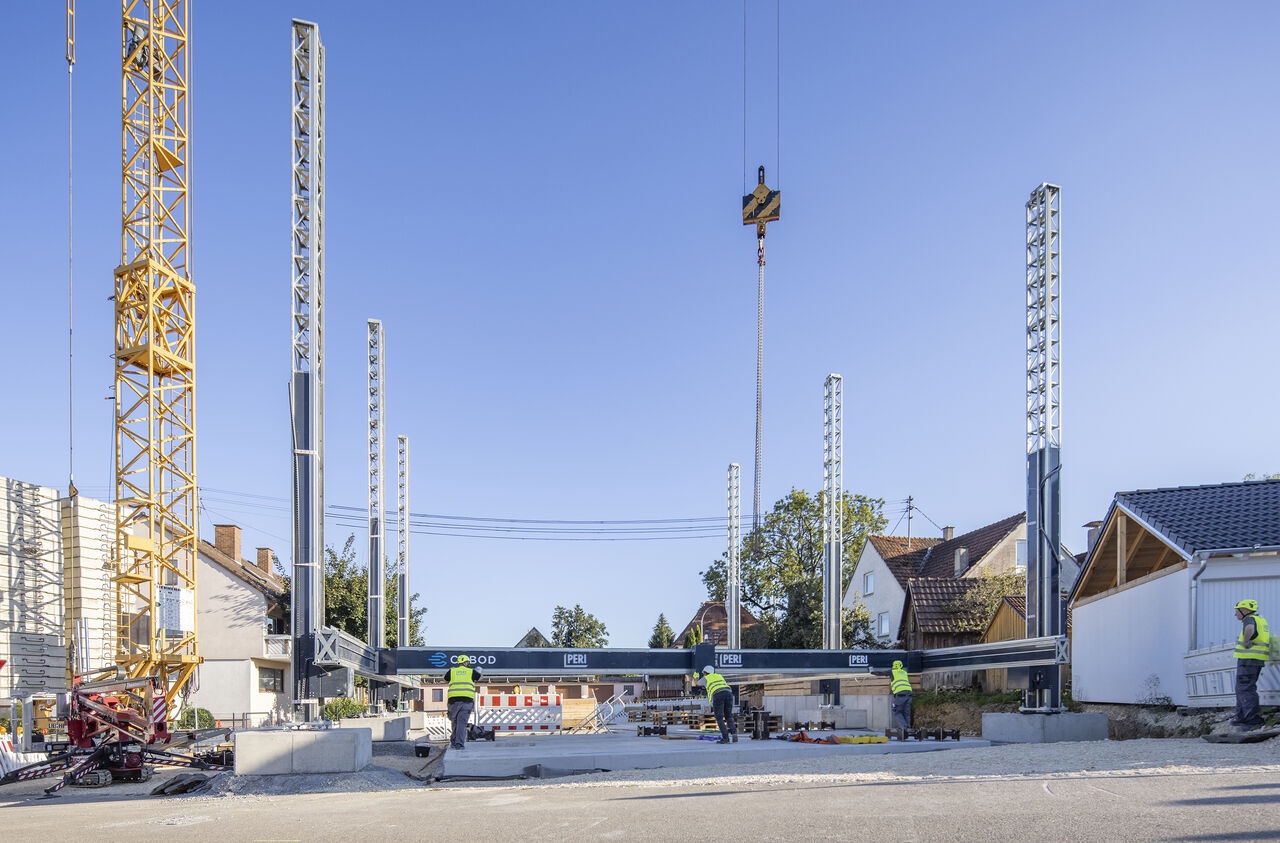
PERI Group, a leading global manufacturer and supplier of formwork and scaffolding materials, was founded in Germany in 1969. In 2018, the company acquired its stake in COBOD. The next year, PERI began distributing COBOD’s BOD2 printer to a small number of customers in Europe and the United States. Now, COBOD and PERI have announced that they will be building on their existing partnership.
PERI will be the official distributor of COBOD printers in eight U.S. states: Washington, Oregon, Nevada, Arizona, Illinois, Indiana, Michigan, and Texas. In addition, PERI, which already distributes COBOD printers in Germany, will expand its European distribution, entering the markets of Poland, the Benelux countries (Belgium, the Netherlands, and Luxembourg), and France. Possessing a longstanding, far-flung network of clients in the construction sector, PERI represents an ideal partner to find a foothold for a company with a technology that has proven its value, but which has also still largely not been adopted by relevant potential customers.
In a press release, the head of 3D printing at PERI, Fabian Meyer-Brötz, said, “Our cooperation with COBOD has been highly successful and the development since our first involvement has gone much faster than expected. …[COBOD has quickly] become the globally leading provider of 3D construction printing technology.” The founder and general manager of COBOD, Henrik Lund-Nielsen, added, “We are thrilled that PERI is now investing further in securing the rollout of our technology to more markets. PERI has proven to be a perfect partner for us, and we would not be where we are today without PERI.”
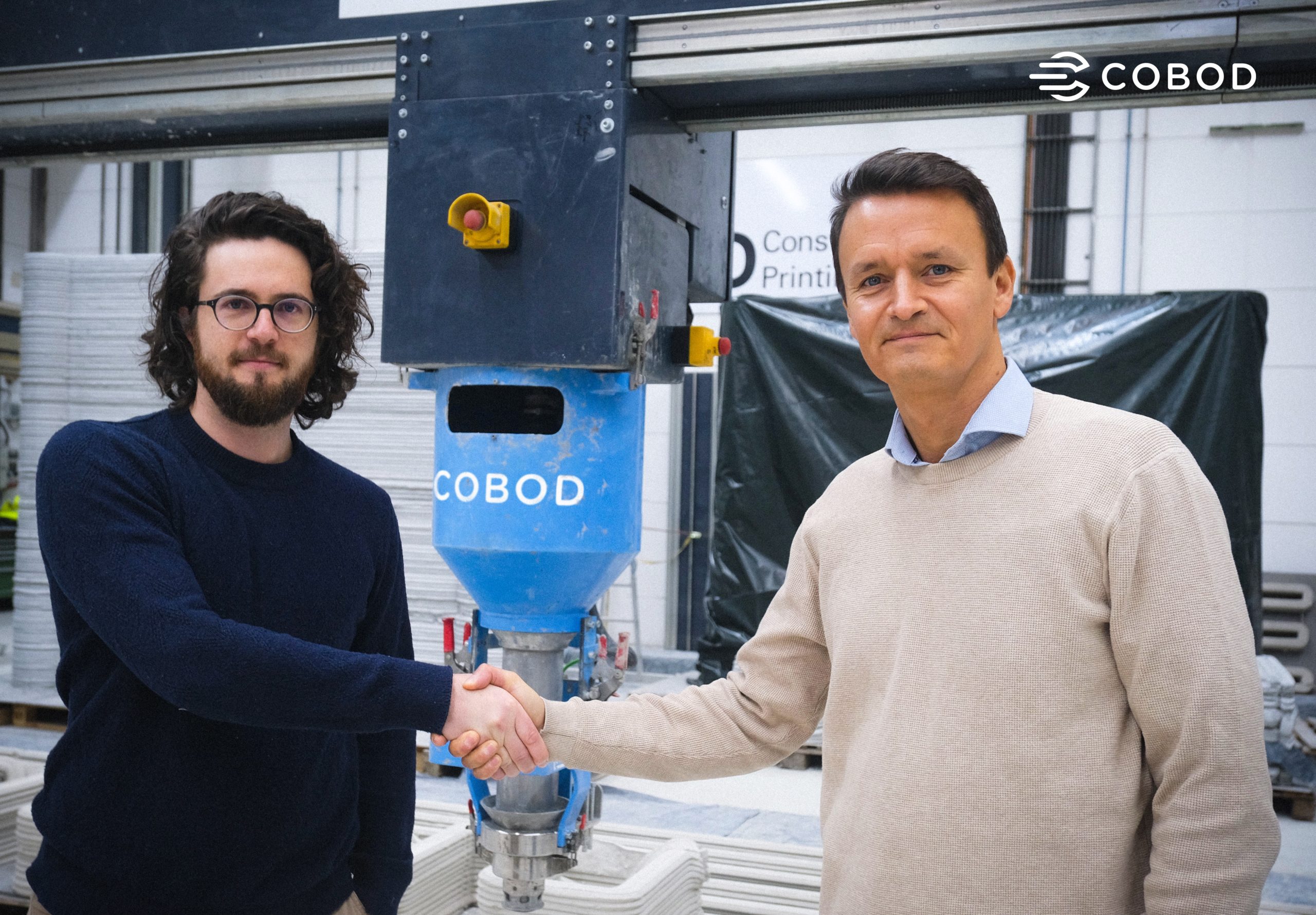 This news is yet another reminder that the AC sector has entered a new phase in its history, one in which it’s being treated less as a novelty, and more as a serious possibility for helping to solve the multi-pronged global housing crisis that continues to worsen at a faster rate. Moreover, PERI’s investment in COBOD, and the strategic partnership between the two companies, are useful examples to follow for both additive manufacturing (AM) startups, as well as legacy companies looking to adopt AM. It feels increasingly likely, the further that AM technologies advance, in general, that strategic partnerships between AM startups and legacy companies will be the key to the mainstreaming of the former, and, for the latter, the answer to staying relevant in an evermore-rapidly transforming global business environment.
Images courtesy of PERI Group and COBOD International
Subscribe to Our Email Newsletter
Stay up-to-date on all the latest news from the 3D printing industry and receive information and offers from third party vendors.
Print Services
Upload your 3D Models and get them printed quickly and efficiently.













You May Also Like
HeyGears Reflex RS Turbo Sets a New Standard for Resin 3D Printing
When creating highly detailed resin prints, speed only matters if the finished result still captures the details that made the model worth printing in the first place. The HeyGears Reflex...
IFA 2026 Shows Where Multicolor 3D Printing Is Headed
Innovation For All (IFA) is best known for televisions, appliances, and consumer electronics. But this year’s show in Berlin also gave 3D printing companies plenty of room to show where...
3D Printing News Briefs, September 12, 2026: Rebranding, Cybersecurity, Project Call, & More
We’ve got a lot of business news from ATLIX to start off this weekend’s 3D Printing News Briefs, with a new identify for its additive manufacturing (AM) portfolio and some...
Quickparts Builds a Four-Country 3D Printing Network for Space and Defense
For manufacturers trying to win more space and defense work, adding 3D printers is only part of the challenge. They also need to make the same parts to the same...