
3D Printing News Briefs, September 19, 2026: Process Validation, Orthotics, Energy Storage, & More

In this weekend’s 3D Printing News Briefs, Eplus3D and Young-Will Aerospace are working on LPBF process validation for a nickel-copper alloy. Meltio released a U.S.-made version of its Meltio Robot Cell, and Mosaic Manufacturing launched a 3D printer for foot orthotics. We’ll move from orthotics to a robotic rehabilitation arm developed by a college undergrad, and end with research into 3D printing for energy storage.
Eplus3D Helping Young-Will Aerospace with Nickel-Copper Alloy Validation
Metal additive manufacturing (AM) solutions provider Eplus3D supported Will-Young Aerospace in the completion of process validation for laser powder bed fusion (LPBF) printing of a nickel-copper alloy, using its EP-M400 metal PBF printer. These types of alloys are well-known for their good processability, corrosion resistance, and stable medium-temperature strength, so they’re often used in aerospace applications like landing gear parts, rocket engine pipe joints, hydraulic components, fuel pipelines, aircraft engine combustion chambers, and more. But, when it comes to processing them with metal AM, nickel-copper alloys need careful control of crack formation, part density, elemental segregation, and mechanical performance. Precise process control can help reduce or even altogether avoid these issues, and that’s why the Eplus3D EP-M400 works here.
Young-Will Aerospace needed to validate an LPBF route for aerospace nickel-copper alloy parts, and Eplus3D offered support with its EP-M400. The printer has a 400 x 400 x 450 mm build volume, a maximum build rate of 210 cm³/h, and up to six lasers. As the part manufacturing and process development platform, the EP-M400 supported coordinated optimization of equipment capability, scanning strategy, and process parameters around the material’s forming characteristics. In this way, it helped to set up a stable process foundation for printing the nickel-copper alloy components. The project ultimately achieved crack-free forming of the nickel-copper alloy parts, which reached a 570 MPa tensile strength—an 18% improvement in comparison to traditionally forged parts. It was a successful material printing trial, but the project also established a solid process foundation for special alloy application development.
Meltio Strengthening Support for U.S. Customers with Meltio Robot Cell
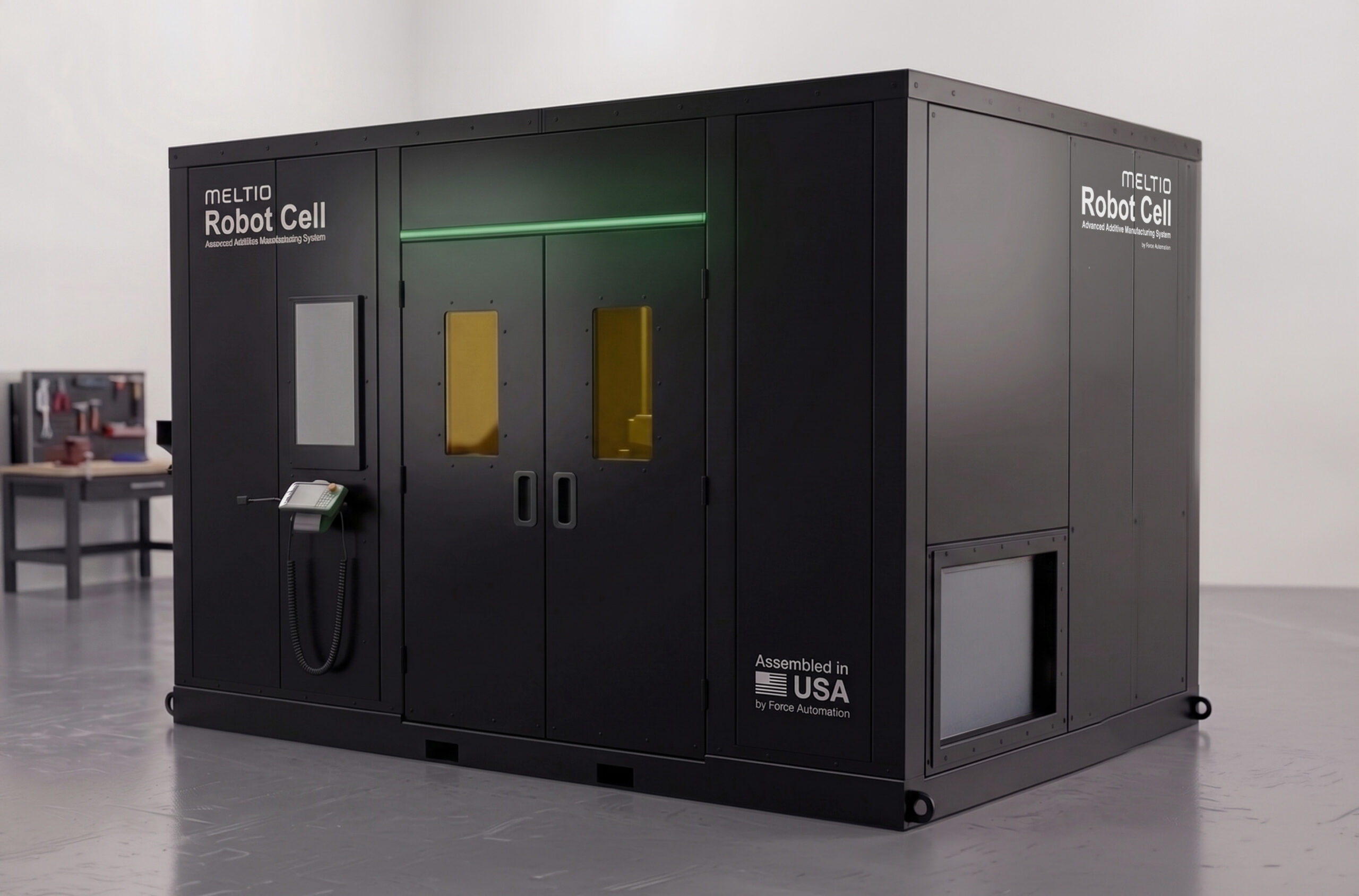
Spanish metal AM company Meltio is strengthening its support for industrial customers in the Americas with a new wire-laser metal deposition (W-LMD) system. The Meltio Robot Cell is used to print metal parts for various industries, and now the company has released one that’s assembled in the U.S. This was done through a strategic partnership with Meltio’s longtime U.S. partner, FORCE Automation, which has robotic integration experience and was a key partner in supporting the integration of Meltio’s technology with robotic arms in the U.S. market. The Meltio Robot Cell is a turnkey solution that controls the entire manufacturing process, which improves the performance of its industrial robotic arm in a more accurate, reliable, and safer way. The U.S.-assembled one was designed as a plug-and-play system for standard industrial environmental conditions, but only needing a single inert gas supply and one electrical power connection to work. It features autonomous operation and integrated monitoring, integrates the Meltio Engine, Meltio Space, and necessary accessories, and is compatible with Meltio’s open hardware platform. The U.S.-made Meltio Robot Cell reduces the typical shipping and customs delays that occur when importing the printer from Spain, and it addresses the needs of U.S. industrial customers in need of a standardized solution for metal AM.
“Meltio is committed to supporting the North America industrial base on its journey towards reestablishing technological sovereignty, and providing Meltio’s technology assembled in the USA, is just a first step towards improving access and service levels to an already established customer base using what is now better understood as one of the most flexible and user friendly technology that provides real solutions to real every day problems of obsolescence, logistics nightmares, and excessive costs of operation in many cases,” said Gabriel Ortiz, Meltio North America Sales Manager.
“The Meltio Robot Cell is based on an open hardware platform that enables Meltio’s metal 3D printing head to be integrated with robotic arms from any brand. The volume and work area defined within the Meltio Robot Cell workspace are designed to meet a wide range of manufacturing needs, while Meltio’s industrial-level additive manufacturing technology enables autonomous part production through integrated monitoring and safety features.”
Mosaic Manufacturing Launching 3D Printing Platform for Custom Orthotics
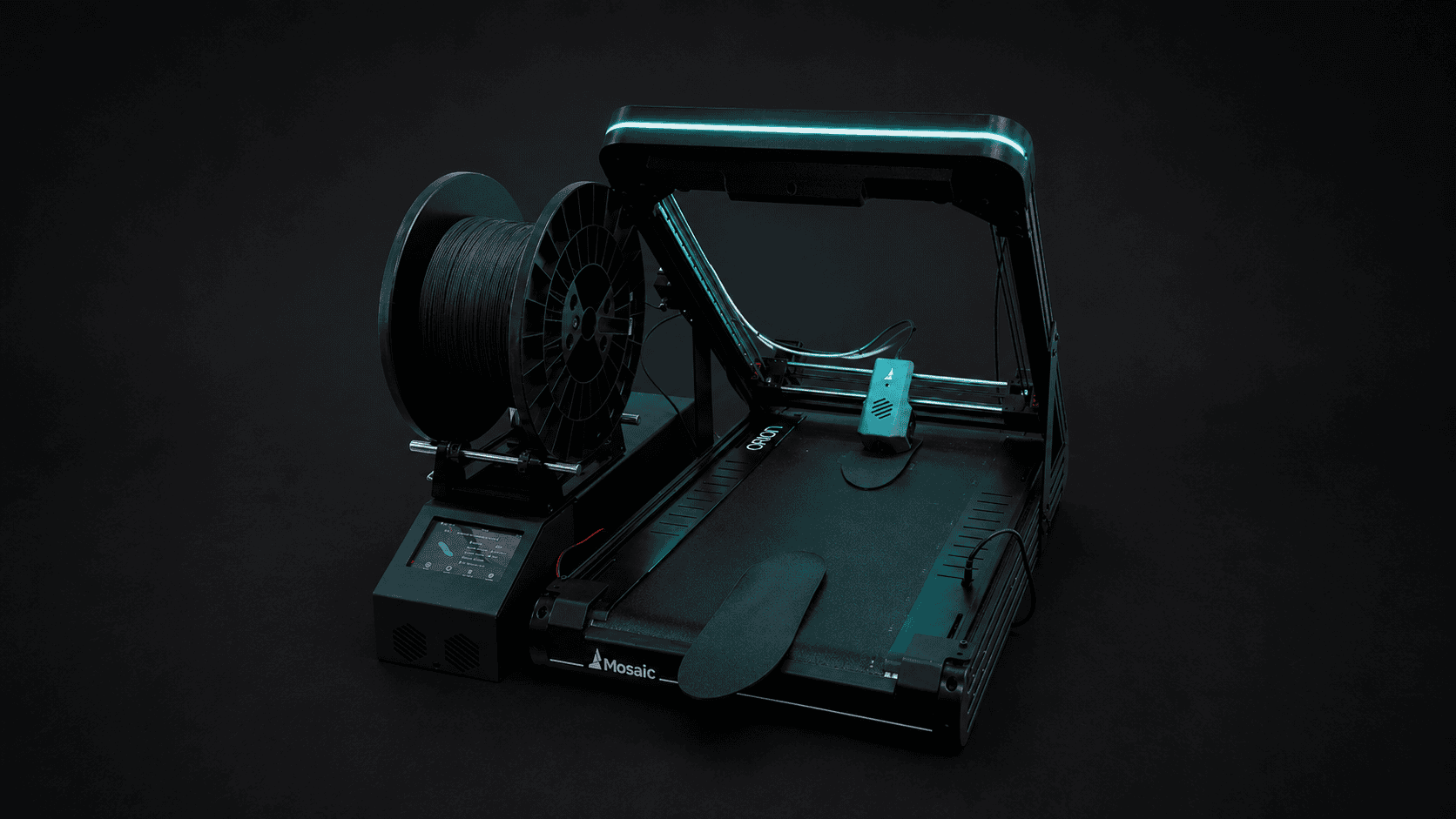
Mosaic Manufacturing launched its new automated 3D printing platform, Orion, developed specifically for custom orthotics production. Transitioning to digital orthotics production has been costly and difficult to implement, so Mosaic listened to the clinicians and manufacturers currently making orthotics, and purpose-built the Orion for labs and clinics. It’s meant to simplify, automate, and lower the cost of fabricating custom orthotics, keeping production consistent and efficient without making things too complicated or adding too much human labor. Mosaic says the Orion is an accessible, ready-to-deploy system with an open-architecture workflow and the ability to print both soft and rigid patient-specific orthotics with its proprietary materials. Because of its belt-based 3D printing and automated queue management, the printer can just keep making custom orthotics, overnight and on the weekends, without needing humans to move things along. The company says using Orion, orthotics producers can print up to 300 pairs a month, achieve material costs as low as $6 a pair, and reduce material waste and hand-finishing. Additionally, customers can move from digital scanning through design and production management by adopting the full Mosaic Stryde Software Suite; if they already have a digital workflow, they can connect Orion to a compatible CAD/CAM setup.
“The ask from orthotics manufacturers was clear: they want to move toward digital production, but getting there with the fragmented tools on the market has been painful,” said Mosaic CEO Mitch Debora. “They wanted an end-to-end, validated solution they could implement confidently and thrive with — and our team delivered. Orion makes digital orthotics production accessible today.”
Undergrad Student Inspired by Family Experience to Create Robotic Arm

Kai Clifford
Kai Clifford, a senior mechanical engineering student at Kennesaw State University, saw firsthand how difficult typical everyday movements can become for people who lose their mobility, like his grandfather. This inspired him to find a way to make rehabilitation more effective and comfortable, and he’s using 3D printing and robotics to do so. Clifford worked with Professor Ayse Tekes through the university’s Summer Undergraduate Research Program, and their research is centered around a 3D printed Reconfigurable Compliant Joint (RCJ) near the elbow. Typical rehab exoskeletons use rigid joints that have to closely align with the patient’s elbow, but when they don’t line up, the patient has to deal with discomfort due to unwanted forces. This sleeve-style robotic arm combines the 3D printed RCJ with a motor, wireless motion sensors, and a real-time control system to guide rehabilitation exercises for stroke patients recovering from upper-limb impairments. A Raspberry Pi processes the sensor information to figure out how the motorized actuator at the elbow should respond. Since the 3D printed joint is flexible, it’s able to better accommodate any differences in the patient’s anatomy and natural arm movement. Using 3D printing also means the RCJ can be redesigned to adjust the resistance for each patient.
“I’d say that it’s like adding a muscle on top of your muscle. The device gives the arm additional support to help it move through rehabilitation exercises,” Clifford says about his robotic arm.
“The reconfigurable compliant joint is what makes it different. If it’s unaligned with your joint, it’s going to try to realign with it.”
Next, Clifford will test how accurately the robotic arm follows a patient’s intended elbow movements, and how much torque it can provide. He also wants to make it more comfortable for patients to wear.
3D Printed Electrode Could Improve Large-Scale Renewable Energy Storage
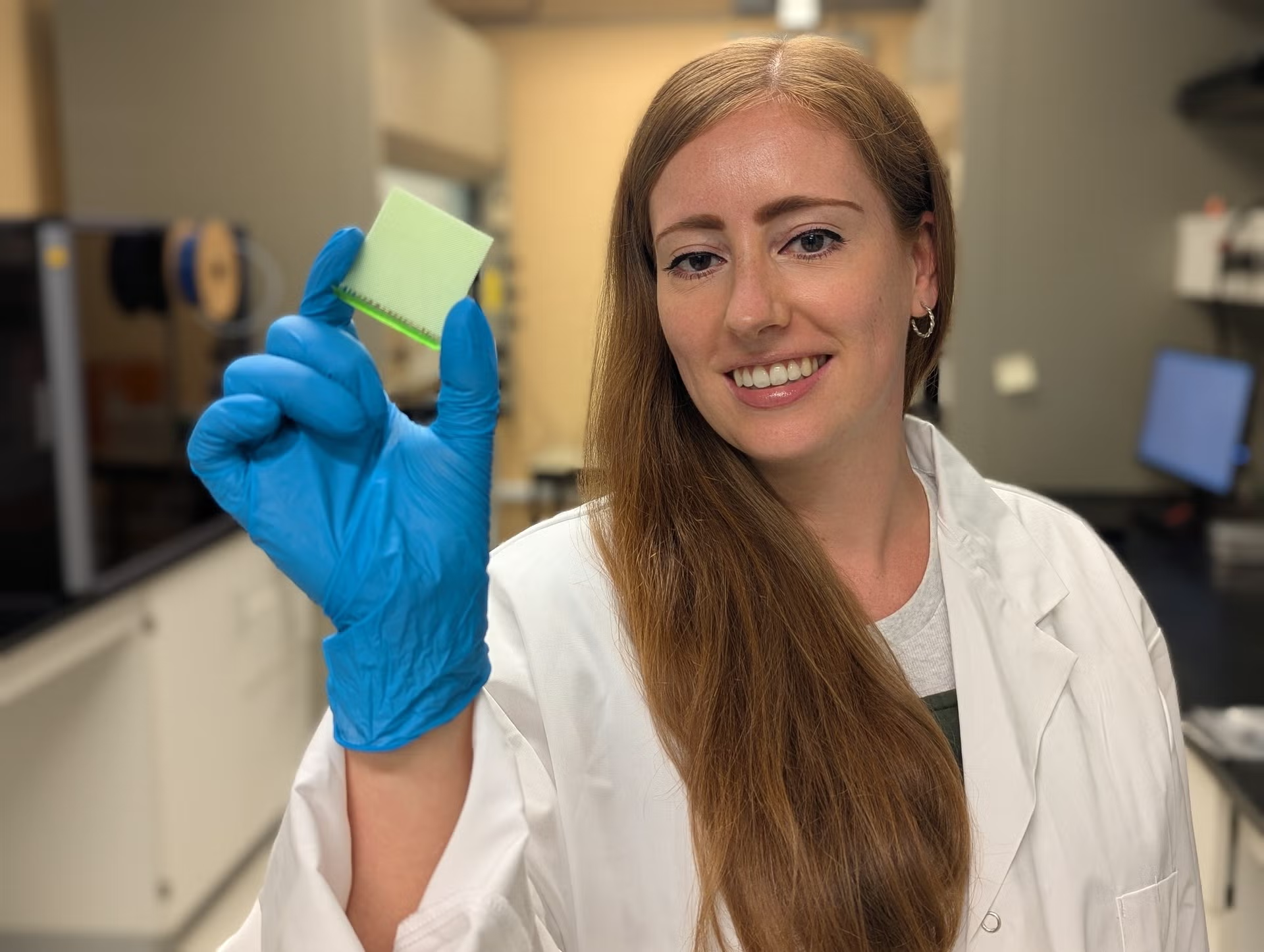
Lithium-ion batteries are used in electric vehicles, phones, and many energy storage systems, but redox flow batteries (RFBs) could be safer for large-scale energy storage. That’s because they use water-based electrolytes, instead of the flammable materials used in lithium-ion batteries, to store electricity. A research team from the University of Waterloo are developing a new 3D printed electrode that could make RFBs even more effective at storing large amounts of renewable wind and solar energy. They were inspired by natural structures to redesign a major component of RFBs. Using 3D printing, they made porous RFB electrodes, which enables control over fluid flow and helps battery liquid move more efficiently. This will allow the chemical reactions which store and release energy to occur more effectively—very useful, as wind and solar power don’t always produce electricity exactly when it’s needed. The team tested different triply periodic minimal surface (TPMS) geometries in their electrode design, and determined that the “diamond” geometry increased performance by 52%. They produced the porous electrodes using digital light processing (DLP) printing, then heat treated them to form conductive carbon electrodes that can carry electricity. The researchers tested their electrodes in laboratory flow cell experiments, and in a working vanadium redox flow battery, to prove that the design could function.
“With 3D printing, we can design the internal structure of an electrode in ways that are difficult to achieve using conventional manufacturing. That gives us much greater control over how the liquid moves through the battery and reaches the surfaces where the energy-storing reactions take place,” explained Dr. Maxime van der Heijden, a chemical engineering professor at Waterloo who led the research team.
You can learn more about the team’s work in their published paper.
Subscribe to Our Email Newsletter
Stay up-to-date on all the latest news from the 3D printing industry and receive information and offers from third party vendors.
Print Services
Upload your 3D Models and get them printed quickly and efficiently.













You May Also Like
The Manufacturing Race Behind the Drone Revolution
We are in the middle of a major manufacturing shift focused on the production speed and payload capacity of uncrewed aerial systems (UAS), or drones. A recent Manufacturing Dive article...
ADDMAN to Buy Up to $10.8M in Nickel 718 Powder from 6K Additive Over 30 Months
After years of buildup, we’re finally starting to see what the US metal additive manufacturing (AM) market could look like at scale. To be sure, it’s still not quite there,...
Metal AM in a Multipolar World, Part 2: How PBF and DED Could Change by 2035
The first decades of PBF development were heavily shaped by machine capability: more power, more lasers, larger build volumes, better recoating, and improved process monitoring. These developments will continue, but...
Advanced Manufacturing at IMTS 2026: 3D Printing and AI and Drones, Oh My!
Last week’s International Manufacturing Technology Snow (IMTS) in Chicago welcomed over 90,000 attendees to the jungle that is McCormick Place. With over 1.17 million square feet of exhibit space, and...

























































