Quickparts Builds a Four-Country 3D Printing Network for Space and Defense

For manufacturers trying to win more space and defense work, adding 3D printers is only part of the challenge. They also need to make the same parts to the same standards across different locations.
Quickparts is putting money behind that idea. The manufacturing services company is adding 12 Stratasys NEO800+ stereolithography (SLA) 3D printers across facilities in the United States, France, Italy and the United Kingdom. The deal is part of a broader investment that brings Quickparts’ commitment to its Seattle Aerospace & Defense Center of Excellence to nearly $6 million.
According to the company, the new machines will increase Quickparts’ large-format production capacity by 40%. But the investment is about more than adding capacity. Quickparts is upgrading its equipment across four countries, making it easier to produce the same parts at different locations.
The Same Production Setup Across Four Countries
The 12 NEO800+ systems will join six Stratasys NEO machines already in Quickparts’ network. Stratasys described the agreement as a multi-year, multi-million-dollar deal when it reported its second-quarter results in August.
The NEO800+ is a large-format resin 3D printer designed for industrial production. Quickparts plans to use the expanded fleet for applications that include end-use manufacturing in aerospace and defense.
Standardizing the equipment also gives Quickparts another option when customers need production in different regions. The company says a part qualified at its Seattle operation can be produced to the same standard at its facilities in France, Italy, or the UK. That can be super useful for defense and space customers. If production is disrupted in one country, Quickparts can shift work to another location.
And rather than treating each facility as a separate manufacturing operation, Quickparts is building a network where production can be spread across several locations.
“Reshoring and industrial resilience are usually discussed as policy. We’re treating them as a balance-sheet decision,” said Quickparts CEO Avi Reichental. “Anyone can buy the same machine we just bought. What they can’t buy quickly is a qualified capability delivering to the same standard across four countries, at a scale that took us years to build. That’s the difference between renting machine time and owning a position in this market that’s genuinely hard to take away, and it’s the business we’ve built.”
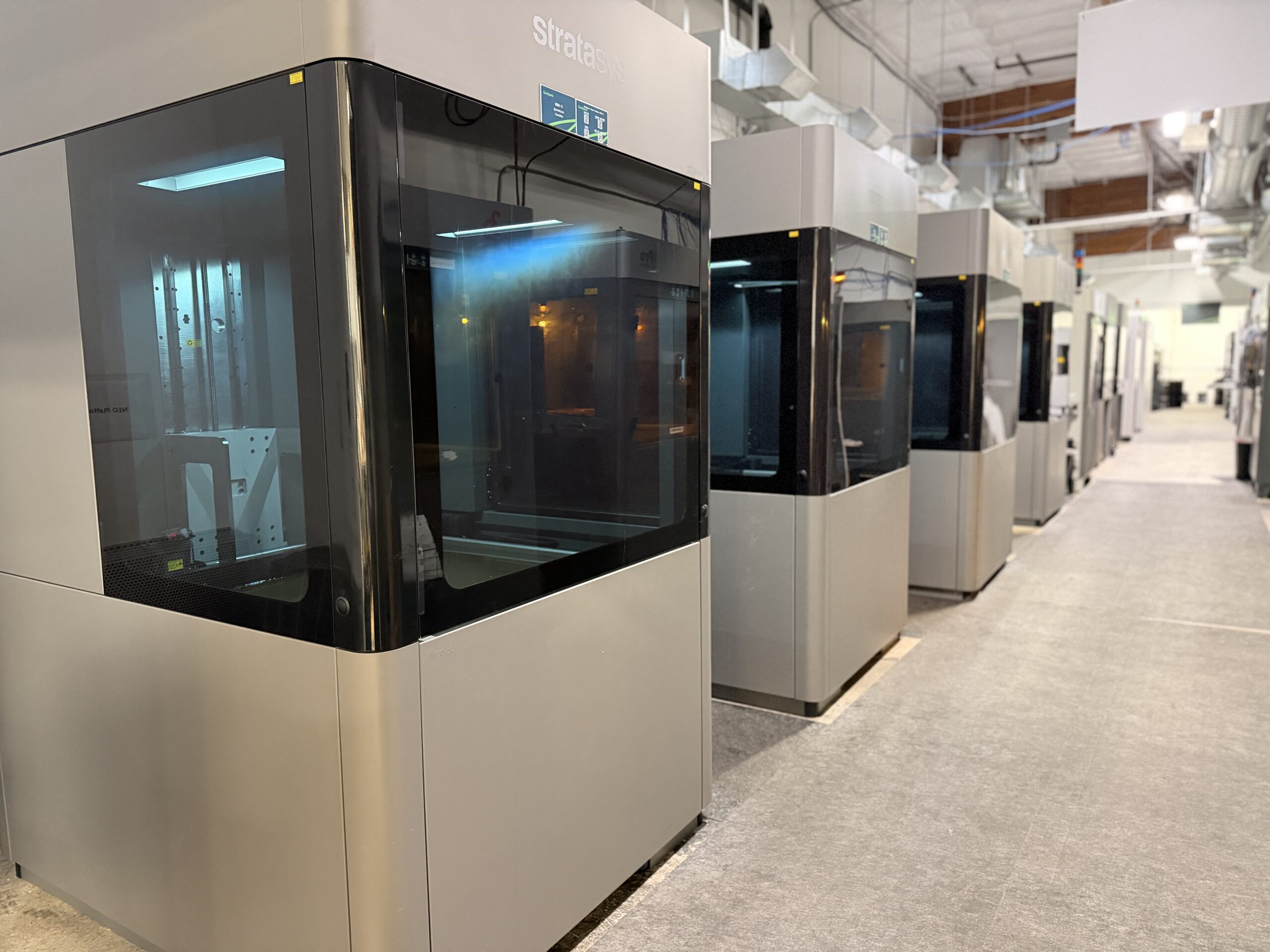
SLA Stratasys fleet in Seattle. Image courtesy of Quickparts.
Quickparts Pushes Deeper Into Space and Defense
The investment also shows where Quickparts expects more of its business to come from. The company says its latest spending is aimed, in part, at national security, space, and defense programs. Its Seattle site is being expanded to support crewed deep-space and national security space work.
Seattle has already been moving in this direction. In November 2025, Quickparts completed a $2.5 million expansion of the facility, adding equipment and upgrading the site while formally establishing it as the company’s Aerospace & Defense Center of Excellence.
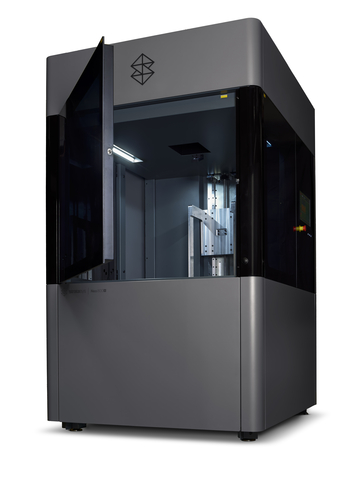
The new Stratasys Neo800+. Image courtesy of Stratasys.
Quickparts does not rely only on its own factories. It also works with manufacturing partners across North America, Europe, and Asia. This gives the company more options for where and how it makes parts. But for space and defense programs, Quickparts sees an advantage in keeping more production in-house. These customers often have strict requirements for how parts are made, tracked, and delivered. That helps explain why Quickparts is investing more in its own equipment.
Stratasys is also seeing more demand from these markets. The company reported in August that its aerospace and defense revenue grew 17% year over year in the second quarter, making it its largest market. Stratasys CEO Yoav Zeif said the Quickparts investment shows the growing role of large-format additive manufacturing in aerospace, defense and space.
The 12 new machines began arriving in August, and Quickparts expects to have them all in place by October.
Quickparts will continue serving other markets, including motorsport and high-end vehicles in Europe. But space and defense are becoming a bigger focus for its own production. In fact, the investment gives the brand more 3D printing capacity and more control over where parts are made. With similar equipment across four countries, production can be moved between locations as needed.
Subscribe to Our Email Newsletter
Stay up-to-date on all the latest news from the 3D printing industry and receive information and offers from third party vendors.
Print Services
Upload your 3D Models and get them printed quickly and efficiently.













You May Also Like
UniFormation S10 Heads to Kickstarter with an Integrated Resin Printing and Post-Processing System
UniFormation will launch its S10 desktop resin 3D printer on Kickstarter on October 22, 2026, with pledges starting at $999. The S10 integrates printing, washing, and drying, allowing a print...
Creality Goes Pro with Sermoon P1S 3D Scanner
From making millions of value-engineered Prusa clones, Creality really has aggressively pivoted to more complex machines. The company has made strides forward in software, and the Ender’s of yore is...
Stratasys Showcases 3D Printed Automotive Applications & New Printer at IMTS 2026
Just ahead of last week’s International Manufacturing Technology Show (IMTS) in Chicago, Stratasys launched the F870, a new large-format, production-grade FDM 3D printing platform designed to drive industrial manufacturing at...
Creality Launches SPARKX i8 on Indiegogo, Bringing Fastest, No-Purge-Waste Printing
Creality announces the launch of the multi-color 3D printer SPARKX i8 on Indiegogo, at an early-bird price of $309 (MSRP $399) starting from Sept. 21. Designed for ultimate user experience,...