Novenda Secures $6.1 Million in Series A Funding for Dental 3D Printing

There once was a company called Lake3D which made and sold continuous DLP systems. They even sold a system to DuPont, and the material jetting printer had a lot of potential. Through jetting, it could perhaps enable new materials, new applications, and be more productive. Where Quantica was making a high viscosity inkjet head, Lake3D wanted to make a high throughput printer. Now, Lake3D has been rebranded as Novenda Technologies. With slicker marketing, the firm now is focused on night guards and dentures. The company has color matching and could perhaps make a denture in a single print step in multiple colors and hardnesses. They also have night guard materials for both soft and hard night guards. Novenda also claims that the clear guards can be more durable, tough, and have high impact resistance. This illustrates the power of refocusing, and doubling down on applications.
The company has received $6.1 million in a Series A round led by Brightlands Venture Partners, Borski Fund, KBC Focus Fund, the LIOF, and angels. The firm also reviewed a credit from the Dutch Enterprise Agency (RVO). With Brightlands, LIOF, and the RVO, there is a bit of a Dutch focus by and of the investors. But, the amount is a significant raise in a time when others have found it nigh impossible to find money. Novenda, which sounds like it’s a drug for eye irritation, was founded in 2019 and pivoted towards dental in 2023.

The company hopes that with less manual labor and post-processing, fewer assembly steps, and water soluble supports, their products could be cheaper than alternatives. Novenda also says that their process can work without mechanical rollers, eliminating ink bleed in prints. Their prints should also have better mechanical properties than those made with some other technologies. The LD100 can reportedly fabricate 15 night guards and 8 dentures per hour. Refreshingly, you can buy the machine, but it is closed, so you are limited to their materials. The company ships their own software with the printer, which will be launched in October.
Novenda Founder Klass Wiertzema stated,
“The combination of water-soluble support and the absence of mechanical interventions to compensate for imprecisions ensures unprecedented long-term accuracy and eliminates the need for extensive post-processing. This is particularly important in a world where dental technicians are becoming increasingly scarce and expensive.”
Olga Goor of Brightlands Venture Partners said,
“As lead investor, Brightlands Venture Partners is proud to support Novenda Technologies in this next phase of growth. Their multi-material jetting technology is a breakthrough in digital dentistry, enabling scalable, high-precision manufacturing with minimal waste and post-processing. This innovation not only sets a new quality standard for dental products but also enhances affordability of dental care for patients that are unable to afford alternatives currently available in the market. This will ultimately drive the transformation of the dental industry towards a more sustainable and equitable future.”
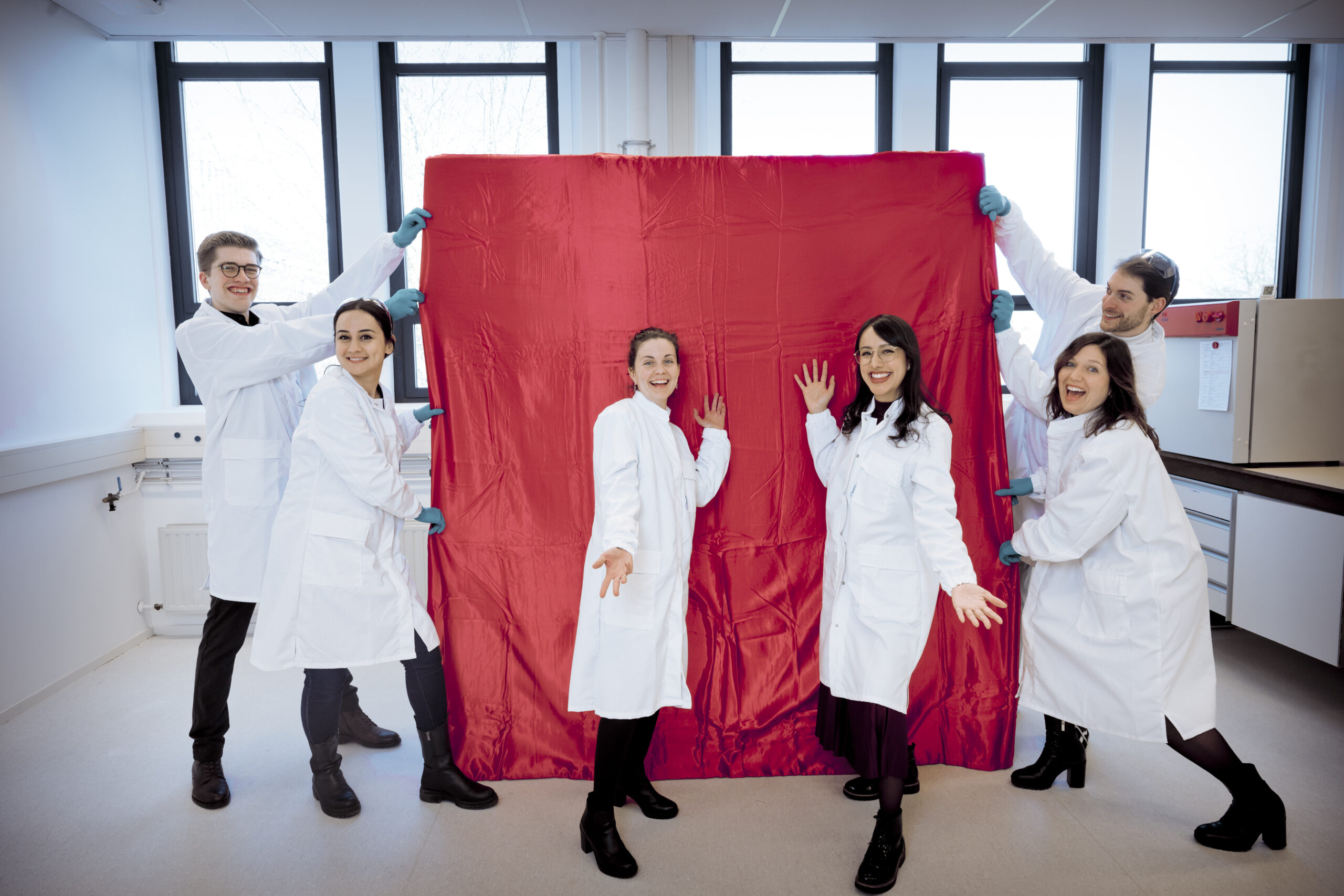
Novenda will focus on dental labs in Europe and the United States. I like the focus very much, it makes everything so much simpler. I’m also going to automatically like a firm of 15 people that has a metrology engineer and a material characterization specialist but no marketing people. I’m so relieved that the era of the growth hacker has ended. This really seems like a technology-focused startup that has matured to understanding the needs of engineering stable processes.
New machines tend to suck, and we have yet to see how happy their initial LD100 customers will be. But, this is shaping up to be the year of material jetting, where people move towards the technology in electronics, multi material, dental, elastomeric parts, and end-use products generally. There is a surprising amount of material jetting activity going on in research, machine development, and startup land right now. It’s an impossible time to raise money, so we don’t know how many in this wave of material jetting firms will find funding. But, there is enough available for there to be real progress on material jetting. Inkjet and material jetting have been far too overlooked technologies in additive. If we want to print an iPhone or millions of other things, inkjet and material jetting are the most obvious candidates.

If you want to learn more about this emerging space, you can check out our 3DPOD episodes with Chris Tuck, Kate Black, Ben Hartkopp, Gareth Neal, Richard Hague, and Rich Neil. I hope that this will give you a good idea of the potential of material jetting and inkjet in various arenas. In additive, they could mean that a whole host of applications will be served by safer materials with better properties and lower costs per part, and that is something we should all be optimistic about.
Subscribe to Our Email Newsletter
Stay up-to-date on all the latest news from the 3D printing industry and receive information and offers from third party vendors.
Print Services
Upload your 3D Models and get them printed quickly and efficiently.













You May Also Like
UniFormation S10 Heads to Kickstarter with an Integrated Resin Printing and Post-Processing System
UniFormation will launch its S10 desktop resin 3D printer on Kickstarter on October 22, 2026, with pledges starting at $999. The S10 integrates printing, washing, and drying, allowing a print...
Creality Goes Pro with Sermoon P1S 3D Scanner
From making millions of value-engineered Prusa clones, Creality really has aggressively pivoted to more complex machines. The company has made strides forward in software, and the Ender’s of yore is...
Stratasys Showcases 3D Printed Automotive Applications & New Printer at IMTS 2026
Just ahead of last week’s International Manufacturing Technology Show (IMTS) in Chicago, Stratasys launched the F870, a new large-format, production-grade FDM 3D printing platform designed to drive industrial manufacturing at...
Creality Launches SPARKX i8 on Indiegogo, Bringing Fastest, No-Purge-Waste Printing
Creality announces the launch of the multi-color 3D printer SPARKX i8 on Indiegogo, at an early-bird price of $309 (MSRP $399) starting from Sept. 21. Designed for ultimate user experience,...