Stratasys Buys Nexa3D Assets as Market Shifts From Startups to Giants


Stratasys has acquired a collection of assets from Nexa3D, a startup that aimed to make high-speed resin 3D printing more practical for production use. While the announcement was relatively quiet, the deal speaks to the ongoing reshaping of the additive manufacturing (AM) landscape.
With this deal, Stratasys strengthens its position as a dominant force in polymer AM, reinforcing what it calls “the largest and most robust offering of AM polymer solutions in the industry.”
What Did Stratasys Acquire?
Stratasys didn’t acquire Nexa3D as a whole, but instead picked up select assets, including intellectual property (IP), inventory, and equipment, but not the company’s personnel or its full operations. That means Nexa3D as a brand and entity is effectively over, but its technologies will live on through Stratasys.
The announcement said that Nexa3D customers will now receive “best-effort” support through iSQUARED AG, a wholly owned Stratasys subsidiary, with the option to transition into the broader Stratasys ecosystem over time.
Nexa3D’s website now directs users to Stratasys-branded services and materials, pointing to continuity of support through spare parts, software licenses, and technical help to “keep printers running smoothly without interruption.”

Nexa3D was founded in 2016 by Avi Reichental, a former CEO of 3D Systems and a well-known expert in the industry. The company gained attention for its ultrafast resin printing systems, such as the XiP and XiP Pro. In just a few years, Nexa3D expanded its reach into powder-based and extrusion systems by acquiring AddiFab and introducing industrial SLS machines.
Nexa3D tried to make a name for itself as a faster, more flexible alternative to bigger companies. And for a while, it gained traction. The company raised roughly $55 million from investors like OurCrowd and Aramco Ventures. But by late 2024, there were signs of trouble everywhere.
Nexa3D’s Financial Decline
The company suddenly canceled its booth at Formnext 2024, the world’s largest AM event. In a direct public update that November, Nexa3D cited “significant funding challenges” and said it could no longer “guarantee customer support or material supply.”
Behind the scenes, the company had already gone through some layoffs. By early 2025, some sources said fewer than 20 to 30 employees were still there. Reichental told the media they were “cutting back operations” and not planning to file for bankruptcy, but it raised serious questions about how much longer they could continue.
Legal and financial analysts speculated about Chapter 11 filings or a full liquidation. Nexa3D denied the reports, but industry insiders suggested the company had quietly put its patents, machines, and leftover inventory on the market as it searched for a transition.
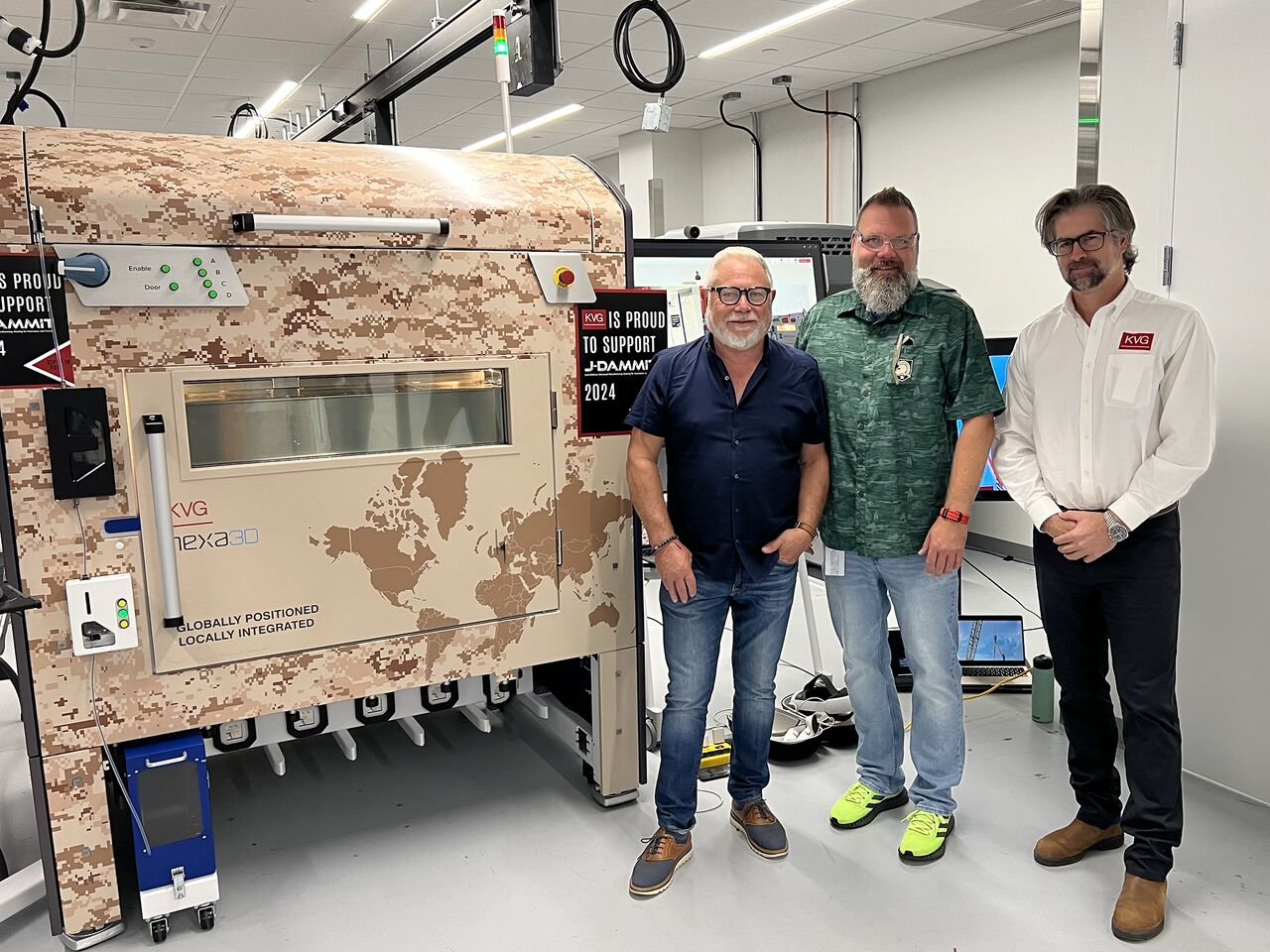
Avi Reichental (left) at Harrisburg University of Science and Technology. Image courtesy of Nexa3D via LinkedIn.
For Stratasys, the move is part of a larger trend: acquiring assets in distress to stay competitive as the market continues to consolidate. Earlier this year, the company also acquired the AM business of Forward AM, which was formerly part of the chemical giant BASF. And over the past few years, it has also absorbed Origin (DLP), RPS (stereolithography), and Covestro‘s AM materials division.
The Nexa3D acquisition allows Stratasys to integrate ultra-fast resin printing IP and machines into its already sprawling product ecosystem, which includes FDM, PolyJet, SAF, SLA, and DLP technologies. The XiP Pro and its modular design may prove useful in production environments that Stratasys is targeting, such as dental labs, aerospace prototyping and end-use parts.
The Big Picture: Is Consolidation Here to Stay?
This is more than just another deal. It’s a snapshot of how fast the industry is changing.
Venture-backed startups, such as Nexa3D, have struggled to maintain momentum following the post-COVID boom. Meanwhile, publicly traded giants with stronger cash flows, such as Stratasys, are acquiring valuable technology at reduced prices.
The industry is moving from quick startup innovation to big companies taking over. The question is whether those bigger players can keep the same pace and creativity. The acquisition also supports a trend covered in a recent 3DPrint.com PRO article about how 2025 is turning out to be a big year for consolidation in AM, as company takeovers are changing how the industry is structured and how businesses compete.
Snapshot: Nexa3D’s Final Chapter
- Founded in 2016 by Avi Reichental
- Raised roughly $55 million from investors like OurCrowd, Saudi Aramco Ventures
- Flagship Products: XiP, XiP Pro (resin printers), QLS 820 (SLS)
- Peak Momentum: 2021–2023, with global expansion and AddiFab acquisition
- Decline: Layoffs and retreat from Formnext in late 2024; “significant funding challenges” publicly admitted
- Final Moves: IP, inventory, and equipment sold to Stratasys in July 2025
- Remaining support: iSQUARED AG offering transitional support
Subscribe to Our Email Newsletter
Stay up-to-date on all the latest news from the 3D printing industry and receive information and offers from third party vendors.
Print Services
Upload your 3D Models and get them printed quickly and efficiently.












You May Also Like
3D Printing News Briefs, August 22, 2026: Polymers for CubeSats, Animal Mobility Devices, & More
We’re starting with defense news in this weekend’s 3D Printing News Briefs, before moving on to polymers for CubeSats and 3D printed prosthetics. We’ll end with a story about engineering...
Nikon Advanced Manufacturing Looks to the Next Frontier for AM: Space
Every kilogram sent into space comes at a cost. So engineers have spent decades finding ways to make spacecraft lighter. The next frontier will be producing some of the parts...
Amaero Builds U.S. Metal Powder Capacity for Additive Manufacturing
For metal additive manufacturing (AM) to grow in the United States, companies need more than printers. They also need a reliable supply of the powders that go into those machines....
AMPulse Asia: 6,500-Printer Farm Leads APAC Manufacturing Expansion
The first half of August brought a wave of factory plans, plant openings, and qualification work across the Asia-Pacific additive manufacturing market. Highlights include a RMB 200 million print farm...