Peopoly Unveils $15,000 Giga 800 FGF 3D Printer for Large Pellet Prints


Peopoly is known for its Magneto X, a printer that eschews belts and uses linear motors instead. The company also has a vat polymerization system, and now is moving into FGF (fused granulate fabrication) with a new system. Also called pellet 3D printing, this process should be much cheaper because you use the pellets directly, so it doesn’t have to be converted into filament first. Typically, it’s around a tenth or a third of the cost, which really adds up with larger objects. And with Peopoly’s new Giga 800, and its 800x800x800mm build volume, people are definitely going to be making larger objects.
Other FGF printers are large industrial units costing upwards of $50,000. Previously, people have also tried to bring FGF to a wider audience, but have not done so well because of its complexity and expense. Peopoly is now trying with a $15,000 machine. Perhaps this is the perfect price point, letting them make a good machine that is accessible to more people. $15,000 is still a lot of money for home users, but for industrial firms, a well working pellet machine at this price point could be very tempting.
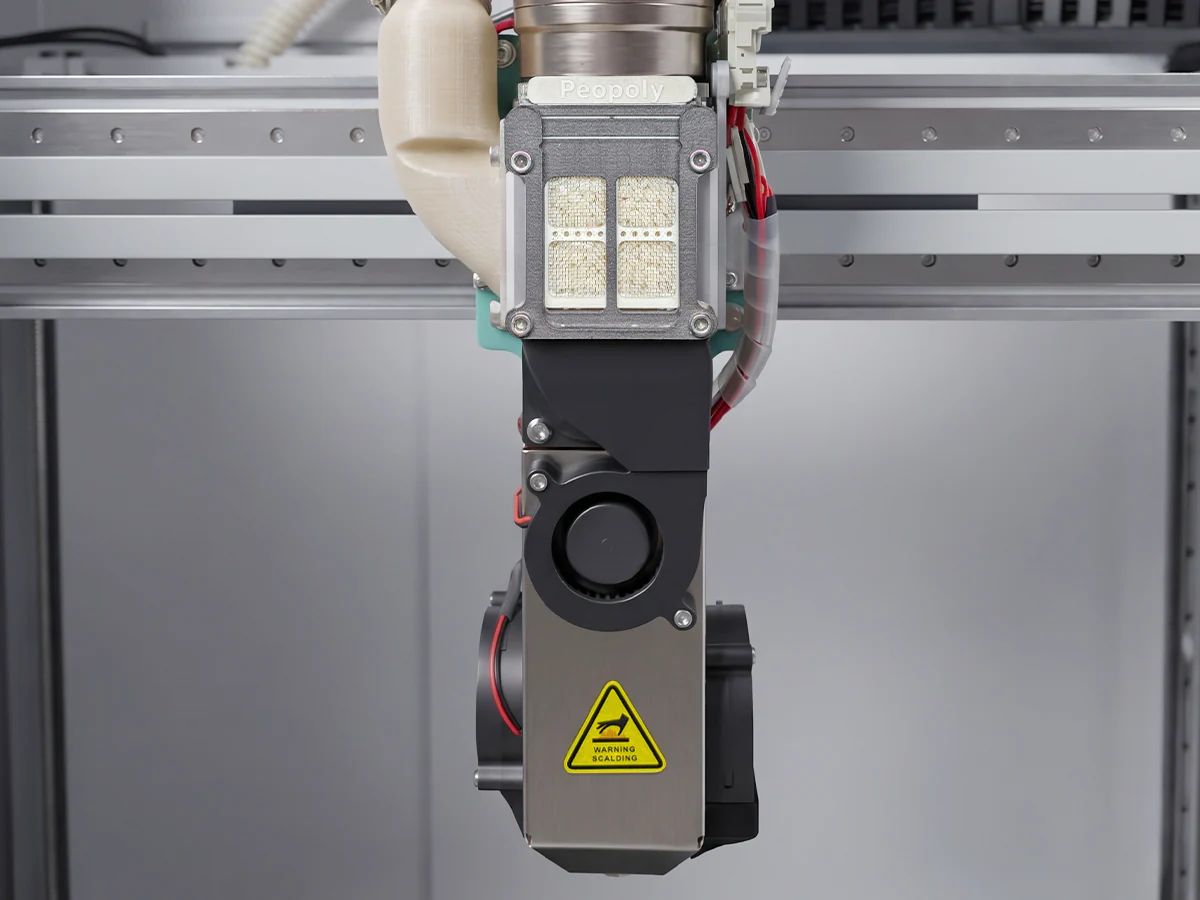
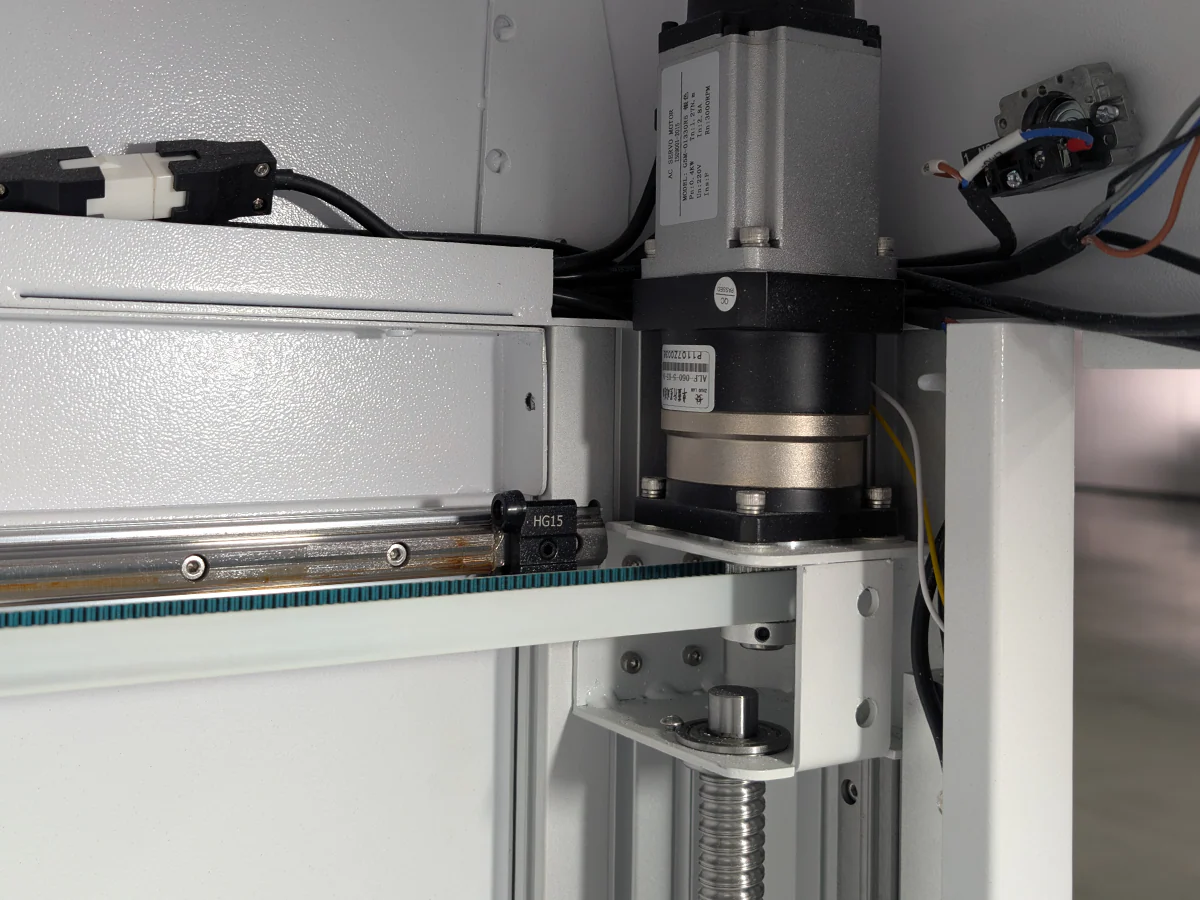
The system has a screw extruder with two heat zones, and the company says it will be able to print 3 kilos per hour. It has a servo-driven CoreXY architecture built on Klipper and OrcaSlicer that uses linear rails and ball screws. Using Klipper´s Pressura Advance and mechanical retraction, the company says that it has reduced the poor surface quality associated with FGF. Pellets are put into a hopper, which feeds them into the extruder. The company says that the heated bed has been optimized to enable easy part release, a big issue for ABS and other materials in large parts.
The hefty 320 kilo printer will come with 0.4mm to 5mm nozzles. It will have a 400°C nozzle temperature and a heated bed that can get to 120°C. The chamber has no active heating, but the company says that it is well insulated and so should keep to around 60°C. This is a bit of a worry for me, as it would be hard to measure and engineer chamber temperature precisely, which can be an issue when wanting to print reliably.
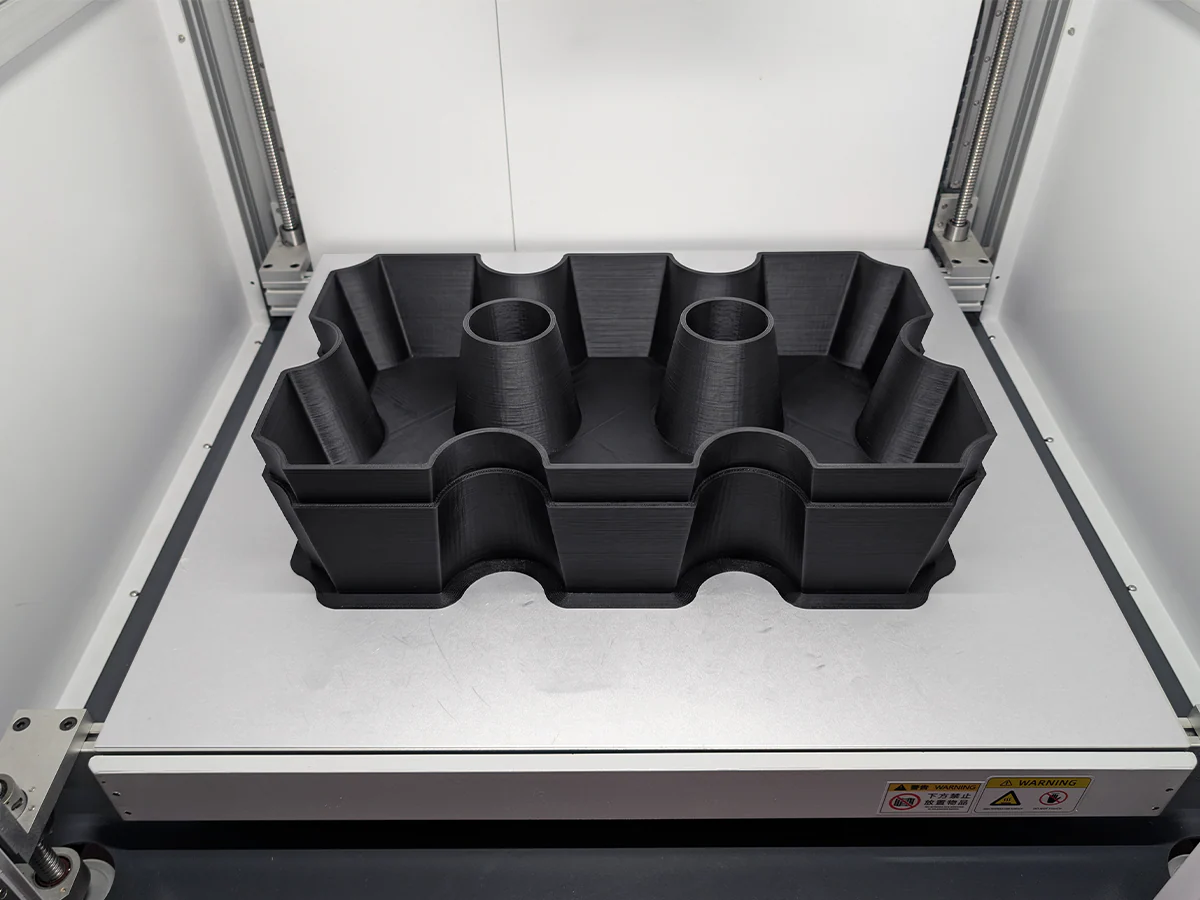
Generally, the new Giga 800 could perhaps make PA GF parts or maybe polycarbonate, which would both be interesting choices for some user. But many will probably stick to PLA or PETG. The company has tested the printer with ABS, ABS-CF, ABS-GF, ASA, ASA-CF, ASA-GF, PPA-CF, PPA-GF, PA-CF, PET-CF, TPU 60A – 95A, TPU-GF, PEBA, and PET-GF so far. Especially for building volume-filling prints, the glass-filled and other reinforced materials will make a lot of sense and reduce warp. More people really need to look into ASA; I love the material for durable outdoor parts, and it prints much better than ABS. I’m curious about the TPUs and other elastomers, and how well they would do in bigger sizes on this machine.
The new price point and big size could be tempting for people making sizable fixtures or things like outdoor advertising. Also, MRO people working in spare parts for defense, boats, and the like could really use this machine. But, I fear that this will struggle to find a market. It’s far too expensive for makers, and local shops will struggle to afford the printer. For industrial firms and users, the price tag isn’t the problem, but they may not be able to justify paying $15,000 for “a Chinese machine.” Aerospace and defense are logical customers, but they also would be wary of that. If people trust this machine and it has a group of staunch fans and users, then it could really do well. A lot of people are looking for something that can 3D print a lot of stuff cheaply and effectively. With far cheaper parts, the Giga 800 could really win over a lot of guys on the shop floor as well as in accounting. But, getting those first customers will be a challenge. Peopoly is launching what a lot of people want, but will it be able to gain their trust? If so, then it will be successful with a machine that could be a great concrete floor workhorse. But, if this trust doesn’t get built, then it will be hard for the firm.
At $1,200, a lot of people bought an Elegoo OrangeStorm Giga for the fun of it, but $15,000 is used car money. Also, you have to arrange for your own LCL shipping and freight forwarding, which doesn’t seem like a fun thing to do and may put people off. There could also be questions on how to provide support for this as well. So, I do hope that this will work, but fear that its success may be slow in coming.
Images courtesy of Peopoly
Subscribe to Our Email Newsletter
Stay up-to-date on all the latest news from the 3D printing industry and receive information and offers from third party vendors.
Print Services
Upload your 3D Models and get them printed quickly and efficiently.













You May Also Like
Russia’s 3D Printed Missiles & Can NATO Get Its Act Together?
For most of US history, however much the two major parties differed on domestic policy (in some cases a lot, overall less than you’d think), there was always essentially a...
3D Printing News Briefs, October 21, 2026: Digital Twins, AI CAD Service, AR Smart Glasses, & More
In today’s 3D Printing News Briefs, America Makes announced the winners of its MIAMI Project Call, and AM Europe released a new report. Artec 3D launched its new Artec Twins...
3D Printing News Briefs, October 10, 2026: Drones, WAAM, Ceramics, & More
We have a packed 3D Printing News Briefs for you this weekend! First, America Makes celebrated the recent National Manufacturing Day with 3D printed drones, and then it’s on to...
The Manufacturing Race Behind the Drone Revolution
We are in the middle of a major manufacturing shift focused on the production speed and payload capacity of uncrewed aerial systems (UAS), or drones. A recent Manufacturing Dive article...