Formnext 2026: Large-Format 3D Printing Gets Bigger, Smarter, and More Production-Ready


The race to build bigger 3D printers is picking up speed at Formnext 2026, as manufacturers turn their attention to industrial-scale production.
At the trade show in Frankfurt, Germany, companies like Raise3D, CMS, AltForm, WASP, BigRep, and Farsoon are showcasing new machines designed to push large-scale 3D printing further into industrial production. And while the machines come in different sizes and use different technologies, they all point to a growing focus on making large-format printing more useful for manufacturers. But size isn’t the only focus this year. Companies are also looking at ways to make large-format printing more affordable and easier to use in everyday production.
Raise3D Makes Large-Format Printing More Affordable
What if manufacturers could print parts up to a meter tall without spending a fortune on a 3D printer? That’s the idea behind Raise3D’s new T Series. The company is introducing two machines, the T450 starting at $4,999 and the much larger T700 at $15,999. Both are designed to print functional parts using engineering-grade materials, giving smaller manufacturers another option for producing tooling and larger components in-house.
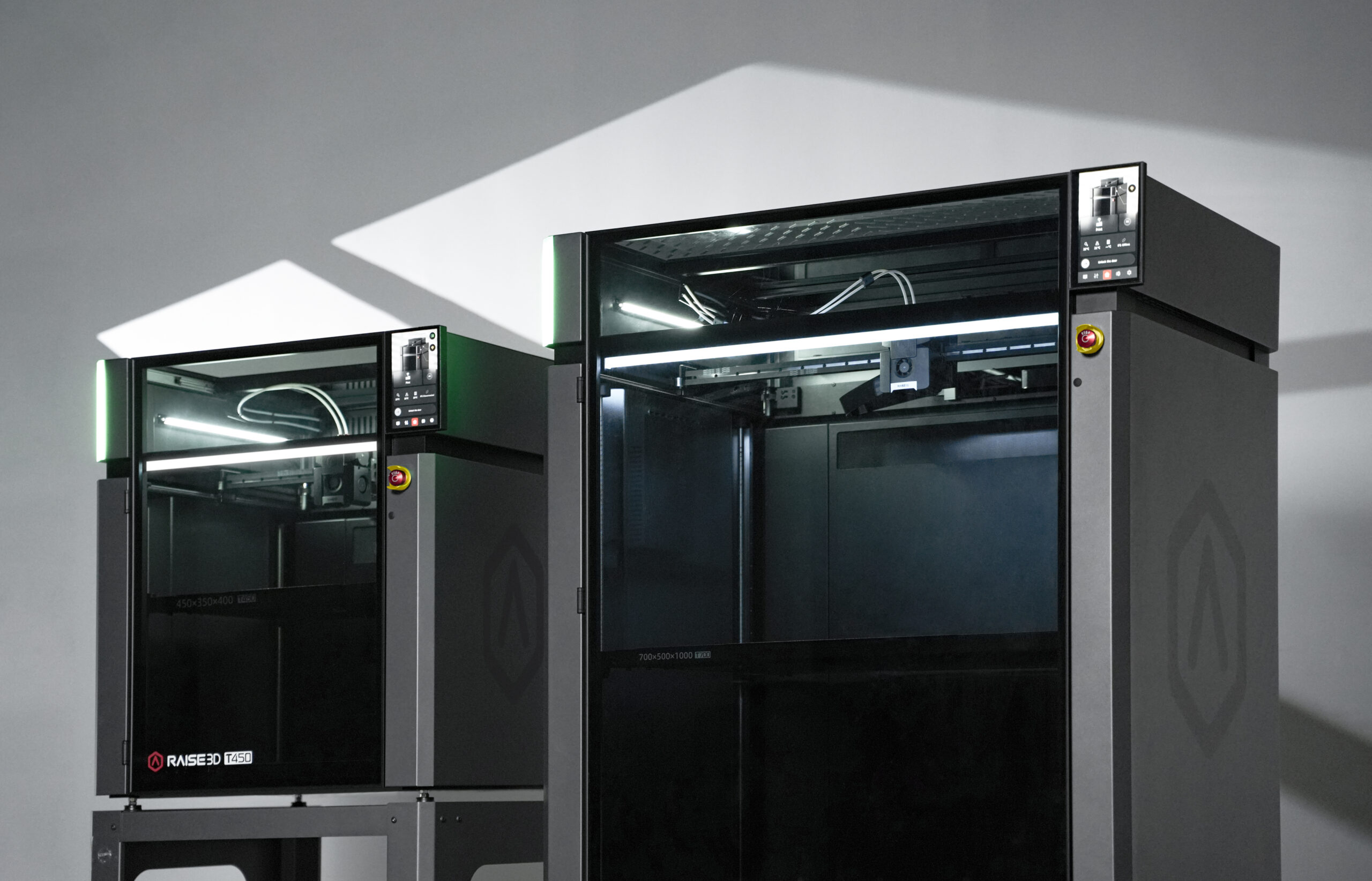
T450 and T700. Image courtesy of Raise3D.
The T700 can print parts up to one meter tall, potentially eliminating the need to split larger designs into smaller pieces and assemble them later. In one manufacturing example shared by Raise3D, 3D printing helped cut production time for battery cell transport trays from 40 days to 10 days, while reducing their weight from 8 kg to 2 kg.
The T450 is expected to begin shipping in late December 2026, followed by the T700 in January 2027.
-
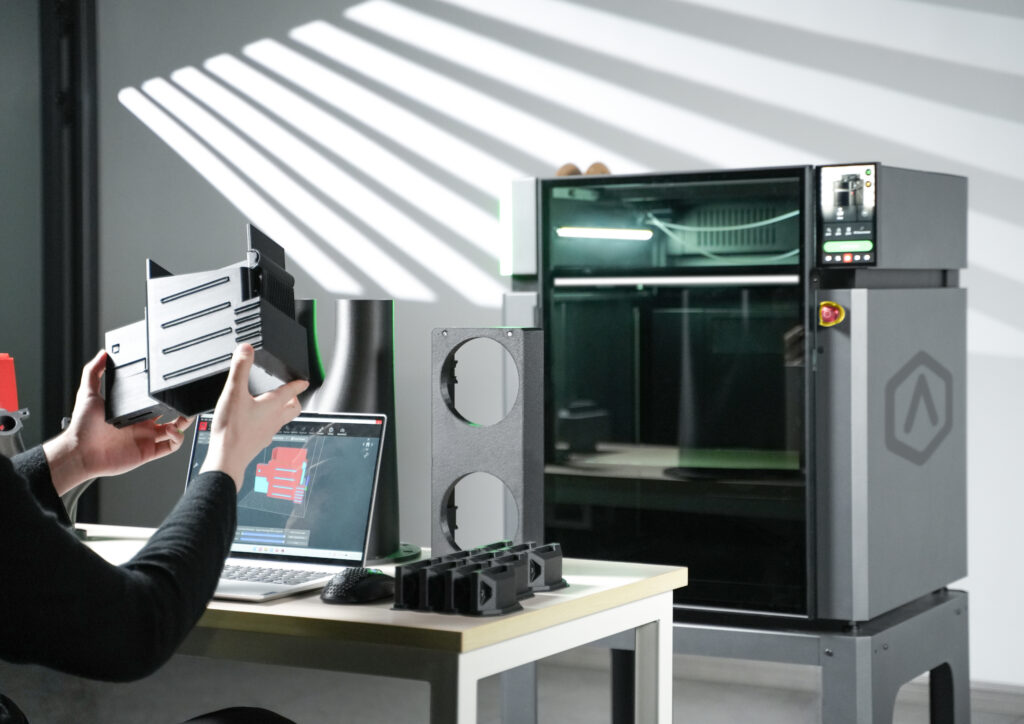
- T450. Image courtesy of Raise3D.
-
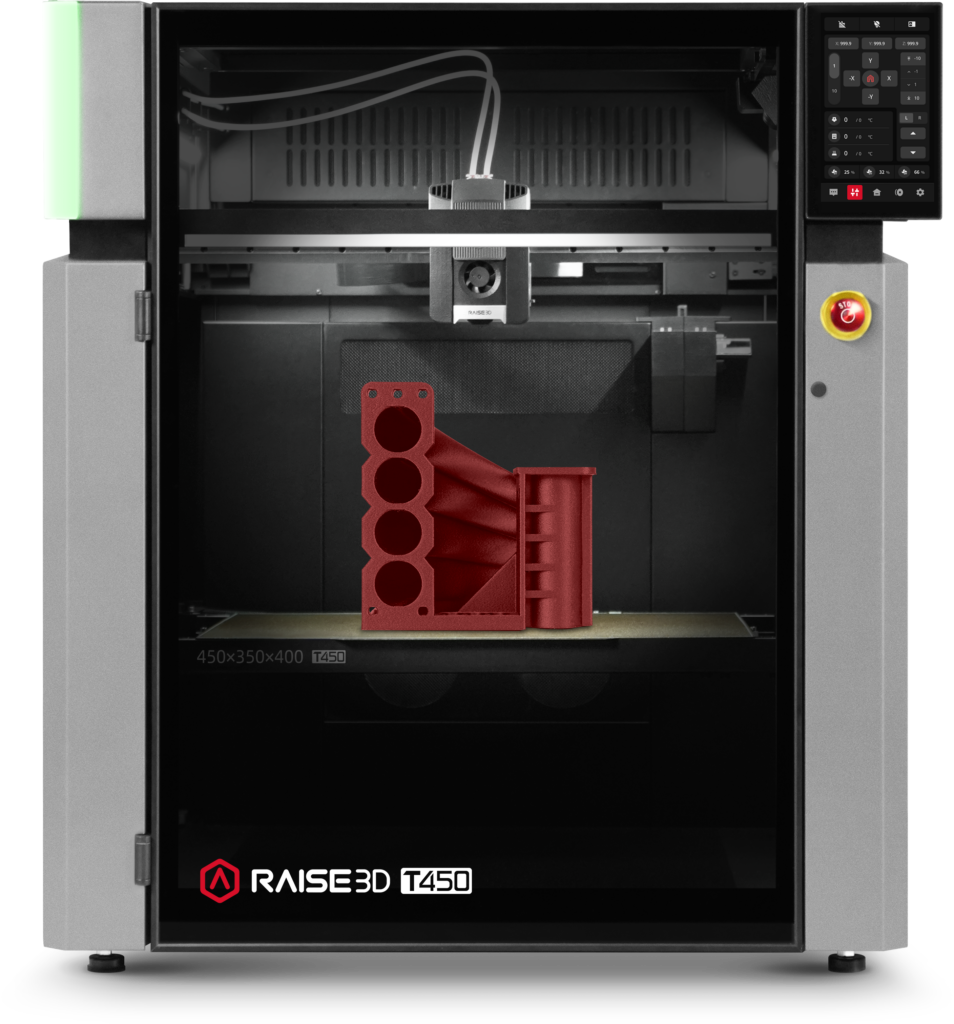
- T450. Image courtesy of Raise3D.
But Raise3D isn’t just introducing new printers. It’s also giving existing customers more capacity for free.
A software and firmware update for its RMS220 selective laser sintering (SLS) printer increases build height from 350 to 450 mm, expanding total build volume by nearly 30% without any hardware changes. That extra space means manufacturers can print taller parts or fit more components into a single build. Raise3D estimates the upgrade could boost throughput by 25% to 30% in typical small-batch production, potentially lowering the cost per part. The update became available on November 17 for both new and existing RMS220 customers.
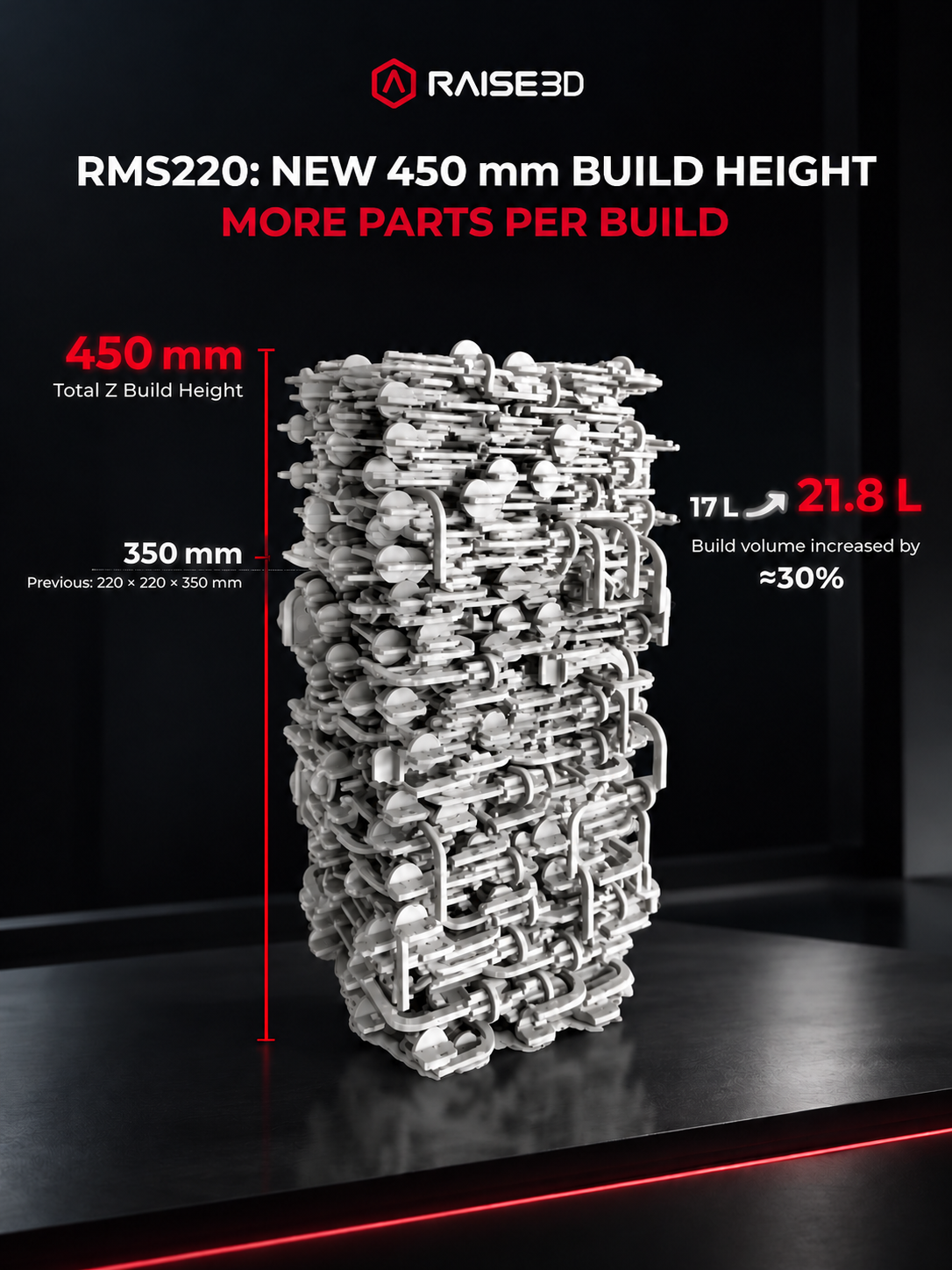
Raise3D’s RMS220 now offers a 450 mm build height, increasing its total build volume by nearly 30% without hardware changes. Image courtesy of Raise3D.
Learn more at Raise3D’s Booth D21, Hall 12.1.
CMS Takes Large-Format Printing Beyond Three Axes
Printing large parts is one thing. Printing complicated shapes is another. CMS is tackling that challenge with Krearob, a robotic 3D printer that can move around a part and print from different angles.
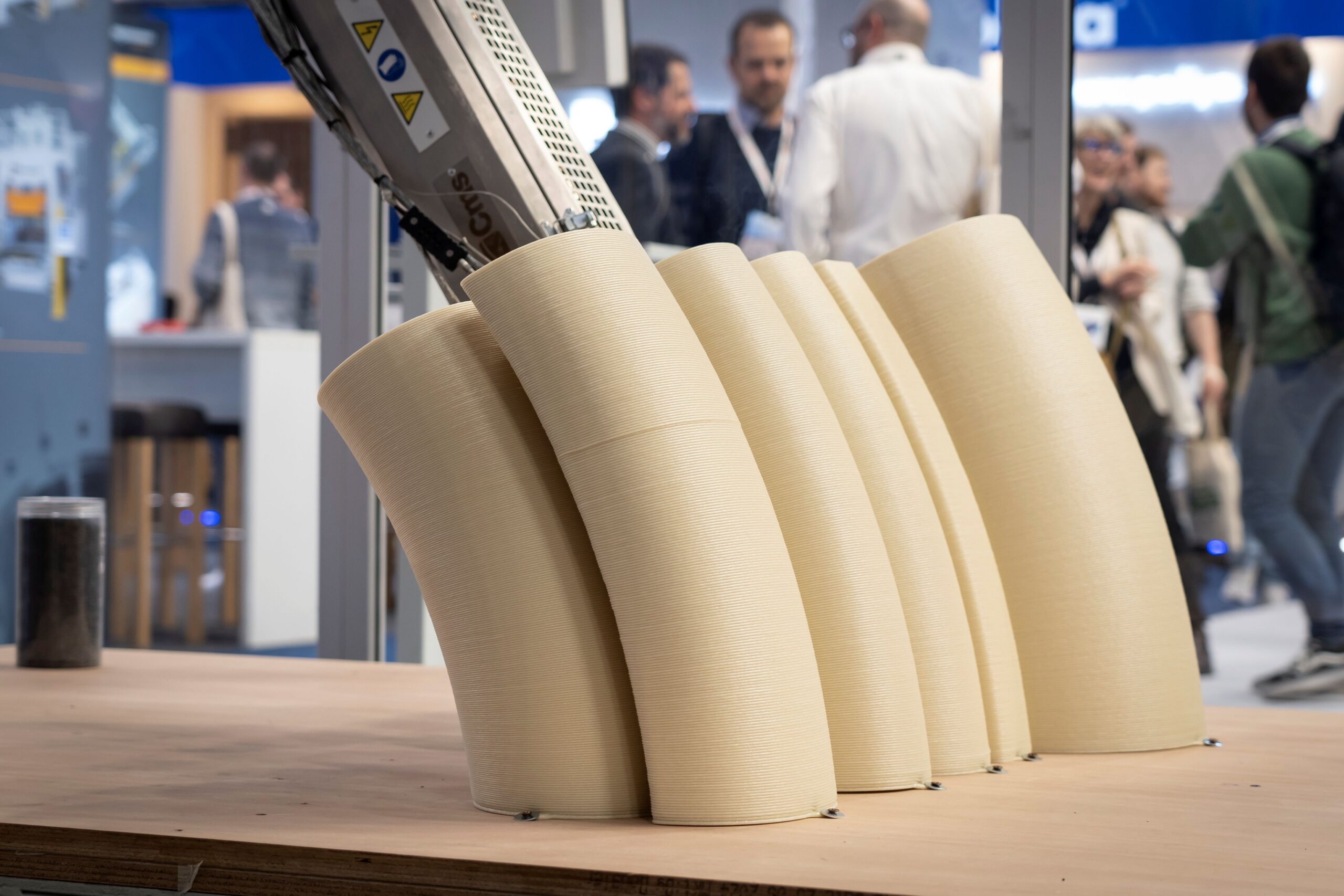
A large thermoplastic component produced using CMS’s Krearob robotic 3D printing system. Image courtesy of CMS.
The Italian company’s technology uses a robotic arm to make large, complex plastic parts, molds, and tooling that can be difficult or expensive to manufacture using conventional methods. CMS says the system can reduce material use and part weight by up to 80%, depending on the application.
CMS is also showcasing its Kreator A3, a more traditional large-format printer that can process up to 30 kg of material per hour. While Krearob is better suited for complicated shapes, the Kreator A3 focuses on larger parts—both target industries like aerospace and automotive.
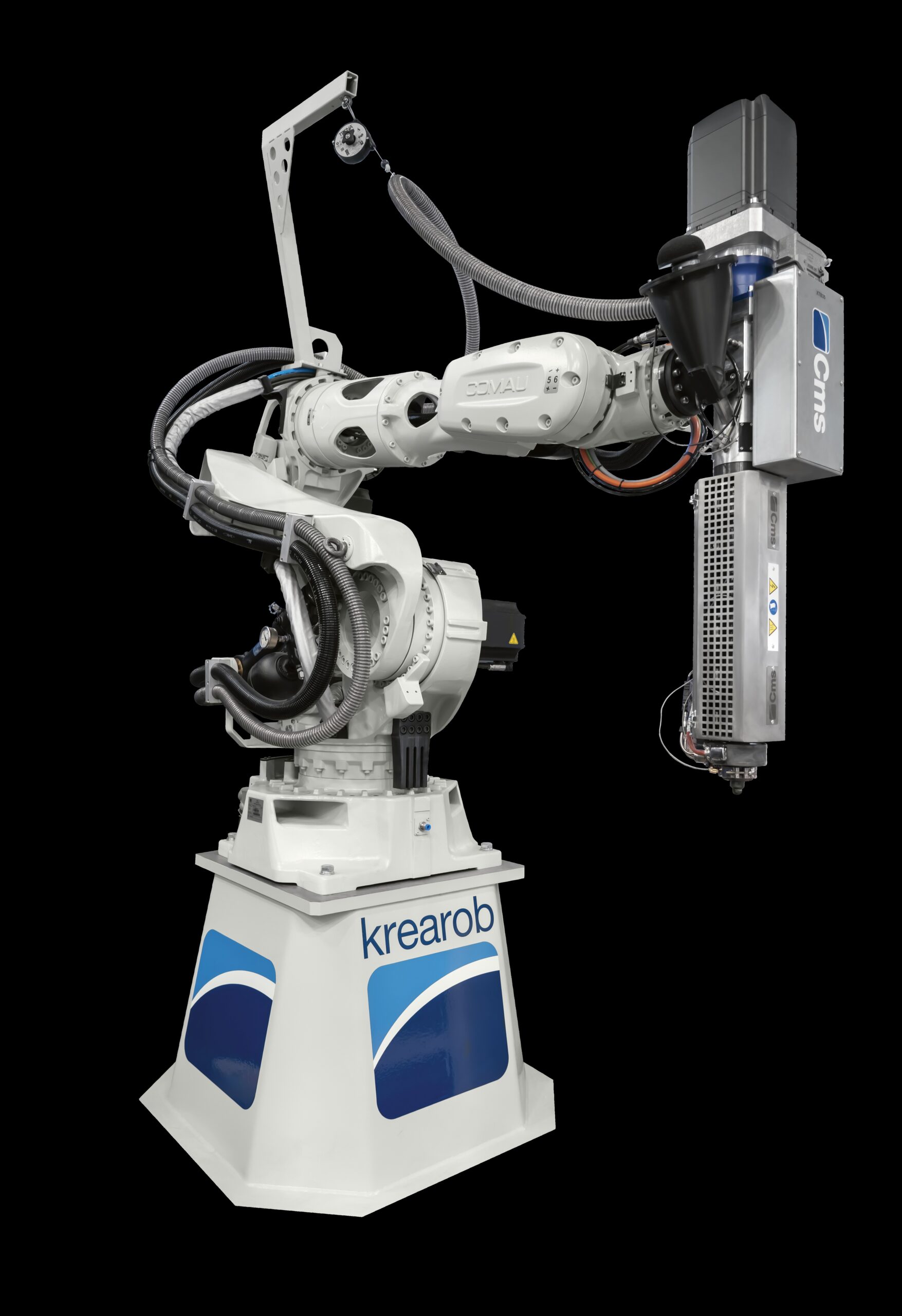
CMS’s six-axis Krearob robotic 3D printing system, designed to produce large, complex thermoplastic parts and tooling. Image courtesy of CMS.
CMS is at Booth D51, Hall 12.0.
AltForm Takes Robotic Metal Printing to Four Meters
Robotic manufacturing is also a focus for Italian metal AM manufacturer AltForm, formerly known as Prima Additive, which is introducing its ZENIT Modular family of directed energy deposition (DED) systems at Formnext.
The new systems come in three sizes, starting with a 2 × 2-meter work area and one robot, and going up to 4 × 4 meters with four robots. In the largest version, the robots can work together on one massive part or produce four separate parts at once.
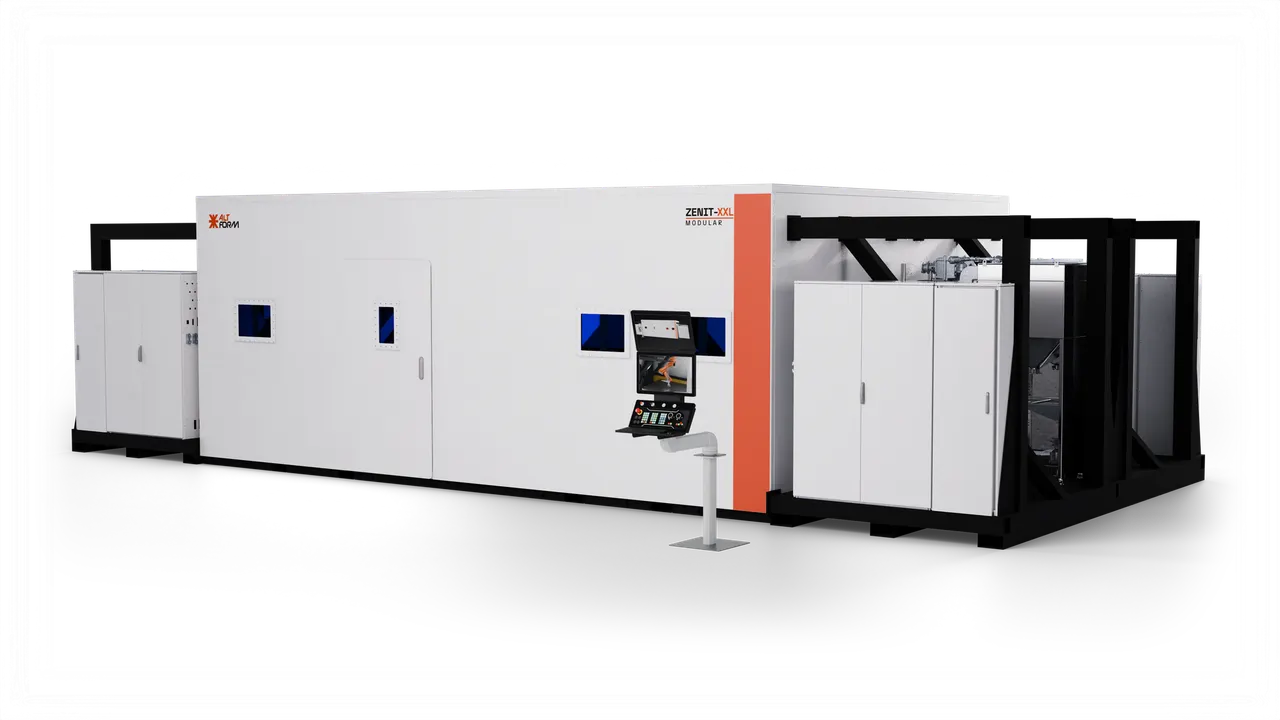
ZENIT XXL. Image courtesy of AltForm.
What makes ZENIT interesting is that manufacturers can start small and expand the system as their needs grow, without buying a completely new machine.
The systems can print metal using powder or wire, including materials such as titanium and aluminum alloys. AltForm says it has already sold its first ZENIT Modular cells to customers in the aerospace and defense industries.
AltForm is at Formnext Booth E139, Hall 12.0.
WASP Expands Pellet Printing and Robotics
Another Italian manufacturer, WASP, is expanding its large-format portfolio with an updated CUBO HDP Industrial printer, new robotic extrusion technology, and material handling systems.
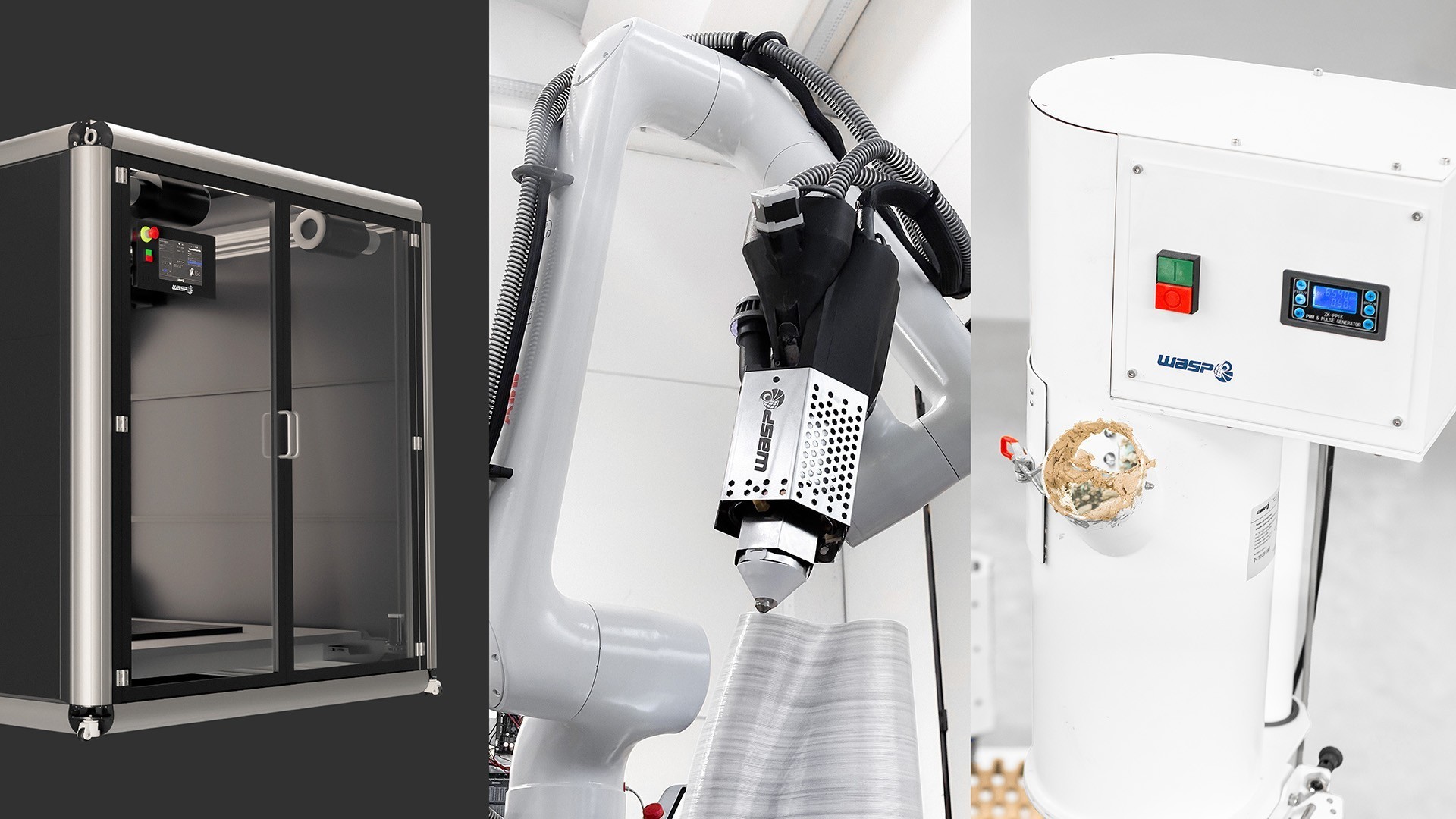
WASP’s large-format pellet 3D printer, robotic extrusion system, and material feeding technology. Image courtesy of WASP.
The upgraded CUBO HDP Industrial uses plastic pellets instead of traditional filament, potentially cutting material costs when printing large parts. It also features improved heating and a vacuum build plate to help keep parts in place during printing.
WASP is also introducing its HDP TORNADO Extruder, a lightweight pellet printing head designed for smaller collaborative robots. Its CEREBRO system allows different printing heads to work with the same robotic arm, giving manufacturers more flexibility.
The company is also introducing RIGENERA 3D, which uses shredded and recycled plastic to produce new parts, along with an improved feeding system for ceramic printing.
Visit WASP at Formnext Booth B129, Hall 12.1.
BigRep Introduces a 750-Liter Pellet Printer
German manufacturer BigRep is also expanding into pellet-based large-format printing with the PELLEX 750, a new system developed in partnership with US extrusion specialist Massive Dimension.
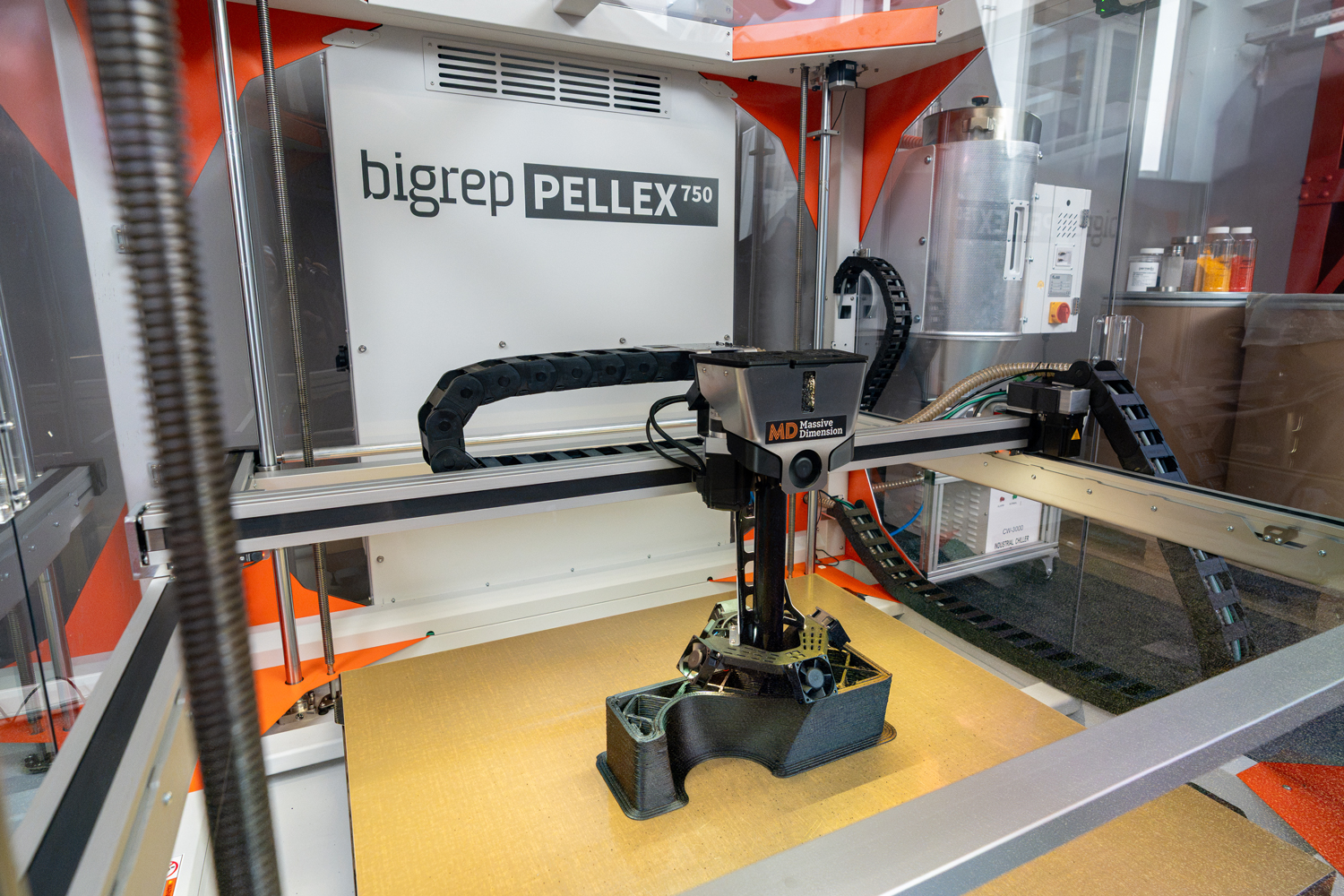
BigRep’s PELLEX 750. Image courtesy of BigRep.
Built on BigRep’s ONE platform, the PELLEX 750 has a 750-liter build volume and can print up to 4 kg of plastic pellets per hour. It also works with third-party materials, giving manufacturers more flexibility and potentially lowering costs.
But here’s what makes it interesting: BigRep is displaying a wind turbine blade mold printed in under five hours using Airtech’s carbon-fiber-reinforced material. It’s a good example of how large-format pellet printing can speed up industrial mold production.
Learn more at BigRep’s Booth E119, Hall 12.1.
Farsoon Focuses on Faster Metal Production
While others are focusing on plastic printing, Farsoon is introducing the FS4X, a new metal 3D printer designed to help manufacturers produce more parts with less downtime.
The machine has a 99-liter build volume and can operate with up to six 1,000 W lasers or four 2,000 W lasers. But its biggest selling point is automation. The FS4X can work with automated systems that move completed builds out for cooling and preparation, letting the printer start its next job sooner.
Farsoon is also focusing on reliability, with features designed to keep printing conditions stable and reduce maintenance interruptions. The goal is to make metal 3D printing more efficient and lower the cost of finished parts.
The FS4X joins two other new Farsoon systems, the FS722M-CAMS and Flight HT1002P-CAMS, which 3DPrint.com recently covered. At Formnext, Farsoon is introducing the FS4X through a video, with the physical machine set to be presented at its European Innovation Center.
Visit Farsoon’s Formnext Booth E11, Hall 11.0.
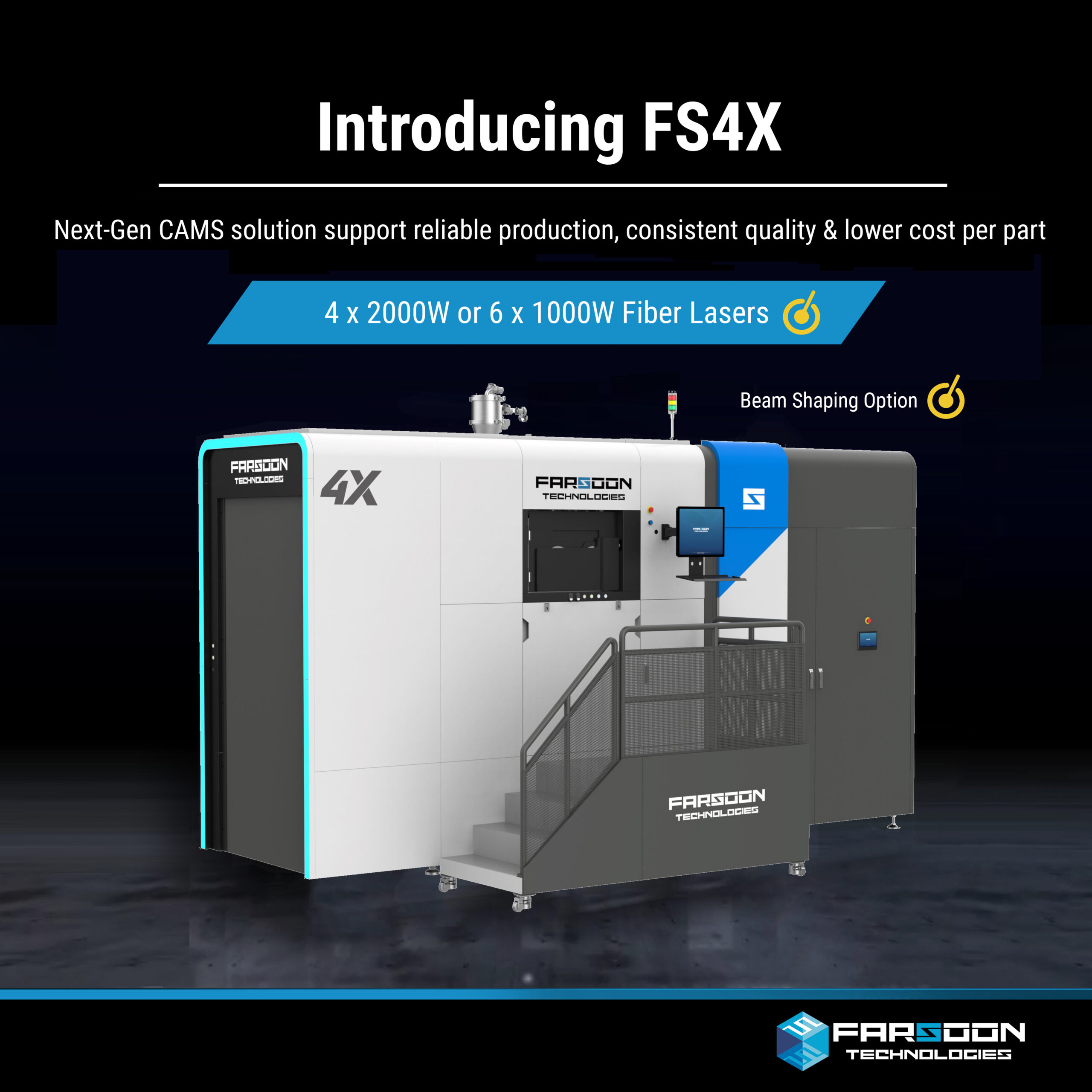
The new FS4X. Image courtesy of Farsoon.
Large-format 3D printing is getting plenty of attention from manufacturers, and this year’s Formnext launches show why. Bigger machines are becoming easier to use, giving companies more options for bringing production in-house.
Subscribe to Our Email Newsletter
Stay up-to-date on all the latest news from the 3D printing industry and receive information and offers from third party vendors.
Print Services
Upload your 3D Models and get them printed quickly and efficiently.











You May Also Like
The AM Industry Is Growing. Arno Held Thinks It Still Needs to Get Smaller
Additive manufacturing is now a $24.2 billion industry, but Arno Held believes too many companies still compete for market share. That was one of the more pointed arguments during an...
3DPOD 322: Neil Hopkinson on Stratasys’ New H550 SAF 3D Printer
Coming to you from Formnext 2026, Joris Peels and Maxwell Bogue welcome Neil Hopkinson, Vice President of SAF Technology at Stratasys, for a conversation about what’s next in industrial 3D...
Continuum Powders Releases the Argos Atomizer for Industrial Settings
Continuum Powders is releasing the new Argos Melt-to-Powder (M2P) atomizer. This takes the firm’s offering to a more industrial large-scale setting. The system is a hybrid plasma torch melting and...
AMPulse Asia: The Race to Build Bigger
New investments, larger 3D printers, and expanding production capabilities lead this edition of AMPulse Asia. From Raise3D’s latest funding round and a major metal powder project in China to new...