Polish Electronics 3D Printing OEM XTPL Sells 10 More Printhead Modules to First Chinese Customer


Smartphones, laptops, and all other such devices are only getting more expensive. As evidenced by Apple’s cautioning of higher prices for this year’s new iPhone line, the problem is largely the result of surging AI demand that’s making memory chips more expensive, an issue which doesn’t look like it’s going to be solved very soon.
This makes all the various potential cost-reduction tactics in device supply chains more important than ever. The Polish company XTPL, an original equipment manufacturer (OEM) of electronics 3D printing hardware and developer/supplier of conductive inks, has made addressing that challenge a cornerstone of its business model. In 2025, the company landed its first Chinese customer, one of the nation’s largest manufacturers of flat panel displays (FPDs).
The original order for six of XTPL’s Ultra-Precise Dispensing (UPD) printhead modules has been validated for the FPD manufacturer’s own customer. Now, XTPL is announcing the order of 10 more UPD modules from the same client. Additionally, the customer will be purchasing various associated consumables from XTPL, including ink, cartridges, and nozzles.
Specifically, the FPD manufacturer is using the XTPL ecosystem to support inline repair: fixing defects in screens during quality inspection instead of after the manufacturing process is completed. The concept has promise for improving yields and thereby lowering costs for production of small devices, but so far it has largely been limited to R&D.
The breakthrough with the customer in China, facilitated by XTPL’s relationship with a local distributor that integrates the UPD printheads for final delivery, suggests the device market is moving closer to making inline repair a feasible commercial reality. Beyond China, that’s relevant to the various other markets XTPL has been seeding around the globe, including Japan and Silicon Valley.
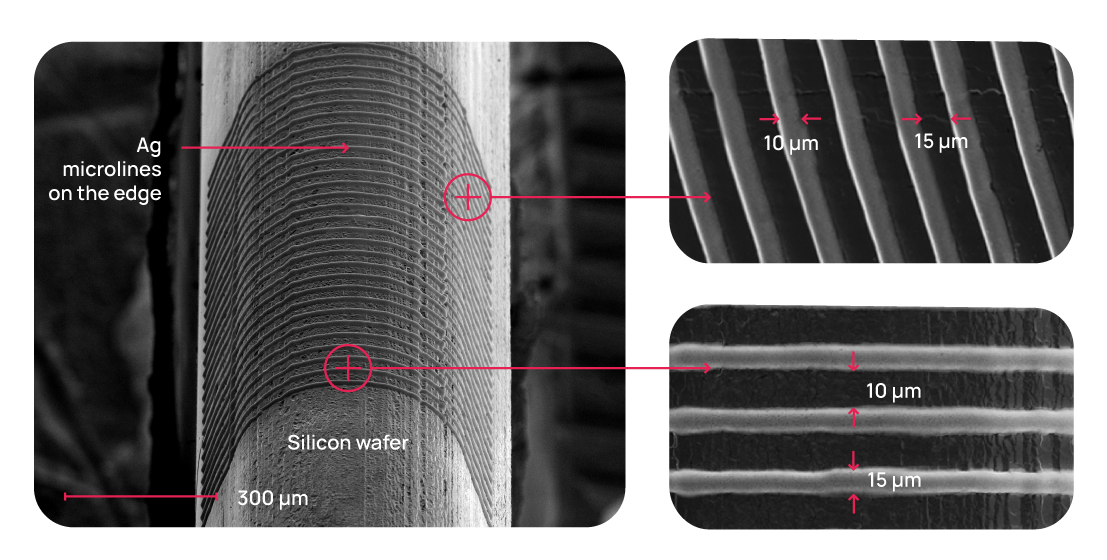
In a press release about XTPL’s follow-on order of 10 UPD modules to its first Chinese customer, the CEO of XTPL, Filip Granek, said, “The new order confirms that the first industrial deployment of XTPL’s technology was not a one-off project, but the beginning of a long-term collaboration. The initial UPD modules were successfully integrated into industrial machines and validated under the end customer’s manufacturing conditions, while the current order expands the scale of our technology’s deployment. This means that our technology has been accepted for day-to-day operation on the client’s production lines and confirms the tangible value it delivers in yield management for the most advanced FPDs. Having completed the first stage of the deployment, the client has returned with a larger order, demonstrating that our commercial model based on phased deliveries of modules and consumables works in practice.”
The company’s CFO, Jacek Olszański, said, “The framework order for 10 UPD modules, to be delivered in tranches over a period of 12 to 18 months, marks another significant milestone in our first industrial deployment. The first tranche will comprise two modules, with the remaining modules to be delivered in subsequent batches in line with the schedules of our partner and the end client. In addition to revenue from module sales, the project will generate recurring revenue from the supply of nanoink, cartridges and nozzles. This is an important element of our business model, under which a growing number of modules operating in industrial environments also drives demand for consumables. The new order confirms the continuing industrialization of XTPL’s technology and supports the execution of our updated 2026–2028 Strategy.”
As I’ve noted previously about XTPL, and as its key executives mention in the quotes above, I’m a big fan of how the company is using each new client to prove the viability of scaling its business model, as opposed to merely trying to maximize the number of customers, an approach which might be good for short-term revenue growth but also leads to a high percentage of one-offs. XTPL might’ve had very little revenue on the books for H1, but it set up plenty of orders to be delivered in the next year and a half, which should put the company in a good position to meet its objective of $25 million in revenue by the end of 2028.
Aside from screens, it’s interesting to consider the economic potential for inline chip repair. It’s difficult to see how this would ever make sense for the vast majority of chips, but data center chips are in the range of thousands of dollars a pop.
Plus, if you can validate the technology initially with screens, that would help change the landscape, not just at the factory, but for the third-party repair industry. This is an aspect I’ve overlooked about XTPL’s modular approach: along with giving the company more flexibility with industrial solutions, it could do much to unlock greater opportunities for repair shops.
Finally, Apple has been selectively adding more US production capabilities to its supply chain, including the manufacture of cover glass for the iPhone and Apple Watch. For consumer electronics companies reshoring to the US, it’s no longer far-fetched to imagine XTPL’s processes being factored into the equation.
Images courtesy of XTPL
Subscribe to Our Email Newsletter
Stay up-to-date on all the latest news from the 3D printing industry and receive information and offers from third party vendors.
Print Services
Upload your 3D Models and get them printed quickly and efficiently.













You May Also Like
$51 Million Revenue VMP Wants to Become a Leading Additive Manufacturing Metal Powder Producer
Chinese powder producers have traditionally had little impact on the additive manufacturing market. Typically, they offer low-cost powders without much in the way of settings or application support. But China’s...
SprintRay Releases Midas Restore
SprintRay‘s new U.S. Food and Drug Administration (FDA)-cleared Midas Restore is a material for restorative dentistry. The ceramic-doped resin is meant for definitive inlays, crowns, and veneers. The resin has...
Alibaba Selling Fiber Optic Military Drones for $200
Ukraine was saved by Turkish-made Baykar Bayraktar drones and many brave soldiers in the first stages of the conflict. Then hobbyists and their DJI Mavics showed how drones could be spotters...
The Formlabs Shuffle
For the latest development on 8/31/26, please see an update at the end of this article. Formlabs is doing a management shuffle, pointing the firm even more surely towards an...