DEEP Manufacturing Collaborating with Fortius Metals to Demonstrate WAAM at Scale


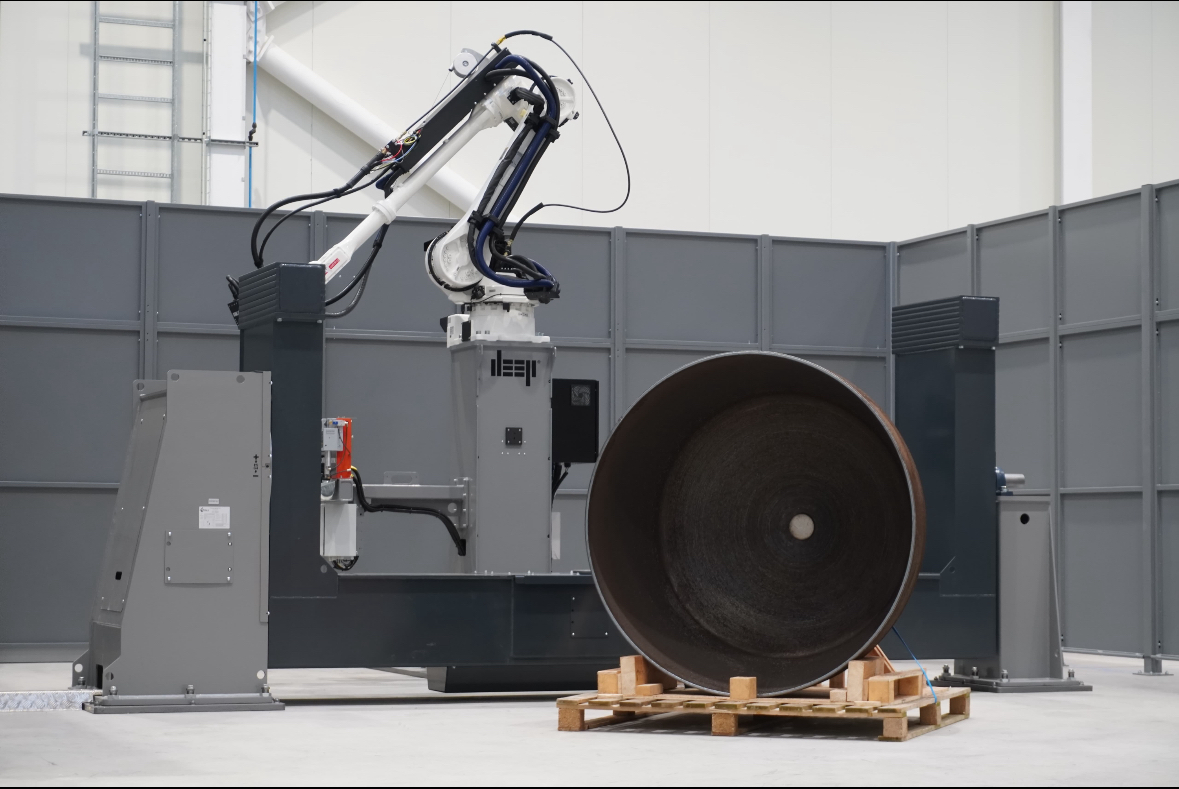
DEEP Manufacturing is trying to build pressure vessels and marine habitats at scale with DED technology. Using commercial robot arms and wire arc additive manufacturing (WAAM), the company is hoping to make a validated, DNV-approved process that will lead to robust, certified pressure vessels at scale.
If we look at subsea (a $30 billion industry) marine construction for things like wind farms, wave energy, sea floor mining, and defense, this could be a considerable business, one much larger than additive manufacturing alone. DEEP Manufacturing is a subsidiary of DEEP, which hopes to build its own habitats while DEEP Manufacturing prints them. But, DEEP Manufacturing will also print large-scale structures and pressure vessels for clients as well.
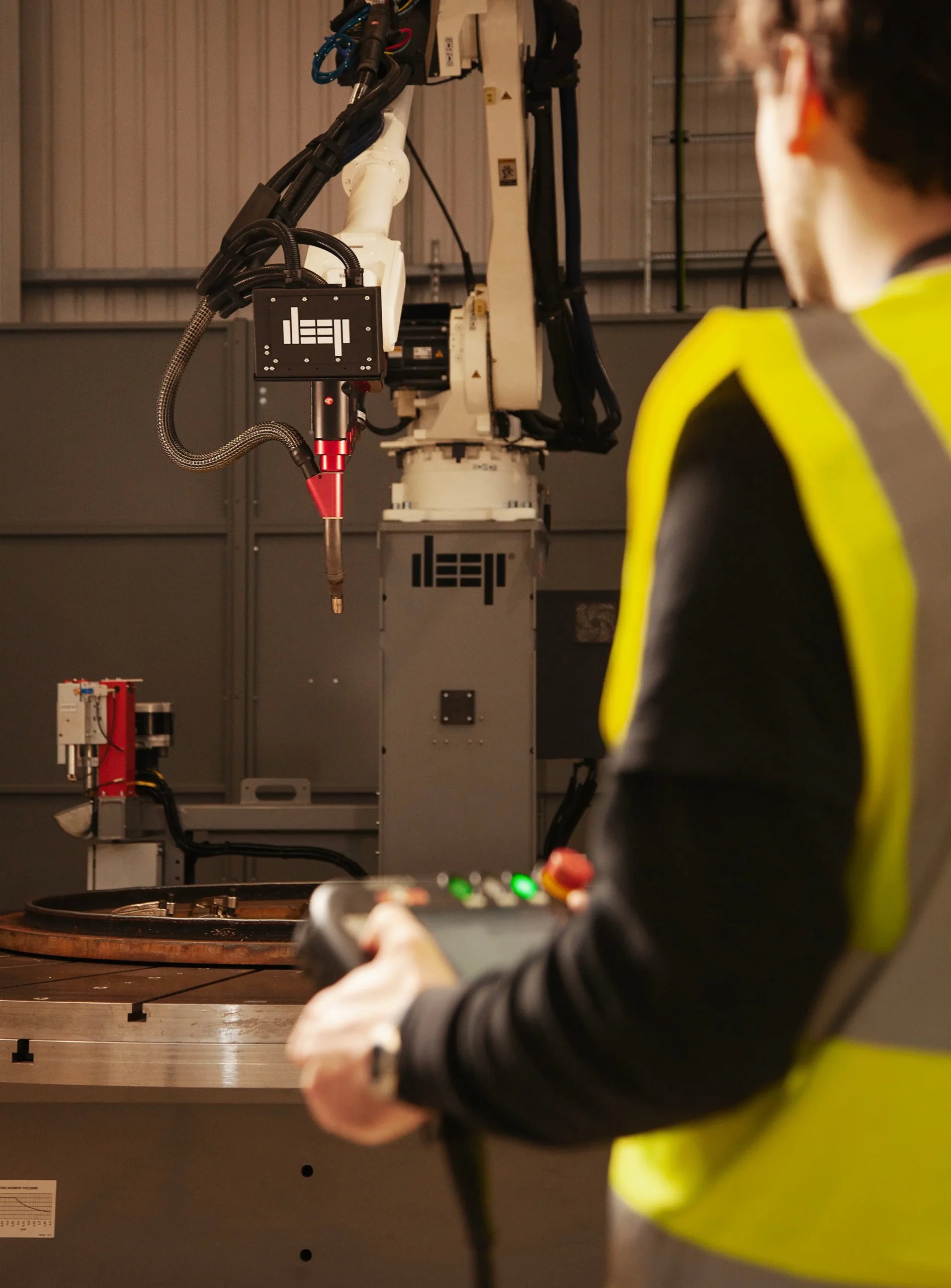
This specialization gives DEEP an edge in a potentially very lucrative market. To make its synchronized multi-robot approach work, the company has partnered with software, toolpathing, and robot arm companies, and now Fortius Metals. Fortius received $2 million from AM Ventures in 2022, and another $2 million from investors in 2024. The firm also won Air Force and other contracts for hypersonics. Fortius spun out of LPBF materials firm Elementum 3D, and we talked to their CEO about the firm last year. Its DED materials have nanoparticle reinforcements that improve mechanical properties such as fatigue and strength.
Fortius will help DEEP with simulation, toolpathing, and its welding wire products. This should help DEEP go to market quicker and make stronger parts. The duo will test out samples before attempting full-sized parts in July. The goal is to build a multi-metal cylinder at scale, to show that these technologies are capable of delivering the process control, precision, and repeatability necessary for industrial environments.
DEEP Manufacturing CEO Peter Richards said,
“Multi-material manufacturing will help transform industries that rely on parts performing in the most demanding environments. But getting there takes more than depositing metal. It takes process knowledge, monitoring and control at scale. This project is about proving those capabilities can come together to move hard problems closer to production.”
Meanwhile, Fortius Metals CEO Jeph Ruppert, stated,
“By combining simulation, toolpath design and advanced wire with a highly capable printing platform, we can explore what’s genuinely possible for complex parts. Working with DEEP Manufacturing lets us apply our modelling and materials expertise to a real, demanding structure.”
This is good news for DEEP because it builds on the firm’s inevitability and progress. DEEP is moving quickly in something that is very quality and precision driven. If you are in the market for human-rated pressure vessels, then you could care about cost, but you’ll always care more about quality. Also, if you want to put humans on the ocean floor for any length of time, whether it be for a spot of underwater welding (yes, that’s a welding joke), or perhaps some sea floor defense activity, the cost of the pressure vessel will be a small component of an expensive endeavor. Dive Support Vessels, medical staff, ROVs, sensors, and more will see your costs balloon before you put one person under the surface.
But, if that person stays there, or if you establish an ROV base at the bottom of the sea to monitor internet cables, the costs will be much lower per day. So this could be a very exciting long-term business with good margins and long-term contracts. It could also be a business of considerable volume that could disrupt parts of the subsea market. For Fortius, this is an excellent development because it is essentially locking the customer into its designs using its materials. This is a variant of the Hotel California strategy that we see ADDMAN and others do. From simulation to design and qualification, using only your materials, is a super lovely place to be.
DEEP Manufacturing is bringing together the knowledge, talent, and procedures of many vendors to one place and aiding in one effort: its own manufacturing needs and prowess. This approach will probably be much faster than others. From this perch, DEEP could then grow and get revenue more quickly as well. At the same time, it must prolong its relationships with key partners once they become a part of their spec.
Subscribe to Our Email Newsletter
Stay up-to-date on all the latest news from the 3D printing industry and receive information and offers from third party vendors.
Print Services
Upload your 3D Models and get them printed quickly and efficiently.













You May Also Like
Phillips Federal Participates in Marine Corps Exercise
Phillips Federal will participate in a Marine Corps exercise that will use several additive manufacturing technologies. The 1st Maintenance Battalion, 1st Marine Logistics Group, I Marine Expeditionary Force (IMEF), will...
Ceramics 3D Printing at Ceramitec 2026
Ceramitec is a key event for the ceramics industry. Held in the lovely city of Munich, it is the leading global event for the ceramics community. With around 13,000 participants...
AM Forum Berlin 2026: Tough Love From BMW’s Timo
We’re once again in the lovely city of Berlin, at the absolutely immense Estrel Center. The congress center, a musical and theater venue, towers over the easternmost reaches of the...
Printing Money Episode 35: Notable VC and M&A Deals, with Arno Held and Alex Kingsbury
Welcome to Printing Money Episode 35 and let us be the last to wish you a happy new year. For this episode Danny is joined by Arno Held (Managing Partner,...