DEEP Manufacturing Introduces Six-Armed Robotic HexBot System for Ultra Large-Scale WAAM


UK-based DEEP Manufacturing Limited, which specializes in precision manufacturing solutions like subsea equipment, has unveiled a new robotic AM system that could help overcome some of the most constant and expensive manufacturing challenges in the energy, maritime, and offshore sectors. The HexBot is a six-arm, synchronized, wire arc additive manufacturing (WAAM) platform that sets a new benchmark for ultra large-scale metal parts production. In these three industries, precision, scale, and speed are of critical importance, and they could benefit greatly from the new HexBot.
The company was launched earlier this year by the international ocean engineering and technology company DEEP as a specialist division. DEEP develops next-generation underwater pressure vessels that support subsea human habitats, and these vessels need large-scale, precision, customized components. So the company chose WAAM technology, which uses an electric arc to melt wire feedstock to ensure a higher level of material quality. DEEP says that WAAM can support a higher degree of design complexity and achieve higher production speeds than traditional methods like forging. That’s why it invested in one of the world’s most concentrated and advanced WAAM operations, which is housed at DEEP Manufacturing’s Advanced Manufacturing Centre of Excellence in Avonmouth, Bristol.

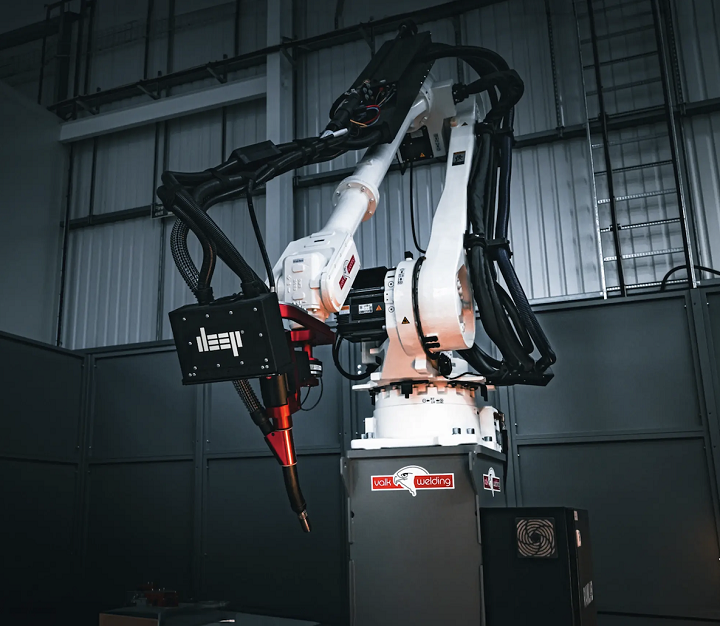
With its six robotic arms, the new DEEP Manufacturing HexBot system offers new manufacturing capabilities that address ongoing challenges with operations and engineering. When operated independently, HexBot’s arms can produce metallic parts up to 3 meters in diameter. But when the full configuration of all six arms operates in unison, the system can print complex, high-integrity components up to 3.2 meters in height and 6.2 meters in diameter. As the company says, HexBot is able to offer a level of customization, scale, and speed “never achieved before.”
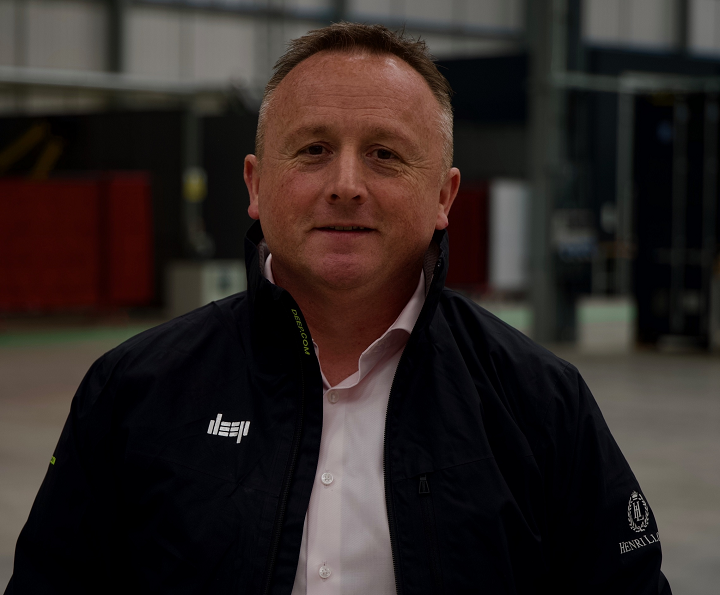
CEO Peter Richards
“HexBot pushes the boundaries of what’s possible in ultra large-scale additive manufacturing, offering speed, scale, and customisation on a level never achieved before,” said CEO Peter Richards.
“This is a uniquely capable system backed by our world-class technical expertise – one that’s not only delivering on DEEP’s vision but also contributing to the advancement of manufacturing as a whole.
“It’s a challenging and uncertain time for many industries, but advances in technology – particularly additive manufacturing, and more specifically WAAM – have the potential to empower companies not just to survive, but to thrive in difficult conditions.”
The flexible HexBot system has been used to print everything from structural parts for offshore wind platforms to shipbuilding and subsea energy infrastructure applications. While DEEP Manufacturing was initially launched to meet DEEP’s internal demands, its solutions have been proven to be fairly wide-reaching, and it’s making a big name for itself in the energy, maritime, offshore, and aviation sectors, which require scalable, structurally sound metal components at a high production rate.
The company is currently in discussions with several major US and UK-based partners to explore Joint Industry Projects (JIPs) that could help shape global industry standards and speed up WAAM adoption. It will also attend the Offshore Technology Conference in Houston, Texas, during the first week of May 2025, where it could meet even more partners. Additionally, to meet increasing demand for its 24/7 manufacturing capabilities, the company aims to double its workforce this year.
Images courtesy of DEEP Manufacturing Limited
Subscribe to Our Email Newsletter
Stay up-to-date on all the latest news from the 3D printing industry and receive information and offers from third party vendors.
Print Services
Upload your 3D Models and get them printed quickly and efficiently.













You May Also Like
3D Printing News Briefs, October 21, 2026: Digital Twins, AI CAD Service, AR Smart Glasses, & More
In today’s 3D Printing News Briefs, America Makes announced the winners of its MIAMI Project Call, and AM Europe released a new report. Artec 3D launched its new Artec Twins...
3D Printing News Briefs: October 17, 2026: Affordable Housing, Bone Implants, Rubber Gloves, & More
In this weekend’s 3D Printing News Briefs, we’re starting off with quality assurance in metal additive manufacturing (AM), a new 3D printer, and 3D printed housing. We’ll finish up with...
3D Printing News Briefs, October 14, 2026: Bolus, Aerospace Tooling, Water Filter, & More
In today’s 3D Printing News Briefs, we’re starting with medical news, as Myrava has received FDA 510(k) clearance for its 3D printed bolus. Moving on to aerospace and metals, AML3D...
Can India’s AM Push Help Make it a Viable Supplement to China?
Diversifying manufacturing supply chains to locales outside of China has nothing to do with actually cultivating “substitutes” to the Chinese economy. The real stakes are these: China is an irreplaceable...