BAE Systems Taps AML3D to 3D Print Metal Frigate Prototype

BAE Systems Maritime Australia (BAESMA), a division of the UK’s BAE Systems, has given a contract to Australian metal additive manufacturing (AM) original equipment manufacturer (OEM) AML3D, to produce and test a part for the Royal Australian Navy’s upcoming Hunter-class of frigates.
The latest contract follows up on two previous BAESMA contracts received by AML3D, from 2021 and 2022, for feasibility and commercial validation testing of AML3D’s metal AM platform for the Hunter-class vessels. The work associated with this contract is expected to last about eight to ten weeks, suggesting the deal could start to be expanded as soon as Q1 2024.
BAE Systems is one of the world’s ten largest defense contractors, and aside from the UK and the US, only Saudi Arabia is a larger market for the company than Australia. Thus, although the Hunter-class program long precedes AUKUS, this is still exactly the sort of collaboration that could end up bolstering the trilateral partnership between Australia, the UK, and the US down the road.
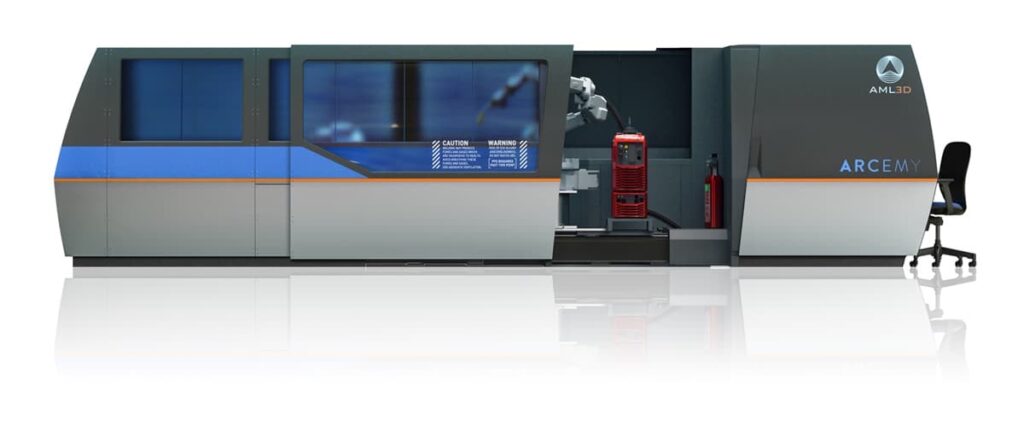
In a press release about AML3D’s latest deal with BAESMA for the Hunter-class frigate program, the CEO of AML3D, Sean Ebert, said, “We had great confidence that our [wire arc manufacturing] technology would satisfy BAESMA’s testing and move into component manufacturing. AML3D has a focus on the significant demand we are seeing in the US, where we are enjoying a lot of success in winning a steady stream of contracts, but we also have a stated aim to develop our commercial relationships across additional marine and defence sectors. Expanding our relationship with BAESMA in Australia, as part of its work for the Royal Australian Navy, is a great example of delivering on this aspect of our growth plan and diversifying our revenue.”
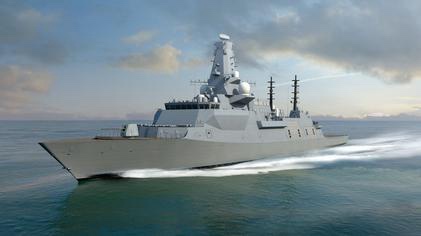
This announcement comes just as it was announced that the Hunter-class program passed its Preliminary Design Review (PDR), a process which began in July. BAESMA won the multibillion-dollar contract to build the ships in 2018, at which point the earliest preliminary research into building the Australian Navy’s future surface fleet had already been ongoing for about a decade. Delivery of the first ship is expected in 2031.
Again, then, while this program is independent of AUKUS, the same manufacturing capacity being built up for AUKUS should certainly come in handy for the Hunter-class, and vice versa. Moreover, aside from the technical capabilities involved, there is the equally significant consideration of demonstrating that Australia can deliver on a future-facing military manufacturing project with such long lead time.
This could be especially relevant to AUKUS given that BAE Systems is the largest defense contractor in the UK (and indeed, in Europe), with its US subsidiary also being one of the US’s largest defense contractors. Proving that companies integral to the AUKUS nations’ emerging AM-centric defense supply chain can effectively execute such a complex undertaking should instill confidence in the new partnership, at a time when its overall viability is under question.
Subscribe to Our Email Newsletter
Stay up-to-date on all the latest news from the 3D printing industry and receive information and offers from third party vendors.
Print Services
Upload your 3D Models and get them printed quickly and efficiently.











You May Also Like
Ceramitec 2026 3D Printing Wrap Up
I was surprised by just how many 3D printing companies and 3D printing projects there were at Ceramitec this year. I came away from the show convinced that the ceramics...
RusselSmith Brings Additive to Ghana’s Maritime Sector
Nigerian firm RusselSmith is in talks with Ghana’s Maritime Authority (GMA) to bring 3D printing to Ghana’s maritime sector. The Commonwealth Enterprise and Investment Council (CWEIC) helped make the discussion...
The Blueprint for Industrial Serial Production
Lithoz is kicking off the 2026 trade fair season with a powerful showcase of real-world applications of ceramic AM serial production capabilities alongside new material upgrades. The company is stepping...
Fraunhofer ILT Tests 3D Printed Titanium Reactors to Generate Hydrogen Onboard Heavy Vehicles
The Aachen-based Fraunhofer Institute for Laser Technology (Fraunhofer ILT) is to research titanium aluminide hydrogen reactors and heat exchangers. The hope is that lightweight, better-performing 3D printed components will make...