First 3D Printed House in Germany Officially Opens


After unveiling the building in October 2020, the PERI Group announced the official opening of the first 3D printed home in Germany. Cutting the ribbon on the 160 m2, two-story structure was Ina Scharrenbach, Minister for Construction, Home, Municipal Affairs and Equality of the State of North Rhine Westphalia. At the event, Scharrenbach noted:
“With the first 3D printed residential building in Germany, positive pressure is being generated in the construction industry: for innovative construction with new technologies, for greater attractiveness in construction professions and for modern architecture with new styles. Now we need to gain experience with the building and establish the manufacturing process on the market, because only more housing provides affordable rents.”
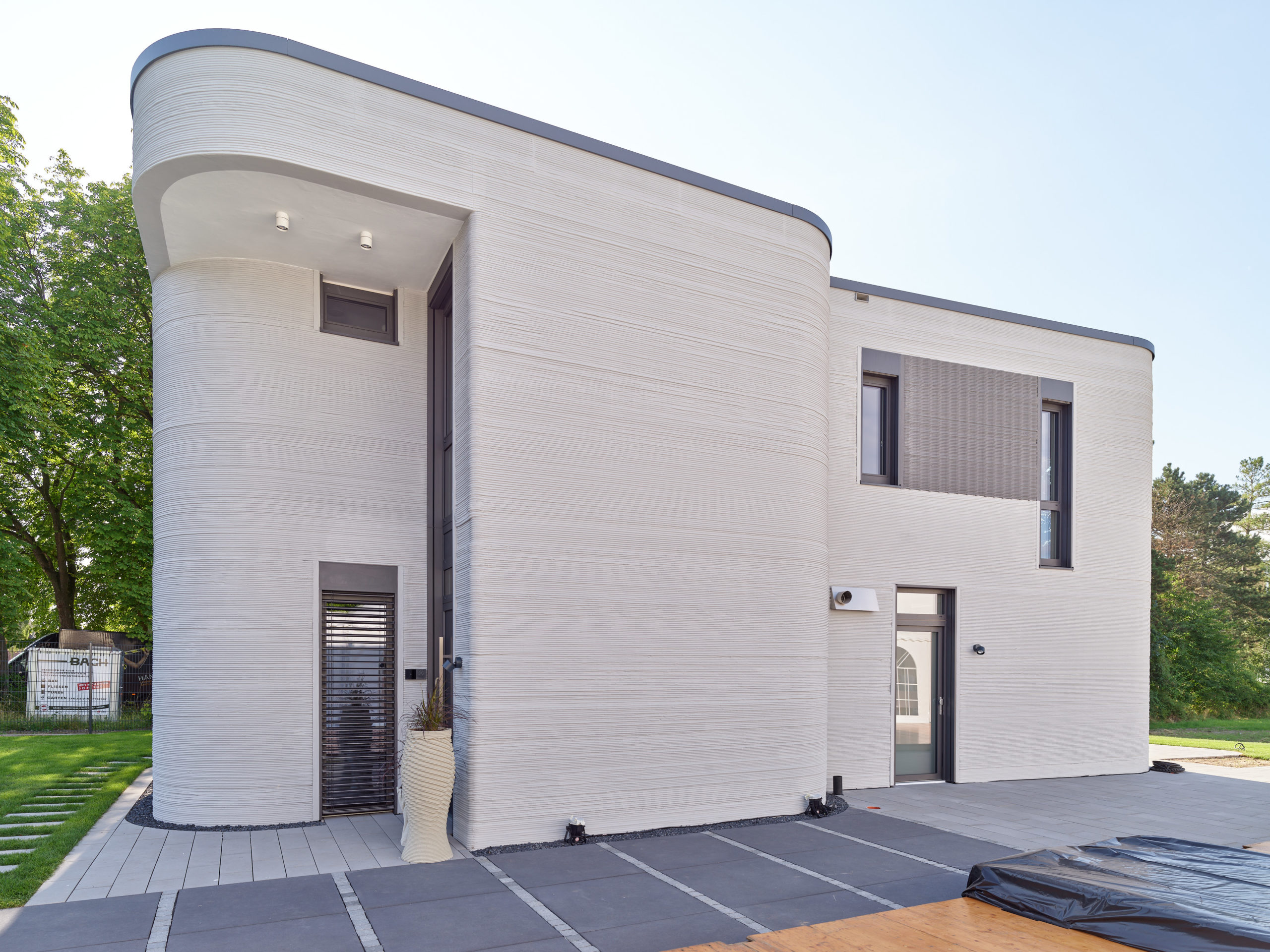
The exterior of the building. Image courtesy of PERI Group.
This is really a minor event in the additive history of a company that has being gaining significant traction with 3D printing globally. PERI acquired a stake in COBOD, a Danish construction 3D printer manufacturer, in 2018. It has used the firms BOD2 3D printers to produce structures in Europe and the U.S., including most recently a home with Habitat for Humanity in Arizona. It is also in the process of constructing a three-story apartment building in Germany.
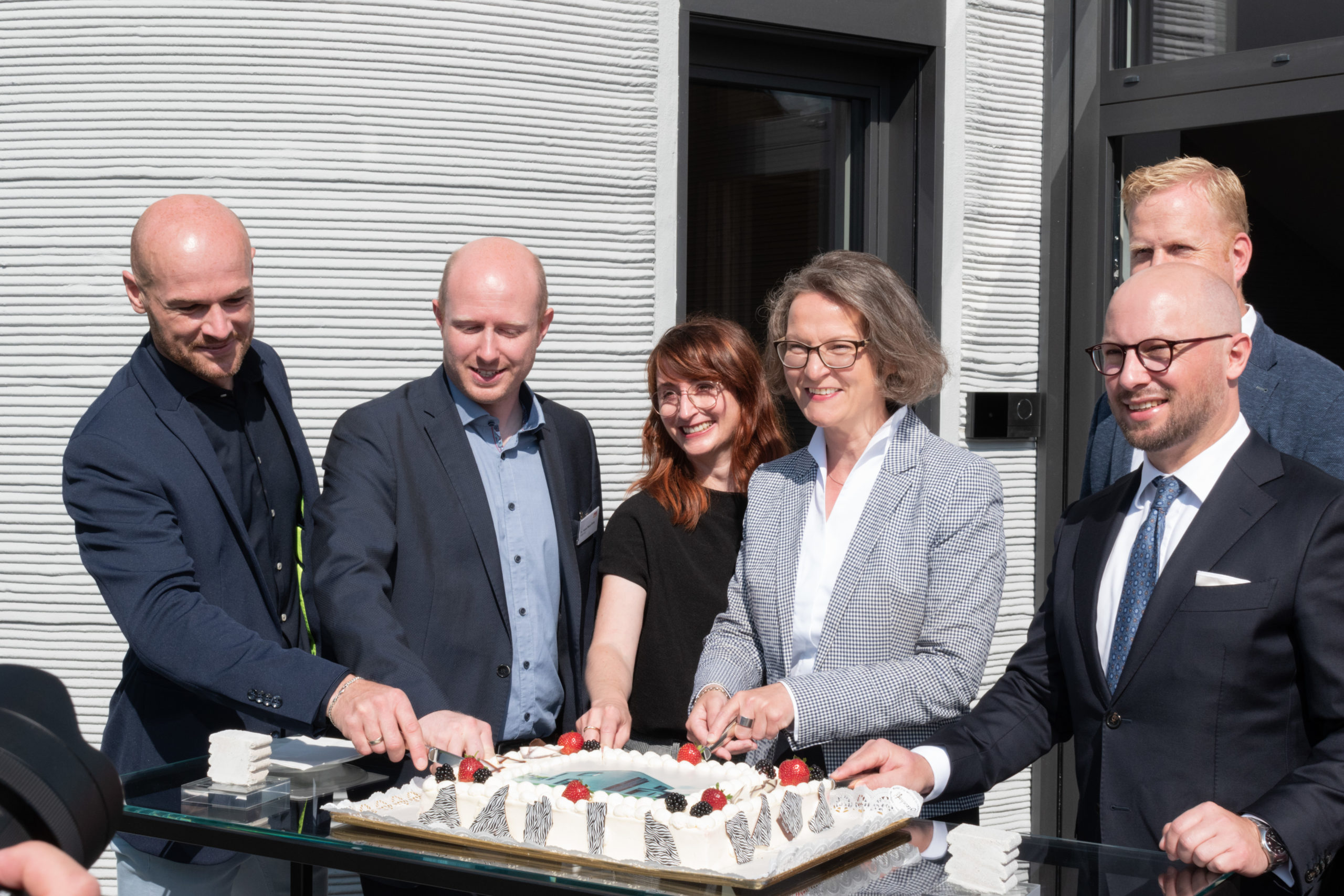
The ribbon cutting ceremony. Image courtesy of PERI Group.
This, along with COBOD’s other partners, has led to profitable growth for the Danish company, which is worth highlighting given the niche nature of the additive construction segment. With support from PERI, COBOD has grown its footprint to Saudi Arabia.
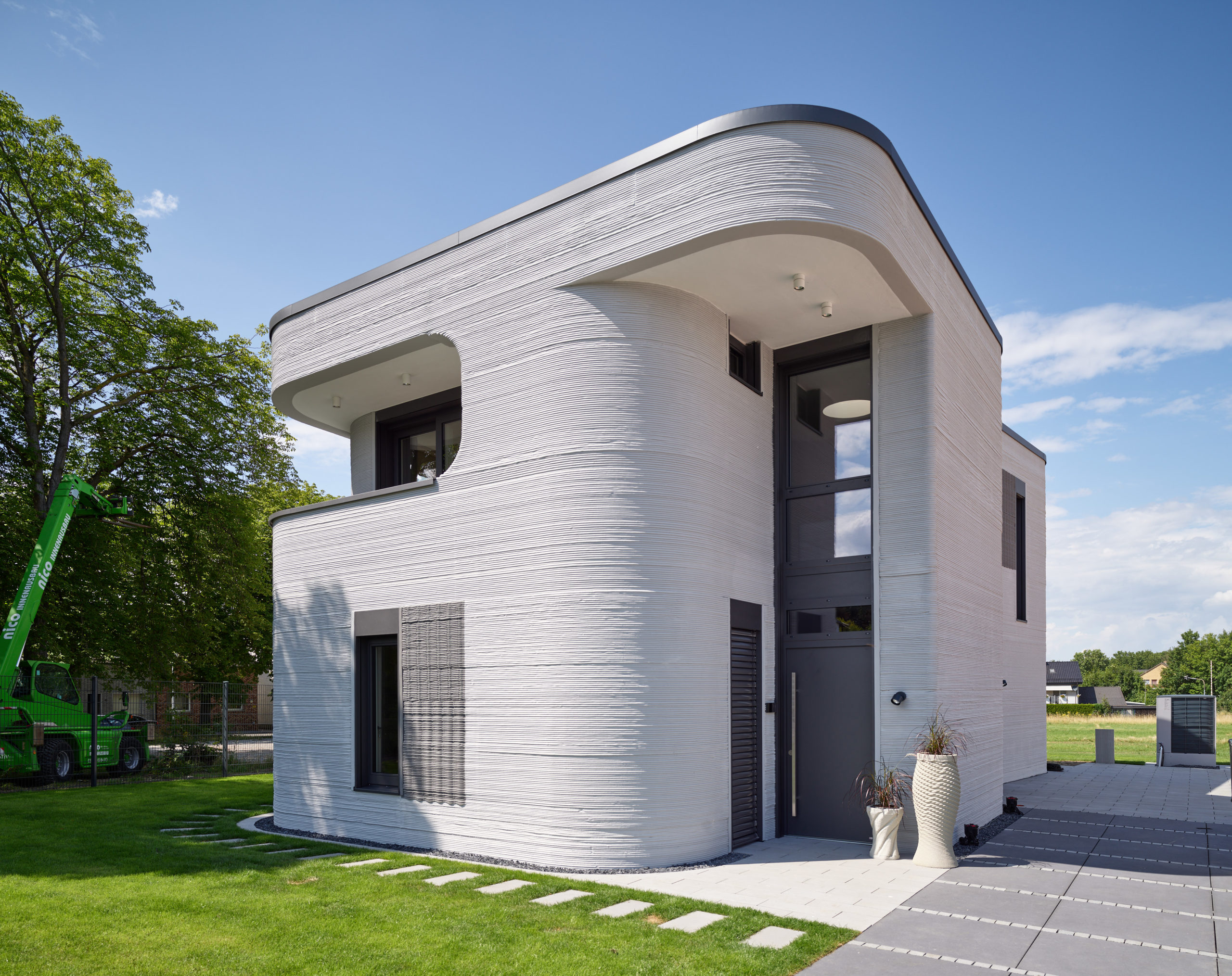
The 3D printed building. Image courtesy of PERI Group.
PERI is an important supplier of form work equipment for the manual casting of concrete. By backing additive construction, PERI is aiming to automate and digitize what is an otherwise slow-moving industry in the midst of an upheaval. Thomas Imbacher, director of Innovation & Marketing of the PERI Group, explained why the home in Germany is particularly significant:
“Together with our Danish technology partner COBOD, the PERI team has shown that 3D concrete printing technology is ready for the market. The project in Beckum is a milestone that has set many things in motion in the industry. The house in Beckum was the first of its kind and for PERI and for all those involved, this project will always remain something very special.”
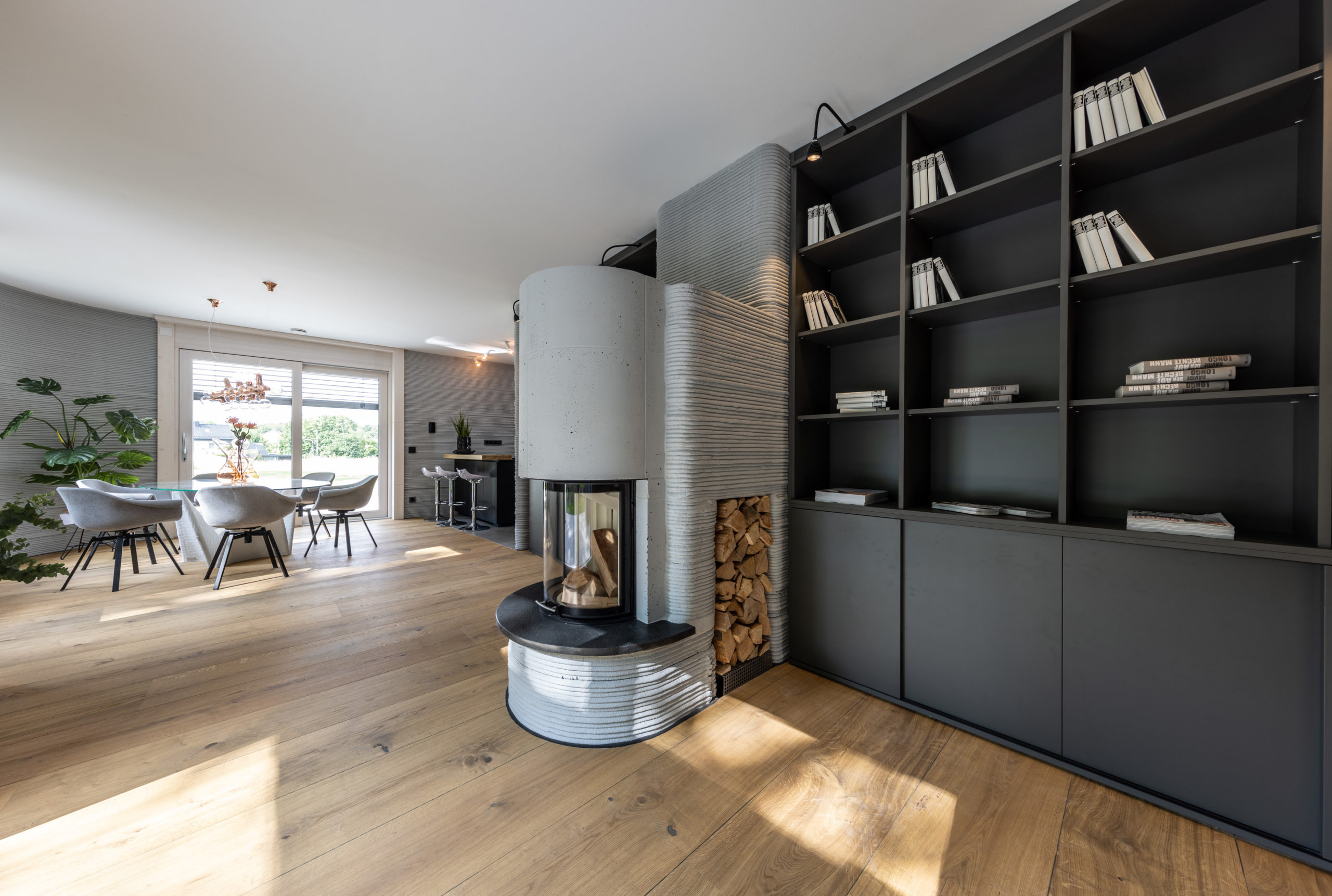
The interior of the home. Image courtesy of PERI Group.
Though 3D printing in the architecture, engineering and construction (AEC) space is quite small, often seems futuristic, and may seem to have limited utility, it is an important enough technology that not only is COBOD doing well financially, but large firms in the space, such as Saint-Gobain, LafargeHolcim, and Sika, are investing in it to some extent. Even GE has partnered with COBOD to 3D print platforms for wind turbines.
Subscribe to Our Email Newsletter
Stay up-to-date on all the latest news from the 3D printing industry and receive information and offers from third party vendors.
Print Services
Upload your 3D Models and get them printed quickly and efficiently.













You May Also Like
50,000 Orders and Counting: EPlus3D & Chinese AM Services Provider Are Scaling Liquid Cooling Solutions for AI Servers
An under-appreciated story driving the additive manufacturing (AM) industry this year has been the divergence between what’s driving the market in China and what’s driving it everywhere else. Let’s start...
Additive Manufacturing Has a Major Growth Opportunity; Trust Will Decide Who Captures It
After years of overpromising, the next phase of AM growth will be won by companies that consistently deliver what they say. When I entered additive manufacturing in 2014, after 15...
Seven Trends Reveal What’s Next for 3D Printing at TCT Shenzhen 2026
TCT Shenzhen 2026 opened on October 14 in Hall 15 of the Shenzhen World Exhibition & Convention Center in Bao’an, and ran through October 16. The event brought together equipment...
AM Investment Strategies 2026 Sets the Stage for AMS 2027
AM Investment Strategies 2026 Nov. 5 · 12 p.m. ET · Free online event RESERVE YOUR SPOT ↗ A one-hour online discussion featuring some of the biggest names in 3D...