RIC Robotics Begins Work on Colorado Community, Including Dozens of 3D Printed Homes


Despite years of increasing public focus on the issue of affordable housing, it wasn’t until the end of last year that US federal policymakers introduced a comprehensive bill to address the problem. The bill — called the “21st Century Road to Housing Act” — has now passed through both houses of the US Congress, providing a national framework that should facilitate new solutions for builders aiming to lower costs and pass the savings on to homebuyers.
Meanwhile, the private sector has already been busy making its own breakthroughs towards putting a dent in persistently rising housing prices, and additive construction (AC) is a key part of that story. Most recently, RIC Robotics, an AC service provider headquartered in Denver, announced that it’s working on one of the largest single 3D printed housing builds, on 55 acres in central Colorado.
The overall community, called Cleora, will comprise 106 homes, with around two-thirds of those homes planned to be built using RIC’s AC robots. Uniquely, Cleora is being planned as its own metro district, integrating provisions of infrastructure including utilities and recreational facilities into the blueprint.
Additionally, the project managers for Cleora will partner with Colorado Mountain College, a local community college, to train students for careers in automated construction. According to RIC Robotics, seven homes have been completed thus far, and multiple units have already been sold.
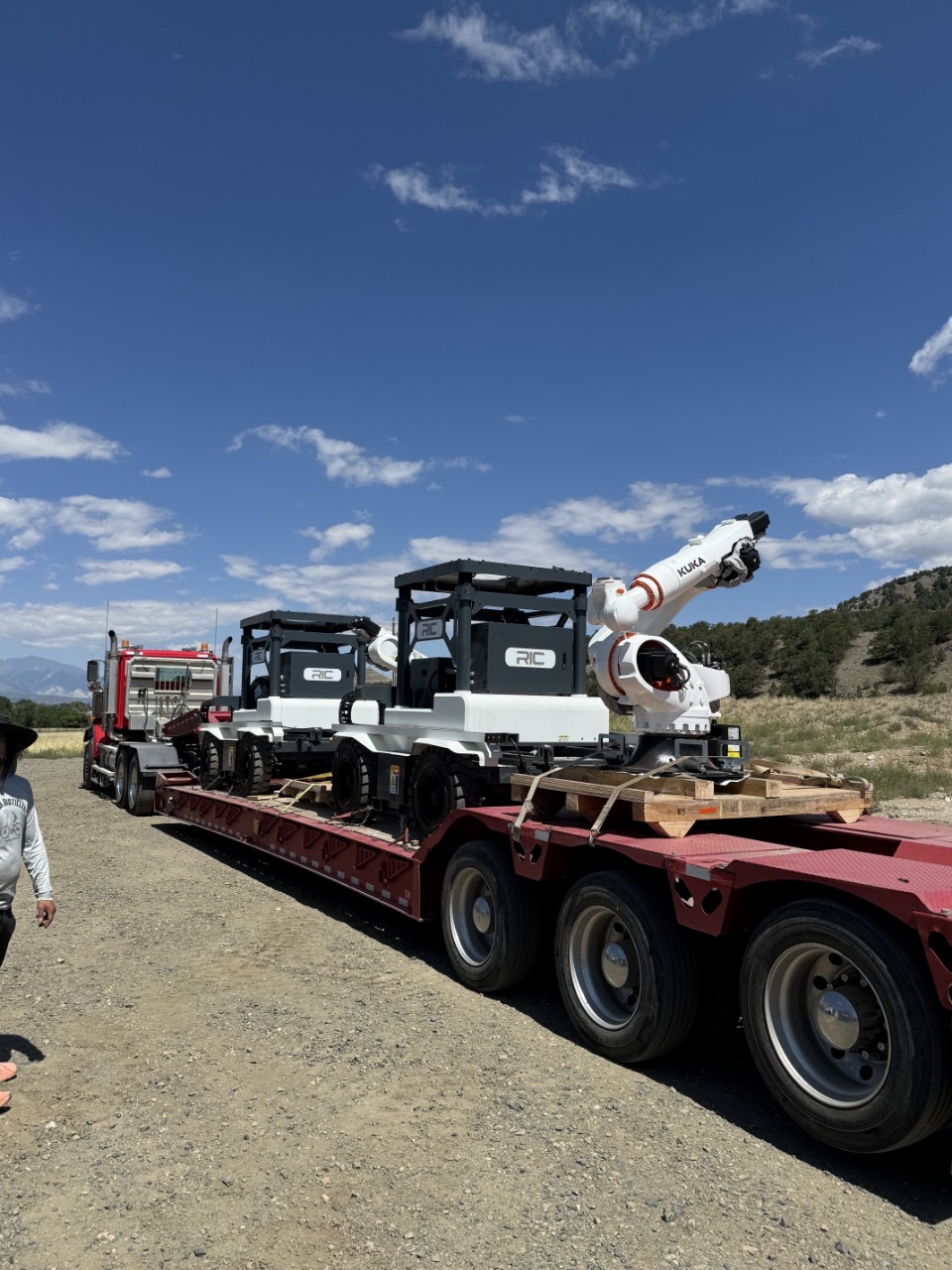
In a press release about the Cleora planned community being built in Colorado with RIC Robotics’ hardware, Dr. Ryan Cox, the CEO of RIC Robotics, said, “Much of the conversation around 3D-printed construction has centered on individual homes and demonstration projects. Cleora represents a significant step forward because it demonstrates how robotics can be integrated into a real community at meaningful scale. The project is helping answer important questions about how technology can support the future of housing delivery, from construction efficiency and workforce development to long-term community growth.”
Greg Kenny, the Managing Partner of Cleora, said, “From day one, our vision wasn’t simply to build 3D-printed homes, it was to prove that robotics could transform how entire communities are designed and delivered. Cleora is demonstrating that this technology is ready to move beyond prototypes and become a practical, scalable solution for real neighborhoods. RIC Robotics has been an outstanding technology partner in helping bring that vision to life.”
There’s at least one major provision in the affordable housing bill which should benefit this sort of project in the future, which is a grant program that will fast-track construction projects working from “a collection of pre-approved housing designs.” More broadly, the very fact that DC is now prioritizing affordable housing solutions on a bipartisan level, and is embracing a certain amount of creativity in approaching the issue, bodes well for the AC market.
Construction is unique insofar as you need some sufficient baseline of public policy cooperation to accomplish things like Cleora, which are required at this point in order to make the cost economics of AC work. But it’s still noteworthy that 3D printed construction enterprises have managed to figure out various formulas for systematizing public-private construction partnerships in a relatively short period of time.
That’s something that the AM industry as a whole could learn from, and it also signals that, now that it is catching on, 3D printed housing could grow more quickly than has been anticipated. Personally, I don’t love the idea of private entities managing communities the way that the public sector is supposed to have been doing, but the public sector has dropped the ball on a massive scale in this and so many other areas, so it’s perhaps to be expected.
On the other hand, maybe the new support that politicians are demonstrating for a social equity issue like housing points to a future where the public sector starts to once again assume more of the responsibilities that were previously solely within the purview of government, but this time with the help of emerging technology industries. It’s a very strange world that’s in the process of forming! Let’s hope that at the very least it’s one where the goal of home ownership no longer seems impossible.
Images courtesy of RIC Robotics
Subscribe to Our Email Newsletter
Stay up-to-date on all the latest news from the 3D printing industry and receive information and offers from third party vendors.
Print Services
Upload your 3D Models and get them printed quickly and efficiently.












You May Also Like
AMPulse Asia: India’s Orbital Launch Headlines a Busy Second Half of July
The second half of July brought major developments across Asia’s additive manufacturing sector. Highlights included India’s first private orbital launch powered by 3D printed engines, a billion-yuan ownership change at...
How the US-China Trade War is Changing the 3D Printing Market
Western governments don’t really have a coherent view on how to engage China on trade, and how could they? They vacillate between intimate economic cooperation and antagonistic bluster, depending on...
3D Printed Packaging OEM XTPL Adds Another Japanese Customer
These things can change at any moment nowadays, but the biggest economic story of the year might not be elevated energy prices, after all. Elevated prices for memory chips may...
3D Printing News Briefs, July 9, 2026: RIMPAC 2026, Software, Housing, & More
In today’s 3D Printing News Briefs, Massivit continues its focus on aerospace and defense manufacturing, and Meltio is collaborating with Phillips Corporation for RIMPAC 2026. Moving on to software, AMIS...