3D PotterBot Clay Delta-Style 3D Printer Launches with RAM Extruder & Innovative New Approach

 Some may say that when it comes to 3D printing, the art of pottery isn’t necessarily an area which needs the technology too urgently. After all there are already numerous tried-and-true tools available such as the pottery wheel, molds, etc. What these people are’t realizing is that the same basic argument could have been made in other areas of manufacturing such as metalworks, and prototyping. What 3D printing adds to the picture is the ability to rapidly design and create intricate pieces which would never have been physically possible prior to the technology’s introduction.
One company called DeltaBots wants to take 3D ceramic printing to the next level, offering a new 3D printer they call the 3D PotterBot.
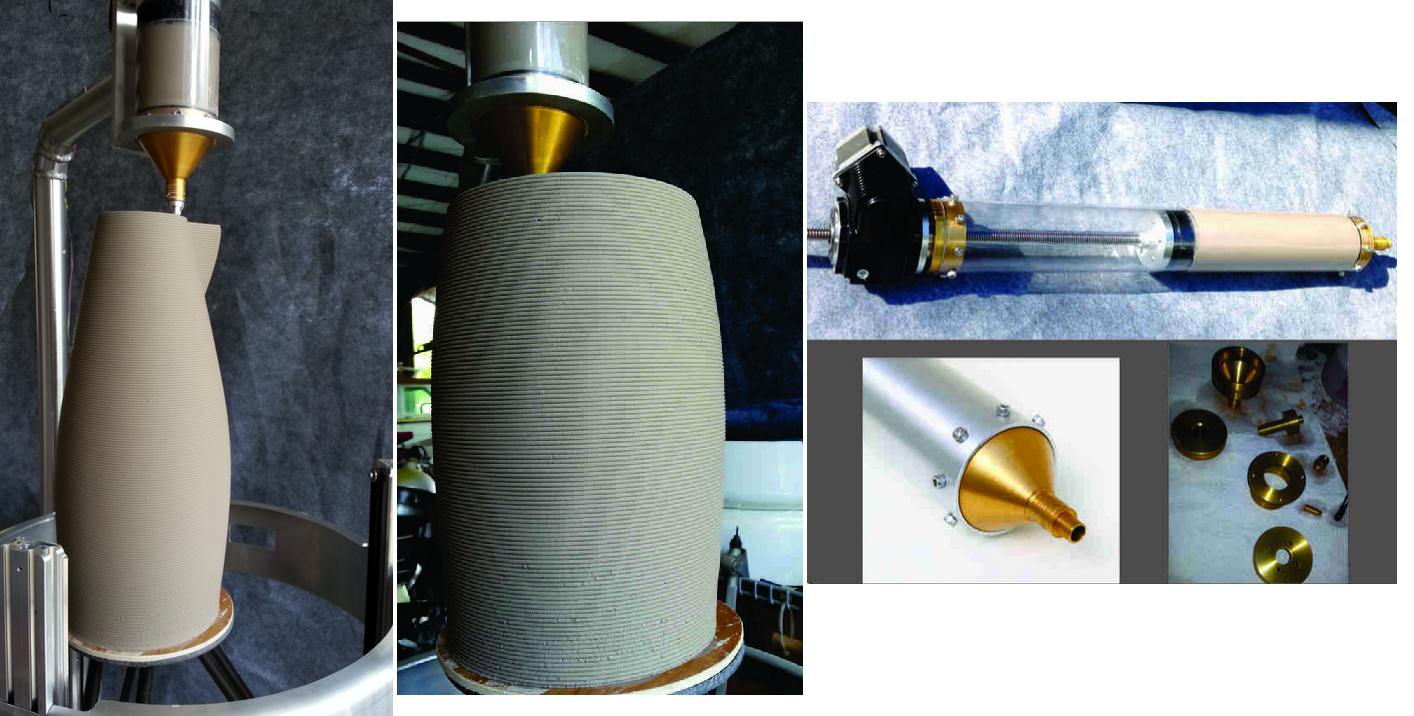
The 3D PotterBot is the first 3D printer dedicated solely to the 3D printing of ceramics and pottery. Although it runs on a delta-style framework, the machine itself works unlike any other delta-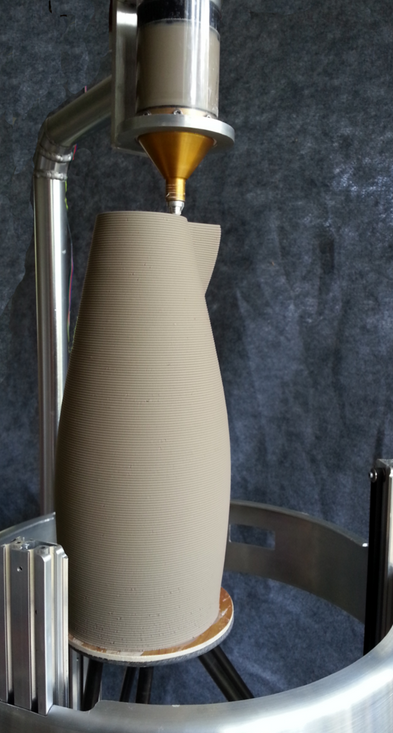 style 3D printer I have seen before. Instead of tethering the extruder to the arms of the delta system, the extruder remains stationary as the delta-style robotic arms move the entire build plate.
The machine itself is shaped quite uniquely, with the delta components all beneath the build platform, which is then situated beneath the extruder. The company claims that the current system is the result of a considerable amount of R&D with paste extrusion systems. Having a stationary RAM extruder enables a more precise print and creates more stability within the machine. If you have seen other paste extrusion systems, you may have noticed most use syringe pumps which utilize compressed air to push the material from the head of the extruder. This can often lead to an uneven extrusion of material, meaning it’s nearly impossible to accomplish an accurate print throughout.
The RAM extruder and stepper motor used within the 3D PotterBot work similarly to those of a typical FDM/FFF printer, only that clay is being extruded rather than molten plastic. This gives the machine unprecedented control and even provides the user the ability to reverse the flow once a print is complete.
DeltaBots is offering these machines for just $2,950, complete with the RAM extruder which they also sell seprately in two different sizes, 2000ml and 4000ml (67 oz and 135 oz). Below you will find a few features and components of the 3D PotterBot package:
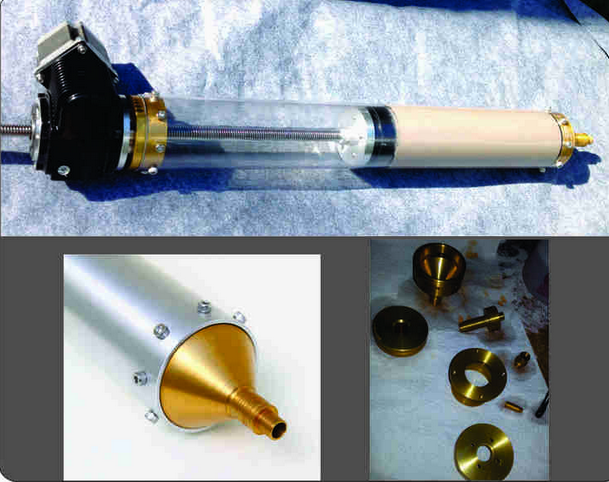
The RAM Extruder
- Varying build envelope dependent on size — up to 19 inches in height and 11.75 inches in diameter
- 2 x 2.75 inch poly-carbonate RAM extruder tubes
- 4 different nozzles, with custom nozzles upon request
- Toolkit
This certainly appears to be a machine which will last a long time, with sustained high quality printing. The RAM extruder itself is the product of aircraft-grade aluminum and polycarbonate which has been professionally CNC machined. Because of its toughness, clay of varying thicknesses can be used without the fear of the extruder breaking or clogging. The company has provided a video (below) showing just how the 3D PotterBot works.
Let us know if you are considering or have ordered this machine. Discuss in the 3D PotterBot forum thread on 3DPB.com.
Subscribe to Our Email Newsletter
Stay up-to-date on all the latest news from the 3D printing industry and receive information and offers from third party vendors.
Print Services
Upload your 3D Models and get them printed quickly and efficiently.













You May Also Like
Solid Rocket Motors: the First Big Scaling Test for AM in the US Defense Sector
The additive manufacturing (AM) industry has become obsessed with the opportunity for drones, and there’s certainly good reason for that. But before drones, the big focal point in AM for...
UK Sight Loss Charity 3D Printing Ultrasounds for Visually Impaired Parents-to-Be
The Guide Dogs for the Blind Association, more commonly known as Guide Dogs, is the UK’s top sight loss charity, working to help people with vision loss “live the life...
Savannah River National Laboratory & 3D Systems Sign Nuclear CRADA
Cooperative Research and Development Agreements (CRADAs) are deals between US federal organizations and other entities. The latter group most often includes private companies, as the primary purpose of CRADAs is...
3D Printing News Briefs, August 29, 2026: Prosthetics, Pelvic Implants, Capillaries, & More
In this weekend’s 3D Printing News Briefs, America Makes announced the winner of its GOTHAAM Project Call. Then it’s all about healthcare 3D printing news, with Stratasys and Limbitless Solutions...