BLT Touts 100,000 Copper Parts Made

With the significant volume of copper used in electronics, semiconductors, aerospace, defense, and beyond, copper additive has had immense promise from the early days of copper 3D printing at Beamit and the first industrialization at GH Induction and Aidimme (both with E-beam!). Years later, green laser LPBF and rejigged LPBF processes brought dedicated copper machines on the market from AMCM, EOS, ATLIX, and others. A lot of the production cases were super secret and very specific, keeping news on copper printing subdued. And if you didn’t know any better, you’d think that copper printing was kind of a shadow of its glimmering glow of promise.
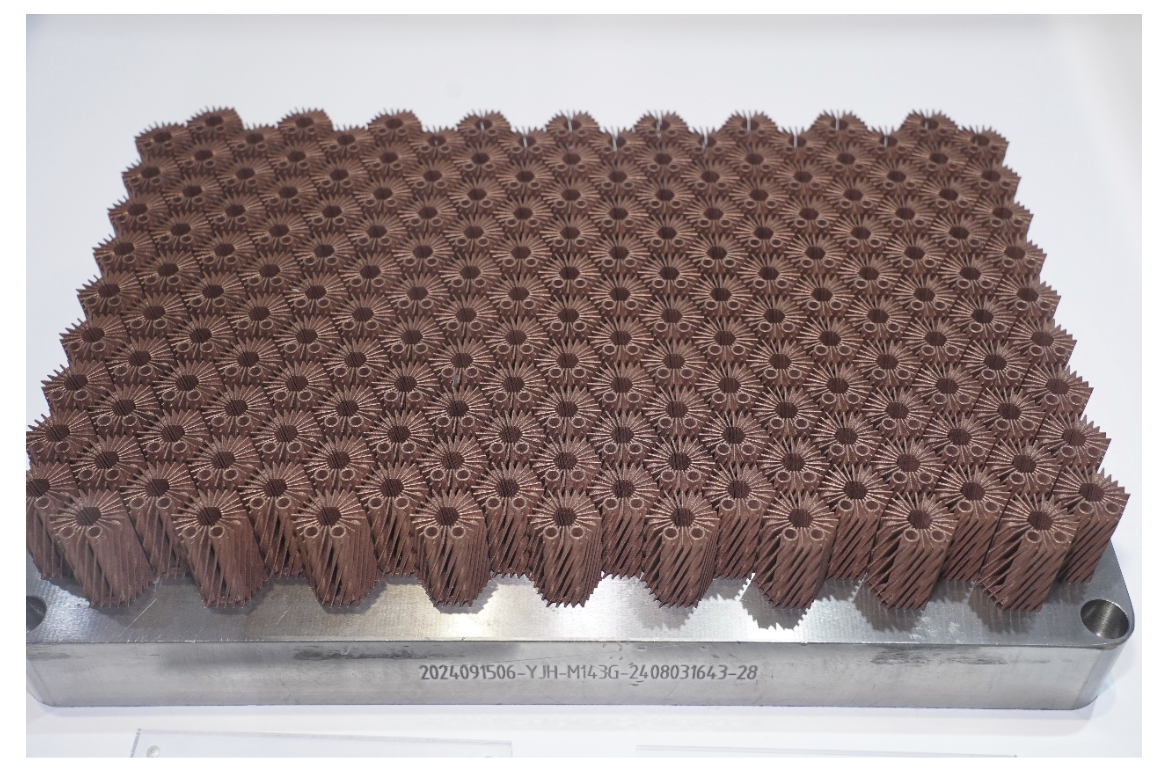
Copper alloy parts 3D printed by BLT.
But copper is an unsung success story in Additive, a victim of what I’ve called the Tip of the Iceberg problem. With no one able to share cases, success seems limited, and the activity becomes self-limiting. Enter BLT to ameliorate that, because even though they are far from the first to do significant production in copper, they are the first to talk about it. BLT has stated that over 100,000 parts have been made on a BLT-S400 8-laser machine.
The company says that “BLT has implemented a fully validated, end-to-end workflow that covers powder development, parameter tuning, and post-processing.” This was achieved in part through red and green lasers, along with “Extending the build length of the BLT- S400 to 450 millimeters increases part density per build, improving efficiency for small, high-volume components like heat sinks and optical modules.” The company also says that “predictive fault management, continuous operation capability, and robust thermal control work together to ensure consistent output during prolonged, high-load production runs.”
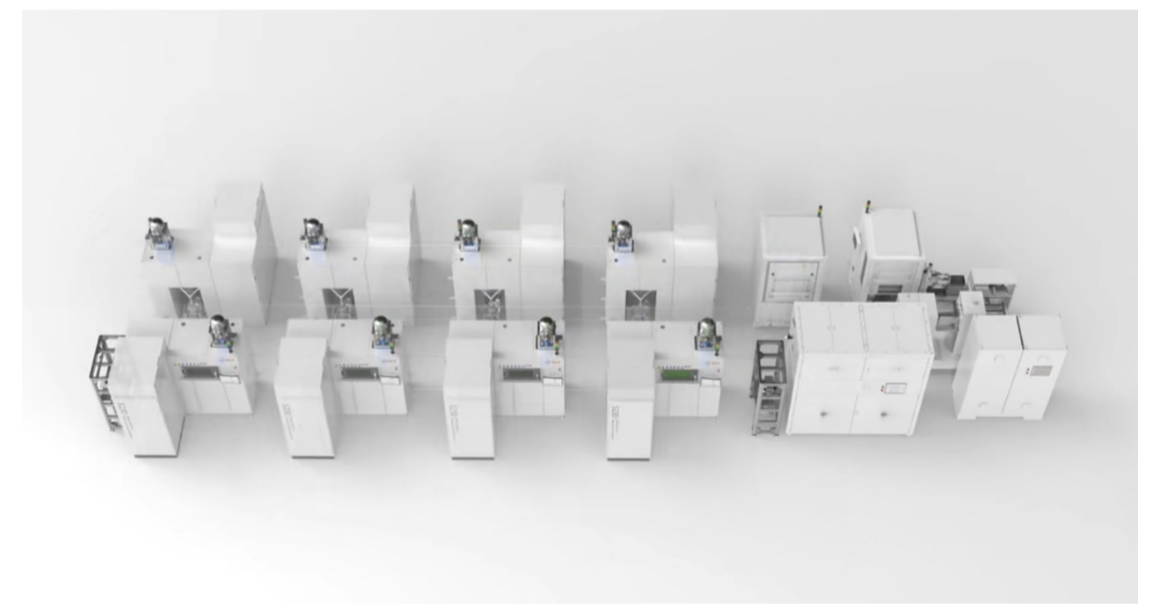
BLT Automated Production Line.
Their current solution is offered in an automated production line configuration optimized for individual clients. BLT aims to take customers on a journey towards actual production. It’s notable here that the whole setup is optimized for small parts. Much of the EOS et al efforts in copper have been focused on large New Space parts, such as rocket engine components in GRCop-42. But this setup is focused on small components. The automation and requirements for small, high-volume setups differ considerably from those for crane and Solukon setups used for large defense applications. Simultaneously, BLT is working with Chinese space firms, so we know they’re active there as well. But, there is comparatively little effort in the complete automation of small copper setups across many other firms. This is a strategic risk for competitors and a potential advantage to BLT. If the firm continues to do its own high-volume production and can play in production and machine building for both small and large copper parts, it will eventually win through scope and scale.
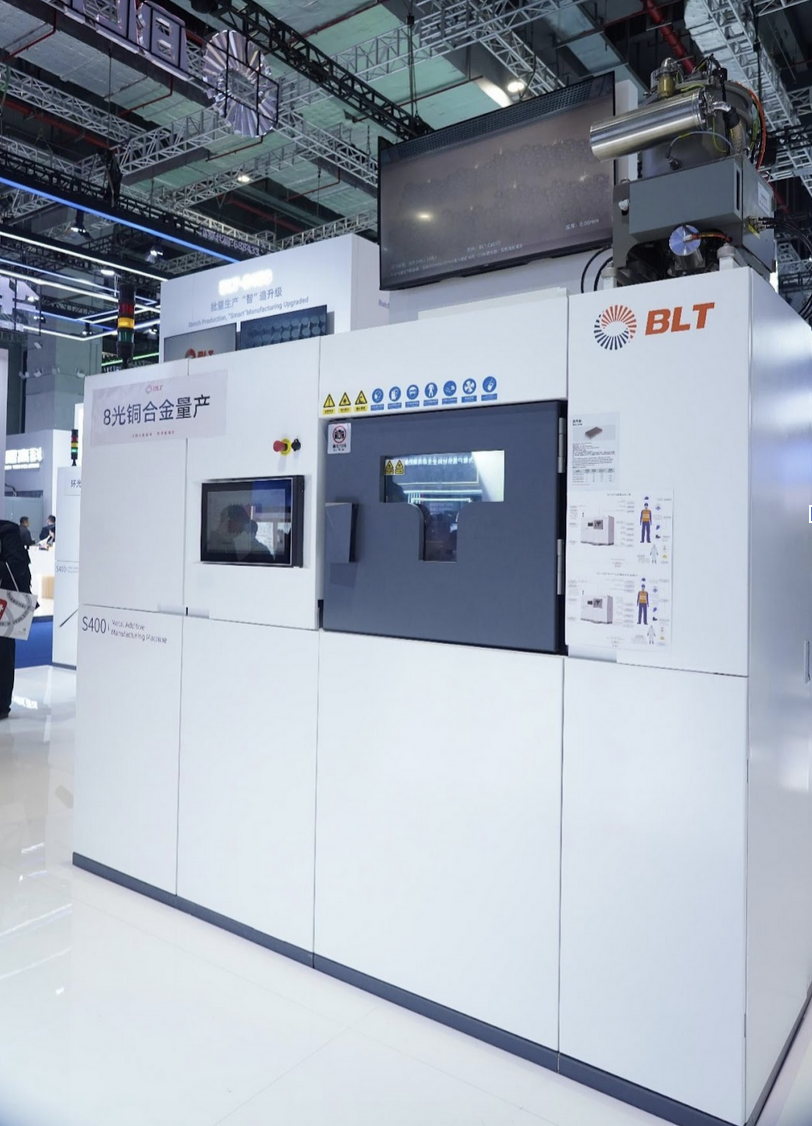
BLT-S400 8-laser PBF-LB/M machine.
The company believes that “AI, 6G, and next-generation electronics” will drive new use cases, while “cost-effective…accelerated production cycles, material efficiency, and design freedom” are key drivers making this possible. High-value production is where it’s at right now. We’re seeing an acceleration of large-scale production runs. Many niches are simultaneously increasing volume. And several companies could have put out a rather vague, frankly, claim about making over 100,000 parts in copper. But it was BLT who did this first. If you’re losing a fight, it’s easy to blame others and look to factors like Chinese subsidies. But, having more gumption and drive, one can push ahead while others whisper backstage. What’s notable here is that gumption is coupled with automated lines and small parts. Automated lines make sense in specific cases, and more work will be needed to right-size them for the right cases and make them easier to adopt. Other firms should look to BLT’s ability to industrialize both large-part and high-volume small-part production in copper. Copper is set to become a bigger production case in the future. Are you ready?
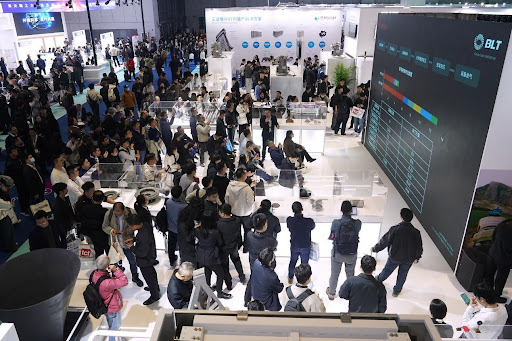
BLT launching the latest technology at TCT Asia 2026.
Images courtesy of BLT
Subscribe to Our Email Newsletter
Stay up-to-date on all the latest news from the 3D printing industry and receive information and offers from third party vendors.
Print Services
Upload your 3D Models and get them printed quickly and efficiently.













You May Also Like
South Korea’s Lincsolution Lands Hanwha Defense Deal as Hanwha Invests Billions in US
I recently wrote about how the South Korean additive manufacturing (AM) firm Lincsolution is building an aerospace and defense hub, part of the company’s construction of “the largest AM facility in...
Bambu Lab and SUSAN FANG 3D Print for London Fashion Week
At London Fashion Week, some of the more unusual pieces on the runway came from 3D printers. Chinese fashion designer SUSAN FANG presented her Spring/Summer 2027 Air-Illusion collection at the...
Why Cross-Border 3D Printing Is Closing the Speed Gap with Local Manufacturing
The fastest 3D printing supplier in your shortlist may no longer be the one closest to your office. That sounds unlikely to many engineers. For years, overseas 3D printing carried...
Arridex Expands 3D Printing Network to Ghana
Nigeria-based Arridex has deep experience in oil and gas additive manufacturing. Previously known as RusselSmith, the firm has in-house metal and polymer additive technology. The company is making 3D printed...