NASA Selects Relativity Space for Mars Science Mission


NASA has selected Relativity Space as its commercial partner for a new Mars science mission scheduled for launch in 2028, giving another boost to one of the most well-known additive manufacturing (AM) companies in the space industry.
As part of the agreement, NASA will provide the Aeolus payload, a suite of atmospheric science instruments designed to study the Martian atmosphere. Relativity Space will supply the spacecraft, launch vehicle, and mission operations needed to deliver the instruments to Mars.
NASA says the mission will help scientists better understand Martian winds, temperatures, dust, and clouds. The data is expected to support future robotic and human missions by improving knowledge of the conditions spacecraft will encounter when entering and landing on the planet.
“Public-private partnerships like this are a force multiplier for science,” NASA Administrator Jared Isaacman said in a statement. “By pairing NASA’s world-class instruments with commercial innovation and investment, we can deliver more science, more often, and reduce the time it takes to get essential data into the hands of researchers preparing for future human missions to Mars.”
Aeolus will carry four instruments developed by NASA to track atmospheric conditions across Mars. NASA Ames Research Center will oversee payload development and integration, while Relativity will handle the spacecraft and operate the mission.
The mission is designed to fill a major knowledge gap for future Mars exploration. By tracking winds, dust, clouds, and temperatures across the planet on a daily basis, Aeolus will help scientists improve models used for spacecraft entry, descent, and landing. NASA says the data could play an important role in reducing risks for future robotic missions and, eventually, human landings.
The project is being carried out under a six-year Space Act Agreement between NASA and Relativity, providing a framework for long-term development and mission support.
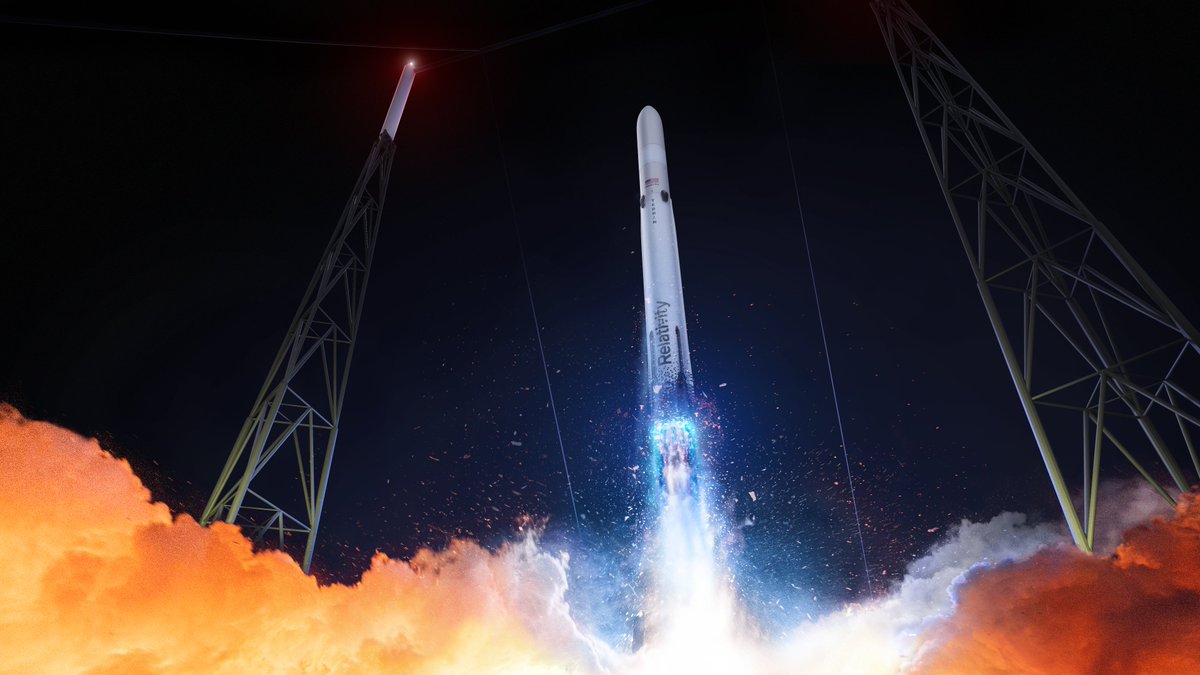
Relativity Space’s Terran 1 launches from Florida. Image courtesy of Relativity Space.
For the AM industry, the announcement is truly amazing because Relativity Space has built its reputation around large-scale metal 3D printing. The company developed its own Stargate AM system and has long argued that rockets can be produced faster and with fewer parts using 3D printing.
However, the company has been through a few ups and downs in recent years. Its Terran 1 rocket made headlines in 2023 as the first largely 3D printed rocket to reach space, but this was not a successful launch because the spacecraft had a problem with its second stage and failed to reach orbit during its only launch attempt. Relativity later retired the program and shifted its focus to Terran R, a much larger reusable rocket that remains under development. Of course, it was disappointing to see the rocket fail on that attempt. However, it was still considered an important milestone for both the company and the 3D printing industry. As Jeff Bezos once said, “Failure and invention are inseparable twins.”
Since then, Relativity has continued developing Terran R while expanding partnerships across the space sector. NASA’s decision to rely on the company for a Mars mission represents a significant vote of confidence as Relativity works toward its next phase of growth.
Aeolus is currently scheduled to launch in 2028 and will operate for at least one Martian year, collecting atmospheric data that NASA says will help support future exploration of the Red Planet. The mission is expected to fly aboard Relativity’s Terran R rocket, which continues to incorporate many of the large-scale 3D printing technologies that helped make the company one of the best-known names in additive manufacturing.
Subscribe to Our Email Newsletter
Stay up-to-date on all the latest news from the 3D printing industry and receive information and offers from third party vendors.
Print Services
Upload your 3D Models and get them printed quickly and efficiently.













You May Also Like
3DPOD 302: Digital Inventory for AM with Mikhail Gladkikh, Würth Additive Group
Mikhail Gladkikh has worked in oil and gas for many years. With this background, we obviously talk about energy market turbulence and the adoption of AM in oil and gas....
Printing Money Episode 39: Q1 2026 Public Markets 3D Printing Earnings Analysis with Troy Jensen, Cantor Fitzgerald
Welcome to Printing Money Episode 39, (or, “The one where they all went to market”). It’s that quarterly time, so Troy Jensen (Managing Director, Cantor Fitzgerald) joins Danny for a review...
3DPOD 301: Jay Rogers on Haddy’s Robotic 3D Printed Manufacturing, and a Lot More
Jay Rogers was in the Marine Corps, consulting, and sailed around the world. He first came to additive through his company, Local Motors. He talks us through that firm’s promise...
3DPOD 300: Celebrating 300 Episodes with a Look at the Next Year in 3D Printing
In the 300th episode of the 3DPOD, we take a look at what we think will happen over the next 12 months; for instance, what will happen with Bambu’s dominance,...