Metalysis, Skyrora & Thermo-Calc to Develop Tanbium Alloy Powder for ESA-Funded Project


Metalysis is to develop Tanbium alloy powder for launch vehicle manufacturer Skyrora. Metalysis uses an FFC solid-state electrolysis process, originally developed at Cambridge University and known as the FFC Cambridge method. This is a single-step electrochemical process to make metal powders through electrolysis. Potentially cheaper, the process allows the UK-based firm to make metal oxides that would normally be difficult for that country to manufacture. Skyora, meanwhile, is developing orbital launch vehicles, including an eponymous small satellite launch vehicle, a two-stage rocket with solid rocket engines, and a space tug. The European Space Agency (ESA) is funding the nine-month research through the General Support Technology Programme (GSTP).
The goal of the program is to develop a Refractory Complex Concentrated Alloy (RCCA), specifically Tanbium, which is said to have excellent properties for rocket components, such as injection nozzles and combustion chambers. Skyrora plans to test-print the material on its Skyprint 2, a hybrid DED and milling system capable of producing parts up to 2.3 meters long. DED systems have, in the past, been used not only to manufacture RCCA parts but also to alloy the materials themselves, which could help the team fine-tune Tanbium for propulsion applications.
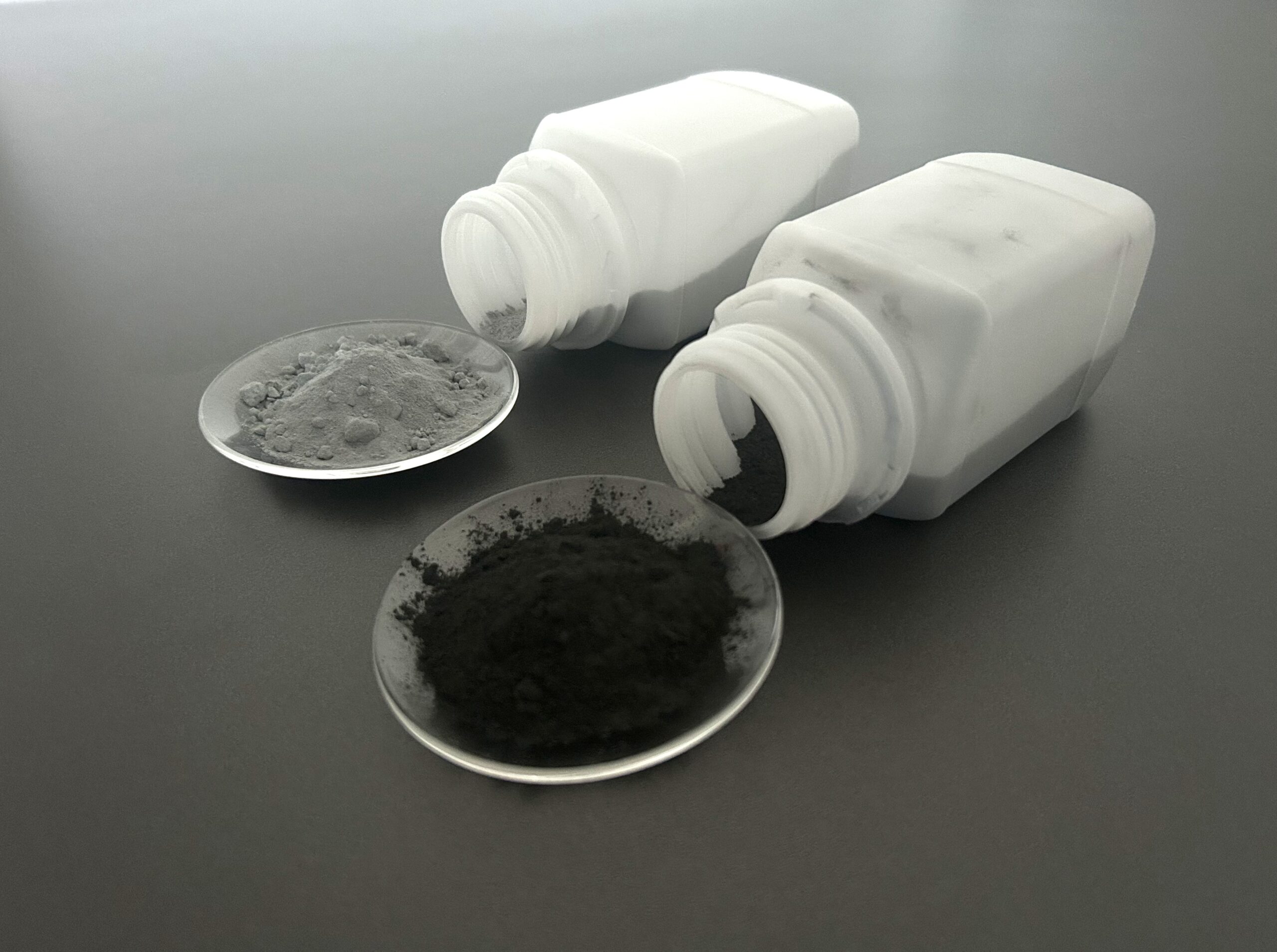
Tanbium alloy powder. Image courtesy of Metalysis.
The company hopes to reach TRL 6 within 9 months. To help it do so, it has enlisted Thermo-Calc Solutions, a renowned Swedish company that offers software enabling the prediction and calculation of properties. Using their databases, this software allows users to find materials, predict behavior, or discover new ones. Thermo-Calc’s Integrated Computational Materials Engineering (ICME) software, used to model and predict alloy properties, is about to become supercharged due to improved computation, Additive methods for making alloys, electrolysis, and other pathways to powders. Thermo-Calc is the company that has actually created the tantalum and niobium alloy Tanbium.
Skyrora hopes that Tanbium will work better than C103 and Inconel 718, to “deliver higher-temperature strength, improved ductility, enhanced oxidation resistance, and better laser processability than incumbent alloys, with predictions that it can extend component lifetime and burn time, while reducing weight with no effect upon performance.”
They also believe that, for the European space industry alone, there will be a need for 20,000 kg of C103 powder over the next five years. Which, if true, would be hilarious. ESA and Skyrora would have done well to publicize this number more widely a few years ago to let people invest in the production of C103 if they had expected it.
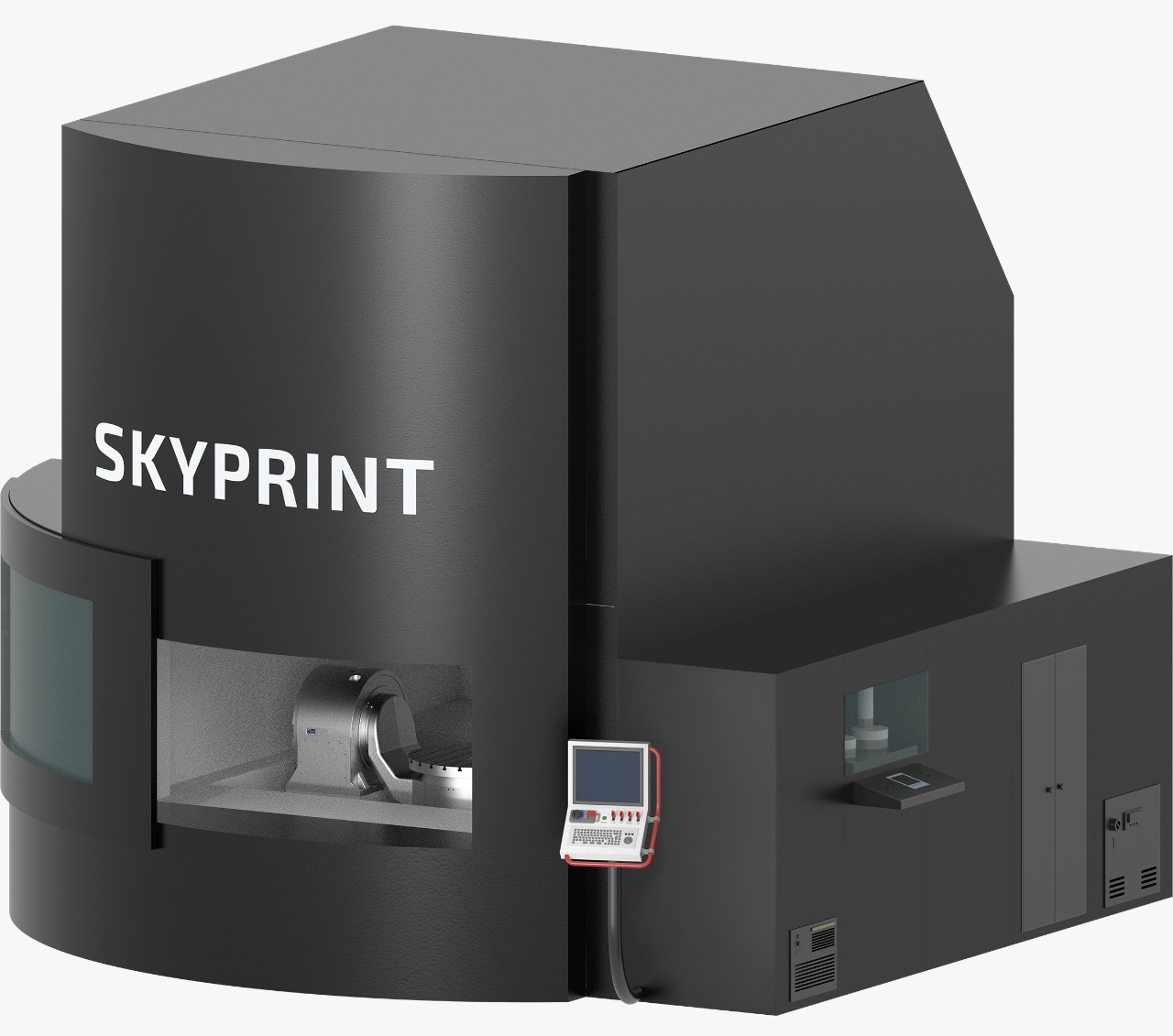
Skyprint 2, a hybrid DED and milling system. Image courtesy of Metalysis.
The powder itself will be made through Metalysis’s FFC Cambridge electrolysis process, which has been used extensively for high entropy alloy (HEA). Indeed, for certain RCCA compounds, Metalysis may be a better source than additive and/or traditional powder processing systems. The company says that “Metalysis’s unique HEA offering: lightweight refractory HEAs – at commercial scale – a breakthrough in materials science not seen since the Bronze Age.” Metalysis indeed has the potential to be a key supplier of designer alloys suited for various purposes. At the same time, it could also be a better and perhaps cheaper alternative.
Metalysis CEO Nitesh Shah said that,
“Metalysis is very excited to be participating in this ESA funded project – utilising our alloy and high entropy alloy experience to produce the new alloy Tanbium, which is predicted to significantly enhance space component lifetimes. Skyrora came to us as the advanced materials partner because only our solid-state process can produce such a vast range of novel alloys. We look forward to successfully completing stage 1 of this project and moving to stages 2 and 3, and so making a real impact within the space propulsion market”.
While Thermo-Calc Solutions Managing Director Dr. Ida Berglund stated,
“Scaling up refractory alloy powder production requires precision and quality. This project, and Metalysis experience and expertise in producing high quality refractory powders, help us bring Tanbium to the space propulsion market faster.”
And ESA Technical Officer Simon Hyde mentioned that,
“Ultra-High Temperature capable materials for rocket motor applications are a key item in the ESA work plans. This project addresses the challenge in an outstanding way: It combines bespoke alloy design with a unique production approach. These technologies are perfectly wedded to laser powder bed fusion, additive manufacturing. Using this, Tanbium alloy, the consortium are addressing a critical challenge for ultra-high temperature applications in Europe.They are opening a potentially rich seam for space applications and providing Europe with a resilient supply chain.”

European involvement in the new space race is more likely to be in the form of a space tourist than anything significant. Saying that the development and commercialization of Tanbium is important is an understatement. Owning the future of alloy systems or being the one to design the optimal alloy for turbo machinery or rocket propulsion is a grand commercial prize. Uniquely, being first with the best specific alloy for a particular application can lead to many more victories in various metals and industries through RCCA systems. RCCA is really a palette that, if used with additive and/or electrolysis as well as computational tools, can discover the best high-performance alloys for a particular purpose. RCCAs are unobtainium, really, a class of materials that could be lighter, with over 100 °C temperature resistance, while having better ductility, yield strength, and better fracture toughness, all at the same time.
Being the first to make and commercially produce these materials is a significant achievement, not only commercially but also geopolitically. Alloy systems, such as Inconel, continue to dominate the most demanding applications, but they were designed in the 1960s. RCCAs are the palette of the future that could be used to make the paints of the future. If successful, this project would, in one fell swoop, make much more than a space passenger out of Europe.
Subscribe to Our Email Newsletter
Stay up-to-date on all the latest news from the 3D printing industry and receive information and offers from third party vendors.
Print Services
Upload your 3D Models and get them printed quickly and efficiently.












You May Also Like
3D Printed Chip Packaging Specialist XTPL Enters Japanese Market
The additive manufacturing (AM) industry naturally wants to move beyond prototyping to production at scale, and the industry is certainly starting to demonstrate success with that objective, especially in Asia....
UT Researchers Use 3D Printing to Develop “Tabletop EUV Lithography” Process
Photolithography, the semiconductor manufacturing process whereby lasers transfer patterns onto chemical layers coating a substrate, is one of the most amazing industrial processes humanity has ever created. It is also...
3D Printing News Briefs, May 30, 2026: RIMPAC 2026, Acquisition, Ceramic Implants, & More
We’re kicking things off with materials news in this weekend’s 3D Printing News Briefs. Then it’s on to a hybrid manufacturing system for a maritime exercise, an expansion of industrial...
The University of Utrecht: “3D Printing Could Change Who Gets to Become a Manufacturing Power”
For decades, manufacturing has mostly been controlled by countries with huge factories, lower labor costs, and industrial systems that took years, sometimes decades, to build. But Utrecht University human geographers...