Pogačar & Fairlight Cycles Show Us Low Cost 3D Printed Components for Bikes


There has been a lot going on in 3D printing for bicycles over the years. The most successful implementation so far is in bicycle seats. Carbon 3D printed seats are now being used by most of the major players and are a hit, giving riders comfort at a hefty premium. Besides this, companies have tried many things, such as wheel hubs, derailleur components, entire frames, and lugs, to help customize frames. Helmets, shoes, and other gear have also been tried.
Especially small brands have been pushing innovation through 3D printing. Typically, light weighting is driving the adoption of 3D printing in cycling. But also, less heat buildup, sweat-wicking properties, unique topologies to increase comfort, aerodynamics, and custom fit are driving the adoption of 3D printing in cycling. It helps that Tour de France bikes now cost upwards of $25,000, while “regular” high-end models are pushing $ 6,000. Given the high cost per kilo that bikes can now command, 3D printing economics are totally doable. But recently, bike valuations have ebbed, more entry-level models are emerging, steel is back in fashion, and lofty expectations are returning to earth. Will 3D printing in bikes remain as hot as it once was? Will bikes become more affordable? We think that saddles and helmets are here to stay, but will 3D-printed bike wax or wane?
Tadej Points the Way
We pointed out Tadej Pogačar using 3D printed parts on his Tour bikes in 2023. In addition to high-end custom parts, there are also some small custom material extrusion parts. These small parts are holders, buttons, housings, clips, and more. They help Pogačar customize his bike’s cockpit, wiring, feel, and interfaces. Lightweight custom components are cheap and can be made on desktop 3D printers. By involving Pogačar and his mechanics in the design process, custom parts can be made to his exacting specifications. Now you could do this yourself and easily set up a service for it, but for many people, it is not yet accessible.
Triathlon Success
But, in the triathlon world, we can see several companies emerging that make custom parts for triathlon bikes. Triathletes are obsessed with weight and custom parts. 4 Frames has various products, including Garmin seat post mounts. You enter your bike’s brand and model, and it will direct you to the custom part for you. A Garmin mount is $36, and the firm has an AirTag mount for an extra $4, a GoPro mount for $6, and a number mount for $14. They also have a $120 hydration bladder that fits in a case beneath the steering wheel. They have a kind of portable snack cubby and more. 4 Frames uses Material Extrusion, and the products are affordable. They also seem to be made with the user in mind, with deep knowledge of what triathletes want and need.
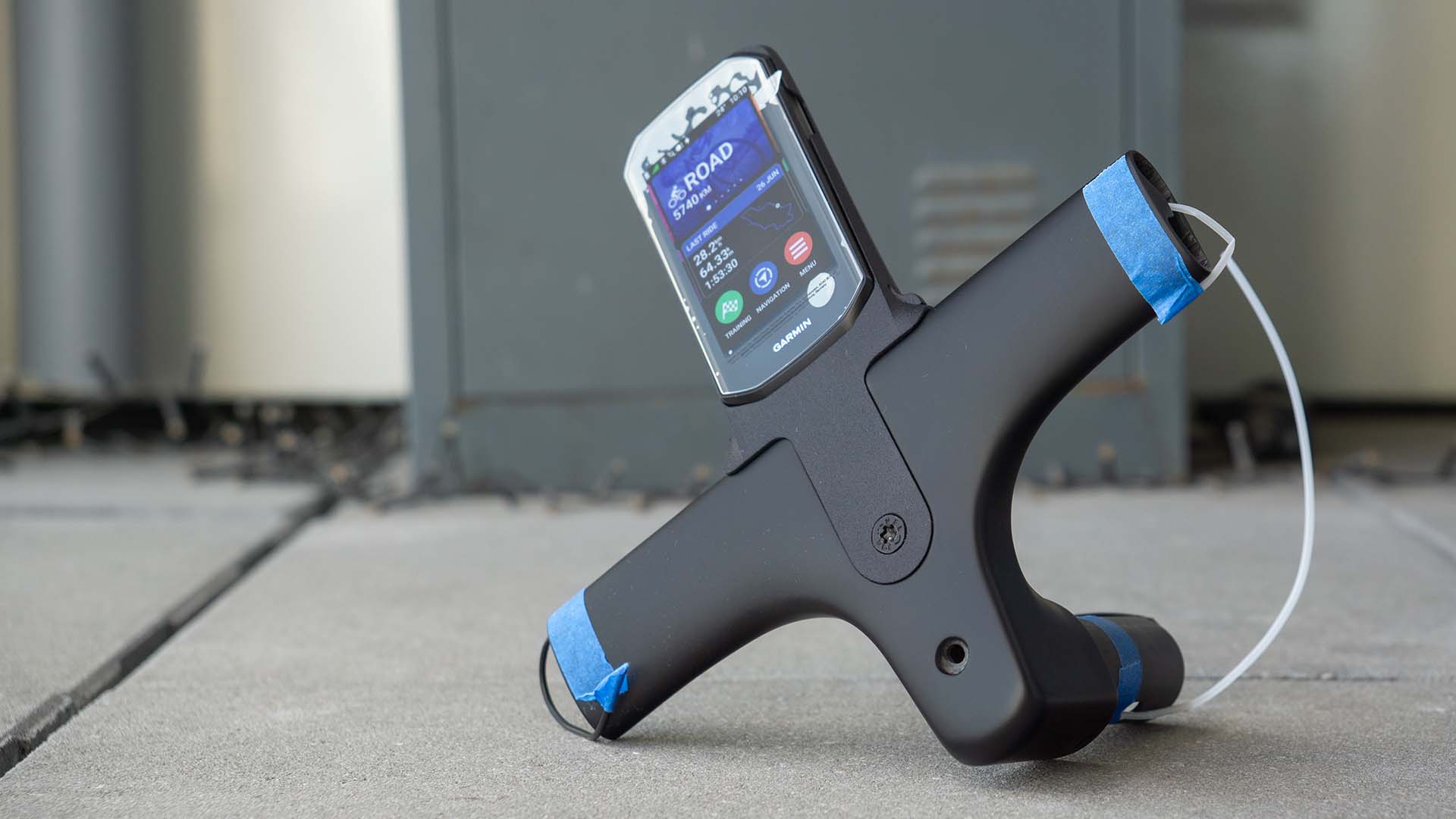
A custom 3D printed bike computer mount designed for aerodynamic integration. Image courtesy of Garmin.
Hinloopen makes Rocket Mounts for bike computers. They say that Pro teams use their mounts. For bike models like the Y1Rs, you just tell them your popular bike computer, and they have a mount for it. They cost $179 and are made by an ex-BMC engineer using powder bed fusion from a service.
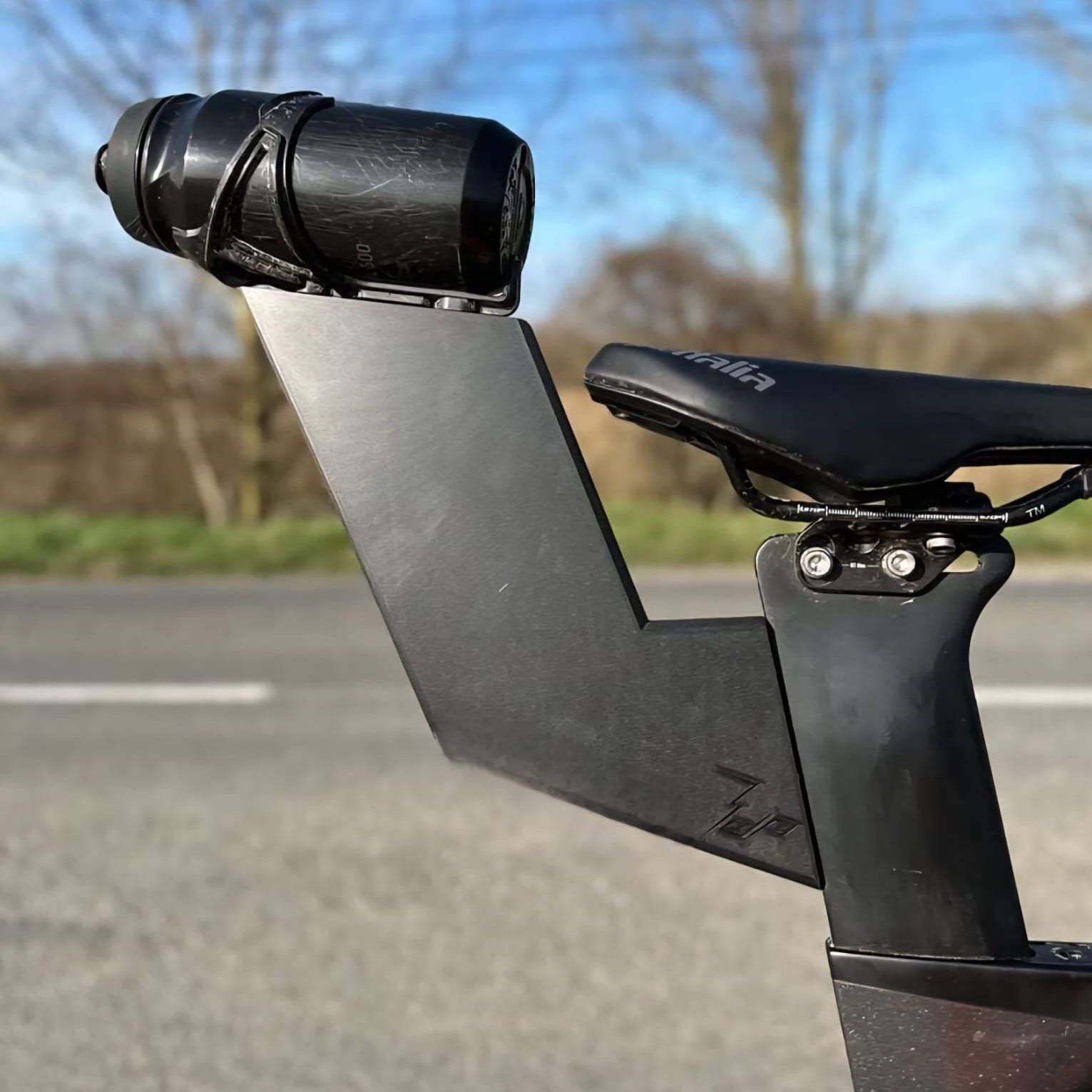
A custom 3D printed rear-mounted bottle holder designed for triathlon applications.
3DPari makes road and triathlon bike parts, and for $45, you can have a bottle cage mounted behind your back.
Slipstream3D makes between the armrests and bottle holders for around $200. Both Slipstream and 3DPari do custom designs if you’d like to be like your hero Tadej Pogačar.
Neat components make $26 holders for the Garmin.
Most of the above firms are small shops run by engineers, 3D printer enthusiasts, and triathletes. An uncommon trio of abilities and interests leads to a rare ability to make the perfect components for the user.
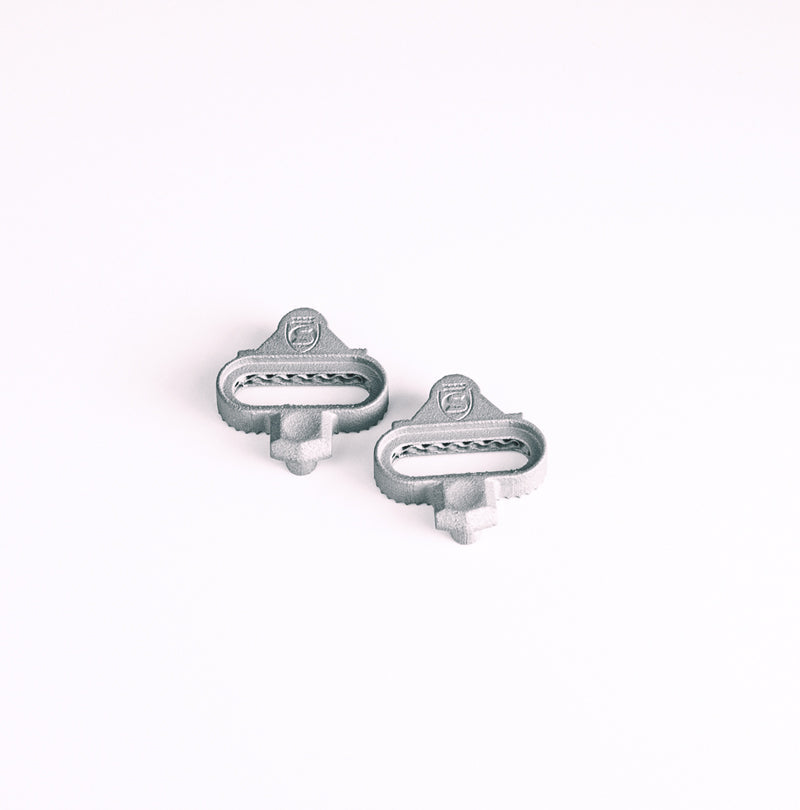
Silca’s 3D printed titanium cleats are designed for durability and weight savings. Image courtesy of Silca.
Silca, on the other hand, was founded in 1917. That company makes 3D printed cleats, computer mounts, and derailleur hangers. I like their $99 derailleur hangers because they’re said to be stiffer and lighter than the OEM components. They are said to improve shifting. These are not cheap, but they show that metal 3D printing is possible in this market. Also, they show that, beyond housing, mount upgrade products are possible.
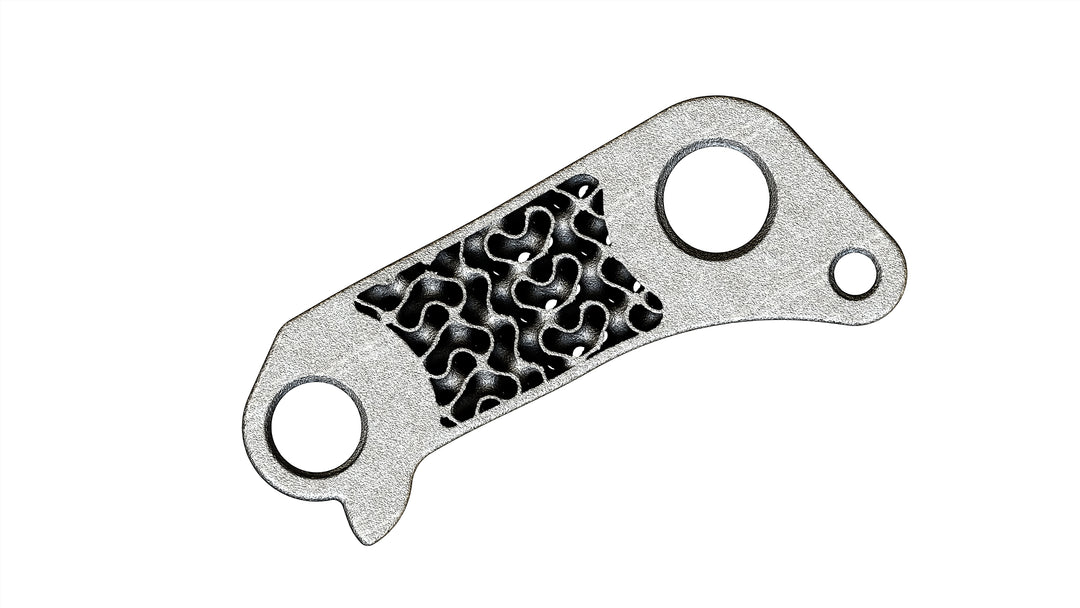
A 3D printed derailleur hanger featuring a lattice structure for weight reduction. Image courtesy of Silca.
The most encouraging example of 3D printed parts I’ve seen publicly, however, is from the British company Fairlight Cycles. The firm specializes in steel frames and craftsmanship, but is also innovative. On their Stael 4.0 bike, they say that they used tubes by the venerable Reynolds firm. That company has an in-house metal LPBF machine and uses it to make tools for bending their tubes correctly.

Reynolds uses metal 3D printed tooling to support bicycle tube manufacturing. Image courtesy of Reynolds.
Now that tool is much simpler than the ones we usually associate with 3D printed tools. But it’s super cost-effective for Reynolds to make. In addition to cost savings, it can help their tubes conform to custom geometry, thereby improving frame strength and comfort while reducing costs. This is a great example of a rather old process of welded tubing can use 3D printing cost effectively.
But, the Fairlight, on the same bike, uses more 3D printing.
The company specifies a “3D printed down tube cable guide..The brake hose now routes through the part for a more elegant aesthetic…All-new 3D-printed bottom bracket cable guide for mechanical gear set-ups. We have made one part do several jobs; as well as guiding the front and rear derailleur cables, it also acts as a guide for the brake hose and for the dynamo rear light wire,” and a “Specific 3D printed bottom bracket guide for Di2 and AXS set-ups. Guides the brake hose and dynamo rear light wire.”
Now I love that because cable guides are a tried-and-true 3D printing application that we do very well. Custom, small, precise enough, and cheap, we can really fit in here. Especially if multiple versions of wiring and bikes are needed. And now, with the industry split a bit between hydraulics and regular brakes, and between electronic switching and mechanical switching, more wiring is prevalent. And the second example, for a specific setup, is a dream part for additive. Multiple functionalities in one complex assembly are what we do well.
It is the helmets and seats that are grabbing the headlines. But as we can see, there is more going on with 3D printed bike parts. Custom parts could be something that some demanding consumers might aspire to, pointing the way to software- or engineering-based design services. And very specific bike parts made on low-cost machines are making their presence felt. With less expensive metal printing emerging, we could see more affordable metal parts as well. And in the regular production of bicycles, we can see small parts that could play a bigger role across many manufacturers.
Subscribe to Our Email Newsletter
Stay up-to-date on all the latest news from the 3D printing industry and receive information and offers from third party vendors.
Print Services
Upload your 3D Models and get them printed quickly and efficiently.













You May Also Like
AM Investment Strategies 2026 Sets the Stage for AMS 2027
AM Investment Strategies 2026 Nov. 5 · 12 p.m. ET · Free online event RESERVE YOUR SPOT ↗ A one-hour online discussion featuring some of the biggest names in 3D...
With Its Latest $200M Round, ICON May Be Running Away With the 3D Printed Construction Market
I used to view ICON, the Austin-based additive construction (AC) firm, as one of a handful of companies that could realistically consider itself the leader of the 3D printed construction...
How Should Businesses Build New Business? Dirk Simon Weighs In — Part 1
Dirk Simon had deep experience in materials and chemistry before joining the 3D printing industry. Instrumental in BASF and Farsoon’s market introduction, Dirk has spent a lot of time thinking...
3D Printing Services Near $2.5B as AM Market Shifts Beyond Hardware
The additive manufacturing market may be growing again, but one of the more interesting numbers behind that recovery has little to do with selling 3D printers. AM services generated nearly...