HP Webinar Explores the Promise and Hurdles of Digital O&P Workflows



For decades, orthotics and prosthetics (O&P) have been built by hand. Every brace, orthosis, or artificial limb reflected the skill of a trained craftsperson who shaped and adjusted it with a lot of care. These traditional methods set the foundation for the field and changed countless lives.
Now, digital tools are expanding what’s possible. With 3D scanning, design software, and 3D printing, clinics can produce devices faster, with more precision, and for more people. Patients can benefit from shorter wait times and custom devices that match their bodies better. Meanwhile, clinicians gain smoother workflows, while still keeping that same personal touch that makes O&P such a human-centered profession.

Digital tools can make the O&P process faster, lighter, and more precise. Instead of weeks of manual labor, a device can be designed, printed, and delivered in days. The technology also allows for a never-before-seen level of customization, giving patients devices that are tailored to their unique anatomy and lifestyle.
Yet the transition is not without some obstacles. Clinics often face steep learning curves, large upfront costs, and the challenge of blending new systems with older ones. Many healthcare professionals who have spent years working with traditional methods are cautious about switching to something completely new. But the change is not only about technology: it’s also about adapting to a different way of working.
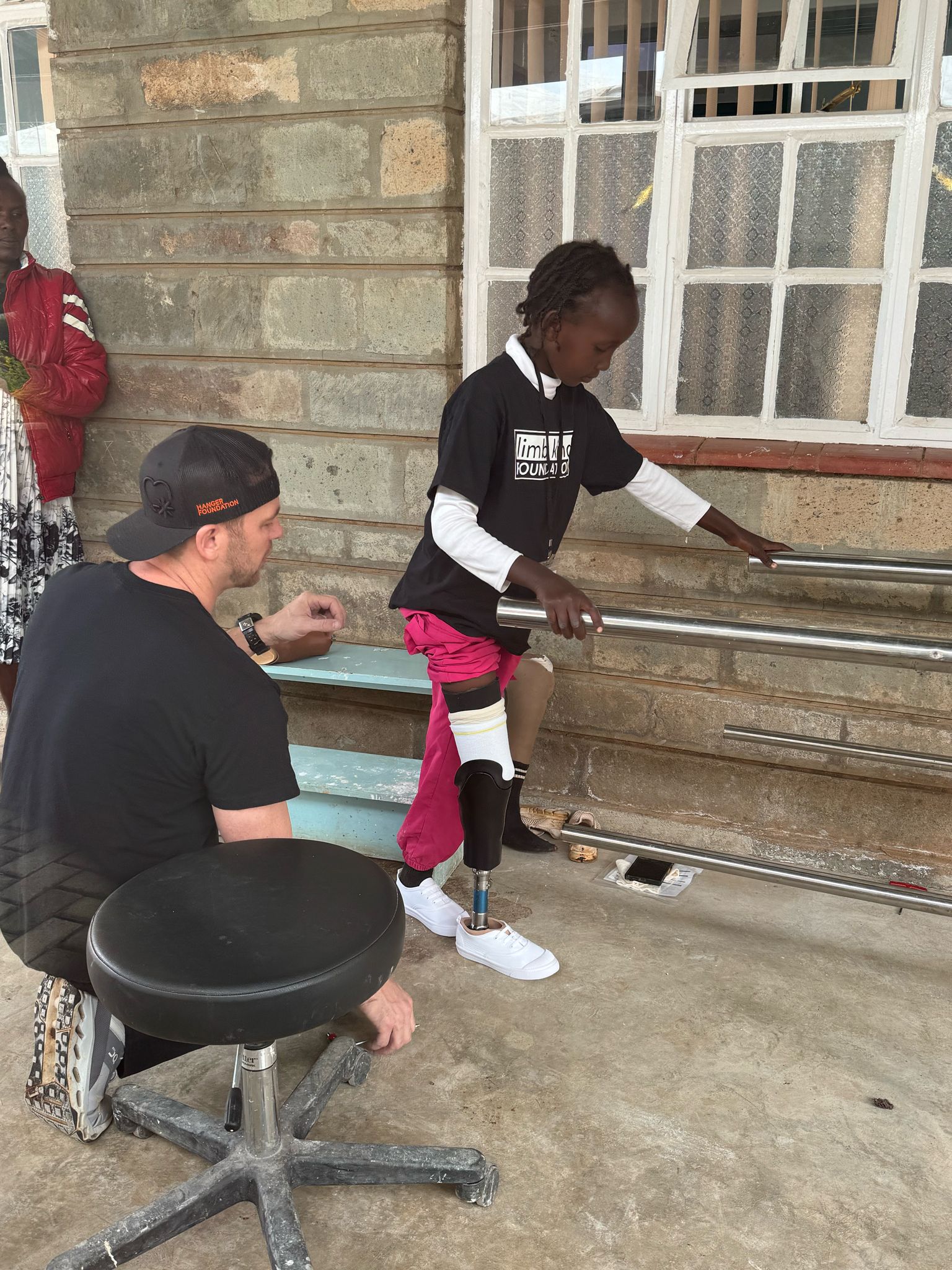
Delivering prostheses to children in Kenya. Image courtesy of HP.
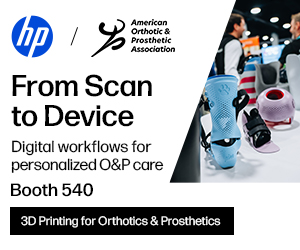
On September 30, HP will host a free 30-minute webinar, Digital O&P Workflows: The Good, The Bad, and The Considerations, designed to explore this transition. Unlike most sessions that only talk about the benefits, this webinar will also look at the challenges and what it really takes to go digital.

Dustin Kloempken. Image courtesy of HP.
The webinar will be led by Dustin Kloempken, a 3D Printing Application Engineer at HP with years of hands-on experience in additive manufacturing, whose career took shape in the aftermath of the 2008 financial crisis. He shifted from running his own startup to dedicating his work to additive manufacturing. Since then, he has explored how 3D printing can reshape O&P, from testing devices head-to-head with traditional methods to imagining new applications that didn’t exist before. His perspective combines both innovation and hard-earned pragmatism.
Kloempken will be joined by moderator Joris Peels, Executive Editor of 3DPrint.com and Vice President of Consulting at Additive Manufacturing Research (AMR), known for his sharp insights into both the business and technology of 3D printing.
Attendees will also have a chance to engage directly during a live Q&A, asking their own questions about the opportunities and the hurdles of digital adoption.
O&P brings together medicine, engineering, and the determination of people rebuilding their lives. Every device tells a story; for example, a child can learn to walk, an athlete can get back on the field, or a worker can regain independence. Adding digital tools isn’t only about making things faster; it’s also about reaching more patients and giving them solutions that fit their lives better.
At the same time, moving from traditional to digital isn’t always easy. The benefits are clear, including faster work, reduced manual effort, and devices that fit patients more effectively. However, there are also hurdles, such as the time it takes to learn new systems, the upfront costs, and ensuring the new tools integrate with what clinics already use. On top of that, clinics need to think about rules, staff training, and how well these changes will hold up over time.
These are the kinds of questions the O&P community is asking now. And they’re the questions at the heart of this upcoming webinar.
The session, Digital O&P Workflows: The Good, The Bad, and The Considerations, will take place at 11 am ET on September 30, 2025. It runs for 30 minutes followed by a live Q&A. Anyone interested in the future of digital O&P workflows can register here.
Subscribe to Our Email Newsletter
Stay up-to-date on all the latest news from the 3D printing industry and receive information and offers from third party vendors.
Print Services
Upload your 3D Models and get them printed quickly and efficiently.












You May Also Like
AMPulse Asia: India’s Orbital Launch Headlines a Busy Second Half of July
The second half of July brought major developments across Asia’s additive manufacturing sector. Highlights included India’s first private orbital launch powered by 3D printed engines, a billion-yuan ownership change at...
Australian OEM AML3D Closes Record Year, Eyes $54M Global Sales Pipeline
The US Department of Defense (DoD) finally seems to be implementing a strategy it has spent years refining, centered on bringing its international allies and partners more into the fold...
Xaar’s Nitrox Print Heat Lets ZCZH 3D Print Wax for Casting
Xaar has been quietly enabling more and more 3D printing firms to use novel materials and processes through its print heads. The company provides application support and knowledge to unlock...
Continuum Powders & AM Research White Paper Argues that Circular Economics is Central to Scaling Metal AM
Pretty much everyone is aware that, over the last several decades, Western nations have continuously ceded control over manufacturing supply chains to China. It has been less widely appreciated that...