FibreSeeker 3: The World’s First Continuous Fibre 3D Printer for the Consumer Launches on Kickstarter



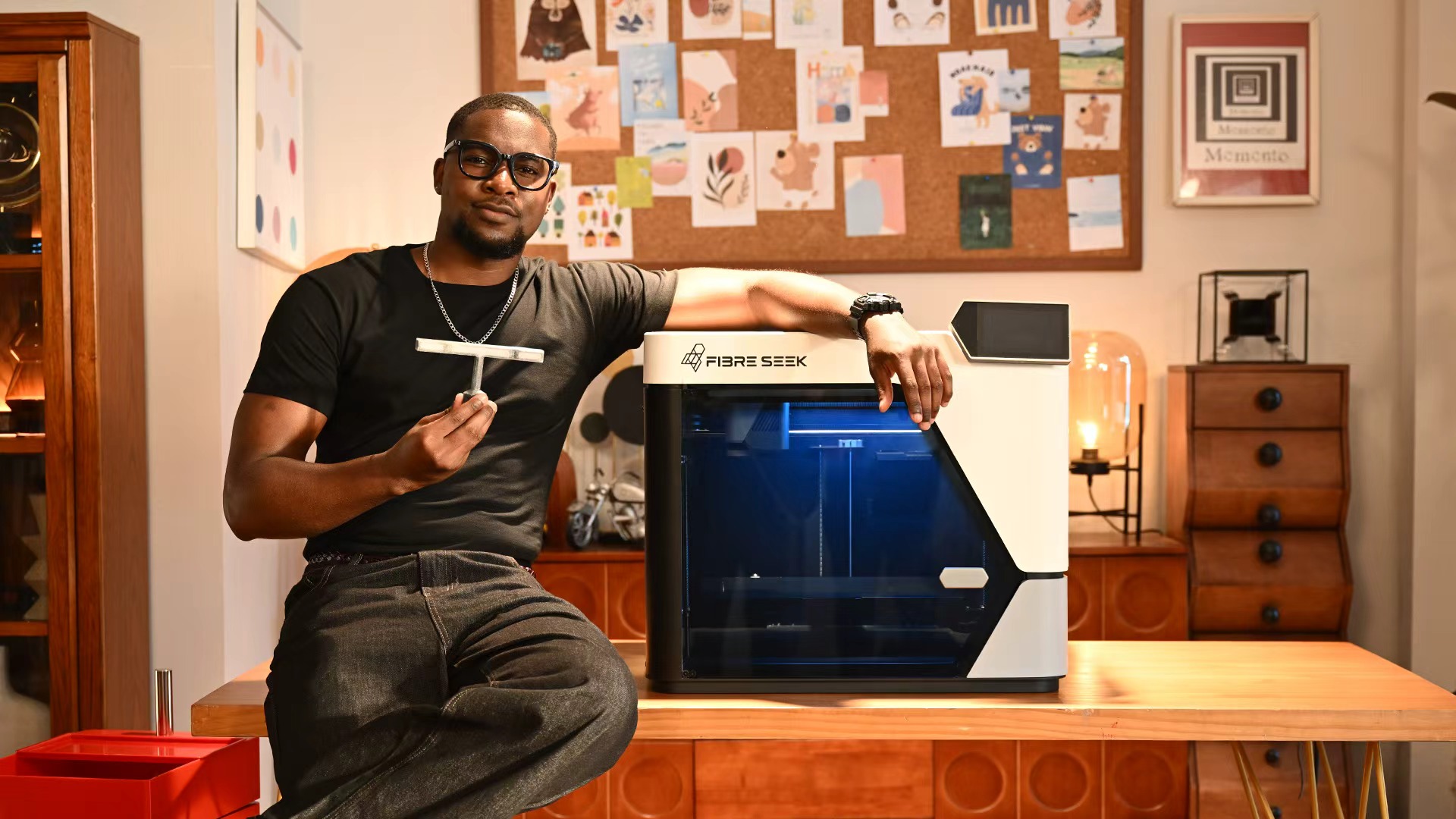
For decades, FDM 3D printing has been the go-to technology for makers, engineers, and educators looking to quickly prototype ideas. But while the speed and accessibility of fused deposition modeling transformed design workflows, its limitations are equally well-known: parts are often brittle, lack strength, and simply can’t withstand the stresses of real-world use. The launch of FibreSeeker 3 represents an important breakthrough—integrating Continuous Fibre Co-extrusion (CFC) into a compact, easy-to-use, consumer-accessible system starting at just $2,699. This isn’t just another incremental improvement in 3D printing. It’s a redefinition of what desktop additive manufacturing can achieve.
The Problem with Conventional FDM
While conventional FDM printers are great for form-fitting prototypes and visual models, their weaknesses become apparent the moment parts are subjected to stress. Thermoplastic prints are prone to cracking, bending, or breaking under load. Engineers and small businesses have long relied on CNC machining or costly outsourced composites to create functional end-use components.
The major barrier has always been cost. Continuous fibre systems from leading brands often range from $10,000 to $30,000—putting industrial-grade composite printing out of reach for most innovators, learning institutions, and small enterprises.
The FibreSeeker 3 Solution
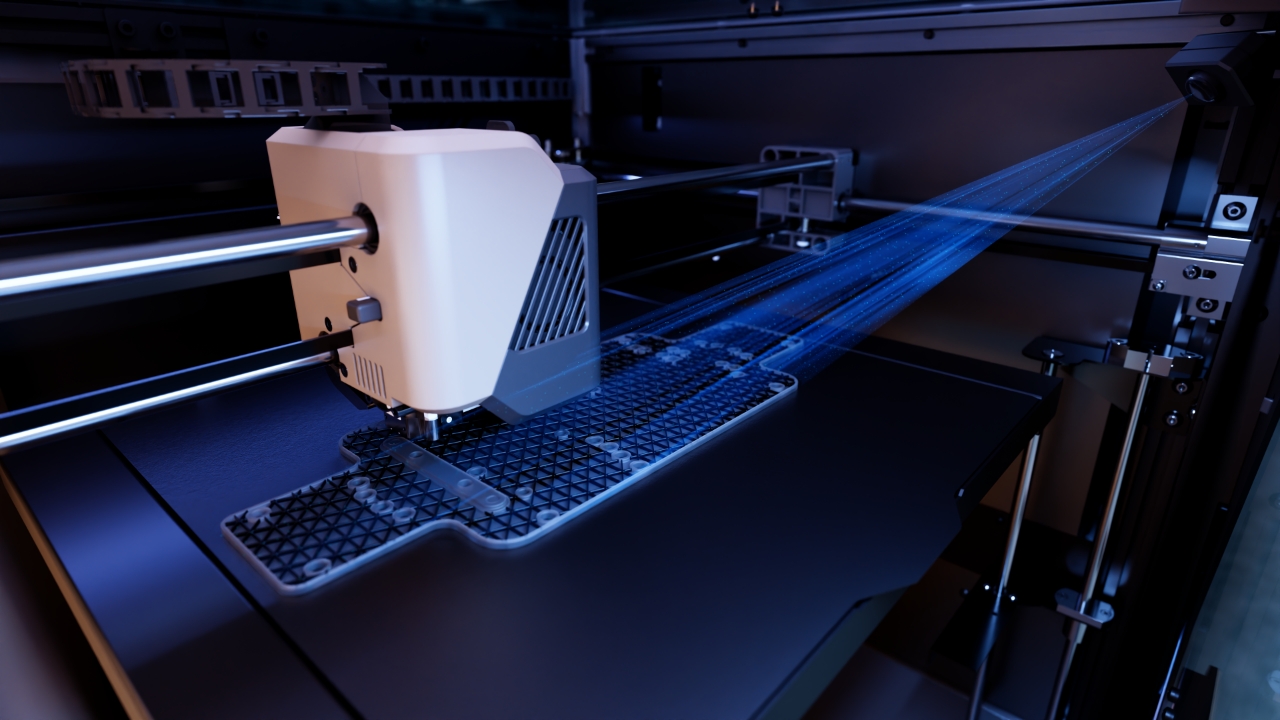
FibreSeeker 3 solves the problem by embedding continuous carbon or glass fibres directly into prints. The result? Parts up to 10x stronger than standard plastics, capable of withstanding structural loads once reserved for machined metals or composites.
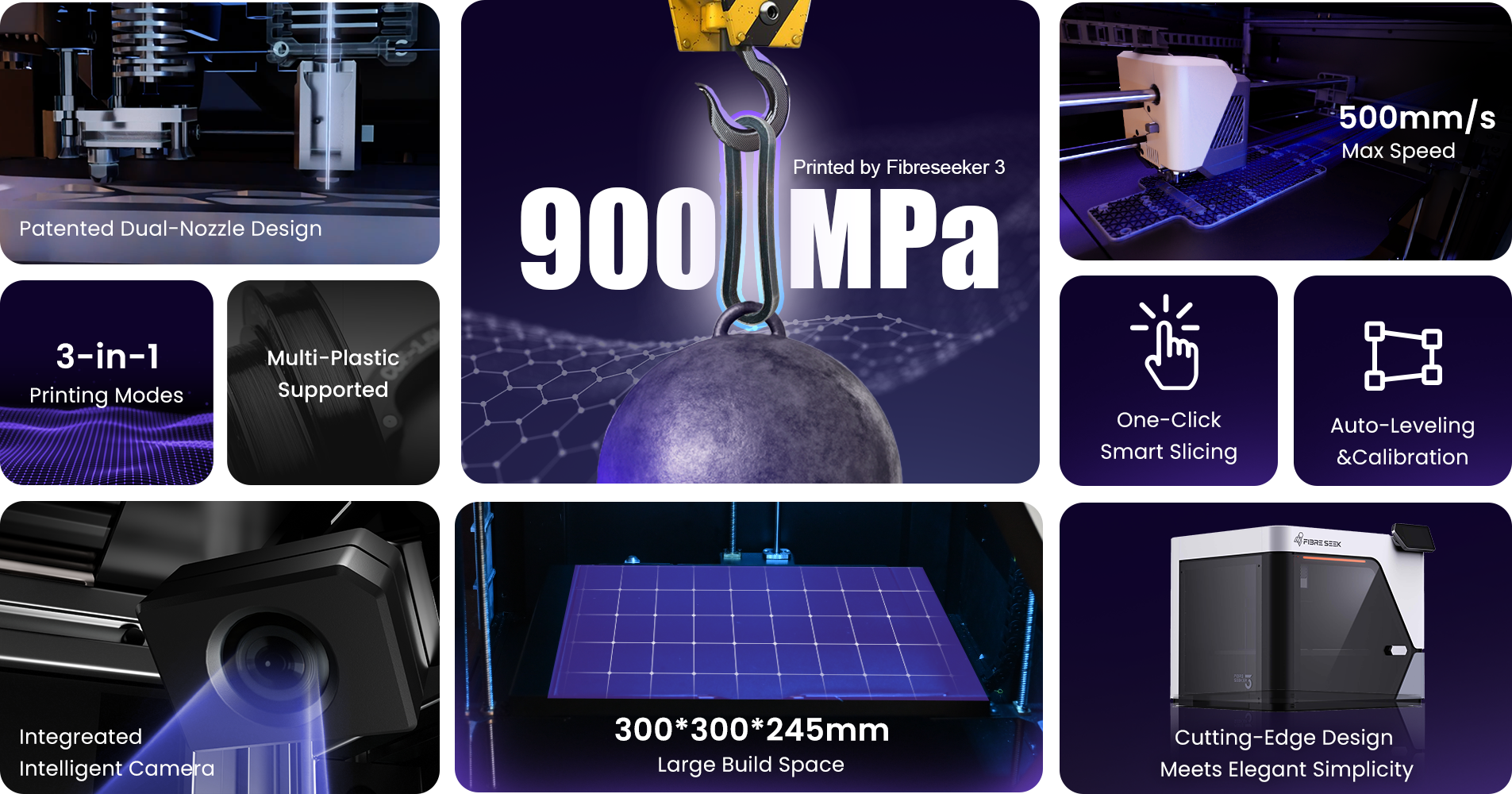
With tensile strength reaching up to 900 MPa, parts rival the performance of metals while remaining significantly lighter—ideal for aerospace, robotics, and automotive applications. FibreSeeker 3 is the first consumer-level printer to make advanced composites a reality for individuals, educators, and makers at an affordable price.
It comes equipped with fibre tension sensors, vibration compensation, and customizable fibre orientations to ensure precision and reliability. Multi-material capability also allows users to combine structural fibre with versatile polymers in a single build.
“After working with aerospace engineers to develop continuous fibre technology for organizations like NASA and Airbus, we realized the same principle could be rebuilt for personal use. FibreSeeker3 gives access to aerospace-grade composites to the consumer — smaller, smarter, and affordable. Real personal manufacturing only makes sense when you can print functional parts, as strong as metal and as light as carbon. This is the mission of FibreSeek, and with your support, we’re making it happen,” said Ryan Liu, Founder and CEO of FibreSeek, who was recognized on the Forbes 30 Under 30 list.
From Anisoprint to FibreSeek
FibreSeek was born from the core team behind Anisoprint, one of the earliest pioneers of continuous fibre 3D printing. What began as a breakthrough in aerospace-grade composites has now evolved into a global team of engineers, scientists, and innovators dedicated to making this technology more accessible. By drawing on years of industrial expertise, FibreSeek is building on Anisoprint’s foundation to deliver a new generation of affordable, high-performance tools.
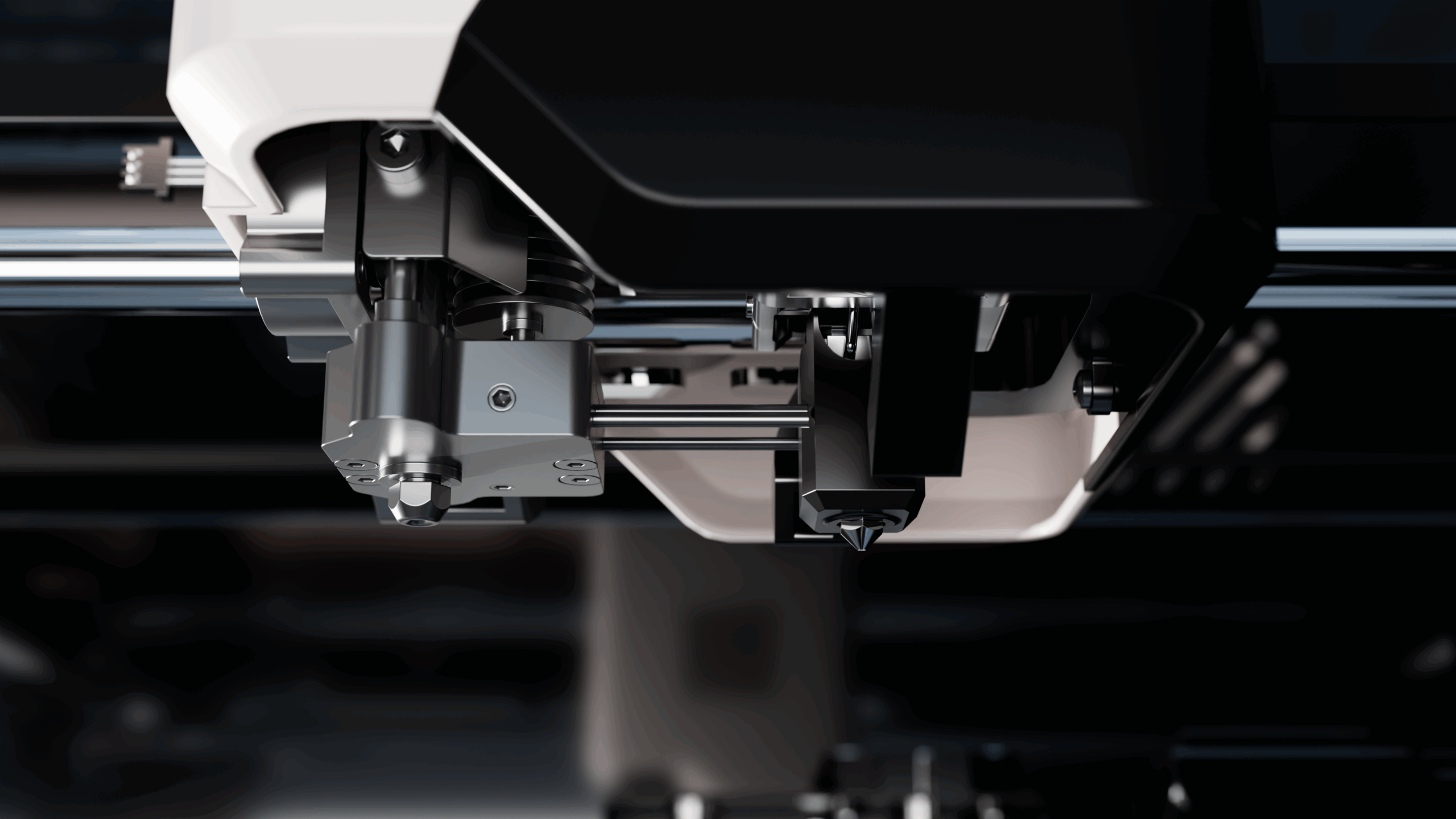
How Continuous Fibre Works
Unlike FDM printing, which relies solely on extruded thermoplastics, Continuous Fibre Co-extrusion (CFC) integrates long strands of carbon or glass fibre into the part. Much like steel rebar reinforces concrete, these fibres dramatically increase strength and stiffness while keeping the structure lightweight.
This process transforms plastic prototypes into structural-grade composite production, perfect for applications where strength, performance, and reliability are required.
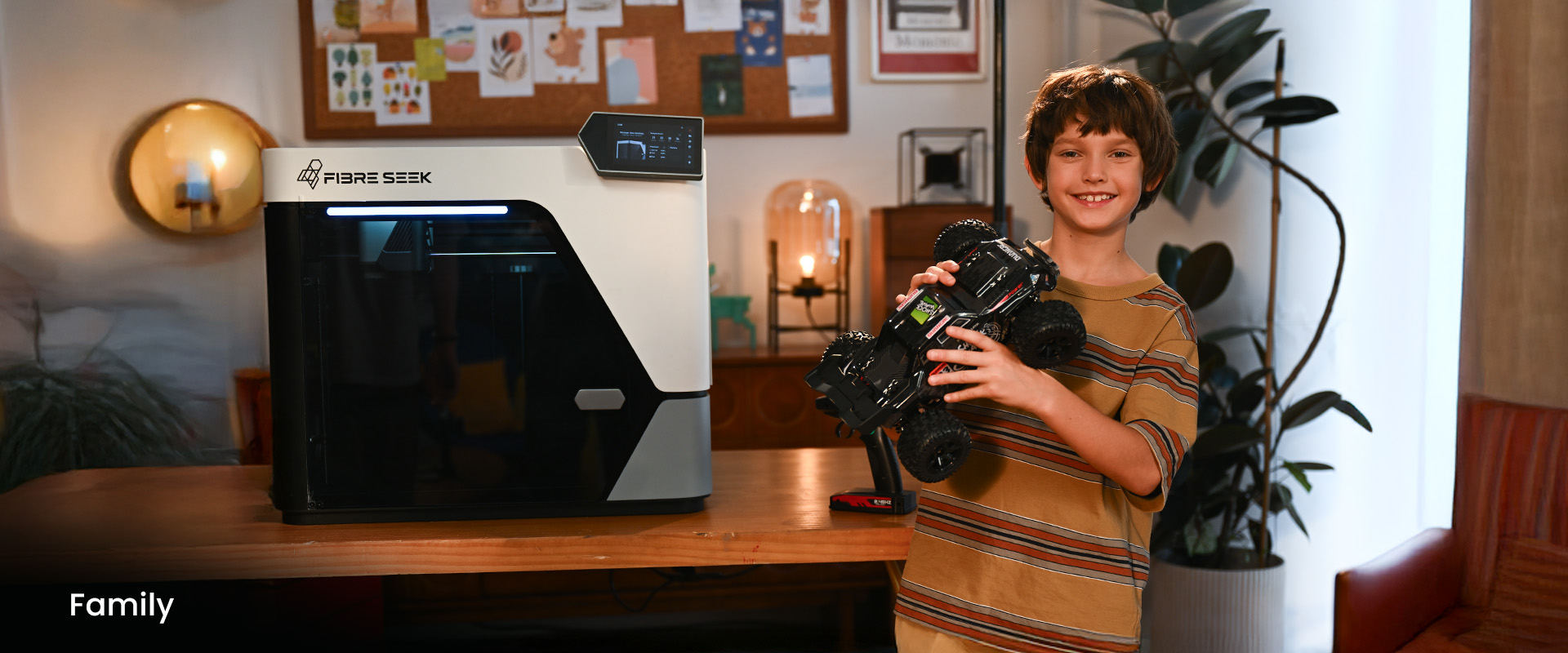
Technical Highlights
FibreSeeker 3 blends industrial-grade performance with desktop accessibility:
- Build Volume: 300 × 300 × 245 mm, suitable for prototypes and small-batch production.
- Precision: ±0.2 mm accuracy with a minimum layer thickness of 50 μm (micrometers).
- Speed: FDM printing up to 500 mm/s; CFC reinforcement at 20 cc/h (cubic centimeters per hour).
- High-Temp Performance: Nozzles up to 320°C; heated bed up to 110°C with automatic leveling.
- Material Range: PLA, PETG, PC, PA (nylon), PACF (carbon-filled nylon), PETGF (glass-filled PETG), plus proprietary continuous fibres (X-CCF, X-CGF).
- Smart Monitoring: Sensors detect filament breaks or fibre clogs; integrated HD camera enables live monitoring.
- Ease of Use: 5-inch touchscreen, PC app, and the FibreSeek Aura slicer (Windows/Mac; supports STL, STP, and 3MF file formats).
Applications & Use Cases
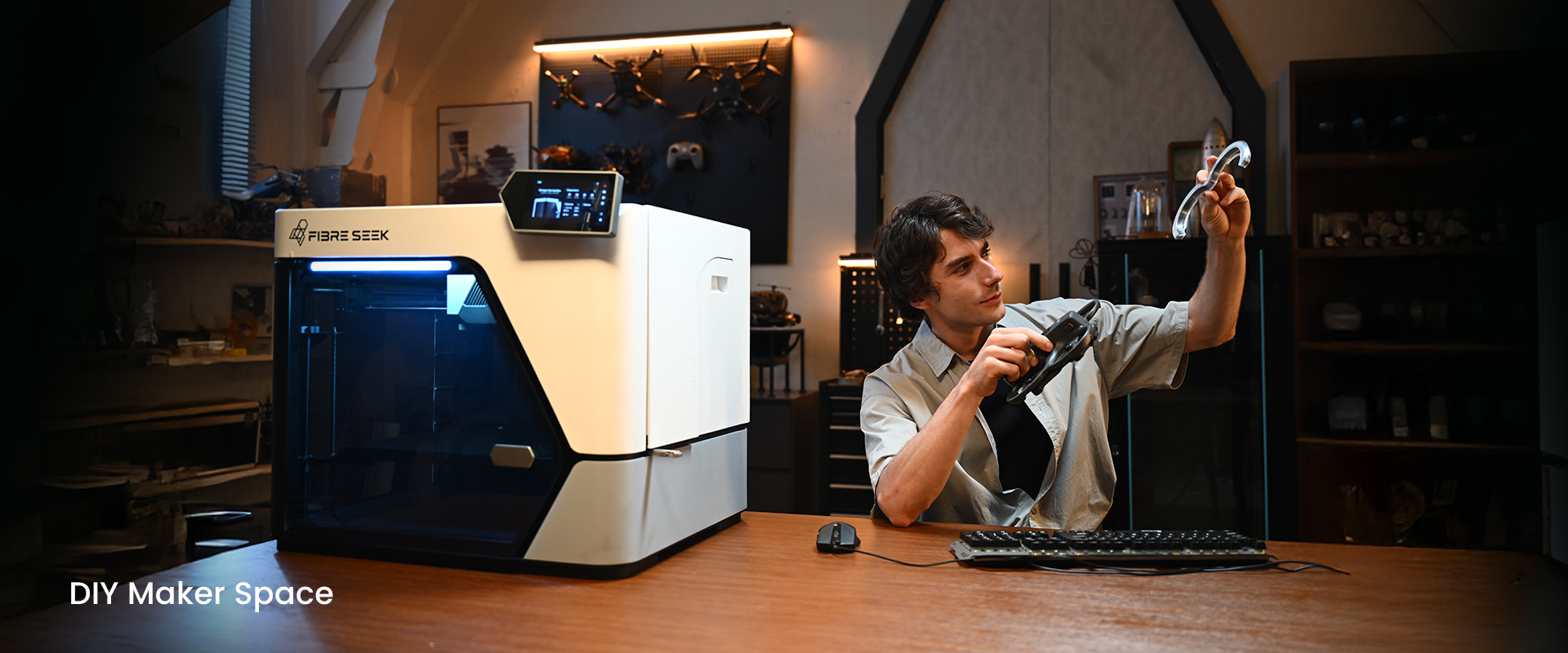
Makers and Hobbyists: Durable UAV frames, robotics, sports equipment.
Small Businesses & Workshops: Functional, small-batch parts like gears, pedals, and brackets.
Engineers and Designers: Prototypes strong enough for real-world testing.
Education and Research: Hands-on training with advanced composites.
High-Performance Industries: Aerospace and automatic parts.
Redefining Personal Manufacturing
By bridging the gap between fragile FDM prototypes and expensive industrial composites, FibreSeeker 3 positions itself as the first truly consumer-accessible continuous fibre 3D printer. With FibreSeeker 3, structural-grade manufacturing is finally available to everyone—empowering innovators everywhere to create stronger, lighter, and more functional parts than ever before. To learn more about FibreSeeker 3, visit the campaign page here: https://www.kickstarter.com/projects/1763117873/fibreseeker-3-the-first-personal-continuous-fibre-3d-printer?ref=4vr7q2.
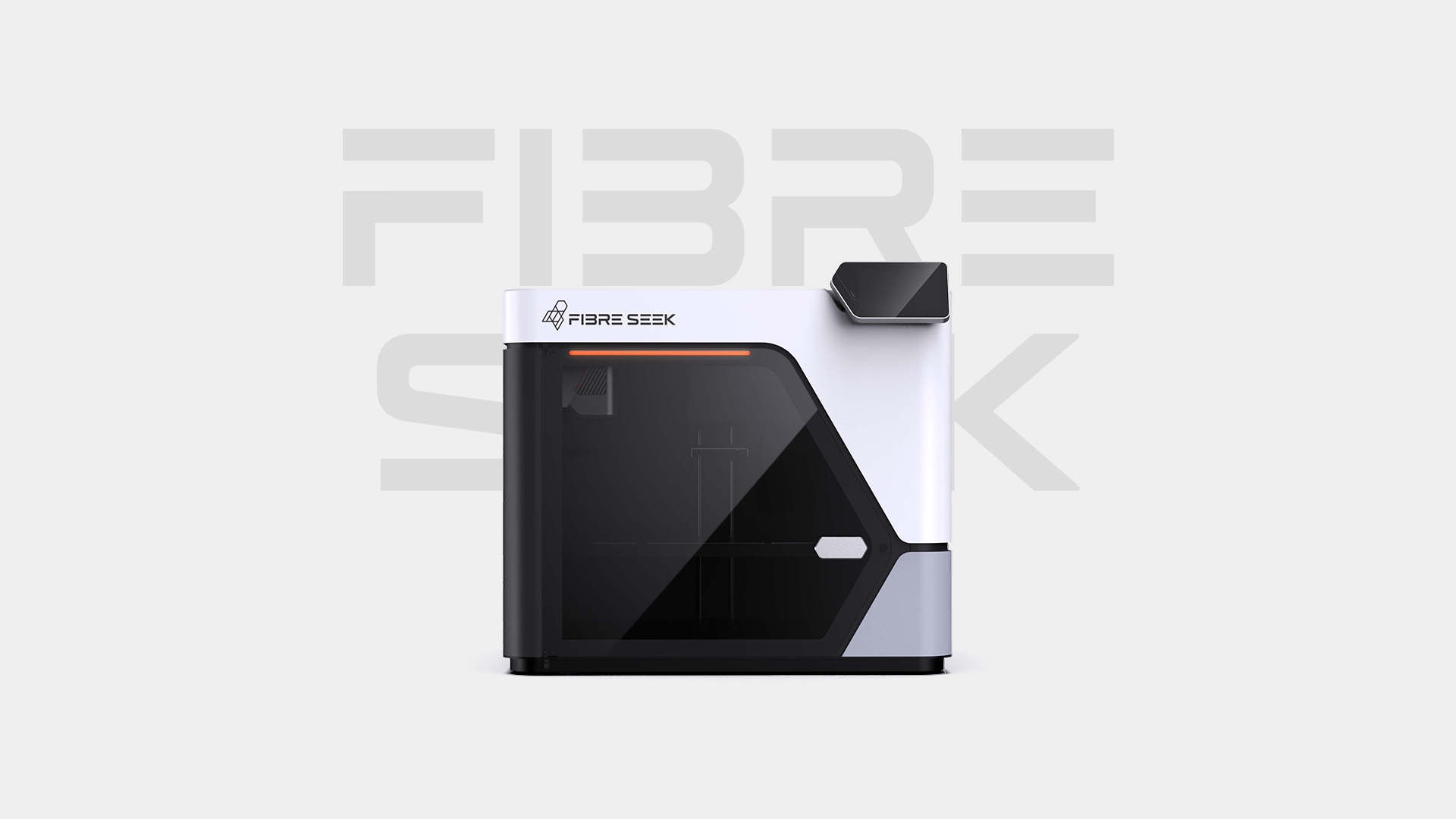
Image courtesy of FibreSeek
Subscribe to Our Email Newsletter
Stay up-to-date on all the latest news from the 3D printing industry and receive information and offers from third party vendors.
Print Services
Upload your 3D Models and get them printed quickly and efficiently.













You May Also Like
Deakin Researchers 3D Print Rotary Kirigami Cylinders
We’ve long had a passion at 3DPrint.com for Kirigami shapes, be it in the form of bandages, nano fabrication, or sensors. We also wrote a lot about metamaterials and, more...
3D Printing News Briefs, August 26, 2026: Meshy 7, 4D Printed Implants, & More
We’re kicking things off today with software news, as the new Meshy 7 is now live. Then we’ll move on to business, with ExOne and voxeljet now operating as a...
3D Printing News Briefs, August 22, 2026: Polymers for CubeSats, Animal Mobility Devices, & More
We’re starting with defense news in this weekend’s 3D Printing News Briefs, before moving on to polymers for CubeSats and 3D printed prosthetics. We’ll end with a story about engineering...
Amaero Builds U.S. Metal Powder Capacity for Additive Manufacturing
For metal additive manufacturing (AM) to grow in the United States, companies need more than printers. They also need a reliable supply of the powders that go into those machines....