OUTLAW3D: Singapore’s 3D Printing Service Bureaus Ask for Better Regulations on Gun & Vape Parts


Back in 2021, the Parliament of Singapore passed a law called the Guns, Explosives, and Weapons Control (GEWC) Bill, banning individuals without the appropriate licenses from owning digital blueprints for firearms and certain firearm components. However, the law only went into effect on July 1, 2025, and, since 2021, additive manufacturing (AM) service bureaus in Singapore have continued to regularly receive requests for 3D printed gun parts.
According to a recent article from Channel News Asia, at least one firm did report that it has received fewer requests for 3D printed gun components in the lead-up to the GEWC’s enforcement. Meanwhile, however, AM service bureaus have been dealing with an uptick in requests for another category of products, giving them cause for concern: vape parts.
Channel News Asia spoke to one service bureau claiming that, so far in 2025, requests for vape parts have increased 50 percent compared to the year prior. In Singapore, vaping has been outlawed since 2018, and, starting soon, Singaporean law enforcement will approach vaping “as a drug issue with stiffer penalties to be imposed”.
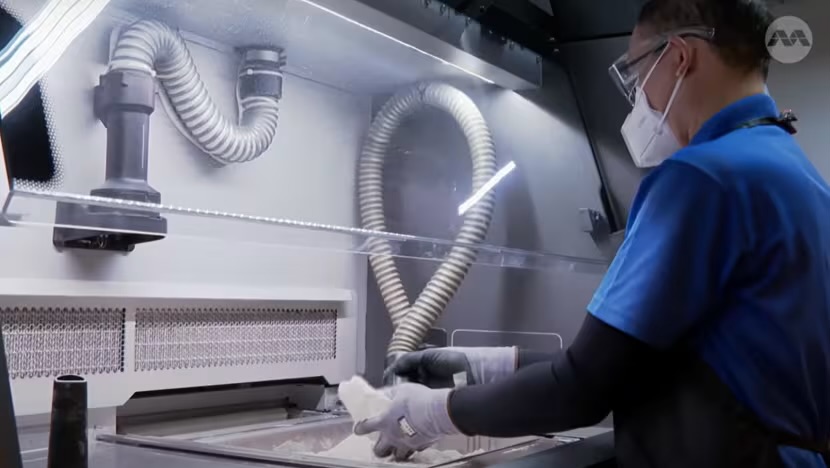
All of this has led AM service bureaus in Singapore to demand more effective regulations concerning digital files: above all, they want mechanisms in place enabling them to “catch illegal designs” before the production process begins. As it stands, many of the companies that spoke to Channel News Asia claim that they’ve been forced to step up inspection efforts on their own, in response to potentially illegal designs.

Hardik Dobariya, co-founder of Singaporean service bureau Factorem, told Channel News Asia, “You can create a 3D model of a gun that’s this many millimeters long, and can achieve this functionality, and the AI will produce it for you. So I think it’s getting easier and easier to get the designs required.”
On the other hand, Dobariya noted that the company is using similar tools to counter requests running contrary to Singaporean law: “When [our] platform detects that there are gun-like components, there’s human intervention required. Our algorithm stops them, requires our team to come in to take a look whether this is a legitimate inquiry and what the purpose of this is.”
The push by lawmakers in the U.S. who are demanding that 3D printing companies adopt AI-enabled tools that can block 3D printed gun parts looks like it’s poised to go global. As I noted in a recent post about concerns from South Korean service bureaus over potential data leakage, nations trying to address digital manufacturing regulatory environments “…could be prompted to unite surrounding an accelerated push on manufacturing cybersecurity, which in turn could serve as a bedrock for further partnership centered on supply chain digitization.”
Now, if such a united regulatory effort does take place, would it mostly be a thinly-veiled attempt to get Bambu Lab (and other Chinese-made) printers out of Western and Western-allied AM ecosystems? Probably! But I think that’s on the horizon, in any case.
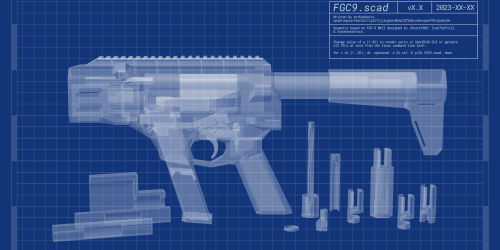
3D printed gun CAD File. Image courtesy of Ed Markey via X.
I don’t really have an issue with what China does: the economic actions it takes are as rational as can be expected from a government that’s attempting to act in its own interests, while responsible for ruling over a billion people. I just think it makes no sense for the U.S. and other nations dependent on Chinese imports to try to implement broad-sweeping reshoring programs while they’re using Chinese hardware. It’s a bit like challenging someone to a duel, then asking them if you can borrow their pistol.
Along those lines, if governments looking to reshore are truly serious about achieving that objective, they, too, will soon realize that it’s quite difficult to do so while dependent on Chinese infrastructure. At that point, they’ll either tone down their reshoring efforts or they’ll join forces with one another by regulating the marketplace on a worldwide (minus China) scale. Collaborations between nations like the U.S., Singapore, South Korea, etc., on digital file regulation increasingly look like a feasible first step through that door.
Images courtesy of Channel News Asia unless otherwise noted
Subscribe to Our Email Newsletter
Stay up-to-date on all the latest news from the 3D printing industry and receive information and offers from third party vendors.
Print Services
Upload your 3D Models and get them printed quickly and efficiently.













You May Also Like
3D Printing News Briefs, October 10, 2026: Drones, WAAM, Ceramics, & More
We have a packed 3D Printing News Briefs for you this weekend! First, America Makes celebrated the recent National Manufacturing Day with 3D printed drones, and then it’s on to...
3D Printing News Briefs, October 3, 2026: Hypersonics, Hotends, & More
We’re starting off with defense in this weekend’s 3D Printing News Briefs, as Titomic was awarded a $5 million U.S. defense contract, and VulcanForms announced a partnership with Specter Aerospace...
The Part Is Only Half the Story: Why 3D Printing Needs a Digital Thread
A 3D printed part can generate a lot of information. The challenge is keeping track of it. Manufacturers need to know which design was used, what material went into the...
Advanced Manufacturing at IMTS 2026: 3D Printing and AI and Drones, Oh My!
Last week’s International Manufacturing Technology Snow (IMTS) in Chicago welcomed over 90,000 attendees to the jungle that is McCormick Place. With over 1.17 million square feet of exhibit space, and...