EOS Joins the MAT‑H2 Consortium

EOS is joining the MAT‑H2 consortium. MAT is an EU-funded group that aims to do research into a hydrogen-led economy. The thinking is that hydrogen will be a clean energy source for industrial processes and many transport applications. The consortium is studying how metals, coatings, and manufacturing processes behave in hydrogen environments, with the goal of developing components that can withstand long-term exposure without losing strength or reliability.
EOS will join members like coatings company Teknos, stainless steel fastener company Bumax, resistant stainless steel firm Spstainless, high-strength steel firm SSAB, engine giant Warstila, researcher VTT, transport company Nordic Tank, and the Finnish University of Oulu. Indeed, the whole project has quite a lot of Finnish firms in it, so there should be some sauna time included in this project overall. EOS’ metal powder bed fusion technology was created by Olli Nyrhilä and other researchers in Finland. So maybe this is some kind of thank you, Finland kind of thing?
We’ve previously looked at Project Overleaf, which is 3D printed carbon fiber tanks, ILT’s quest for 3D printed hydrogen reactors, and a DTU ceramic hydrogen fuel cell. I’ve repeatedly said that we have enough flying bombs already. I’m also skeptical of limiting ourselves through standardizing on one battery technology, hydrogen rather than developing new ones all the time. They also may have found 250 million tonnes of hydrogen beneath France. This may be worth $92 trillion. Look, I’m all for saving the planet, but the French are super annoying already; imagine if they had trillions in hydrogen. They’d be insufferable.
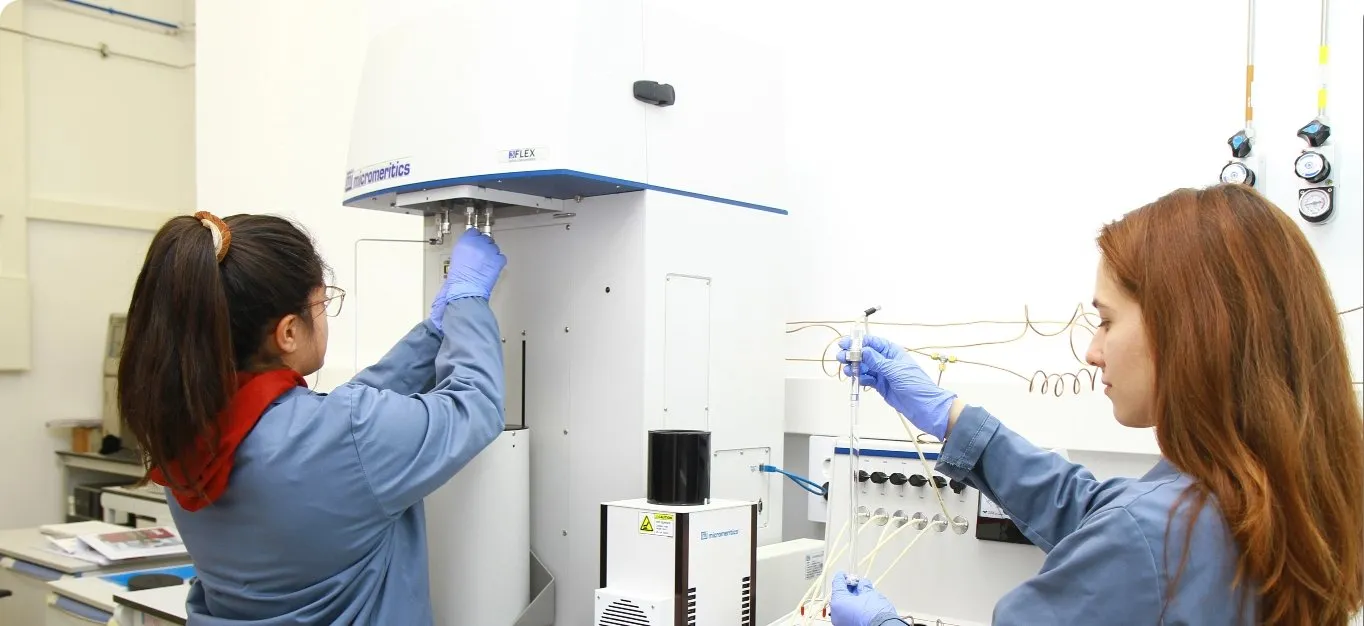
Finland reportedly has no hydrogen but is nonetheless betting big on the technology through declaring the BotH₂nia Hydrogen Valley and starting hydrogen production plants.
Paula Kainu, Industrial Manager Energy at EOS explained,
“Hydrogen will play an important role in the future energy landscape, but its successful adoption depends on solving complex material challenges. Additive manufacturing is a key enabler in this process, creating new opportunities to develop, test, and optimize materials and components for hydrogen environments with greater speed and flexibility. Through the MAT-H2 consortium, EOS is helping bridge the gap between research and industrial implementation by contributing expertise in metal AM, material characterization, and application-driven development.”
Key to this development is Wartsila’s WISE – Wide and Intelligent Sustainable Energy grouping, which is looking at hydrogen power plants, power trains and energy production. EOS will help both through its AM and materials knowledge. I’m going to go out on a limb here and think that this is going to be centered on stainless steel given the companies involved. The issue they probably want to solve is hydrogen embrittlement, where metals absorb hydrogen and become brittle. Stress and other cracks can form and propagate more easily, leading to failures. At the same time, standby nickel and titanium alloys also suffer from embrittlement and other negative effects. 316L is better than other steels at holding up to hydrogen, but lots of parts in a hydrogen system will be under pressure, making embrittlement much more of an issue. Perhaps they should make friends with firms such as Outukumpu whose Supra range of steels has been optimized for this?
If the European economy makes a shift towards hydrogen, then it could propagate its liberal democracies indefinitely and fund their welfare states for good. The continent would also no longer be dependent on energy from the US, Russia or the Middle East. This is a sovereign future that could be very beguiling in a post-globalization world where the continent has effectively been isolated by the US. If even a small part of the economy does shift to hydrogen, then high-pressure components made with Additive will play a role in that transition. So beyond a big thank you to Finland, this seems like a solid move for EOS:
Subscribe to Our Email Newsletter
Stay up-to-date on all the latest news from the 3D printing industry and receive information and offers from third party vendors.
Print Services
Upload your 3D Models and get them printed quickly and efficiently.













You May Also Like
The Manufacturing Race Behind the Drone Revolution
We are in the middle of a major manufacturing shift focused on the production speed and payload capacity of uncrewed aerial systems (UAS), or drones. A recent Manufacturing Dive article...
ADDMAN to Buy Up to $10.8M in Nickel 718 Powder from 6K Additive Over 30 Months
After years of buildup, we’re finally starting to see what the US metal additive manufacturing (AM) market could look like at scale. To be sure, it’s still not quite there,...
Metal AM in a Multipolar World, Part 2: How PBF and DED Could Change by 2035
The first decades of PBF development were heavily shaped by machine capability: more power, more lasers, larger build volumes, better recoating, and improved process monitoring. These developments will continue, but...
Advanced Manufacturing at IMTS 2026: 3D Printing and AI and Drones, Oh My!
Last week’s International Manufacturing Technology Snow (IMTS) in Chicago welcomed over 90,000 attendees to the jungle that is McCormick Place. With over 1.17 million square feet of exhibit space, and...