New York DA Proposes Law to Stop Sharing Digital 3D Printed Gun Blueprints

A new bill in New York seeks to stop the spread of digital blueprints used to 3D print gun parts and auto sears. These small devices can turn a semi-automatic gun into a fully automatic one, and can be made with a 3D printer, often for just a few dollars. They are also sometimes sold online disguised as toys or other harmless items.
The proposed law would make it a crime to share files showing how to 3D print auto sears and other gun parts. Introduced by Manhattan District Attorney (DA) Alvin Bragg, State Senator Brad Hoylman-Sigal, and Assemblymember Linda Rosenthal, the bill is part of a wider effort to address the rise of illegal homemade weapons. Bragg’s office began focusing on 3D printed guns in 2020 with the launch of the Ghost Guns Initiative, which has led to many prosecutions and policy pushes.
Right now, under New York State law, it is a crime to make or own an auto sear. But sharing digital files that show how to 3D print one is not illegal. The new bill (S227A/A1777A) would make it a class A misdemeanor to distribute blueprints or files for printing auto sears. It also includes language from a 2023 proposal to make it a class D felony to manufacture 3D printed guns and gun parts, and a class A misdemeanor to share the files for printing them.
“Driving down gun violence and addressing the proliferation of 3D printed and ghost guns is an ongoing priority for my office that requires an aggressive and holistic approach. Auto sears are dangerous weapons that further exacerbate gun violence and need to be treated extremely seriously,” said Bragg. “Our proposed legislation reflects a comprehensive legislative fix that would give us additional tools to hold people accountable who are using and developing illegal firearms. I hope the legislature gives serious consideration to this bill before the session ends in June.”
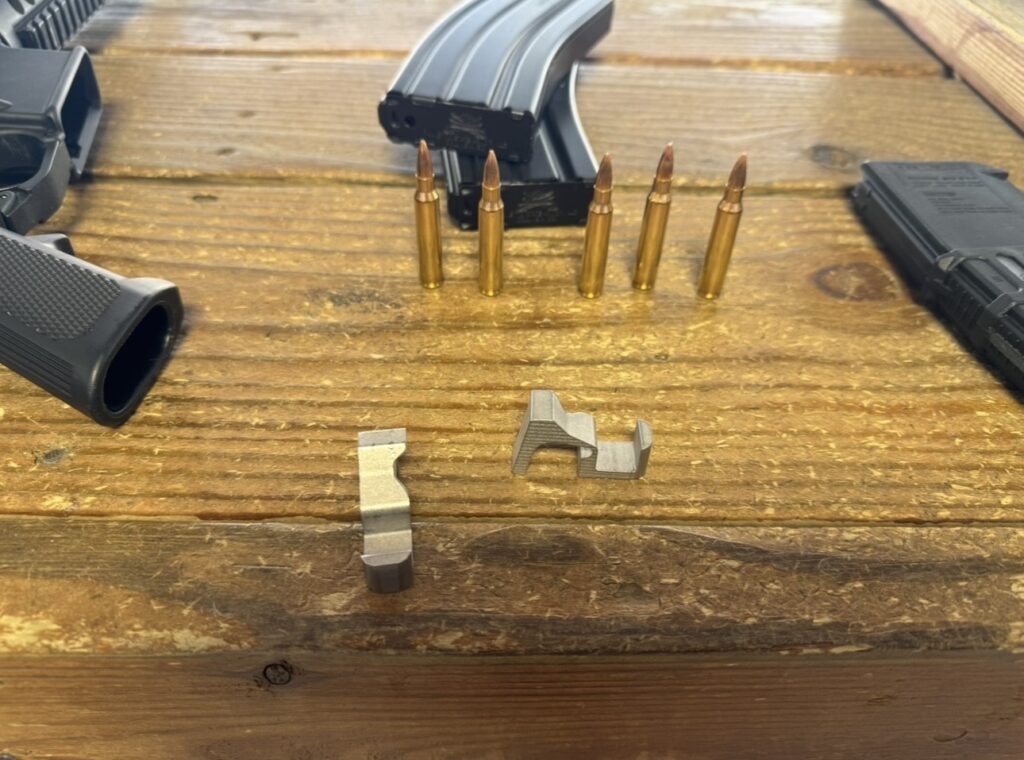
An example of an auto sear.
This legislative push is part of a broader effort by the Manhattan DA’s Office to stop the spread of 3D printed guns. In recent years, the office has reached out to 3D printing companies and websites that host blueprint files, asking them to block access to files used to print firearms and related parts. It has also worked with companies like YouTube to restrict content showing how to print guns and ammunition.

Manhattan District Attorney Alvin Bragg.
In addition, Bragg’s team has prosecuted several cases involving ghost guns and 3D printed parts, including people allegedly making or selling these items from apartments, online, and even from inside a federal prison. These prosecutions include the indictment of Luigi Mangione, who reportedly used a ghost gun to kill his former boss, the CEO of a tech company; the case against Hayden Espinosa, who was found selling ghost guns and gun parts while serving time in federal prison; an investigation into multiple ghost gun conspiracies allegedly involving New York City employees; and the case of an individual who was manufacturing ghost guns and gun parts in his apartment using a 3D printer.
These actions are part of a larger program: the Ghost Guns Initiative, launched by the office in 2020. Since then, the effort has led to the recovery of more than 90 firearms, over 130 ghost gun parts, and hundreds of high-capacity magazines and other gun accessories.
Over the last few years, law enforcement agencies across the US have been paying closer attention to the rise of 3D printed firearms. At 3DPrint.com, we have reported dozens of cases and created datasets tracking arrests involving 3D printed guns. In 2024 alone, at least 30 individuals across 16 states were arrested in connection with crimes involving 3D printed firearms or components. These include people allegedly manufacturing weapons in homes or apartments, shipping printed gun parts across state lines, and participating in extremist networks using 3D printed guns. Some cases also involved juveniles or individuals on parole using widely available blueprints and desktop printers to create functional weapons.
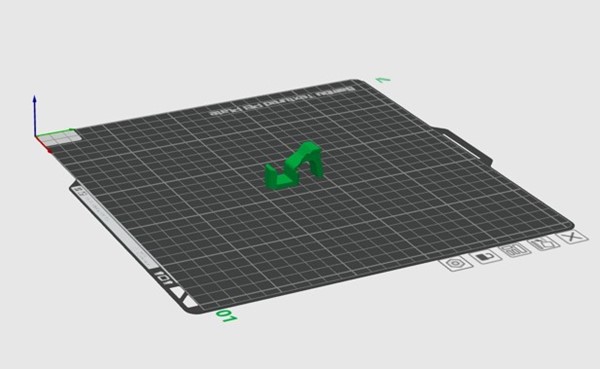
A digital blueprint for an AR-style auto sear.
As more people gain access to 3D printers and online blueprints, police and prosecutors have had to adjust quickly, using both new laws and existing ones to react. This new legislation in New York is part of a larger trend, as states and cities try to keep up with how digital tools are changing how firearms are made and shared.
In fact, according to reporting by 3DPrint.com, as of 2024, at least 11 US states and several cities have passed or updated laws that specifically address 3D printed guns, focusing on issues such as serial number requirements, restrictions on digital file sharing, and penalties for manufacturing unserialized firearms.
The proposed legislation is now awaiting consideration by the New York State Legislature, and lawmakers are expected to debate it before the session ends in June. If passed, the bill would give prosecutors new tools to address the spread of digital files used to produce illegal weapons.
Images courtesy of Manhattan’s District Attorney’s Office.
Subscribe to Our Email Newsletter
Stay up-to-date on all the latest news from the 3D printing industry and receive information and offers from third party vendors.
Print Services
Upload your 3D Models and get them printed quickly and efficiently.












You May Also Like
South Korea’s Lincsolution Lands Hanwha Defense Deal as Hanwha Invests Billions in US
I recently wrote about how the South Korean additive manufacturing (AM) firm Lincsolution is building an aerospace and defense hub, part of the company’s construction of “the largest AM facility in...
Bambu Lab and SUSAN FANG 3D Print for London Fashion Week
At London Fashion Week, some of the more unusual pieces on the runway came from 3D printers. Chinese fashion designer SUSAN FANG presented her Spring/Summer 2027 Air-Illusion collection at the...
Why Cross-Border 3D Printing Is Closing the Speed Gap with Local Manufacturing
The fastest 3D printing supplier in your shortlist may no longer be the one closest to your office. That sounds unlikely to many engineers. For years, overseas 3D printing carried...
Arridex Expands 3D Printing Network to Ghana
Nigeria-based Arridex has deep experience in oil and gas additive manufacturing. Previously known as RusselSmith, the firm has in-house metal and polymer additive technology. The company is making 3D printed...