Kings 3D Breaks Ground on $70M 3D Printing Hub in China

Kings 3D Group, a prominent Chinese additive manufacturing company, has announced the development of a major new 3D printing hub in Pinghu City, Zhejiang Province. The project, which represents an investment of approximately 500 million yuan (about $70 million USD) and spans 25 acres, aims to significantly enhance the 3D printing infrastructure in the region.
This new hub is expected to produce up to 1,000 3D printers annually and boasts a production capability of 5,000 tons of 3D printing materials per year. The facility will provide a comprehensive range of services across the entire 3D printing lifecycle, establishing a state-of-the-art ecosystem for the industry.
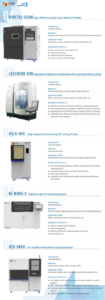
The establishment of such a large-scale hub by Kings 3D Group follows a series of strategic expansions and technological advancements by the company. Recently, at an event hosted by its Additive Manufacturing Research Institute in Zhuhai, Guangdong, Kings 3D Group showcased its latest technological achievements and introduced several new products. These include the DiMetal-500M, a quad-laser metal powder bed fusion printer designed for industries such as automotive and aerospace, and the LASERADD-600, a hybrid machine that combines additive and subtractive manufacturing capabilities.
 Kings 3D Group has been a significant player in the 3D printing industry since its establishment in 2007, growing from a focus on stereolithography (SLA) to encompass a broad array of polymer and metal 3D printing technologies. This growth is reflective of the broader expansion of the 3D printing industry in China, which has been supported by substantial government funding and increased competition both within the country and internationally. This trend is discussed in much more depth in the recent “The State of Chinese Additive Manufacturing: Market Opportunity Brief” from AM Research.
The new hub in Pinghu is poised to further enhance Kings 3D Group’s production capabilities and market presence. While the company’s prior focus on SLA may have meant competition with the country’s other SLA leader, UnionTech, both firms have since broadened their scope. Now, numerous companies throughout China have begun manufacturing a wide variety of technologies that overshadow the breadth of the portfolios by businesses in Europe and the U.S.
This could be read in part as general competition between these firms, which is possible due to the sheer size of the Chinese market, but it could also mean that a large country like China needs companies that represent regional hubs as supply chain disruptions impact not only international trade but intranational. However, we should also expect to see some of these companies consolidate, specialize in niche markets to differentiate their offerings, and diversify into related services and products. Meanwhile, companies like EPlus3D, Bright Laser Technologies, and Farsoon have already expanded internationally to avoid domestic market saturation.
Subscribe to Our Email Newsletter
Stay up-to-date on all the latest news from the 3D printing industry and receive information and offers from third party vendors.
Print Services
Upload your 3D Models and get them printed quickly and efficiently.











You May Also Like
Rocket Lab & Aussie Startup Hypersonix Team Up for DIU-Backed, 3D Printed Hypersonic Testbed Trial
Additive Manufacturing (AM) Research just published its latest study, “AM Applications Analysis: Parts Produced 2025-2034,” which AM Research SVP Scott Dunham said includes by far the consultancy’s largest data package...
Printing Money Episode 36: Recent 3DP/AM Deals and More with John Barnes (TBGA & MPW)
Welcome to Printing Money Episode 36! For this episode Danny is joined by a new guest, John Barnes (Founder and President, The Barnes Global Advisors, Founder and CEO, Metal Powder...
Friendshoring and Additive Manufacturing: Turning Australia’s Research Strength into Commercial Impact
Global supply chains are being re-written. After decades of globalisation driven primarily by cost efficiency, geopolitical tensions, trade disputes and pandemic-era disruptions have exposed the risks of concentrating manufacturing and...
3D Printing News Briefs, December 27, 2025: Additive Construction in the U.S., Canada, & India
In this holiday weekend’s 3D Printing News Briefs, the focus is entirely on additive construction! We’ll start with news out of North America, specifically Canada and the United States, and...