Immensa and Pelagus 3D Collaborate to Tap “$2 Billion” 3D Printing Opportunity


Dubai’s Immensa, which claims to be the “largest digital manufacturer” in the Middle East/North Africa (MENA) region, has formed a strategic collaboration with Pelagus 3D, a Singapore-based, on-demand digital manufacturing platform specializing in the maritime and offshore industries. According to Immensa, the partners’ unique combination of expertise and positioning in both the maritime and energy sectors could ultimately lead to a market opportunity for additive manufacturing (AM) worth $2 billion annually.
Pelagus 3D, a joint venture between steel giant thyssenkrupp and maritime services firm Wilhelmsen, was launched in October 2023, as a vehicle for Singapore to leverage its strengths in both maritime services and advanced manufacturing. Via the joint partnership, Immensa will be the sole vendor of Pelagus 3D products in the MENA region. In announcing the new collaboration, Immensa also announced the rebrand of its AI-backed digital inventory platform, which is now called Immensa360.
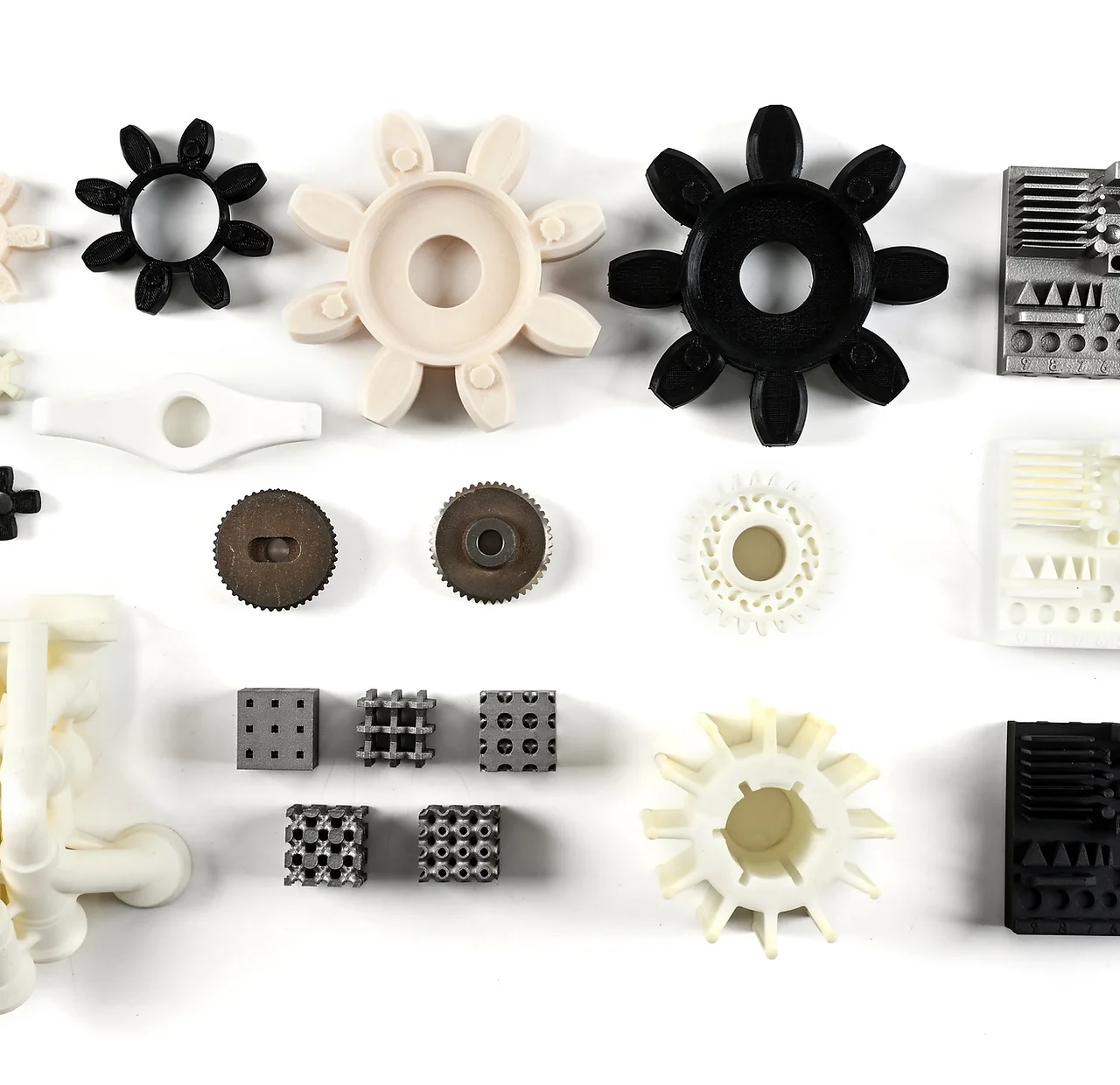
Image courtesy of Pelagus 3D
In a press release about the new strategic collaboration between Pelagus 3D and Immensa, Immensa’s CEO, Fahmi Al Shawwa, said, “Immensa seeks to be world-class in everything it does: technology, strategy, execution, talent, and its partners. Today’s new brings two world-class partners together and we look forward to working closely with Pelagus 3D — which is developing the largest database of spare parts for [AM] in the maritime and offshore industry — to transform inventory management across sectors.”
The chief commercial officer of Pelagus 3D, Haakon Ellekjaer, said, “This marks a significant milestone in our mission to drive adoption of on-demand spare parts in the MENA region. Through this partnership, we are offering enhanced [AM] services and technologies for our OEMs and end users, fostering technological advancement in the industry. We look forward to working together with Immensa to further AM innovation and accelerate adoption.”
Screenshot from Immensa’s website
This is about as logical as it gets for an AM partnership, thanks to the inherent geopolitical compatibility between a Gulf region energy services provider and an Asian-Pacific maritime firm. They’re an ideal pair for capitalizing on the global efforts involved in attempting to alleviate ongoing economic volatility in the Middle East.
Additionally, the partnership could very realistically help both the United Arab Emirates (UAE) and Singapore branch out from their conventional areas of industrial expertise, in oilfield services and electronics, respectively.
Alongside supply flexibility and operational agility, one of the most important aspects of economic resilience is sectoral diversity, i.e., the equal distribution of investments across as many industries as possible. Perhaps even more so than geopolitical instability — and, long-term, directly related to it — this may be the primary impetus for any significant growth in the MENA region’s AM capacity.
Subscribe to Our Email Newsletter
Stay up-to-date on all the latest news from the 3D printing industry and receive information and offers from third party vendors.
Print Services
Upload your 3D Models and get them printed quickly and efficiently.












You May Also Like
Inside Decibel’s Collaboration with SKYLRK at Coachella 2026
There’s a version of Coachella most people never see. Not the stage. Not the crowd. Not even the music. It’s everything built around it: the spaces where artists host, brands...
Caracol to Build Large-Format 3D Printing Hub in Milan With Designtech & LAMÁQUINA
In the 1990 classic in economic strategy, The Competitive Advantage of Nations, business theorist Michael Porter wrote, “Most commentators on the Italian economy have persistently underestimated Italy, because they have...
Why Kyle Bass Is Betting on Divergent, and What It Says About the Future of Manufacturing
Kyle Bass has spent much of his career looking at big economic trends before everyone else does. The founder of Hayman Capital Management became famous for betting against the U.S....
Beyond Thermoplastics: Why JuggerBot Is Betting on Hybrid AM
For years, thermoplastics have been the workhorse of additive manufacturing (AM). They are pretty easy to process, available, and compatible with many of today’s industrial 3D printers. From prototypes to...