
AML3D Secures $155K Aussie Defense Contract to Test Cutting-Edge Marine Parts

AML3D (ASX: AL3), an Adelaide-based innovator in metal 3D printing, has secured an A$240,000 ($155,708) contract with the Australian Government’s Defence Science and Technology Group (DSTG). This move is part of the brand’s strategic effort to expand its footprint into defense markets and reflects a growing trend toward modernizing and diversifying military capabilities with cutting-edge technology.
Under the contract terms, AML3D is set to manufacture two types of test components specifically designed for marine applications. These parts will be created using Nickel Aluminium Bronze (NAB) and a high-strength duplex steel alloy. The use of these materials is particularly noteworthy since NAB is renowned for its corrosion resistance and durability in seawater, making it ideal for marine hardware. At the same time, duplex steel offers high strength and resistance to stress corrosion cracking in demanding environments.
Several parts have been 3D printed using NAB and high-strength duplex steel alloys, such as marine propellers like Damen Shipyards‘ “WAAMpeller” for tugboats, underscoring NAB’s corrosion resistance and strength in marine environments. Similarly, duplex steel alloys, known for their high strength and corrosion resistance, are highly used in industries like offshore oil drilling and marine engineering to produce components like valves and pumps, which demand durability given the challenging conditions they face.
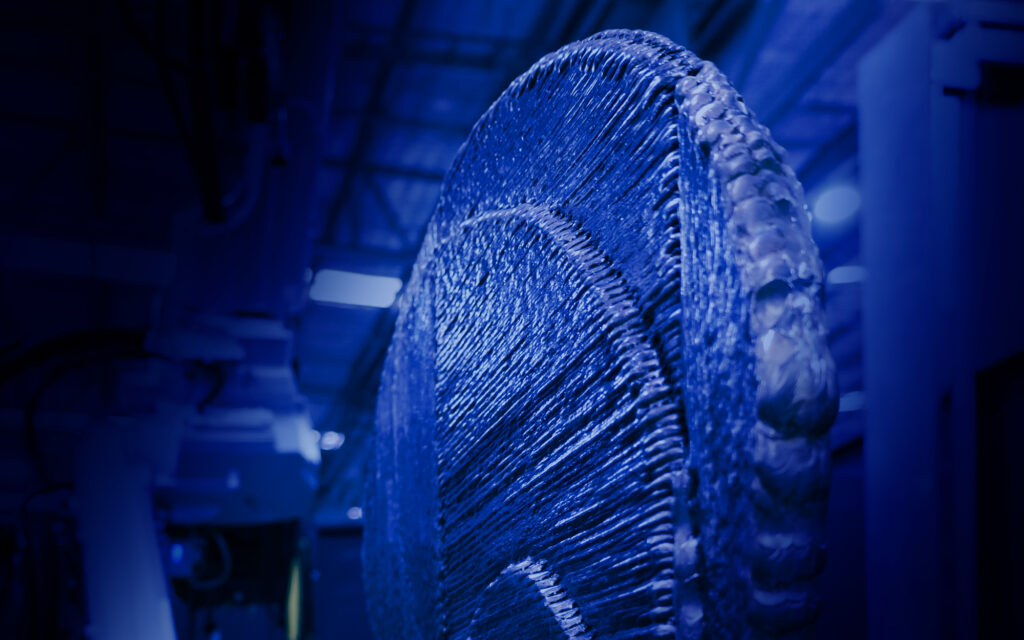
AML3D to 3D print marine defense parts. Image courtesy of AML3D.
This initiative is set to kick off immediately at AML3D’s Adelaide facility, promising delivery of the parts before June 30, 2024. The partnership highlights AML3D’s expertise in leveraging its proprietary Wire Arc Manufacturing (WAM) technology to meet rigorous defense standards.
CEO Sean Ebert emphasized the strategic importance of this collaboration: “It is very exciting to be directly supplying test NAB and duplex steel components to the DSTG, which is tasked with assessing the best of Australian science, technology, and innovation to address Australia’s Defence and national security challenges. AML3D’s WAM-manufactured NAB and duplex steel have passed multiple rounds of marine defense testing in the U.S. and here at home. This gives us confidence we will meet the DSTG requirements, creating opportunities for significant new contracts.”
Ebert’s confidence stems from AML3D’s successful track record with similar marine defense testing in the U.S. and Australia, suggesting a strong likelihood of meeting the DSTG’s stringent requirements. AML3D has ongoing engagements with the Australian government and has developed prototype parts for the Royal Australian Navy’s Hunter-class frigates.
AML3D has strong partnerships with key defense contractors like BAE Systems Maritime Australia. These partnerships focus on projects that showcase AML3D’s technological capabilities and contribute to broader defense goals. For example, the Manufacturing Evaluation Programme with Australia’s submarine builder ASC Shipbuilding assessed the suitability of AML3D’s WAM technology for building naval ships. This project demonstrated how 3D printing can make shipbuilding more efficient and cost-effective.
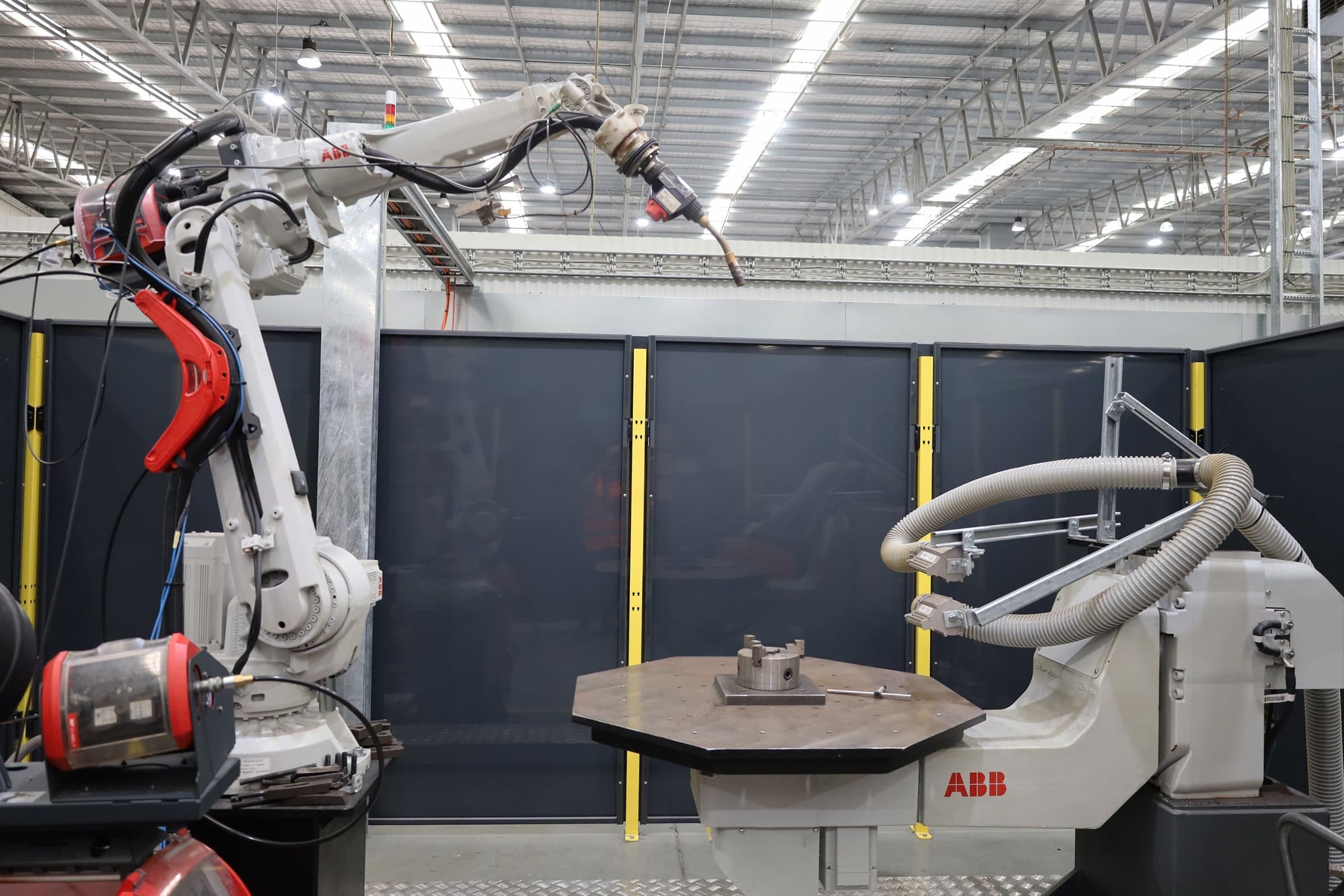
AML3D’s WAM process. Image courtesy of AML3D.
Working closely with the Australian Defence Force, AML3D has been helping transform traditional manufacturing methods for defense applications. By embracing innovative technologies, the company has consistently met rigorous standards and enhanced Australia’s defense capabilities.
The latest contract with the DSTG reflects AML3D’s ongoing strategy to expand into additional global defense markets, complementing its substantial growth in the U.S. This approach is supported by nearly A$12 million ($7.8 million) in contracts that AML3D secured in 2023, mainly aimed at enhancing the U.S. Navy’s submarine industrial base, including a A$2.2 million ($1.4 million) deal for a custom ARCEMY system tailored for the U.S. Navy‘s needs. The company also established new operations in Ohio to expand its footprint in the American market.
AML3D is using its successful U.S. strategy as a model to accelerate its entry into new defense markets and meet the increasing demand for advanced manufacturing solutions. In this context, the partnership with the DSTG plays a crucial role, as the government organization operates at the intersection of science and national security and aims to improve the overall security and technological backbone of Australia’s military operations.
Subscribe to Our Email Newsletter
Stay up-to-date on all the latest news from the 3D printing industry and receive information and offers from third party vendors.
Print Services
Upload your 3D Models and get them printed quickly and efficiently.













You May Also Like
South Korea’s Lincsolution Lands Hanwha Defense Deal as Hanwha Invests Billions in US
I recently wrote about how the South Korean additive manufacturing (AM) firm Lincsolution is building an aerospace and defense hub, part of the company’s construction of “the largest AM facility in...
Bambu Lab and SUSAN FANG 3D Print for London Fashion Week
At London Fashion Week, some of the more unusual pieces on the runway came from 3D printers. Chinese fashion designer SUSAN FANG presented her Spring/Summer 2027 Air-Illusion collection at the...
Why Cross-Border 3D Printing Is Closing the Speed Gap with Local Manufacturing
The fastest 3D printing supplier in your shortlist may no longer be the one closest to your office. That sounds unlikely to many engineers. For years, overseas 3D printing carried...
Arridex Expands 3D Printing Network to Ghana
Nigeria-based Arridex has deep experience in oil and gas additive manufacturing. Previously known as RusselSmith, the firm has in-house metal and polymer additive technology. The company is making 3D printed...























































