3D Printing Savvy Rocket Lab Lands $515M Space Force Defense Contract

After reaching a new annual launch record with its 10th Electron mission in December 2023, Rocket Lab (Nasdaq: RKLB) announced a contract with the Space Development Agency (SDA) – a U.S. Space Force unit tasked with deploying disruptive space technology – to design and build a constellation of data transport satellites. This contract marks a major milestone in Rocket Lab’s expansion and diversification.
The latest contract with the SDA underlines Rocket Lab’s expanding scope of operations. As the prime contractor in this $515 million agreement, Rocket Lab will lead the design, development, production, testing, and operations of 18 Tranche 2 Transport Layer-Beta Data Transport Satellites (T2TL – Beta), which are integral to a global communication network in Low Earth Orbit (LEO) for defense and military operations.
This contract establishes Rocket Lab as a leading satellite prime contractor and, through its involvement with the SDA, directly supports the Department of Defense‘s (DoD) initiatives. The SDA, operating under the U.S. Space Force, is crucial in advancing the DoD’s space-based capabilities, with projects like T2TL – Beta enhancing the DoD’s global communication and surveillance infrastructure. Therefore, Rocket Lab’s work with the SDA on this project significantly improves the DoD’s supply chain and overall space capability.
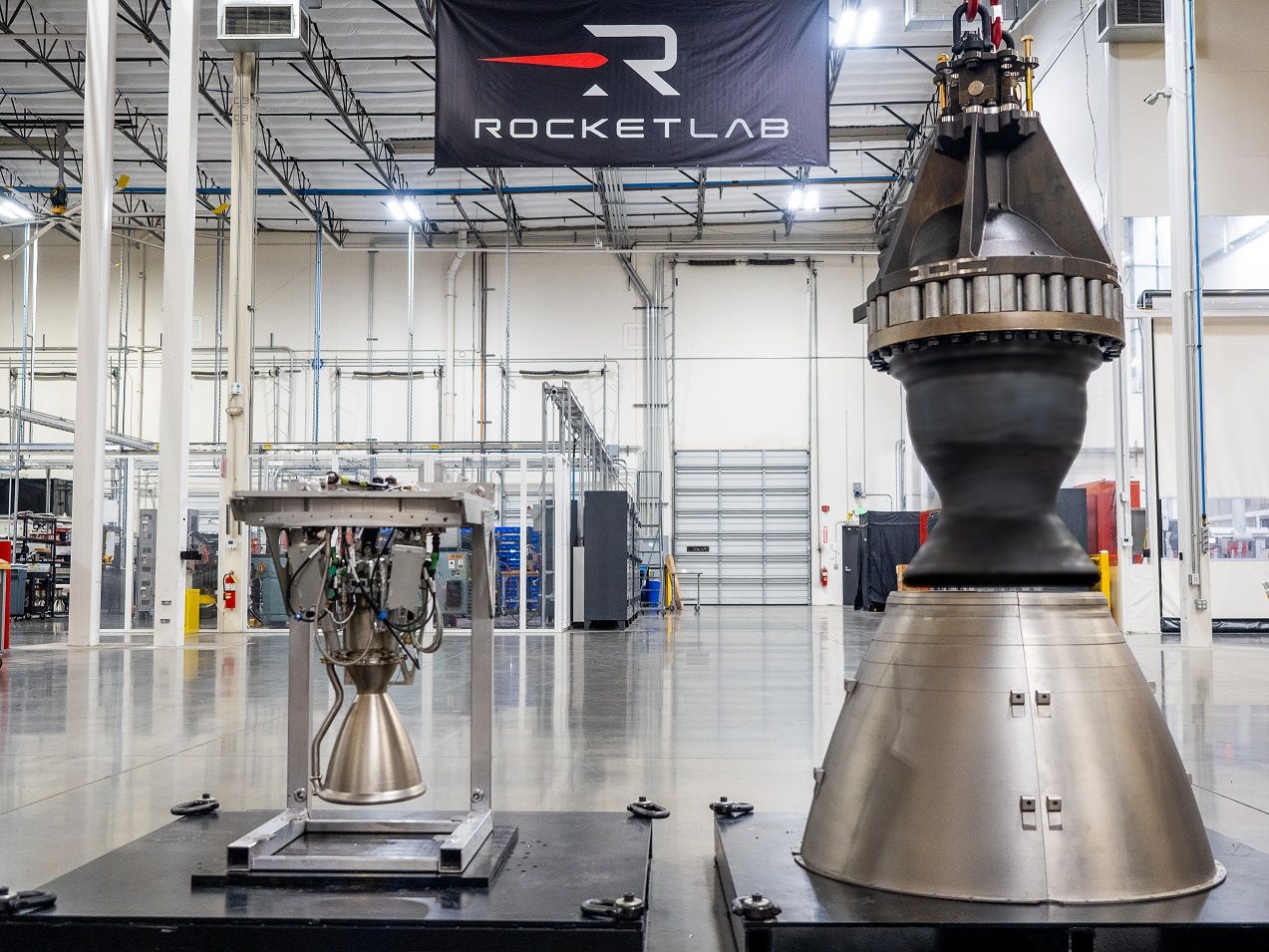
Rocket Lab uses 3D printing to make its engines. Image courtesy of Rocket Lab.
Rocket Lab’s role in this project goes beyond just manufacturing; it involves a holistic approach, including procurement and integrating payload subsystems. The contract includes a $489 million base, with an additional $26 million in incentives and options. Rocket Lab National Security (RLNS), the company’s subsidiary dedicated to serving the U.S. defense and intelligence community, will carry out the project. Established in December 2022, RLNS is specifically tailored to meet the unique needs and requirements of national security missions, focusing on delivering reliable launch services, spacecraft manufacturing, and space systems capabilities for the U.S. government and its allies.
The SDA aims to set up an extensive network of satellites in LEO. This network, called a proliferated constellation, is designed to improve the capabilities of the U.S. military in space. Moreover, Rocket Lab’s expertise in space technology makes them a great fit for this project, and the 18 T2TL – Beta satellites they are building for the SDA are a crucial part of this plan. These satellites will enhance military communications by ensuring that data can be sent and received quickly, reliably, and securely across the globe. According to the company, this is vital for modern military operations, which often require fast and stable communication links.
“This contract marks the beginning of Rocket Lab’s new era as a leading satellite prime. We’ve methodically executed our strategy of developing and acquiring experienced teams, advanced technology, manufacturing facilities, and a robust spacecraft supply chain to make this possible. It’s exciting to now be delivering this capability for government and commercial customers alike,” said Rocket Lab founder and CEO Peter Beck. “SDA’s acquisition approach favors speed, schedule certainty, and affordability to deliver next-generation space capabilities to the nation. We’ve proven Rocket Lab is capable of delivering this across our launch and spacecraft programs and we look forward to delivering it for SDA.”
In terms of manufacturing, Rocket Lab will use in-house subsystems and components, showcasing a high degree of vertical integration. This approach allows for significant control over supply chain efficiencies and certainty on cost, schedule, and quality. The satellites will be built at Rocket Lab’s advanced spacecraft development and manufacturing complex in Long Beach, featuring state-of-the-art facilities designed for constellation-class manufacturing.
A key aspect of Rocket Lab’s innovative manufacturing process is its extensive use of 3D printing, which has positioned it as a leader in the space industry’s adoption of these advanced approaches. Rocket Lab is mainly known for its almost entirely 3D printed Rutherford engine, with components produced using electron beam melting technology.
The company’s engagement with 3D printing extends to collaborations with key players in the 3D printing industry, like Carpenter Technology, EOS, Nikon SLM Solutions, and Renishaw. These partnerships provide Rocket Lab access to the latest and most advanced 3D printing technologies. In fact, Beck has expressed his enthusiasm for the transformative potential of 3D printing in the design and production of rocket engines. In interviews with Forbes and CNBC, Beck indicated that Rocket Lab would continue investing heavily in 3D printing, considering it a crucial component of their manufacturing strategy.
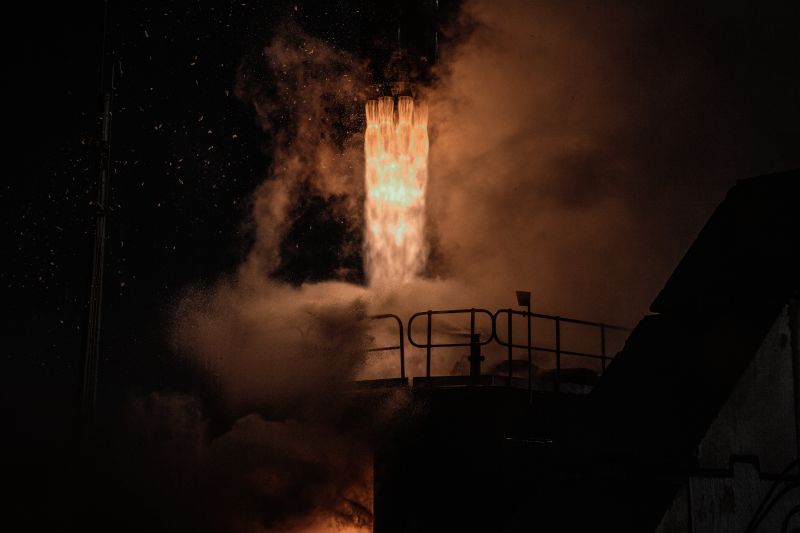
Rocket Lab’s Rutherford engine was the first 3D printed, electric pump-fed orbital rocket engine. Image courtesy of Rocket Lab.
This is not the first time the Space Force has tapped Rocket Lab for key space initiatives. In September 2021, the Space Force, through its Space Systems Command, awarded Rocket Lab, alongside other industry leaders like United Launch Alliance (ULA), Blue Origin, and SpaceX, $88 million to develop prototype projects. These projects were integral to enhancing space security and advancing space technology, focusing on next-generation rocket engine testing and orbital transfer capabilities. Additionally, in September 2022, Rocket Lab joined the U.S. Air Force’s Rocket Cargo program, which aims to use suborbital space vehicles for ultra-fast transportation of cargo and people on Earth. This involvement underscores Rocket Lab’s pioneering use of 3D printing in developing parts for its rockets, a key factor in their innovative approach to solving complex aerospace challenges.
Looking forward, the satellites are scheduled for launch in 2027. Rocket Lab’s portfolio includes more than 40 satellites in development and production, with technology integrated into over 1,700 satellite missions globally. With a proven track record, strategic expansions, and a growing role in national defense, Rocket Lab is a key player in the evolving landscape of space technology and exploration.
Subscribe to Our Email Newsletter
Stay up-to-date on all the latest news from the 3D printing industry and receive information and offers from third party vendors.
Print Services
Upload your 3D Models and get them printed quickly and efficiently.













You May Also Like
The Manufacturing Race Behind the Drone Revolution
We are in the middle of a major manufacturing shift focused on the production speed and payload capacity of uncrewed aerial systems (UAS), or drones. A recent Manufacturing Dive article...
ADDMAN to Buy Up to $10.8M in Nickel 718 Powder from 6K Additive Over 30 Months
After years of buildup, we’re finally starting to see what the US metal additive manufacturing (AM) market could look like at scale. To be sure, it’s still not quite there,...
Metal AM in a Multipolar World, Part 2: How PBF and DED Could Change by 2035
The first decades of PBF development were heavily shaped by machine capability: more power, more lasers, larger build volumes, better recoating, and improved process monitoring. These developments will continue, but...
Advanced Manufacturing at IMTS 2026: 3D Printing and AI and Drones, Oh My!
Last week’s International Manufacturing Technology Snow (IMTS) in Chicago welcomed over 90,000 attendees to the jungle that is McCormick Place. With over 1.17 million square feet of exhibit space, and...