HILOS Unveils On-demand 3D Printed Shoe Platform at Art Basel


At Art Basel in Miami, Portland startup HILOS Studio announced a new partnership that signals a shift in the company’s business strategy for 3D printed footwear production, likely for the better. Fashion house Unknown Union will be leveraging HILOS Studio’s shoe manufacturing workflow as the startup shifts from producing its own footwear to becoming a platform for making products for others.
In the past, HILOS showcased its footwear 3D printing capabilities by combining soles made with HP’s Multi Jet Fusion (MJF) technology with vegan leather uppers. The soles are 3D printed from thermoplastic polyurethane derived from 80 percent recycled material, offering a sustainable alternative to traditional shoe manufacturing. Compared to standard manufacturing methods, HILOS shoes, in partnership with brand Helm, have shown a dramatic decrease in water waste and CO2 emissions.
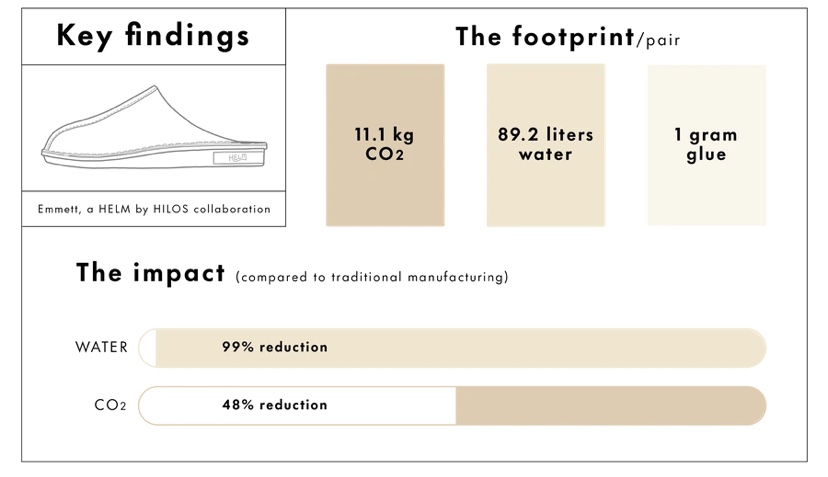
With significant media attention and a $3 million investment by former Nike execs, the startup seems to broadened its focus by offering its capabilities to fashion companies for the production of shoes on-demand. This flexibility allows for a wide selection of smaller production runs, adapting swiftly to market changes. The platform extends its reach beyond women’s fashion footwear, encompassing a range from technical outdoor wear to luxury items.
The launch at Art Basel featured a luxury sandal designed by Unknown Union, showcasing the potential of HILOS Studio. Elias Stahl, CEO and co-founder of HILOS, emphasized the pivotal moment this represents for the industry. The platform empowers brands and designers to create stunning 3D-printed shoes on-demand, eliminating the need for inventory and reducing waste.
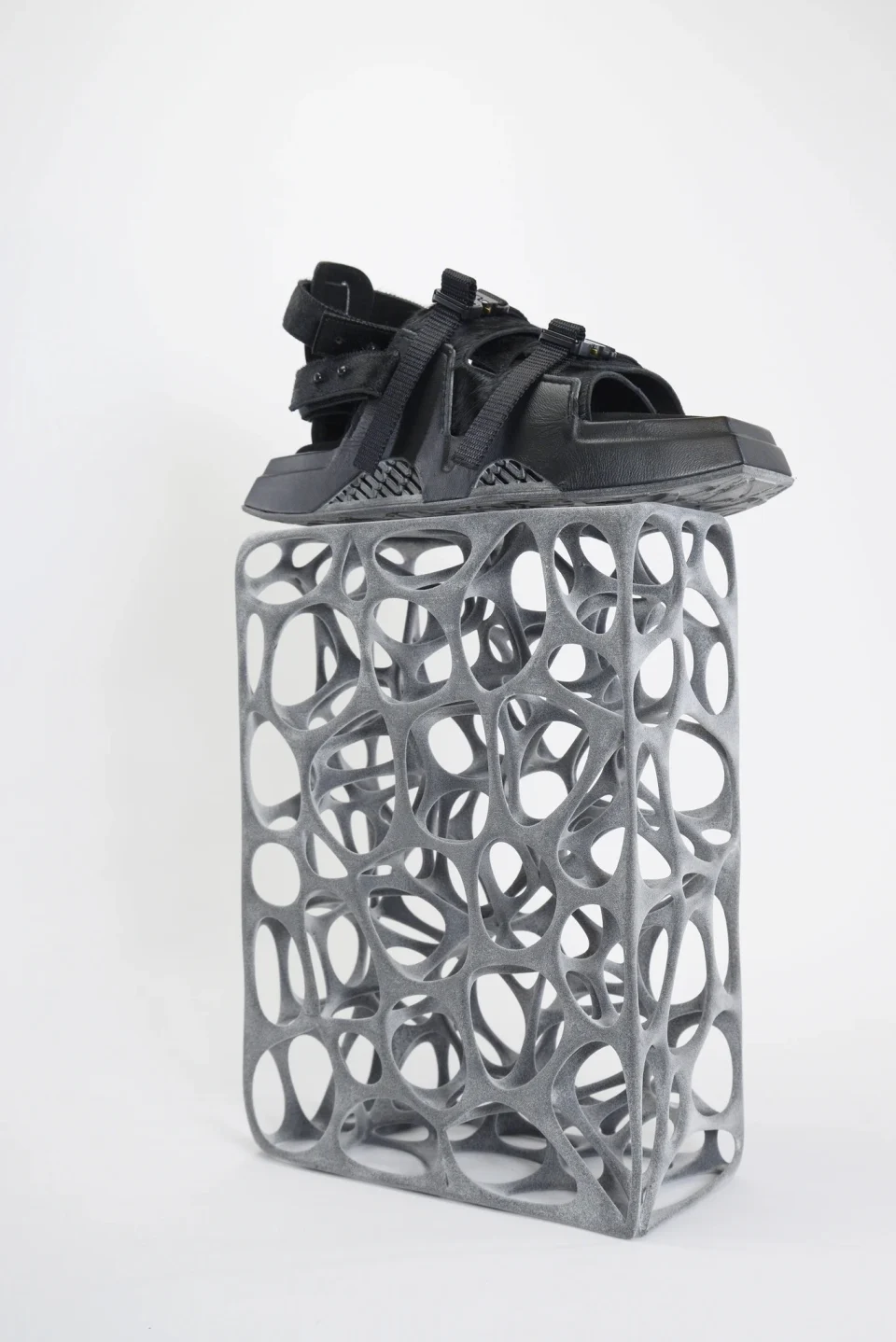
Unknown Union’s 3D printed sandal made with the HILOS Studio platform. Image courtesy of HILOS Studio.
Sustainability is a core tenet of HILOS Studio. MJF technology minimizes waste, a crucial benefit in an industry where a significant proportion of produced shoes end up in landfills. This technology allows for intricate designs, previously difficult to achieve through traditional methods.
With its recent fundraising, HILOS aims to scale its business. The company’s process allows for rapid manufacturing, meeting demand with speed comparable to pre-made inventory. This approach has attracted attention and endorsement from industry veterans, highlighting HILOS’ potential to revolutionize footwear manufacturing.
Shoes with 3D printed parts are on the verge of taking off—to the tune of $4.2 billion in revenues by 2025, according to the “3D-Printed Footwear 2020-2030, an Analysis of the Market Potential of 3D Printing in the Footwear Industry” report from Additive Manufacturing Research. The support HILOS has garnered is notable. Influential figures from the worlds of footwear and fashion, including former executives from Nike and Adidas and creative directors with diverse industry experience, have backed the company. With that in mind, HILOS may be primed to be a key player in this growing sector, but HP may ultimately benefit to a greater degree, given its widespread use among a variety of shoe companies, including Brooks Running, Decathalon, and Reebok.
Subscribe to Our Email Newsletter
Stay up-to-date on all the latest news from the 3D printing industry and receive information and offers from third party vendors.
Print Services
Upload your 3D Models and get them printed quickly and efficiently.













You May Also Like
Phillips Federal Participates in Marine Corps Exercise
Phillips Federal will participate in a Marine Corps exercise that will use several additive manufacturing technologies. The 1st Maintenance Battalion, 1st Marine Logistics Group, I Marine Expeditionary Force (IMEF), will...
Ceramics 3D Printing at Ceramitec 2026
Ceramitec is a key event for the ceramics industry. Held in the lovely city of Munich, it is the leading global event for the ceramics community. With around 13,000 participants...
AM Forum Berlin 2026: Tough Love From BMW’s Timo
We’re once again in the lovely city of Berlin, at the absolutely immense Estrel Center. The congress center, a musical and theater venue, towers over the easternmost reaches of the...
Printing Money Episode 35: Notable VC and M&A Deals, with Arno Held and Alex Kingsbury
Welcome to Printing Money Episode 35 and let us be the last to wish you a happy new year. For this episode Danny is joined by Arno Held (Managing Partner,...