
Contract Manufacturer Visser Precision Orders Two Sapphire Metal 3D Printers from Velo3D

Velo3D (NYSE: VLD), a 3D printing original equipment manufacturer (OEM) based in Silicon Valley, announced that the company has received an order for two Sapphire metal platforms from Visser Precision, a major Denver-based contract manufacturer. In addition to a Sapphire calibrated for the widely-used Inconel 718 nickel alloy powder, Visser will also be the first contract manufacturer to receive a Sapphire calibrated for another nickel-based alloy powder, Haynes 214.
Haynes 214 is a nickel-chromium-aluminum-iron alloy produced by Haynes International, a leading American alloy supplier. Like both Velo3D and Visser Precision, Haynes International specializes in the defense and aerospace markets, but — also like Velo3D and Visser — has a significant presence in other heavy industries as well, especially oil & gas.
Based on the descriptions in the list of alloys on Haynes’ website, Haynes 214 seems like one of the metal manufacturers’ more versatile products. Among other applications, the company notes that the powder is gaining increasing traction for automotive and electronics components, owing to its “clean firing” properties.
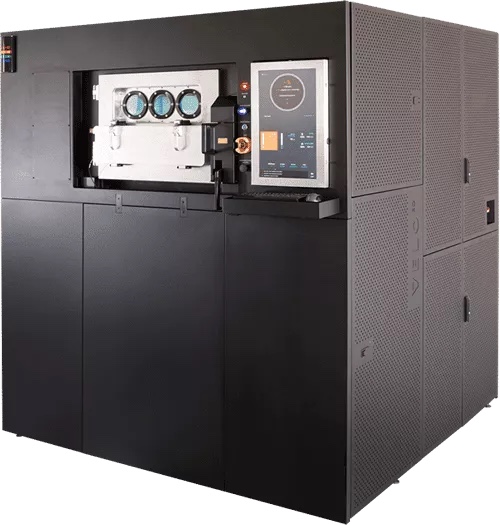
In a press release announcing the order of two Sapphire machines from Visser Precision, Zach Murphree, the VP of Global Business Development and Sales at Velo3D, commented, “With the first Haynes 214 Sapphire in our contract manufacturing network, [Visser Precision] will be a great resource for the aerospace industry. We expect many of our existing customers will utilize them for their supply chain needs.”
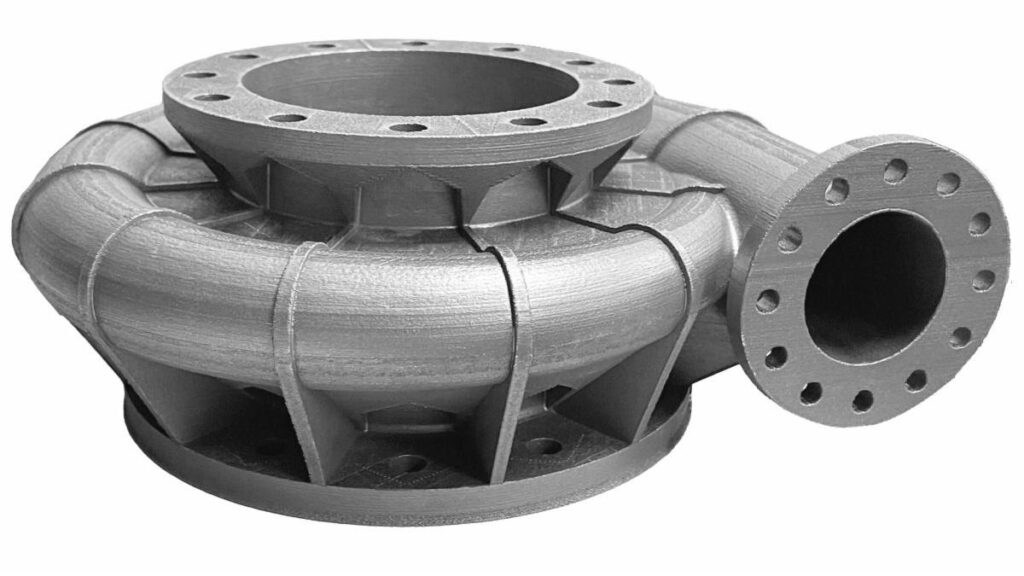
The president of Visser Precision, Jack Kerr, explained, “We view our customers as partners, so when one of them asked us to explore Velo3D’s technology, we did. We were very impressed by the company’s ability to print highly complex part geometries with minimal — and in some cases no — supports.”
Although the president of Visser didn’t name the customer, it seems worth pointing out that SpaceX is one of Visser’s clients, given that the Elon Musk “new space” venture is so heavily involved (and invested) in Velo3D. This is a perfect example of corporate synergy, in this case in the form of a combination of two of Velo3D’s biggest strategic selling points: its connection to SpaceX, and its diligence in building a network of established contract manufacturers as the cornerstone of its customer base.
Similarly, Visser Precision could benefit from being a part of Velo3D’s network of contract manufacturers. Visser was the target of a serious cyberattack in early March, 2020, less than two weeks before Donald Trump first announced a state of emergency in the US in response to the spread of COVID-19. Meanwhile, Velo3D recently released a case study detailing the company’s success at decentralized, repeatable manufacturing across the globe, for oil & gas parts.
Considering that the intertwining concern of energy security and cybersecurity has seemed to explode into the consciousness of policymakers in the past year, those two different objectives seem increasingly difficult to separate. A recent article about Velo3D on the investment website Seeking Alpha concludes that the company may still be too monolithically dependent on defense and aerospace clients for the company to be able to deliver on its growth strategy. Nevertheless, if a manufacturing company has to be singularly focused on a particular sector at this point in time, it could be over-leveraged into far worse areas of industry than defense and aerospace.
Along those lines, in/famous hedge fund celebrity Cathie Wood has made Velo3D, a well-established part of her portfolio, the latest member of the “Cathie Wood goes bargain hunting” club of stocks. Tesla, for one, has certainly gained from being in that same club, rebounding to the tune of almost 90 percent this year, after an atrocious 2022.
Subscribe to Our Email Newsletter
Stay up-to-date on all the latest news from the 3D printing industry and receive information and offers from third party vendors.
Print Services
Upload your 3D Models and get them printed quickly and efficiently.













You May Also Like
Mosquito Dreams Part 1: Thonet, A World History
As a child, I lived in Kenya for a while. When we went to Mombasa, wafting breezes, crunchy white powder that sounds like snow underfoot, beaches bordered by many unseen...
3D Printing News Unpeeled: Textile 3D Printing & Mosquitos
German textile machinery company Karl Mayer Group has made a 3D printer combined with a warp knitted textile machine. This moves at 5 meters per second across a 2 meter...
























































