Nikon Invests in Hybrid Manufacturing Technologies, Signaling 3D Printing Boom

Japanese imaging manufacturing giant Nikon (TYO: 7731) is laser-focused on revolutionizing digital manufacturing. As part of its strategy, the company has already acquired majority ownership of El Segundo, California’s Morf3D for an undisclosed amount in April 2021, followed by a recent $622 million bid to buy 3D printer manufacturer SLM Solutions (ETR: AM3D), which 3DPrint.com Executive Editor Joris Peels described as “a great move for the industry.”
Now, the optics and imaging expert has disclosed its latest investment, this time in Hybrid Manufacturing Technologies (HMT), a pioneering company that combines industrial 3D printing and machining in a single platform. This latest investment will enable HMT and Nikon to leverage their combined expertise to accelerate innovation and expand the hybrid manufacturing landscape.
Commenting on the latest announcement, Nikon Corporate Vice President Yuichi Shibazaki said the investment in HMT is the newest component of Nikon’s Next Generation Project program, established in 2019 to further industrialize digital manufacturing through strategic investments and alliances with industry-leading companies worldwide.
In fact, HMT’s groundbreaking technology allows users to take full advantage of the manufacturing process by unifying multiple complementary technologies in one setup. While parts manufacturers will often use AM processing and machining in tandem, depending on their specific production goals and tolerances, HMT enabled a leap forward by unlocking the freedoms of additive but retaining the precision and surface finish capabilities of CNC, all in a single system.
Through their patented AMBIT laser metal deposition heads, only a simple tool change is required to switch from cutting to adding metal, giving users what the company describes as “unprecedented flexibility.” Furthermore, HMT’s tool changeable heads are not limited to laser processes but are compatible with numerous materials and a vast array of deployment methods. HMT can upgrade existing vertical platforms to enable both additive and subtractive machining capabilities in one system or create bespoke solutions with customized heads to meet the user’s needs.
“As an industry leader with demonstrated collaborative capabilities, HMT and its AMBIT™ portfolio are well-matched with Nikon technologies. We look forward to working with them as part of our commitment to creating value and advancing society through novel industries like hybrid manufacturing,” proposed Shibazaki.
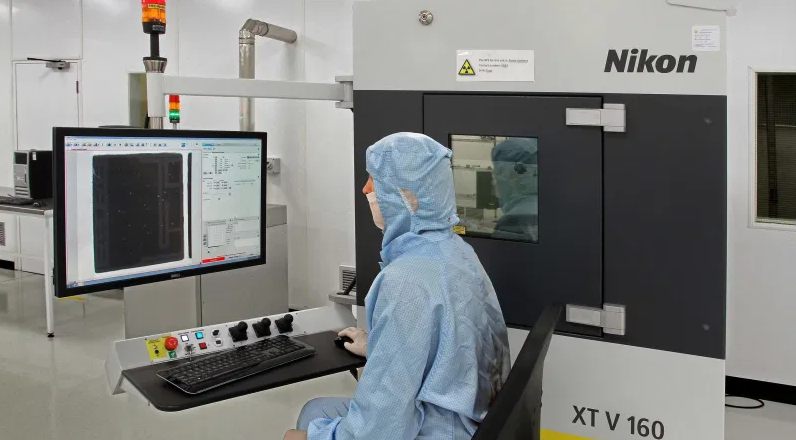 Nikon Metrology CT system. Image courtesy of Nikon Metrology
Founded in 2012 by Dr. Jason Jones and Peter Coates as a spinoff from a collaborative research and development project at De Montfort University’s AM and 3D printing research lab, UK-based Hybrid Manufacturing Technologies has already received a $1.5 million research grant to develop its laser-based hybrid CNC system named RECLAIM (Remanufacture of high-value products using a Combined Laser cladding, Inspection, and Machining system). This was followed by another €6 million collaborative research grant for hybrid manufacturing. And although Nikon’s investment is undisclosed, Jones says it will help “fully deliver on the promise of additive and digital manufacturing.”
“We expect the results of this technology will touch the lives of virtually all people on earth in the coming decades,” revealed Jones.
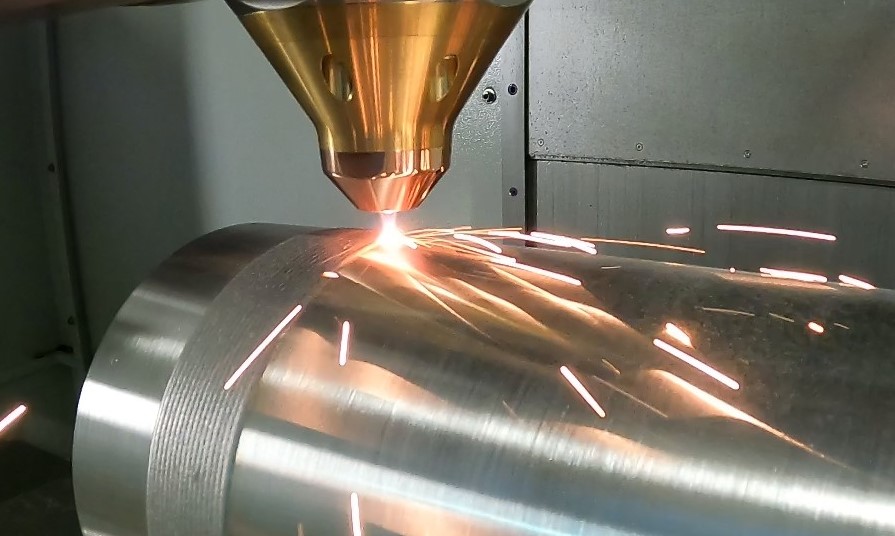 Hybrid Manufacturing Technologies AMBIT patented system. Image courtesy of Additive Manufacturing Technologies.
Similarly, Coates added that “Hybrid is all about synergy. For the better part of ten years in this industry, we have taken pride in the strategic nature of our collaborations, and our partnership with Nikon takes this to a whole new level by adding value to advanced manufacture.”
Nikon manufactures some of the most precise equipment in the world. Actually, the brand’s products are being used in applications ranging from semiconductor manufacturing and mass production of panels for televisions and smart devices to medical systems, automobiles, and satellites.
Eager to become an essential technology solutions company, Nikon is set on its Vision 2030 strategy, which anticipates a “megashift” in society, one which the company plans to stay ahead of by identifying the diverse needs of future customers. Looking ahead to society in 2030, Nikon believes there will be an acceleration in the technology shift that will lead to further evolution and enhancement of engineering and machines. In preparation for these upcoming changes, Nikon has announced a 300 billion yen ($2 billion) investment in M&A over four years until 2025, collaborations, and partnerships. It is evident in 2022 that the company is already following its set path, particularly if the SLM Solutions deal moves forward as anticipated.
Subscribe to Our Email Newsletter
Stay up-to-date on all the latest news from the 3D printing industry and receive information and offers from third party vendors.
Print Services
Upload your 3D Models and get them printed quickly and efficiently.













You May Also Like
3D Printing News Briefs, August 22, 2026: Polymers for CubeSats, Animal Mobility Devices, & More
We’re starting with defense news in this weekend’s 3D Printing News Briefs, before moving on to polymers for CubeSats and 3D printed prosthetics. We’ll end with a story about engineering...
Pusan National University & ORNL Develop Elastomeric Liquid Crystal Actuators
Researchers from Korea’s Pusan National University and Oak Ridge National Laboratory (ORNL) have developed 3D printed elastomeric actuators. In a paper published in Nature, the team used elastomeric liquid crystal...
Scientists Use BMF to 3D Print Seal Whiskers That Track Prey Long After It’s Gone
Seals use their whiskers to hunt. Not Navy Seals, although they may in some way also, but this article is about lowercase seals. Not Seal the musician either; as far...
Harvard’s Jennifer Lewis Lab Is 3D Printing Artificial Muscles That Twist and Bend on Demand
Researchers at Harvard John A. Paulson School of Engineering and Applied Sciences (SEAS) have developed a new way to 3D print materials that can move on their own, bending, twisting,...