McGill University Startup TissueTinker Could Speed Up Cancer Drug Development with 3D Printing

TissueTinker is a McGill University startup that aims to accelerate cancer research. The team uses 3D printing to make tumor models from hydrogels. That approach may lead to alternatives for animal testing, which of course would alleviate a lot of suffering by animals. But at the same time, it could also make cancer research quicker and less expensive. The tumor models could also be more accurate, leading to faster adoption of new cancer drugs or better paths to cancer drugs. If TissueTinker demonstrates its ability to speed up preclinical trials, the firm could play a significant role in the future of cancer research.
Current animal-based testing and simplistic models of human organs and tumors are simply not effective in cost-effectively producing cancer medicines. Costly and unwieldy, the old approaches are simply not cutting it. Worse still, perfectly good cancer medicines could be getting binned unnecessarily through the use of poor models. TissueTinker is able to make more accurate models, creating “complex, miniaturized models that replicate healthy and diseased tissues side by side. The team has mastered spatial control over where cells are placed, creating models that mimic the way tumours develop in the body.”
Co-Founder Benjamin Ringler stated,
¨The ability to customize the tumour really allows researchers to gain deep, targeted insights into how cancer behaves at a micro level. Because the testing environment more readily simulates the human body, researchers can better assess and understand whether or not their drug works before reaching clinical trial stages. This is key for drug progression and curbing financial waste in the industry….We’re not just solving a problem; we’re rethinking the way we approach cancer drug development,”
Better selection of drugs in earlier stages of development could make the entire drug discovery process more accurate. If this works, then it could majorly change the profitability of drug companies as well. A really great NIH paper states,
“Drug discovery and development is a long, costly, and high-risk process that takes over 10–15 years with an average cost of over $1–2 billion for each new drug to be approved for clinical use1. For any pharmaceutical company or academic institution, it is a big achievement to advance a drug candidate to phase I clinical trial after drug candidates are rigorously optimized at preclinical stage. However, nine out of ten drug candidates after they have entered clinical studies would fail during phase I, II, III clinical trials and drug approval2,3. It is also worth noting that the 90% failure rate is for the drug candidates that are already advanced to phase I clinical trial, which does not include the drug candidates in the preclinical stages. If drug candidates in the preclinical stage are also counted, the failure rate of drug discovery/development is even higher than 90%.”
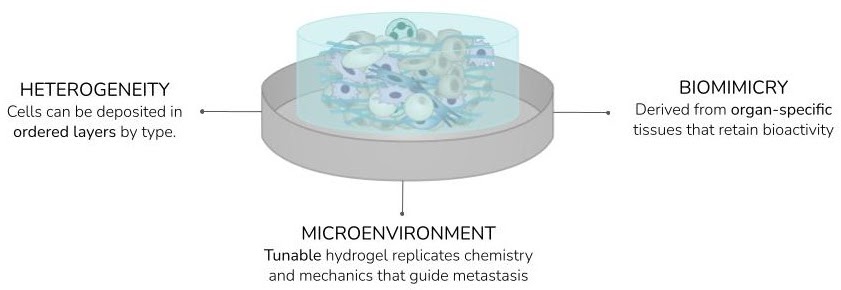
The financial stakes are enormous. If a company invested tens of millions in TissueTinker, and it flagged just one single candidate that would have gone to a clinical trial, it could have a material impact on the firm’s overall finances. That company’s future drug pipeline and their overall fortunes could be altered by using TissueTinker. And for society as a whole, if the product works as advertised, drug discovery could become a lot better and faster.
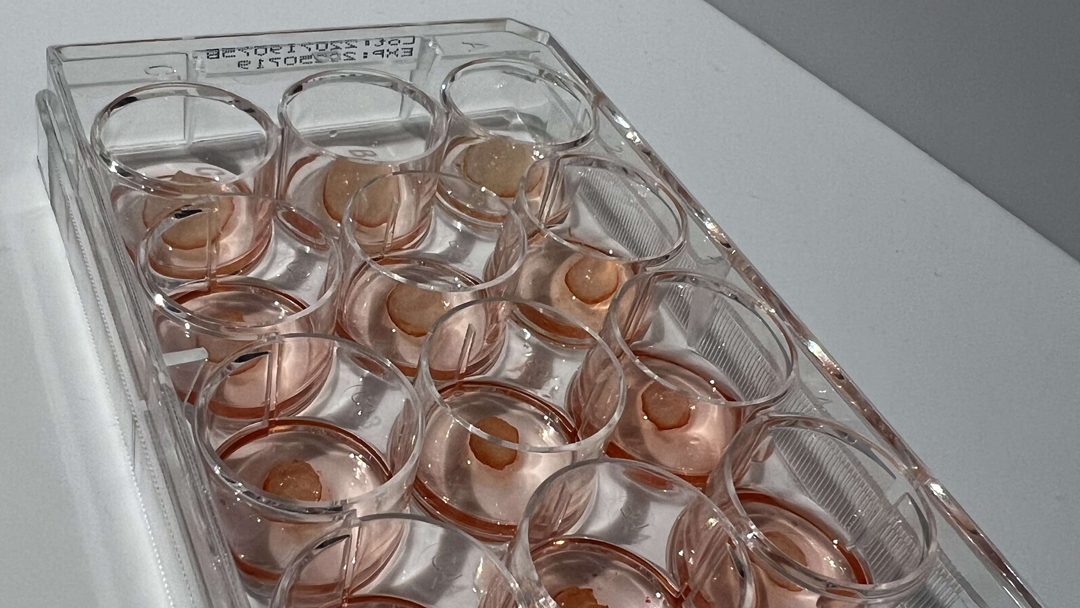
TissueTinker is working on making its technology a high throughput one that can test lots of structures and doses at the same time. The team is also working on creating a library of cancer bioinks. They want to, eventually, make inks for every conceivable tissue. They also hope that their technology will enable work on rare cancers as well. At the same time, they could also test potential cures against models of a more diverse group of patients; this could lead to treatments optimized for a particular genetic makeup or age, for example. They think that their more accurate printing methods would be better at understanding tumor growth and propagation as well. The team hope to show this through a blinded study that would let companies and researchers know that their technology actually works.
Now, of course TissueTinker is not the only show in town, and they are not the only team working on this. FluidForm, for example, has also seen success in helping drug companies find new drugs faster through 3D printing. The promise is enormous, however, and just this single application of bioprinting could have an immediate impact, both financially and on many human lives.
Subscribe to Our Email Newsletter
Stay up-to-date on all the latest news from the 3D printing industry and receive information and offers from third party vendors.
Print Services
Upload your 3D Models and get them printed quickly and efficiently.











You May Also Like
Srini Kaza Discusses Strategically Scaling Align’s “Smile-Changing” 3D Printed Aligners
Align Technology‘s Invisalign is a revolutionary method to get you the smile you want through 3D printing. It is also a hugely popular process to go through, a $4 billion...
Analysis: Additive Manufacturing Strategies Spotlights Vertical Value Creation
A slowdown in the industry and particularly a tightening of access to capital following the additive manufacturing (AM) industry’s peak special purpose acquisition company (SPAC) phase in early 2021 is...
Department of Defense Awards PROTECT3D $1.3M for Custom 3D Printed Braces
Custom prosthetics company PROTECT3D has secured a $1.3M Department of Defense (DoD) Small Business Innovation Research contract to develop a platform for creating custom braces for soldiers. The PROTECT3D Platform...
AMS 2025 Highlights Big Changes in 3D Printing with Pivotal Speakers and Panels
2023 was filled with excitement around the potential mergers being pursued by industry stalwart Stratasys (Nasdaq: SSYS), leading to some of the most insightful conversations imaginable at Additive Manufacturing Strategies...