Bambu Lab Launches Software to Manage 3D Printer Fleets—No Cloud Needed

Bambu Lab has introduced a new software tool, Bambu Farm Manager, designed to help users manage large fleets of 3D printers over a local network, without relying on the cloud.
After nearly a year in beta testing, Bambu Farm Manager became available to users with a soft launch on May 27, 2025. The company officially announced the release to the public on July 3. The software currently works with the P1, A1, and X1 Carbon 3D printers, with support for the X1E expected in the third quarter of 2025 and for the upcoming H2 Dual model by the end of the year.
For schools, businesses, and makers who care about privacy, security, or simply want more control over their print farms, Bambu Lab says this could be a game-changer.
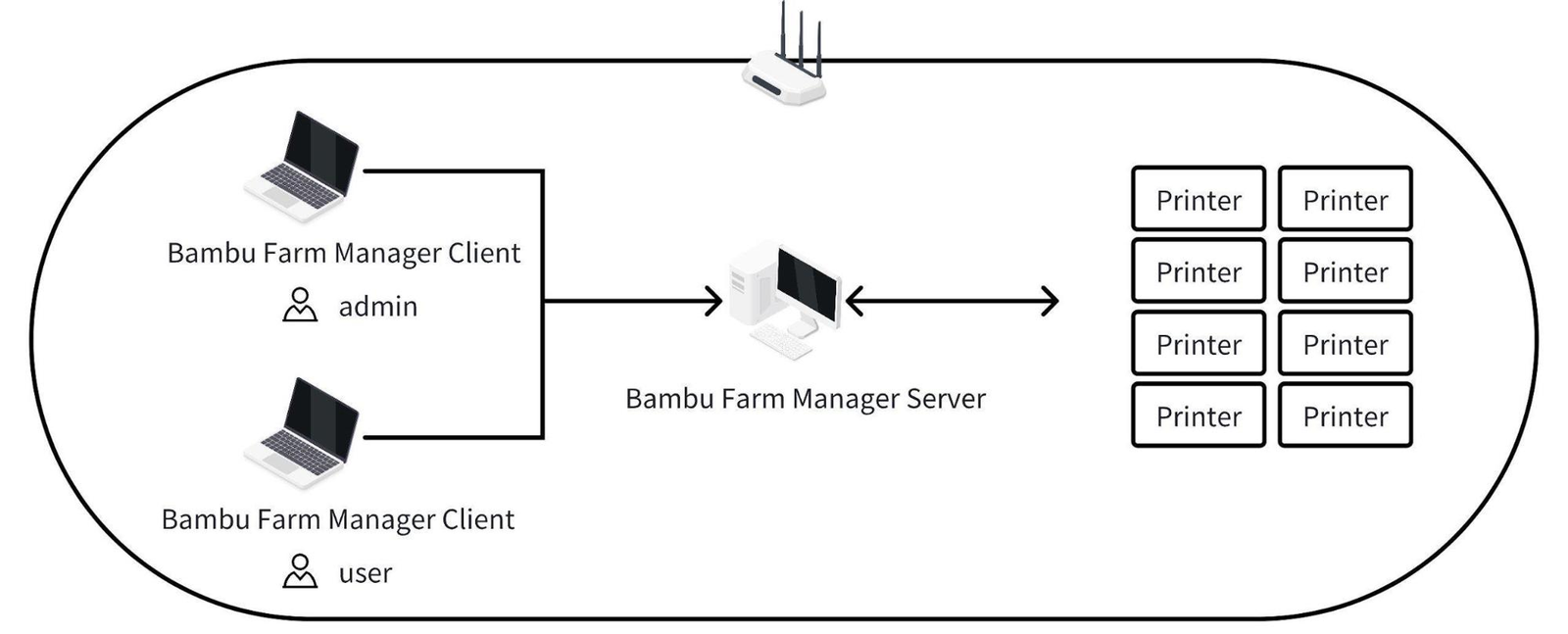
Bambu Farm’s network diagram.
A Cloud-Free Alternative for Print Farms
Bambu Farm Manager was designed specifically for high-volume printing environments, such as print farms, schools, and research labs. What sets it apart is that everything runs locally.
Instead of sending data to cloud servers, Bambu Farm Manager keeps all commands, files, and communication on-site, which means faster, more secure operations; this is especially useful for teams working with sensitive files or strict IT rules.
“Farm Manager gives me and my clients full control over where their data goes,” said Korneel Bullens, an engineer and founder of Korneel’s 3D Services, a print‑farm operation based in the Netherlands. “It’s also made managing the printer fleet a breeze, substantially driving down operational costs.”
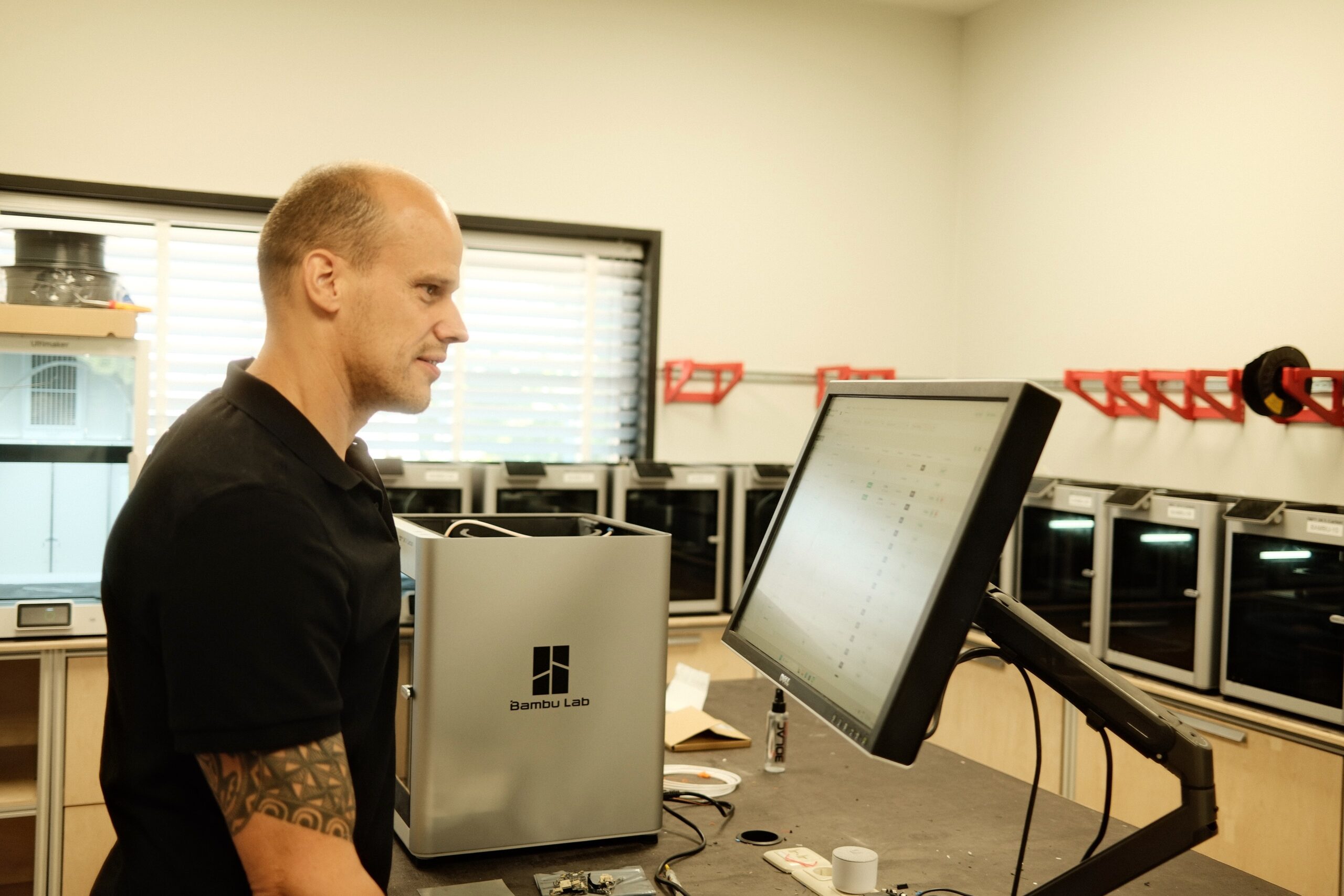
Korneel engineer uses Bambu Farm Manager.
Bambu Farm Manager is made up of two main parts that work together to streamline printer fleet management. The Farm Manager Server runs in the background on the computer, handling communication with all connected printers. Meanwhile, the Farm Manager Client serves as the user-facing dashboard that is used to monitor and control the entire fleet.
More importantly, the system can scale to as many printers as the local network and computer can support. That makes it ideal for setups ranging from a handful of machines to print farms with dozens or even hundreds of devices.
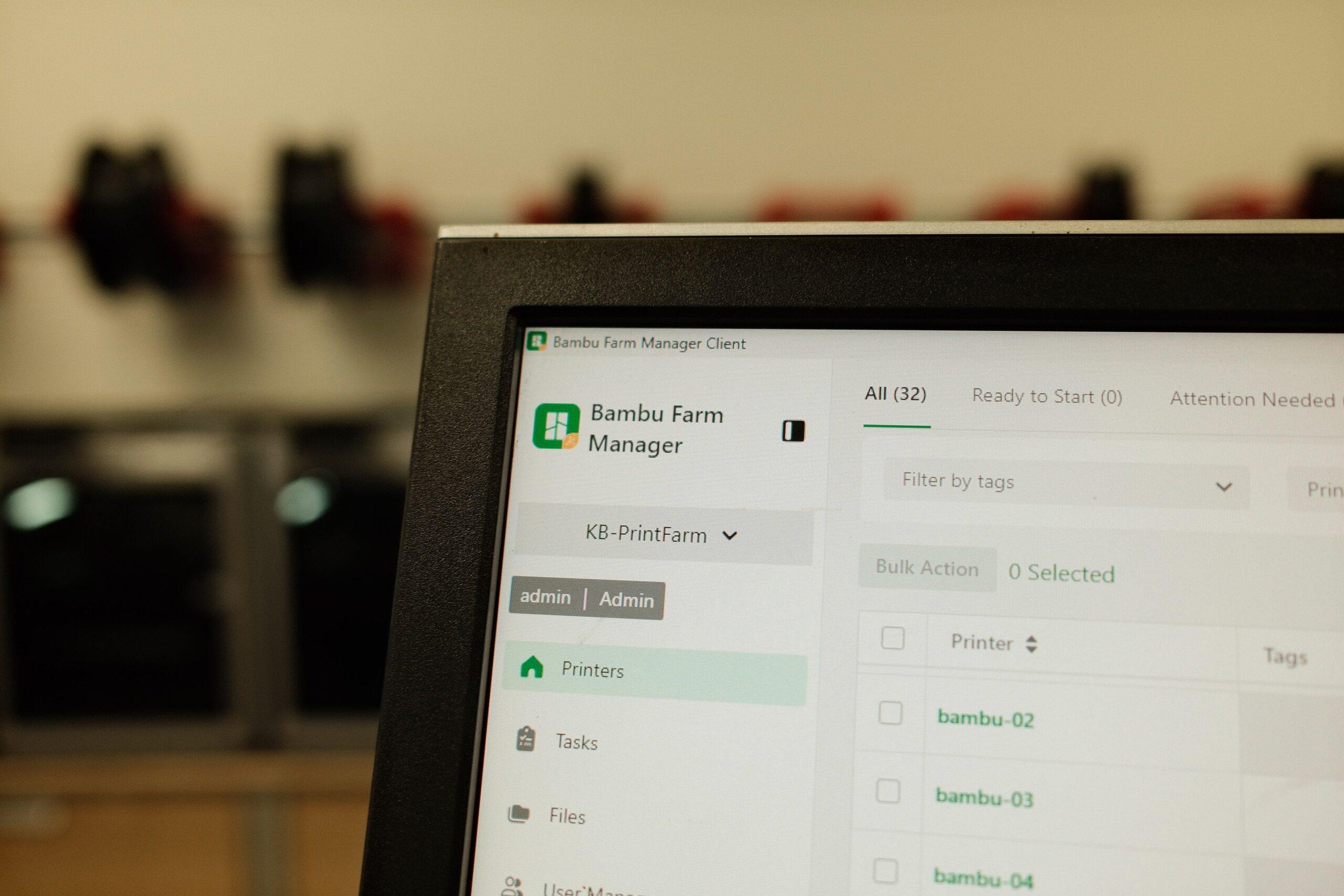
Korneel uses Bambu Farm Manager.
Tools to Run Large Printer Fleets
Bambu Farm Manager includes a set of useful features to streamline large-scale 3D printing operations. It also promises real-time monitoring to see the status of all printers on a single screen, batch controls that allow the same command to be sent to multiple machines, and smart queuing to automatically assign jobs based on availability.
File organization is handled through tags, folders, and filters, making it easier to navigate print tasks. The software also supports staggered start times to help manage power loads across a fleet. Together, these features are designed to support efficient, organized, and scalable printer management.
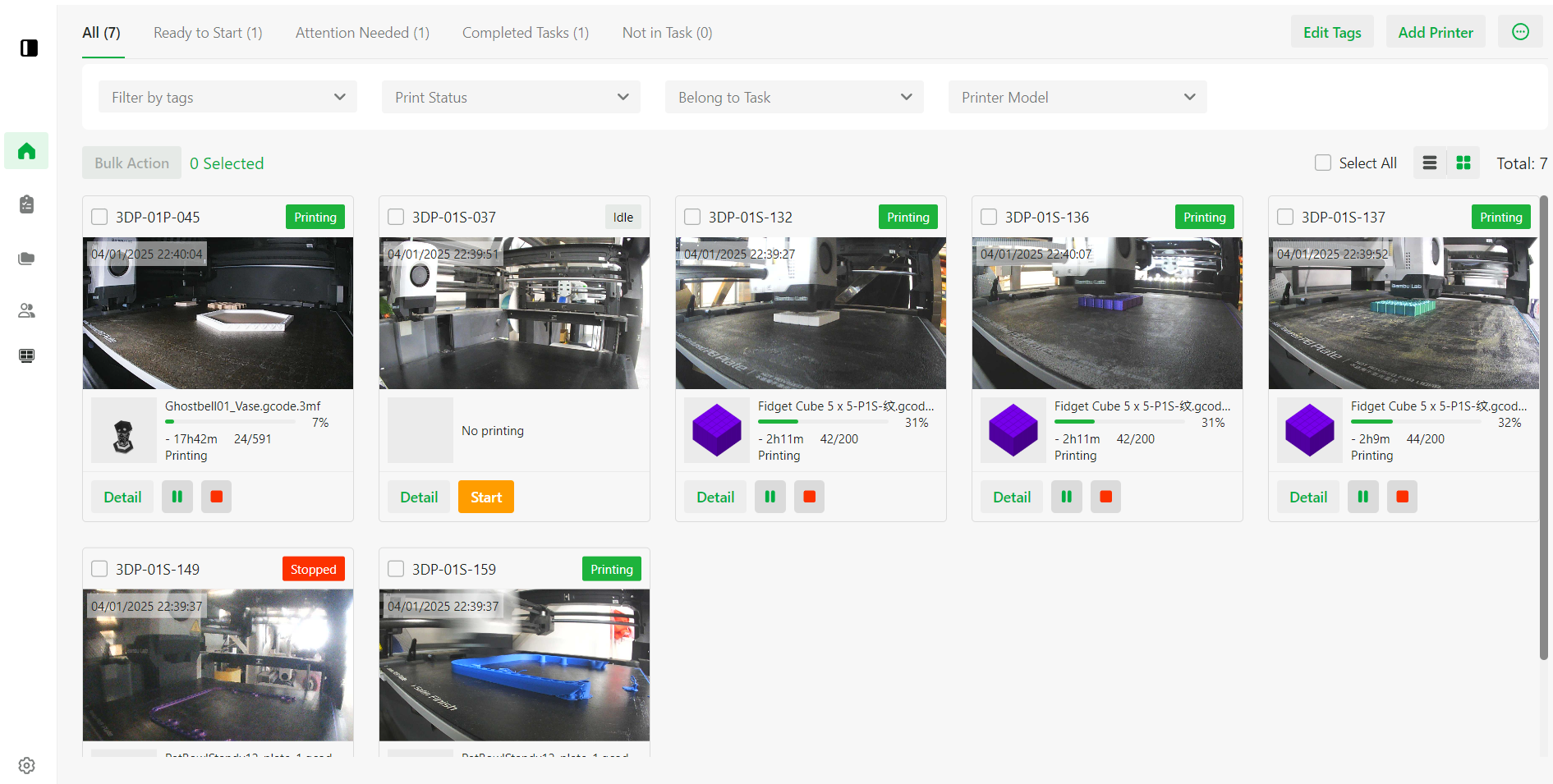
Bambu Farm Manager real-time monitoring.
Free to Use For Now
The current version of Bambu Farm Manager is completely free and available to Windows users (Windows 10 and higher). All existing features will remain free, according to Bambu Lab.
That said, the company is already thinking about premium add-ons for the future, although they have promised that these will only be introduced if they bring real value to larger, professional operations.
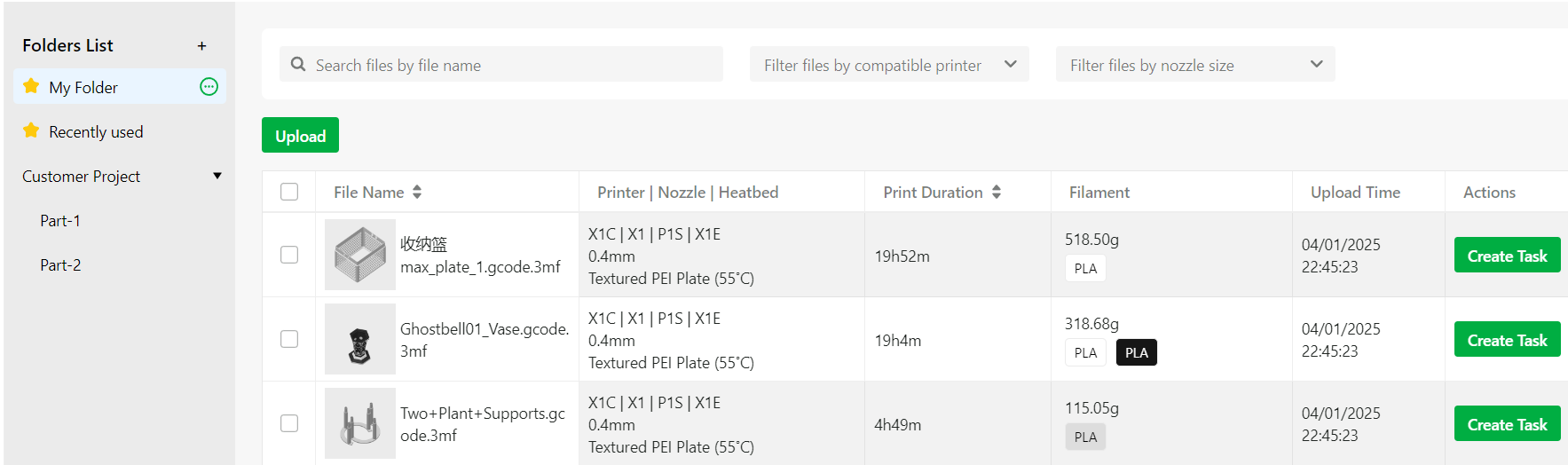
Bambu Farm Manager file organization.
If you want to try Bambu Farm Manager, everything you need is available on Bambu Lab’s official Farm Manager Wiki, including installation guides, system requirements, and FAQs. Bambu Lab has also released a case study showing how engineers are already using the software.
Images courtesy of Bambu Lab.
Subscribe to Our Email Newsletter
Stay up-to-date on all the latest news from the 3D printing industry and receive information and offers from third party vendors.
Print Services
Upload your 3D Models and get them printed quickly and efficiently.













You May Also Like
Oerlikon Adds ATLIX’s xBUILD 5000, Plans More for 2027
Oerlikon has installed a new ATLIX xBUILD 5000 metal 3D printer at its facility in Huntersville, North Carolina, marking the first production deployment of the system worldwide. The machine will...
The Manufacturing Race Behind the Drone Revolution
We are in the middle of a major manufacturing shift focused on the production speed and payload capacity of uncrewed aerial systems (UAS), or drones. A recent Manufacturing Dive article...
Stratasys vs. Bambu Lab: Why Europe and the U.S. Reached Different Results, Part II
Editor’s note: This is Part 2 of a two-part series by Xu Fanglei examining the technology and patent issues behind the Stratasys-Bambu Lab dispute. Part 1 looked at the $27.6...
3D Printing News Briefs, October 1, 2026: Defense, Enclosures, & More
In today’s 3D Printing News Briefs, we’re starting with defense news, first from Massivit and then from AML3D. Then we’ll move on to U.S. manufacturing of a new large-format LPBF...