BASF Taps Sinterit to Develop Compact SLS 3D Printing

In its quest to conquer the world of 3D printing, the world’s largest chemical company, BASF, is now moving into compact selective laser sintering (SLS) with Sinterit. BASF’s 3D printing brand, Forward AM, has partnered with the Polish manufacturer of the Lisa SLS 3D printer to develop the compact SLS segment.
As potentially revolutionary as low-cost SLS technology could be, it hasn’t skyrocketed in use the same way material extrusion and vat photopolymerization did when desktop machines were introduced to the market. So, while there are a handful of manufacturers of compact SLS 3D printers—Formlabs, Sintratec, WeMatter, Sharebot, Prodways—we’re not seeing massive print farms and the types of case studies we might expect.
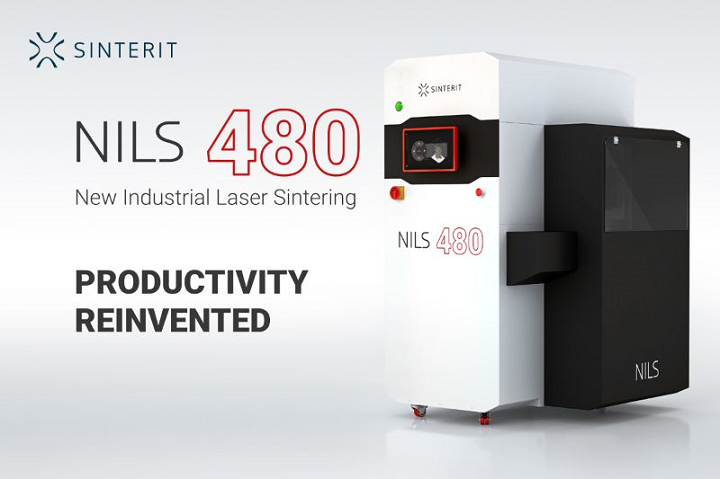
BASF and Sinterit may change that. The companies will be cultivating this segment with materials, hardware, and industrial applications. Sinterit is a prime choice for this partnership, as it has already done a great deal to expand its own offerings, including a slew of accessories as well as an industrial SLS machine, the NILS 480 with a robust build volume of 200 x 200 x 330 mm.
“A prerequisite for a large increase in the potential of this technology is new applications that can be opened by materials. In cooperation with BASF Forward AM materials, Sinterit will introduce work-ready materials with the Lisa and NILS lines,” said Konrad Głowacki, Sinterit cofounder responsible for Product Management.
“Entering the partnership with Sinterit allows us to make our high-performance materials even more accessible. The combination of Sinterit’s hardware and our SLS powders will enable customers to realize new industrial applications in reliable high quality. This step contributes to the continuous industrialization of Additive Manufacturing,” said Stefan Josupeit, Head of Business Line Powder Bed Fusion, BASF 3D Printing Solutions.
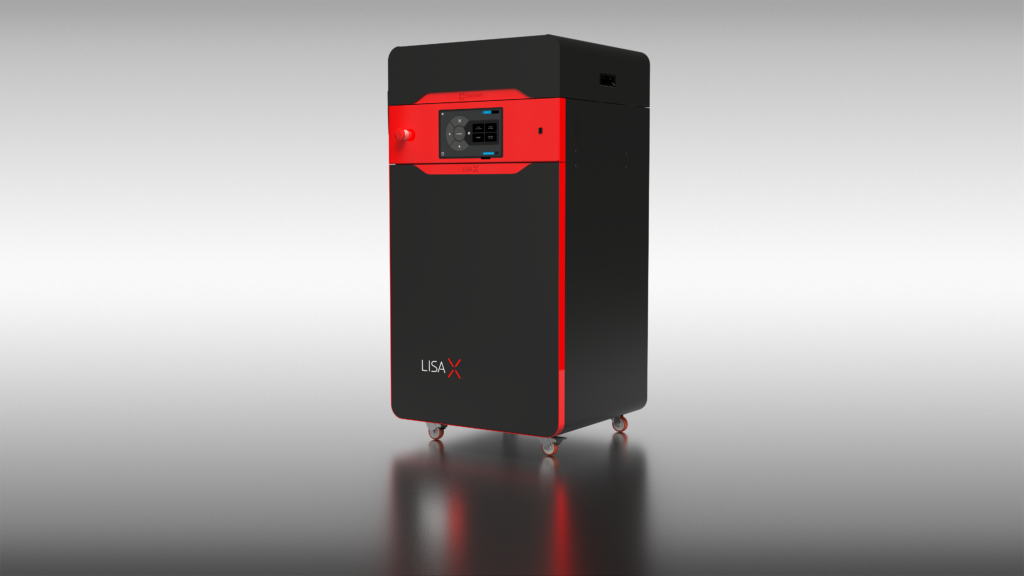
Sinterit’s Lisa X SLS 3D printer. Image courtesy of Sinterit.
BASF has been working to permeate every aspect of the 3D printing world, acquiring service bureau Sculpteo while working with its competitors Materialise and Shapeways. Meanwhile, it’s releasing materials for polymer and metal extrusion, as well as for HP’s Multi Jet Fusion, and has opened a spare part 3D printing firm. As for SLS and photopolymers, BASF it has those too. By purchasing Solvay’s polyamide business, it was able to crack the SLS space, which has evolved into partnerships with XYZprinting and Farsoon. For photopolymers, it has worked with Photocentric, Nexa3D and Origin. BASF is even in the bioprinting space.
Compact SLS could evolve into quite a revenue stream for the German giant as smaller service bureaus adopt low-cost SLS 3D printers to take on large firms that rely on large-scale SLS for plastic parts. Meanwhile, BASF will have a role on both ends and could see Sinterit machines used at the services it is working with. In fact, BASF already invested in Prodways’ compact P1000 SLS machine. As evidenced by the paragraph above, BASF has quickly become a 3D printing powerhouse that could help it dominate a world that no longer uses fossil fuels for energy, but still relies on them for plastics.
Subscribe to Our Email Newsletter
Stay up-to-date on all the latest news from the 3D printing industry and receive information and offers from third party vendors.
Print Services
Upload your 3D Models and get them printed quickly and efficiently.













You May Also Like
Solukon Goes Big with New SFM-AT850 Depowdering System
Solukon has released the SFM-AT850 depowdering system. The German depowdering specialist has updated its product line, and this machine replaces the SFM-AT800-S and SFM-AT1000-S. Rather than many small parts, this...
The Hidden Economics of Powder Bed 3D Printing: Closing the Loop in Powder Management
Automation is a very topical thing in additive manufacturing at the moment. With renewed scale, some clients are fervently looking to automate production. Other business cases only make sense with...
Oerlikon Adds ATLIX’s xBUILD 5000, Plans More for 2027
Oerlikon has installed a new ATLIX xBUILD 5000 metal 3D printer at its facility in Huntersville, North Carolina, marking the first production deployment of the system worldwide. The machine will...
The Science Lab You Can 3D Print
Researchers at Sweden’s Umeå University have shown how desktop 3D printers can be used to make lab equipment, giving scientists a cheaper way to build tools for their research. The...