Nexa3D and BASF Develop New Photopolymers for NXE400 3D Printer

Ultrafast industrial-grade polymer 3D printer manufacturer Nexa3D expands its partnership with BASF’s corporate brand Forward AM to deliver three new ultrafast photopolymer materials for Nexa3D’s NXE400 3D printer. The companies will collaborate to offer customers a way to rapidly design a wider range of prototypes and parts, including housings, enclosures, pipes, packaging products, and footwear components with greater performance and functionality. The new x45 family of materials was specifically designed with Forward AM’s rapidly expanding suite of tailor-made photopolymer formulations to print parts much faster and accurately on Nexa’s 3D printer.
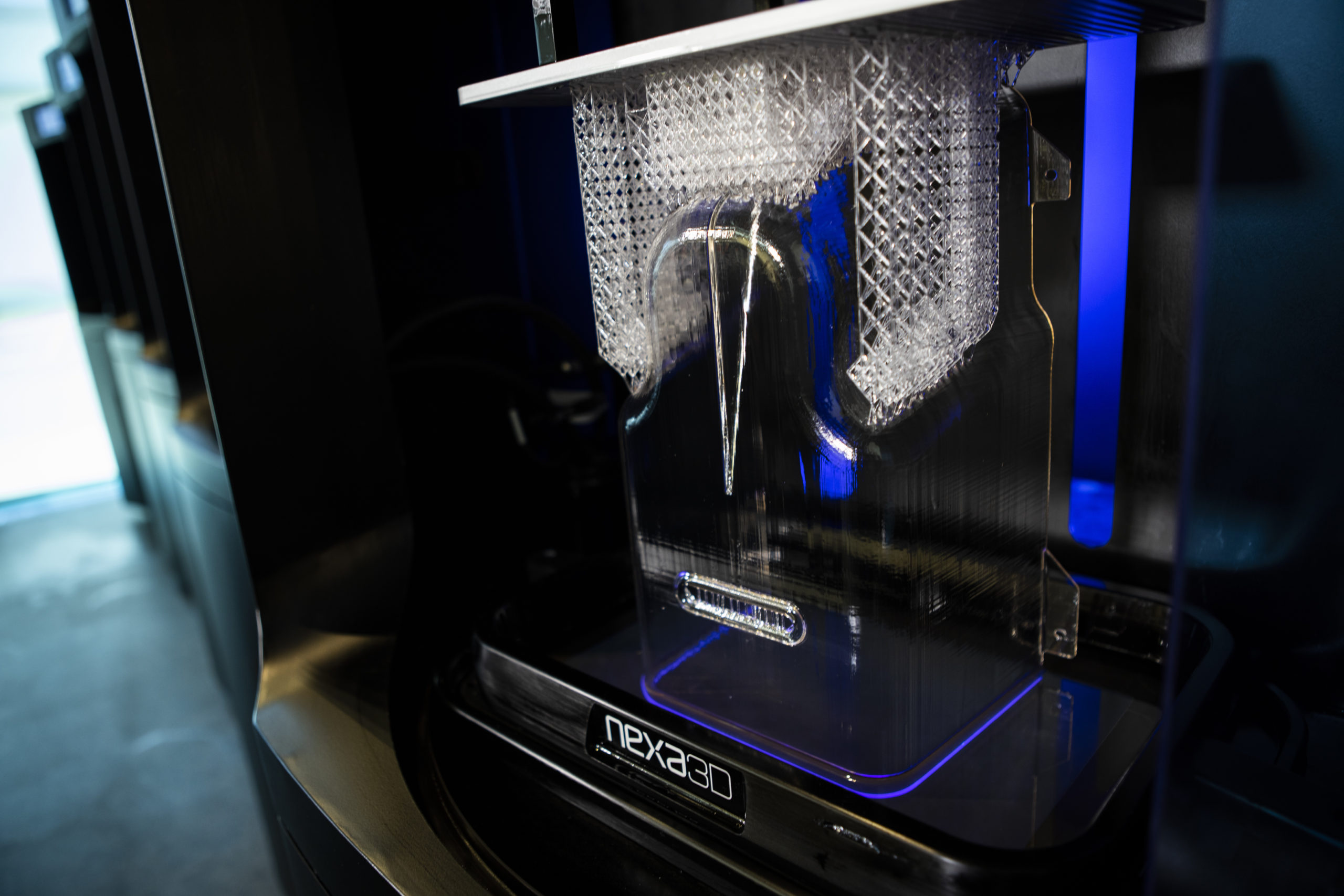
Nexa3D’s NXE400 printer. Image courtesy of Nexa3D
Under the partnership, the companies will leverage their capabilities to develop three new materials available through Nexa3D’s growing network of resellers, which already provides photoplastic and thermoplastic printers, materials, post-processing, and software solutions to many customers worldwide. The collaboration will focus on developing photopolymers x45-NATURAL, x45-CLEAR, and x45-BLACK, which will be added to the startup’s growing list of photoplastic materials designed for use in a range of applications like casting and dental. With strength above 60 MPa, the x45 materials are ideal for many use applications and prototyping and testing at a fraction of the time and cost of traditional methods.
Supporting a wide variety of applications with short processing times, x45-NATURAL is considered by the business partners ideal for models and functional prototypes requiring high strength and durability. Described as a “tough material,” x45-NATURAL’s draft build mode could enable companies greater flexibility within their manufacturing processes. The x45-BLACK will target 3D printed parts that need durability and an attractive matte black finish, such as automotive components usually molded in black plastic. Nexa3D and BASF claim it combines build speed and excellent out-of-printer properties that ensure first-time build success, giving manufacturers greater flexibility within their output processes.

Part printed with a new family of x45 photopolymer materials developed by Nexa3D and BASF. Image courtesy of Nexa3D/Trinity Wheeler Photography.
Finally, the x45-CLEAR combines good clarity with toughness for various models and functional prototypes requiring fast turnaround times. Nexa3D describes x45-CLEAR as having an outstanding build speed to give users greater adaptability within their manufacturing processes. The material also has excellent out-of-printer properties with robust print styles to ensure high first-time build success.
https://youtu.be/92_XOZYw–Q
After releasing its ultrafast NXE400 printer to transform 3D printing into an industrial machine for scale production, Nexa3D partnered with leading material formulators BASF, Henkel, Evonik, and DSM to create a diverse portfolio of production-grade, innovative polymers designed for the fast speeds of its printers, enabling engineers to prototype with the same materials they intend to produce their products with.
“Thanks to these new BASF materials and Nexa3D’s open materials platform, fast just got faster,” said Kevin McAlea, Chief Operating Officer at Nexa3D. “Both companies are committed to democratizing access to scalable additive polymer solutions for the entire product life cycle from design to production. With NXE400’s 20X productivity gains and up to 85% lower total cost of ownership, manufacturers will benefit from higher productivity, better functionality, and exceptional cost-effectiveness.”
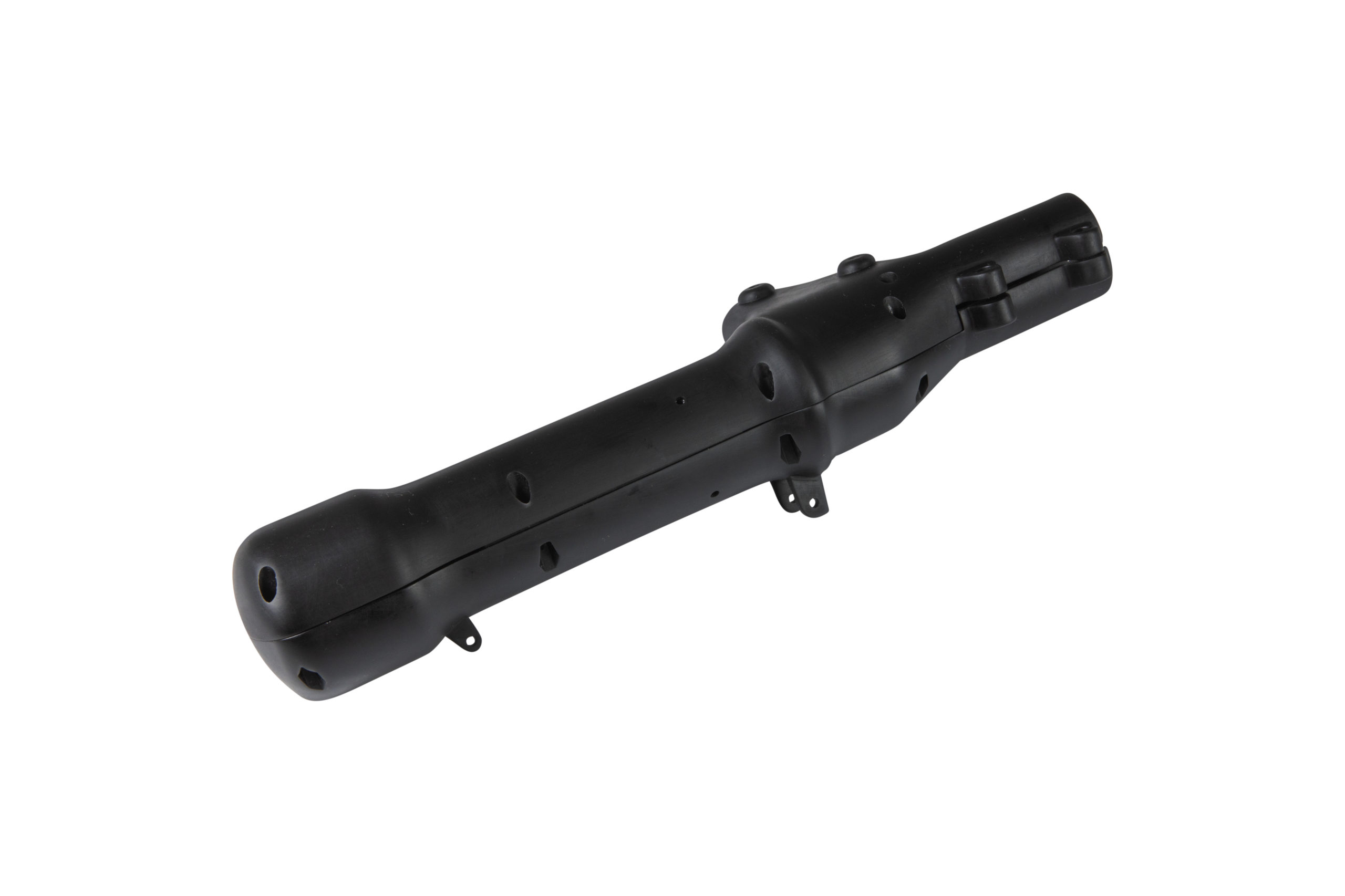
Part printed with a new family of x45 photopolymer materials developed by Nexa3D and BASF. Image courtesy of Nexa3D/Trinity Wheeler Photography.
Founded in 2016, California-based Nexa3D focused on developing industrial-grade stereolithography 3D printers intended to turn ideas into reality instantly. The 3D printers are powered by its proprietary Lubricant Sublayer Photo-curing (LSPc) technology and structured light matrix capable of reaching top speeds, enabling professionals and businesses to reduce 3D printing cycles of precision functional parts from hours to minutes.
Nexa3D is gaining an edge over its competition by collaborating with significant material formulators to capture next-generation polymers that will work with its platform, which the company says can improve productivity by 20 times. As part of a smart business spirit, Nexa3D was capable of bringing to market more than half a dozen materials in just over seven months. Nexa3D Co-founder and serial entrepreneur Avi Reichental told 3DPrint.com last year that there has been a lot of interest from companies that needed to augment their production, even during the pandemic, such as medical and consumer products, many automotive and tier-one suppliers, service bureaus, and transportation or mobility companies. Nexa3D took this opportunity to step up its R&D investment and become more competitive.

Nexa3D’s NXE400 3D printer. Image courtesy of Nexa3D.
The resourceful vision is clearly paying off. In just a few months, the startup has introduced a large format 3D printer for dental labs, struck a deal with British Formula One motor racing team Williams Racing to manufacture lightweight parts, and continued to fast track more materials for its printers. Unleashing the full capability of the materials, resins, and powders is key to Nexa3D, especially considering the company is interested in scaling up AM into production in a wide range of industries and driving adoption of the technology to disrupt traditional manufacturing in many industries.
Subscribe to Our Email Newsletter
Stay up-to-date on all the latest news from the 3D printing industry and receive information and offers from third party vendors.
Print Services
Upload your 3D Models and get them printed quickly and efficiently.













You May Also Like
AM & National Competitive Advantage, Part One: the Real Problem with US Manufacturing
The problem with US manufacturing is the productivity growth rate. Depending on the source, US manufacturing productivity has either been flat or slightly declined since 2010. Before going any further...
Advanced Manufacturing at IMTS 2026: 3D Printing and AI and Drones, Oh My!
Last week’s International Manufacturing Technology Snow (IMTS) in Chicago welcomed over 90,000 attendees to the jungle that is McCormick Place. With over 1.17 million square feet of exhibit space, and...
Let the Games Begin! Xi Throws Down the Advanced Manufacturing Gauntlet
Sangmin Lee went to TCT Asia back in March and reported on the event for 3DPrint.com. He wrote two articles arguing that China’s AM industry looks “ready to scale.” This...
What 3D2GO Says About 3D Printing’s Growth in Southeast Asia
The Philippines offers an interesting case study in how 3D printing can develop in Southeast Asia, and Manila-based 3D2GO helps illustrate it. 3D printing in Southeast Asia doesn’t have to...