Readily3D Bioprinting Pancreas to Help EU-Funded Program Develop Diabetes Treatment


As the World Health Organization reports, the prevalence of diabetes has been rising over the last few decades, and there are currently around 422 million people around the world who have the disease, which causes 1.6 million deaths annually. Improving the diagnosis and treatment of diabetes could majorly benefit public health. That’s just what Readily3D, a spin-off company from the École polytechnique fédérale de Lausanne (EPFL) in Switzerland, is trying to do. The company has developed its bioprinted mini pancreas, created through a novel system that can supposedly print biological tissue in only 30 seconds.
“Existing bioprinting technologies are slow, which tends to reduce cell viability. They also have a poor ability to produce complex anatomical structures, such as vasculatures,” Readily3D explains on its website. “To overcome these limitations, we created Tomolite: a unique bioprinter, allowing biologists to print an entire cell-laden volume at once, in less than a minute and without impairing cell viability.”
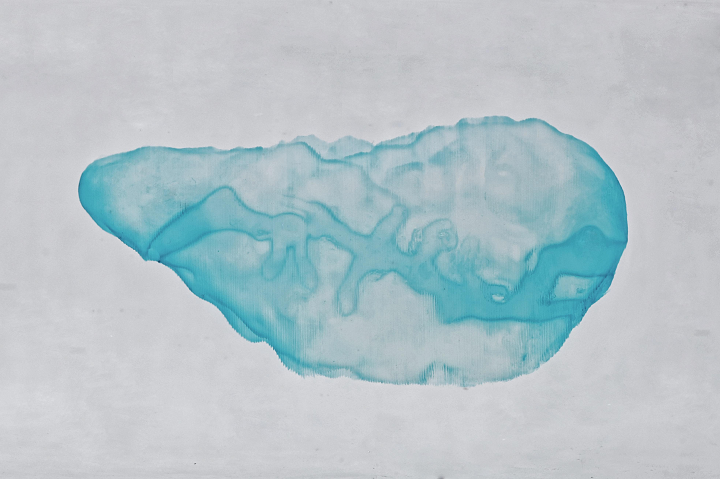
Mini pancreas prototype, bioprinted by Readily3D
The pancreas, located behind the stomach, produces the necessary bicarbonates and enzymes we need to digest our food, but it also secretes several hormones, such as insulin, which regulates our blood sugar. A diseased pancreas can no longer produce insulin, which can lead to diabetes—a chronic disease characterized by high levels of blood sugar, which can result in serious damage to many parts of the body, including the blood vessels, heart, kidneys, nerves, and eyes. In fact, according to The International Diabetes Federation’s 2019 IDF Diabetes Atlas and the European Diabetes Study Center (CeeD), diabetes is the leading cause of blindness among adults and majorly increases the risk of heart attack, stroke, and kidney failure.
Readily3D’s tomographic illumination technology, created at EPFL’s Laboratory of Applied Photonics Devices (LAPD) and further developed by Readily3D, uses a biological gel that contains a patient’s stem cells within, and a laser applied to this gel solidifies the material through a polymerization process. The team says it can control the location, and the intensity, of the laser beam so only the required areas of the gel are solidified to form the tissue. Additionally, Readily3D’s bioprinting technology is said to be fast, contamination-free, easy to use, and cell-friendly, meaning the cells spend very little time outside of an incubator.
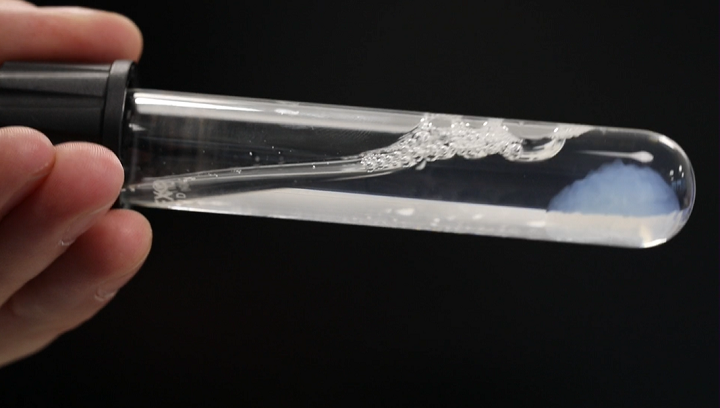
Paul Delrot, the CTO of Readily3D, explained, “One of the main advantages of our method is that it can create tissue in a single block, making it particularly useful for printing soft tissue like organs.”
Bioprinting is proving to be a transformative technology in the additive manufacturing and medical fields, and its success is based on plenty of hard work and research over the last twenty or so years. Bioprinted tissue, in particular, is extremely beneficial, as it negates the need for animal testing, and because it’s created from a patient’s own stem cells, can be custom-made for a person.
“What’s more,” Readily3D’s CEO Damien Loterie continued, “patients won’t have to try out an array of drugs, some of which may have unpleasant side effects, before finding the right one for them.”
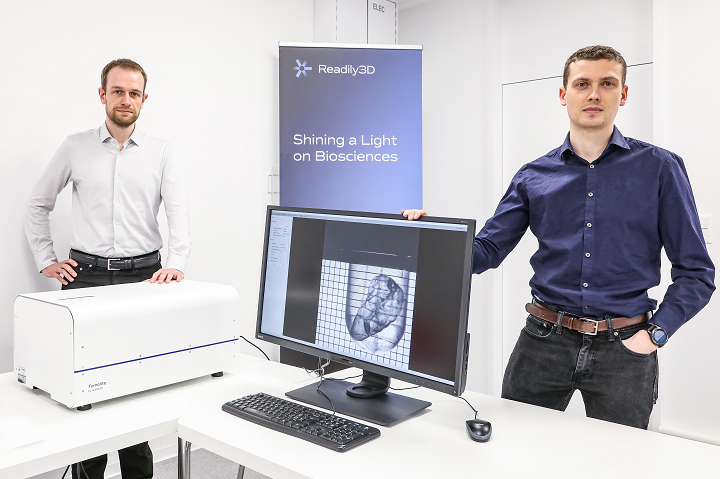
Damien Loterie and Paul Delrot, Readily3D founders
Readily3D’s innovative bioprinting technology is currently being used to develop a reliable, living pancreas model for diabetes drug testing applications in a large-scale project called Enlight, which received €3.6 million in funding from the EU’s Horizon 2020 Framework to develop the first living model of the pancreas within the next three years.
Christophe Moser, the head of LAPD and SPIE award winner for this technology, explained, “Developing a system that can print 3D tissue at the cubic centimeter scale and faithfully replicate the functioning of a live pancreas is a huge challenge, which we hope to meet with this technology.”

A cross-disciplinary consortium, led by UMC Utrecht, is carrying out the ambitious Enlight project, with help from fellow participants EPFL, Readily3D, and ETH Zurich in Switzerland, the University of Naples Federico II in Italy, AstraZeneca in Sweden, Rousselot in Belgium, and the Giannino Bassetti Foundation in Italy.
While EPFL and Readily3D are currently focusing on the pancreas, their bioprinting technology could be used in the future to fabricate different kinds of tissue, which could be used to make transplant organs or even come up with cancer treatments.
(Source/Images: EPFL)
Subscribe to Our Email Newsletter
Stay up-to-date on all the latest news from the 3D printing industry and receive information and offers from third party vendors.
Print Services
Upload your 3D Models and get them printed quickly and efficiently.













You May Also Like
50,000 Orders and Counting: EPlus3D & Chinese AM Services Provider Are Scaling Liquid Cooling Solutions for AI Servers
An under-appreciated story driving the additive manufacturing (AM) industry this year has been the divergence between what’s driving the market in China and what’s driving it everywhere else. Let’s start...
Seven Trends Reveal What’s Next for 3D Printing at TCT Shenzhen 2026
TCT Shenzhen 2026 opened on October 14 in Hall 15 of the Shenzhen World Exhibition & Convention Center in Bao’an, and ran through October 16. The event brought together equipment...
With Increased Aerospace & Defense Focus, CORE Industrial Partners Buys More Manufacturing Firms
Private equity’s march into manufacturing continues with CORE Industrial Partners’ latest acquisitions. CORE purchased Fathom a few years ago, and later bought 3DXTECH LLC, Triton 3D LLC, and Gearbox3D. It...
Can India’s AM Push Help Make it a Viable Supplement to China?
Diversifying manufacturing supply chains to locales outside of China has nothing to do with actually cultivating “substitutes” to the Chinese economy. The real stakes are these: China is an irreplaceable...