Ursa Major Lands $28.6M AFRL Deal for 3D Printed Draper Engine Flight Demo

The US Air Force Research Laboratory’s (AFRL’s) Rocket Propulsion Division at Edwards Air Force Base has awarded a $28.6 million contract to Ursa Major for follow-on work related to the company’s development of its Draper engine. This contract supports AFRL’s broader goals in responsive space, hypersonic, and on-orbit propulsion. Ursa Major’s first successful hotfire test for the Draper, produced using additive manufacturing (AM), was announced in May of 2024, less than a year after the company began developing the engine.
After its unusually fast achievement of that initial milestone, Ursa Major has gone on to conduct over 200 hotfires with the Draper. According to SpaceNews, this latest AFRL contract for the company covers “work scheduled through early 2027” and will include integration of the Draper into a test vehicle as well as a flight demonstration.
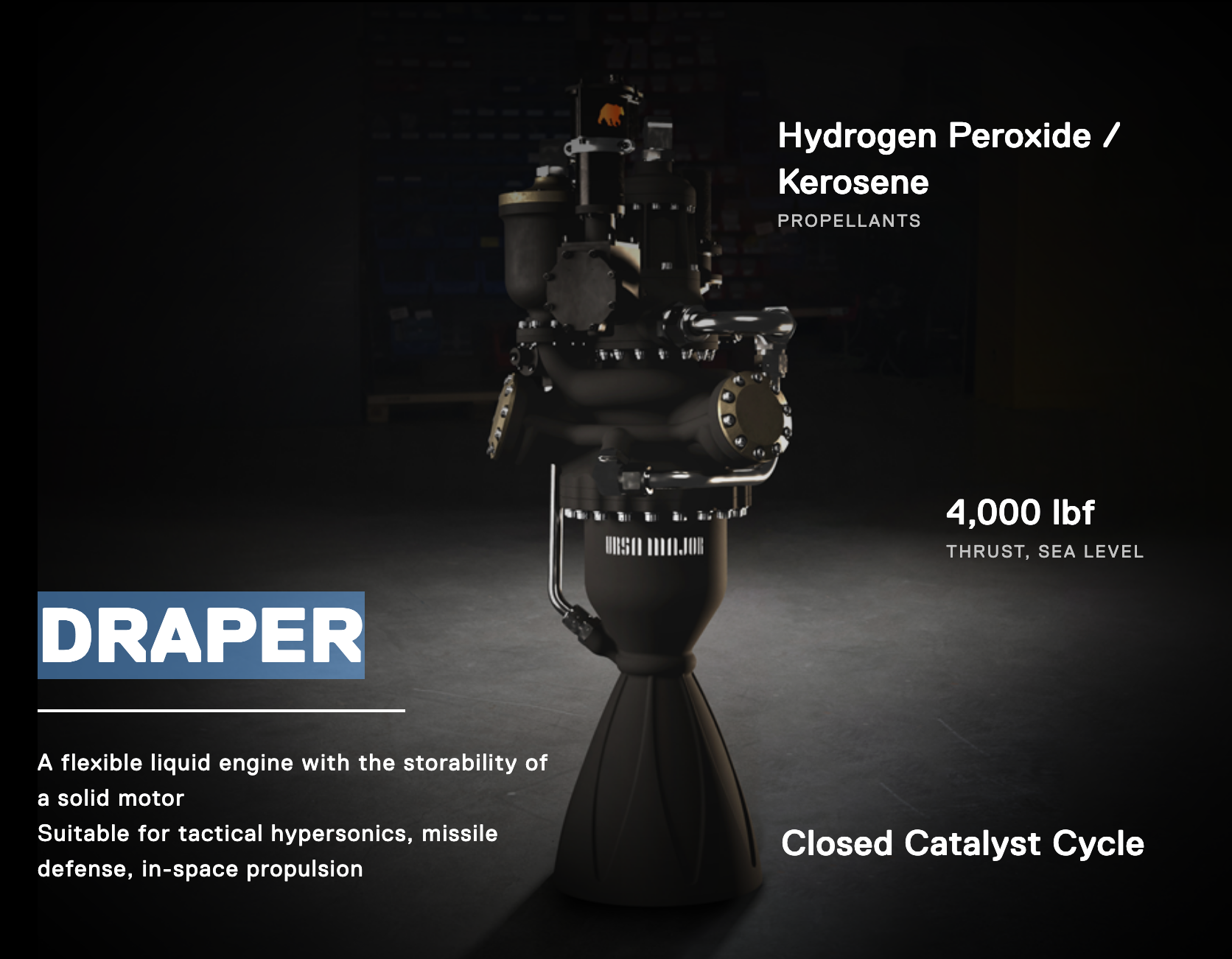
Draper rocket engine.
Ursa Major has already demonstrated its capacity for executing test flights, having successfully completed a demonstration in March 2024, when its Hadley engine powered a Stratolaunch Talon-A1 testbed that neared hypersonic speeds over the Pacific Ocean. The Draper, which produces 4,000 pounds of thrust, is designed to build on that success by offering greater maneuverability, flexibility, and range, all critical for countering next-generation hypersonic threats.
As was the case under the Biden administration, hypersonic development continues to be a priority for President Trump, with the White House issuing an executive order in January calling for an “Iron Dome for America”, an initiative that places hypersonic R&D at its center. Inspired by Israel’s Iron Dome missile defense system, the “Golden Dome” program already has $25 billion in spending earmarked in the US Congress’s latest budget proposal.
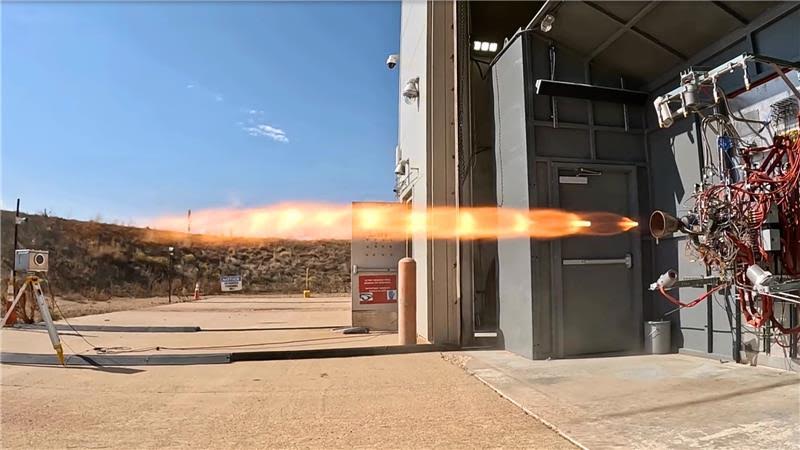
Testing of the Draper engine model.
In a press release about Ursa Major’s $28.6 million contract from the US AFRL to continue work on the Draper engine, the company’s CEO, Dan Jablonsky, said, “Under this contract, Ursa Major serves as the lead integrator for a tactical flight demonstrator that will prove the ability to use a storable liquid rocket system for hypersonic applications. Because of their tactical configuration, storable liquid rocket engines, like Ursa Major’s Draper, are uniquely positioned to deliver to the warfighter a hypersonic capability that is manufacturable at scale and at a fraction of the cost of alternatives.”
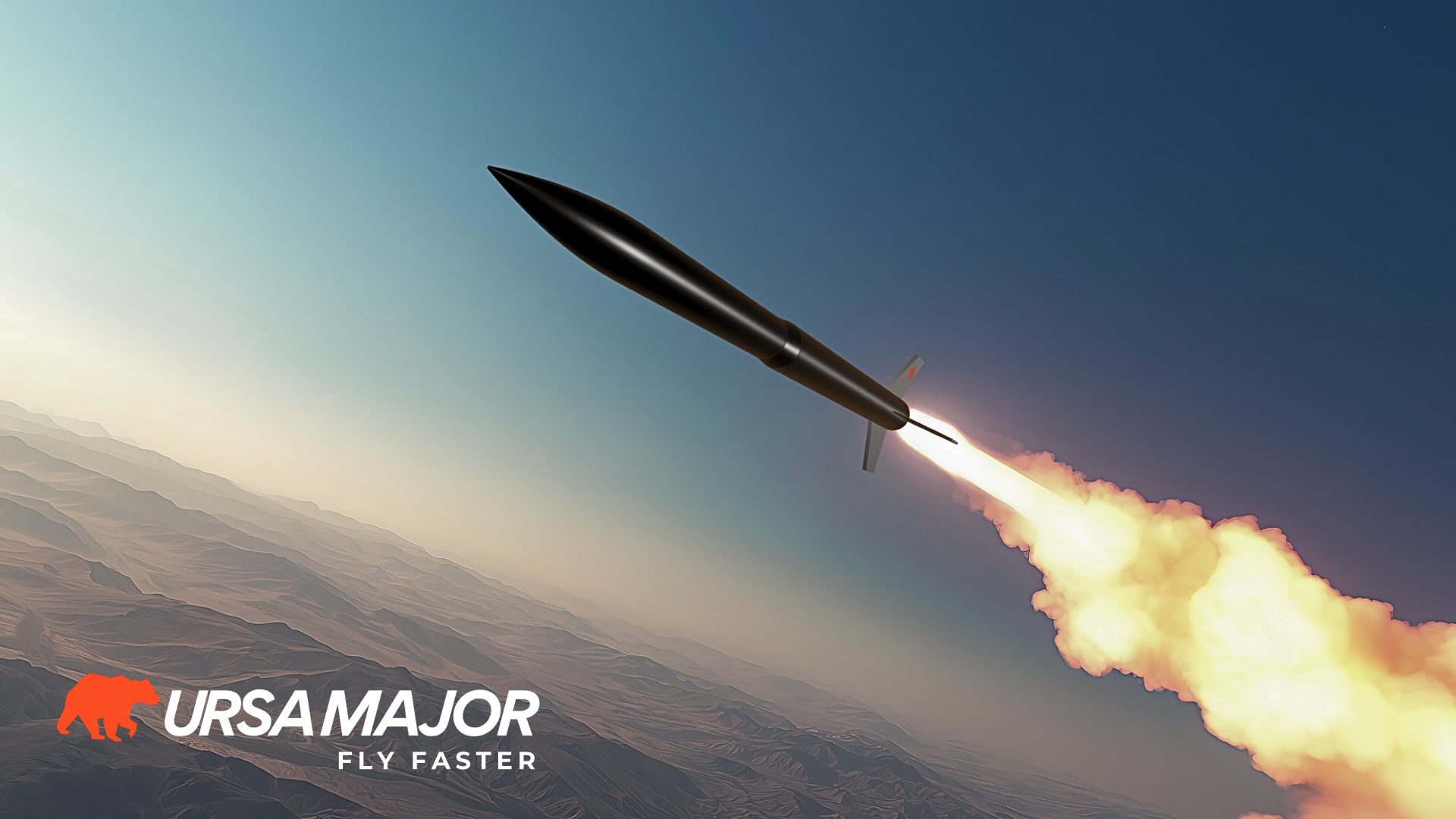
Solid rocket motor propulsion capabilities.
It’s already proving to be yet another big year for Ursa Major, with the company having announced in April that it sold 10 Hadley engines to the US subsidiary of Tokyo’s Innovative Space Carrier. Only about a month earlier, the company announced a $10-15 million contract to an unnamed customer for satellite propulsion systems.
Both contracts are important in terms of forecasting what ultimately might come from Ursa Major’s big AFRL deal: the Hadley engine sale came about a year after the company’s successful flight demonstration, and in-orbit propulsion is one potential application for the Draper engine. Thus, the AFRL contract matters not just in its own right, but perhaps even more crucially, because it will help put Ursa Major in an ideal position to translate the results into long-term commercial growth.
Meanwhile, the DoD’s continued ramp-up of its hypersonic research bodes positively for the AM industry’s ability to keep making inroads into the defense sector. For instance, this context may help explain why Velo3D has seen so much positive momentum lately, given all of the company’s work over the years on hypersonic applications — work that includes its longstanding relationship with Ursa Major.
Images courtesy of Ursa Major
Subscribe to Our Email Newsletter
Stay up-to-date on all the latest news from the 3D printing industry and receive information and offers from third party vendors.
Print Services
Upload your 3D Models and get them printed quickly and efficiently.













You May Also Like
AI Design and Point-of-Care Integration Headline ADDITIV Medical 2026
Medical additive manufacturing is expanding rapidly inside major healthcare institutions. In 2026 alone, hospital systems including Indiana University Health and Sheffield Teaching Hospitals launched dedicated point-of-care 3D printing facilities to...
GKN Aerospace’s UAV Demonstrator with 3D Printed Engine Avoids ITAR Regulations
The US CIA director recently made an unannounced visit to Moscow that has naturally raised much speculation, while the EU and NATO have now officially accused Russia of being behind...
The Business Case for 3D Printed Stents
A new 3D printed stent developed at New York University (NYU) does not look like the devices doctors typically use today. Instead of a simple tube, the prototype resembles a...
3D Printing Financials: 3D Systems, Prodways, and Align Build on Positive Momentum
The latest earnings from 3D Systems (NYSE: DDD), Prodways (EPA: ALPWG), and Align Technology (Nasdaq: ALGN) show that the 3D printing market continues to move forward. Some businesses are growing...