Evonik Opens Center for Plastic 3D Printing in Austin, Texas


Based in Germany, Evonik Industries has been a leader not only in developing specialty chemicals but also in additive manufacturing processes, precipitating the need for yet another new facility in the US.

Joining a long list of other production sites and offices in North America, the latest Evonik technology center has opened in Austin, Texas, meant to continue paving the way for their worldwide network of innovation with powder bed fusion materials made by Structured Polymers.
To be known as the Center for Structured Polymers Technology, the new lab houses all of the following:
- Numerous 3D printers
- A 3D printing processing area
- Research and development laboratory
- Production rooms
- Office areas
- Meeting rooms
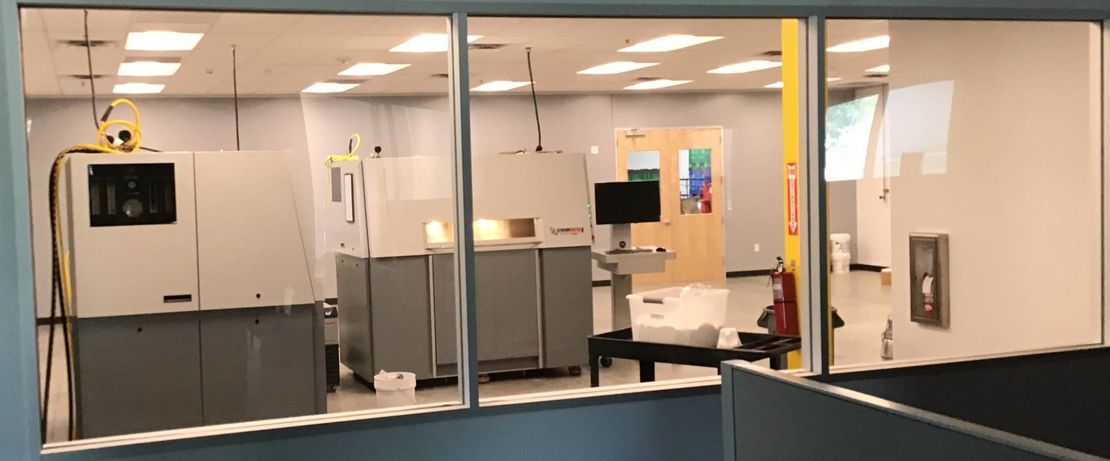
Made up of a large building complex, the Austin site will also offer the highest levels in meeting safety standards, as well as necessary workplace ergonomics. Working under “the umbrella of Evonik,” and the supervision of managing director, Vikram Devarajan, the plan is for the Texas company to solidify their presence in the market of 3D printable polymers.
“By expanding our capabilities in North America, we are sending an important signal to our partners in the region that we can now better support them with new technological opportunities in materials development right in their own backyard,” said Vikram Devarajan.
The materials startup was founded in 2012 by Dr. Vikram Devarajan, Dr. Jim Mikulak, and Dr. Carl Deckard, and acquired by Evonik in 2019—following an investment two years previously via their venture capital division. The strategic merger provided Evonik with access to the new patented materials and gave Structured Polymers a better chance for expanding their products within the AM space. Equally important though was the potential for improved diversification overall and better opportunities for their customers.
Following the acquisition of Structured Polymers, the two companies were able to release their first powders to the 3D printing materials market (end of 2019), in the form of two thermoplastic elastomers made from co-polyesters. The materials are meant to be tough yet flexible, providing high elasticity, resilience, and are available in either white or black.
Currently, Evonik leads with the production of their polyamide 12 (PA12) powders. These materials have been used in the AM industry for over two decades. Evonik also offers the following:
- Flexible PEBA powders
- GMP-quality biomaterials
- Dispersants
- Flow improvers
- Reactive modifiers
- Nanocomposites
With over 32,000 employees working in Evonik locations in 100 different countries, their mission is to “improve life, today and tomorrow.” Last year sales were €13.1 billion with an operating profit (adjusted EBITDA) of €2.15 billion.
Evonik has also invested in and collaborated with other dynamic companies, to include startups overseas, HP, and more. They have also continued to develop new filaments, implants, and software tools for manufacturers.
[Source / Images: Evonik; MarketScreener]Subscribe to Our Email Newsletter
Stay up-to-date on all the latest news from the 3D printing industry and receive information and offers from third party vendors.
Print Services
Upload your 3D Models and get them printed quickly and efficiently.












You May Also Like
3DPOD 302: Digital Inventory for AM with Mikhail Gladkikh, Würth Additive Group
Mikhail Gladkikh has worked in oil and gas for many years. With this background, we obviously talk about energy market turbulence and the adoption of AM in oil and gas....
Spectrum Filaments Gets Investment: How They Could Win in Filament
Spectrum Filaments is a long-time high-quality filament supplier based in Poland. With good tolerances, roundness, and consistency coupled with affordable pricing, the firm has been a mainstay for makers, industrial...
NX Atomics and Sciaky Collaborating to 3D Print Nuclear Components
For decades, the nuclear industry has quietly experimented with and implemented additive. Bouyed by the likes of ORNL, companies such as Westinghouse have 3D printed components serially. We have an...
Incodema3D Buys 14 Metal EOS Systems, Now One of the World’s Largest Metal 3D Printer Operators
Recently, a majority stake of 3D printing service bureau Incodema3D was purchased by AFM Capital. Under new ownership, the Freeville, New York company is now using its cash-rich parent for...