3D Printing News Briefs: October 14, 2019


In today’s 3D Printing News Briefs, everything is new, new, new! Carbon is announcing a new RPU 130 material, and STERNE Elastomere introduces its antimicrobial silicone 3D printing. Protolabs launches a new polypropylene 3D printing service in Europe, and Hydra Research has officially released its flagship Nautilus 3D printer.
Carbon Introduces RPU 130 Material
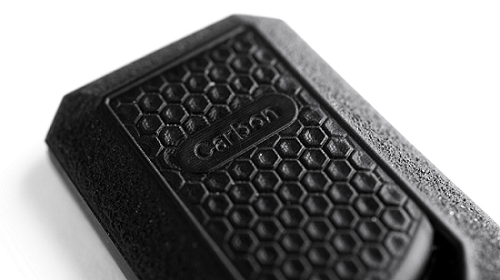 At this week’s International K Trade Fair in Dusseldorf, Carbon will debut its new RPU 130 resin, a rigid polyurethane that’s rigid, tough, impact resistant, and stands up under high temperatures, making it a perfect choice for the automotive industry in applications such as brake caliper covers. Made exclusively for Carbon’s Digital Light Synthesis, the dual-cure engineering resin is comparable to unfilled thermoplastics, and Carbon also partnered with DuPont Tate & Lyle Bio Products to make RPU 130 out of sustainable Susterra propanediol, a 100% bio-based material that uses 46% less nonrenewable energy from cradle-to-gate and produces 48% less greenhouse gas emissions as well.
“We are focused on ways to incorporate more sustainable approaches to developing materials, and our partnership with DuPont Tate & Lyle emphasizes that commitment,” stated Jason Rolland, SVP of Materials at Carbon. “We believe that sustainability can go hand-in-hand with improved performance. In the case of RPU 130, we believe it will make the material even more appealing for our customers, as it makes it possible to create better quality products that are also ultimately better for the environment.”
You can learn more about Carbon’s new RPU 130 at its K-Show booth, H7.2, F12 from October 16-23.
Antimicrobial Silicone 3D Printing by STERNE
 French silicone 3D printing specialist STERNE will also be attending K 2019 this month. Three years ago, the company unveiled its silicone 3D printer at K 2016, and its SiO-shaping 3D silicone printing technology makes it possible to fabricate very small pieces, according to standard ISO 3302-01 :2014 (M2) tolerances, at hardness from 30 to 60 Shores A. The printer also offers a full panel of colors in opaque, phosphorescent, and translucent.
The company is now combining 3D printing with antimicrobial silicone, in order to keep the silicone odor-free, avoid bacteria developing, improve the hygiene of a 3D printed object, and strengthen its immune barrier as well. You can learn more about this antimicrobial silicone 3D printing at STERNE’s Stand E23, Hall 8A, at K 2019.
Protolabs Offering Polypropylene 3D Printing in Europe
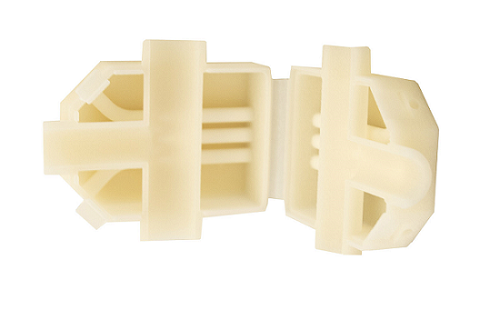 For the first time, digital manufacturing company Protolabs is offering polypropylene 3D printing, with the launch of a new service in Europe. The company has invested a lot in developing the material to be used with selective laser sintering (SLS) technology, on an SPro 60 system. SLS 3D printing with polypropylene plastic allows design engineers to rapidly develop and test prototypes, and fabricate complex designs as well, like internal channels and honeycomb structures.
“Polypropylene is one of the most used plastics available to modern manufacturers and is widely used for a number of applications. Polypropylene is one of the most used plastics available to modern manufacturers and is widely used for a number of applications. Now that we can produce a prototype in polypropylene, design engineers can develop and test it in an application using the same material that it will be manufactured from. The product design can then be quickly reiterated and retested until they have the perfect solution, before committing to tooling. This breakthrough takes product development to the next level using the most versatile of plastics, ” said Andrea Landoni, 3D printing product manager for Protolabs.
“Before, if you wanted to use polypropylene then you were limited in what you could design by the manufacturing technology available to you. Now the only limitation is your imagination.”
Hydra Research Releases Flagship 3D Printer
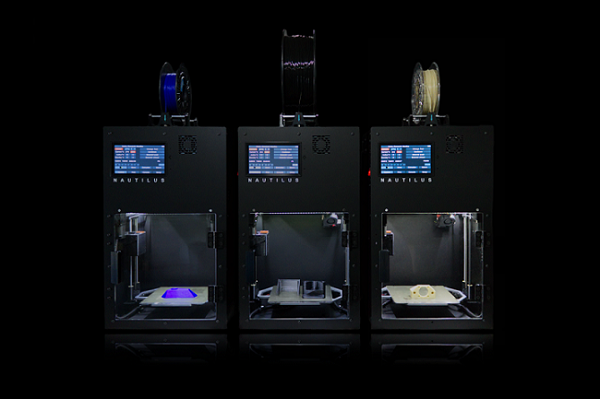 Oregon company Hydra Research, which began in a closet three years ago as a peer-to-peer print service, has announced the release of it flagship 3D printer, the Nautilus. The fully enclosed, industrial-grade desktop system – assembled in Portland – features a quick-change Tool Cartridge system that integrates E3D’s V6 hotend for fast nozzle switching, in addition to an integrated software solution. It also supports a variety of materials, provides Cura profiles for easy slicing, has a small footprint in a sleek frame, and offers customizable HydraCare support and consulting packages
“As a company, our primary goal is producing world-class hardware on an open source platform,” explained John Kray, the Founder and CEO of Hydra Research. “Manufacturers like E3D, Duet3D, and Fillamentum combine these values perfectly.”
You can now purchase Hydra’s Nautilus 3D printer on the company’s website, in addition to spare parts, accessories, and filament.
Discuss these stories and other 3D printing topics at 3DPrintBoard.com or share your thoughts in the Facebook comments below.
Subscribe to Our Email Newsletter
Stay up-to-date on all the latest news from the 3D printing industry and receive information and offers from third party vendors.
Print Services
Upload your 3D Models and get them printed quickly and efficiently.












You May Also Like
3D Printing News Briefs, July 9, 2026: RIMPAC 2026, Software, Housing, & More
In today’s 3D Printing News Briefs, Massivit continues its focus on aerospace and defense manufacturing, and Meltio is collaborating with Phillips Corporation for RIMPAC 2026. Moving on to software, AMIS...
3DPOD 304: Precast Concrete AM with Greg Kerkstra, Mangrove
Greg Kerkstra is part of a family business that leads in the precast concrete industry. They’ve now turned to Progress Group’s large-format binder-jet concrete technology, which we covered here in...
3D Printing News Briefs, June 10, 2026: Grand Opening, Photoresins, Footwear, & More
We’re starting with some exciting news in today’s 3D Printing News Briefs: Stratasys just celebrated the opening of its new North American headquarters in Minnesota. Moving on, Nanoscribe is scaling...
Wells Fargo Backs ICON in Landmark Milestone for 3D Printed Housing
Qualification is an indispensable step on the path to legitimization for any new technology, but it’s still just one step: markets tend to remain unswayed without a co-sign from an...