
Allevi and Made In Space Partner Up for New Initiative: 3D Bioprinting in Outer Space

3D bioprinting company Allevi, formerly known as BioBots, is on a mission to make it easier for scientists and researchers to design and engineer 3D tissues. The company, which was founded four years ago, develops 3D bioprinters, software, and bioinks for the purposes of solving the most difficult biomedical problems that plague our world, such as disease and eliminating the organ waiting list.
 But now, Allevi is preparing to take its 3D bioprinting work out of this world with a new initiative.
Ever since the space race began in the late 1950s and led to the first man on the moon, humanity has been working hard to conquer the vastness of outer space. 3D printing has helped in this quest, from sending astronauts into space for research and testing and allowing them to fabricate items in zero gravity and microgravity to creating tools, medical supplies, and even habitats in space. Space exploration has also led to the creation of such practical tools on Earth as joysticks, GPS devices, and thermometers. This last brings us back to the medical sector, and Allevi’s goal of 3D bioprinting replacement organs for humans.
“While we continue to understand the capabilities and constraints of 3d biofabrication here on Earth, the ability to explore cellular function in space could afford us novel discoveries of organ form and function that have never before been studied,” Allevi wrote.
Astronauts can study things in a completely new way when they don’t have to worry about the constraints of gravity, and 3D printing can help increase their capabilities in these situations. This is one of the main focuses of California-based 3D printing and space technology firm Made In Space, which is responsible for introducing 3D printing to the International Space Station (ISS) four years ago. Having the ability to 3D print important parts and tools aboard the ISS helps the astronauts complete their tasks in space.
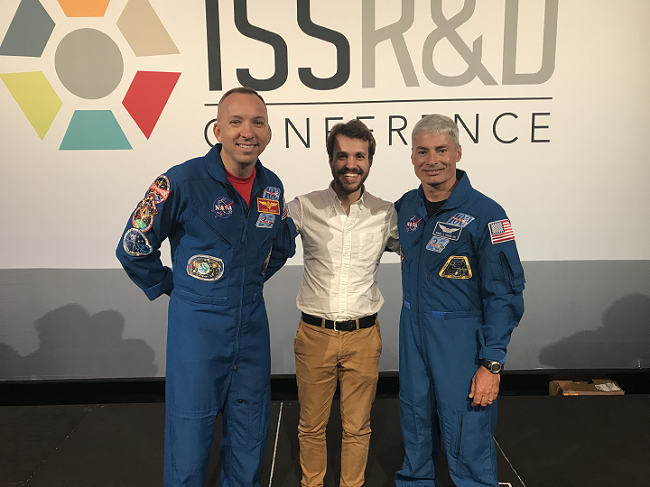
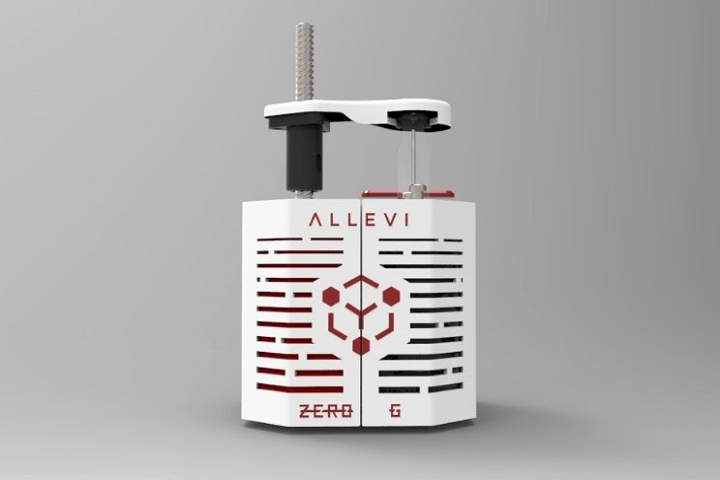
 Now, Made In Space and Allevi are working together to develop the Allevi ZeroG – the first 3D bioprinter in space. The two companies jointly launched the initiative at the recent ISS Conference in San Francisco, and even found the first two users of the new 3D bioprinting platform in Astronauts Mark Vendei Hei and Randy Bresnik, who Allevi says are excited to be on board.
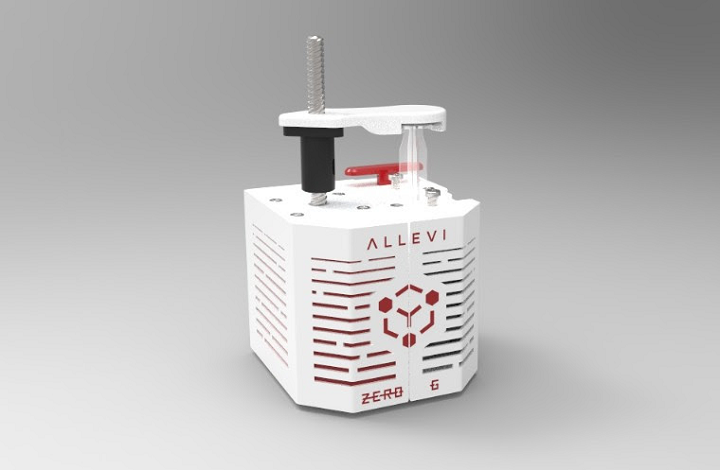
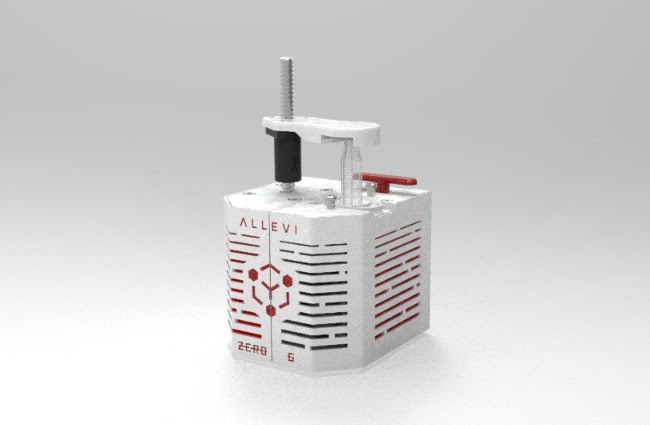
Allevi developed a compatible extruder, fittingly called the ZeroG bio-extruder, that is able to be outfitted onto Made In Space’s Additive Manufacturing Facility currently on board the ISS. This new bio-extruder will make it possible for scientists using the Allevi 3D bioprinting platform to run experiments in space, and back home on Earth, at the same time, in order to observe and study any biological differences that happen when 3D printing with gravity and without it.
“We are excited to continue to revolutionize how we study biology, not only on the ground but now in space,” Allevi wrote. “And perhaps one day, the Allevi ZeroG will aid astronauts in 3D bioprinting replacement organs for deep space travel. We’re excited to participate in this next generation space race.”
NASA and companies like Made In Space are already hard at work researching and creating tools to use and places to live in outer space. But if this Allevi initiative is successful, having the ability to create 3D bioprinted organs in space will bring us another step closer to living among the stars.
Discuss this story and other 3D printing topics at 3DPrintBoard.com or share your thoughts in the comments below.
[Images provided by Allevi]Subscribe to Our Email Newsletter
Stay up-to-date on all the latest news from the 3D printing industry and receive information and offers from third party vendors.
Print Services
Upload your 3D Models and get them printed quickly and efficiently.













You May Also Like
South Korea’s Lincsolution Lands Hanwha Defense Deal as Hanwha Invests Billions in US
I recently wrote about how the South Korean additive manufacturing (AM) firm Lincsolution is building an aerospace and defense hub, part of the company’s construction of “the largest AM facility in...
Bambu Lab and SUSAN FANG 3D Print for London Fashion Week
At London Fashion Week, some of the more unusual pieces on the runway came from 3D printers. Chinese fashion designer SUSAN FANG presented her Spring/Summer 2027 Air-Illusion collection at the...
Why Cross-Border 3D Printing Is Closing the Speed Gap with Local Manufacturing
The fastest 3D printing supplier in your shortlist may no longer be the one closest to your office. That sounds unlikely to many engineers. For years, overseas 3D printing carried...
Arridex Expands 3D Printing Network to Ghana
Nigeria-based Arridex has deep experience in oil and gas additive manufacturing. Previously known as RusselSmith, the firm has in-house metal and polymer additive technology. The company is making 3D printed...























































