3D Printing Blog APM Designs Releases Thorough, Comprehensive Guide to the MakerGear M2


 Before the Internet emerged, you had few options if you were having trouble with an appliance or device. Things like VCRs (remember those?) or other electronics would come with instruction booklets that were either so thin and sparse you’d be convinced they left out half the information, or so novel-thick that it was maddening to try to find the topic you needed. If things got really dire, you’d have to make the dreaded customer service phone call, steeling yourself to wait on hold for 45 minutes just for a stranger to politely ask you if you tried unplugging the device and then plugging it back in again.
While over-the-phone customer service hasn’t changed in the slightest, users of electronic devices have many more places to turn before picking up the phone as a last resort. Most companies provide online help forums and FAQs, and – sometimes even more helpful – some customers take it upon themselves to create their own how-to guides, forums and advice sites. This seems to be especially true in the 3D printing world, which is so based on sharing – of information, of designs, of software, etc.
 A blog entitled APM Designs, with the sub-heading “3D Printers Explained,” recently released a comprehensive, detailed guide to the MakerGear M2. The guide covers just about every topic that may cross the mind of a MakerGear user, beginning with assembly instructions and continuing on to provide tips for quality prints, troubleshooting, filament recommendations, software advice and more.
Brightly colored diagrams and video tutorials accompany the step-by-step instructions, which are more thorough than most manufacturers’ guides. Bed calibration and adhesion are covered in depth (the blog recommends Elmer’s Disappearing Purple School Glue Sticks as an adhesive, which makes me inexplicably happy – it’s just such a throwback to childhood, I guess), as is Z endstop calibration, and the text is peppered with hyperlinks that make it easy to jump from one section to another.
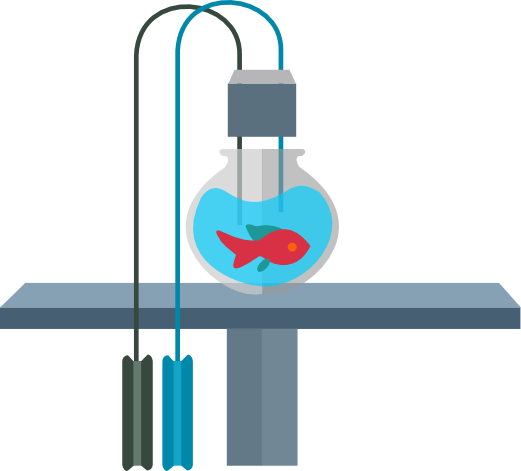
You definitely don’t want fish in your extruder.
The blog also offers a lot of advice that seems obvious, but that might not occur to the typical user. Don’t know why your prints aren’t coming out well? Check to make sure all the nuts and bolts of the machine are tight enough. Users are reminded of the importance of keeping filament dry and dust-free, and suggestions are given on how to do both – including a link to a handy DIY dust trap from the MakerGear forum. In addition, the blog advises, you should be willing to spend some money on your filament – as attractive as inexpensive materials are, cheaper filaments can cause problems that make the cost savings just not worth it.
Like, for example, nozzle clogs – which are also covered in detail, as is extrusion calibration. After the hardware issues are covered, there’s a long section on software, as well. MakerGear is compatible with a wide variety of open-source software programs, and the blog lists several of them, but focuses on setup instructions for Simplify3D, which is what MakerGear recommends.
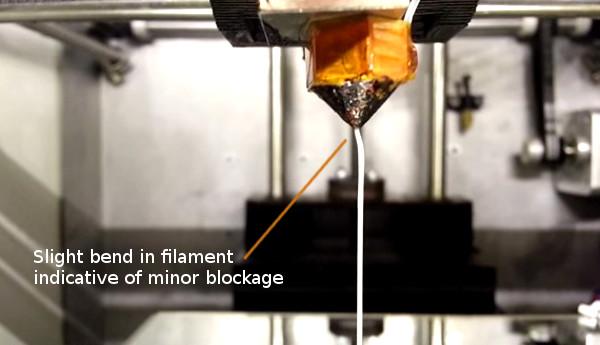
A lot of the advice given is helpful for users of any FDM printer, not just the M2 – like the advice on filament, for example, or the blog’s closing paragraph, which emphasizes the importance of safety, particularly when it comes to printing fumes. An additional FAQ follows, along with several links to sites with even more in-depth information.
APM Designs appears to be a relatively new blog, as there are only two other entries – a 3Doodler Pro review and an FDM/SLA comparison guide, but those entries are as thorough and detailed as the MakerGear guide. According to a comment from the writer, we can expect to see additional 3D printer guides in the future, as well as additional features on 3D printing. Discuss in the MakerGear M2 forum at 3DPB.com.
Subscribe to Our Email Newsletter
Stay up-to-date on all the latest news from the 3D printing industry and receive information and offers from third party vendors.
Print Services
Upload your 3D Models and get them printed quickly and efficiently.













You May Also Like
Phillips Federal Participates in Marine Corps Exercise
Phillips Federal will participate in a Marine Corps exercise that will use several additive manufacturing technologies. The 1st Maintenance Battalion, 1st Marine Logistics Group, I Marine Expeditionary Force (IMEF), will...
Ceramics 3D Printing at Ceramitec 2026
Ceramitec is a key event for the ceramics industry. Held in the lovely city of Munich, it is the leading global event for the ceramics community. With around 13,000 participants...
AM Forum Berlin 2026: Tough Love From BMW’s Timo
We’re once again in the lovely city of Berlin, at the absolutely immense Estrel Center. The congress center, a musical and theater venue, towers over the easternmost reaches of the...
Printing Money Episode 35: Notable VC and M&A Deals, with Arno Held and Alex Kingsbury
Welcome to Printing Money Episode 35 and let us be the last to wish you a happy new year. For this episode Danny is joined by Arno Held (Managing Partner,...