
Honda Shows Off 3D Printed Electric Car, Customized in Both Appearance and Function

[Image: Tim Stevens/Roadshow / CNET]
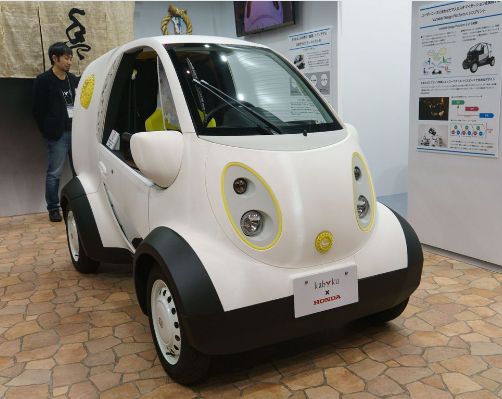
Honda revealed their newest idea at CEATEC, which opened Tuesday and will run until October 7. The consumer electronics show is Japan’s largest, and features some of the biggest technology of the future – including Honda’s Micro Commuter electric car concept. “Micro” is an appropriate term, as the car is tiny, but its small size packs a lot of function – and its overall coolness factor is not to be underestimated. The outside of the Micro Commuter was almost entirely 3D printed on a Stratasys printer, in a process that took a full month of nonstop printing.
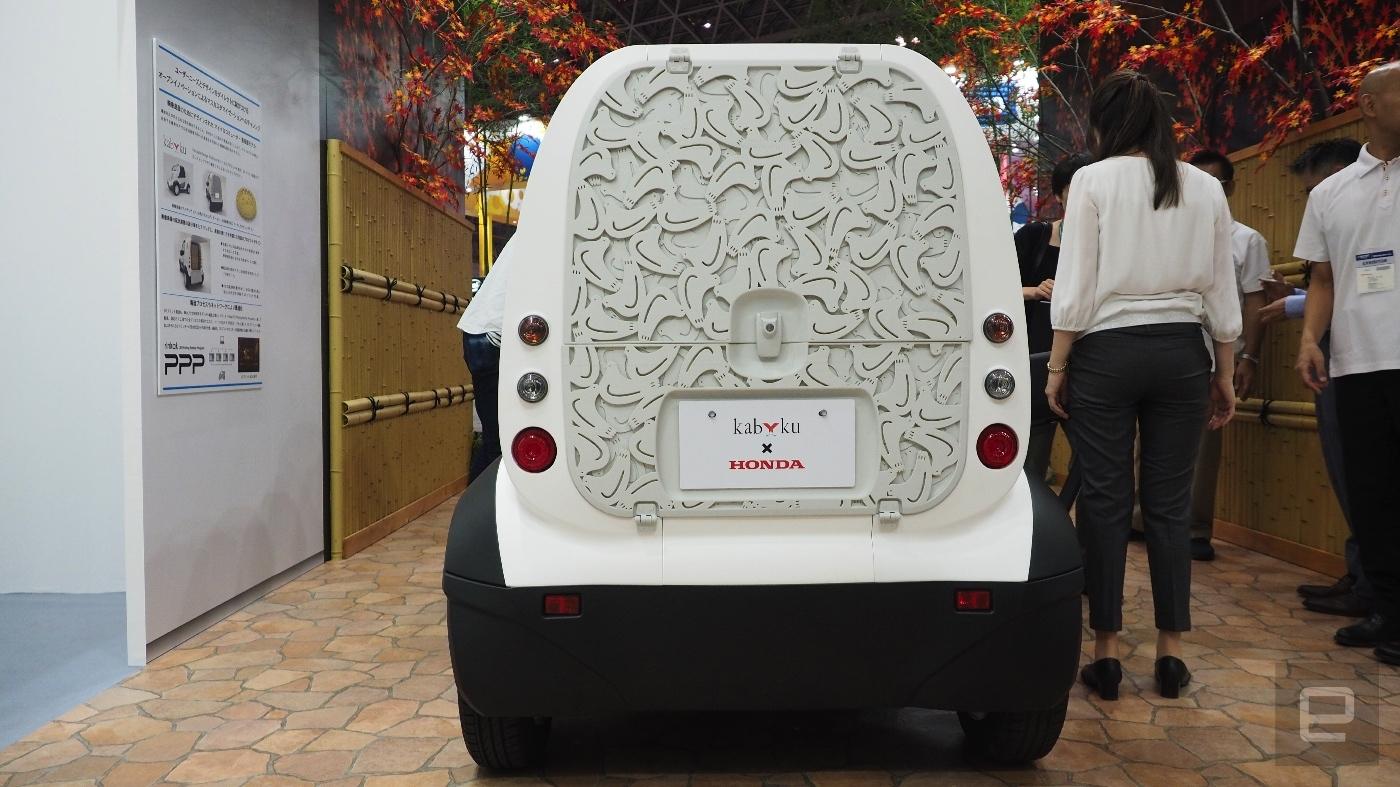
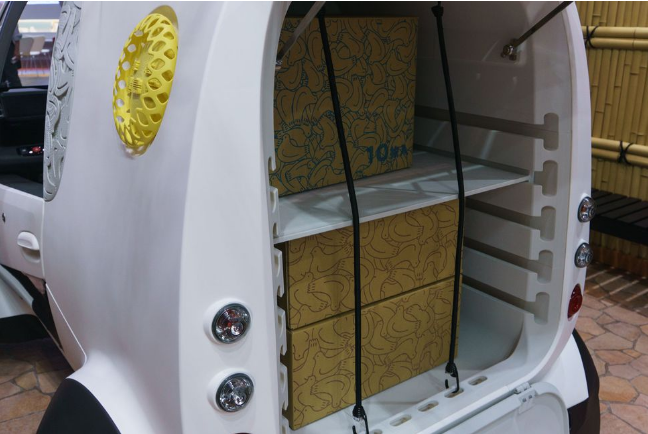
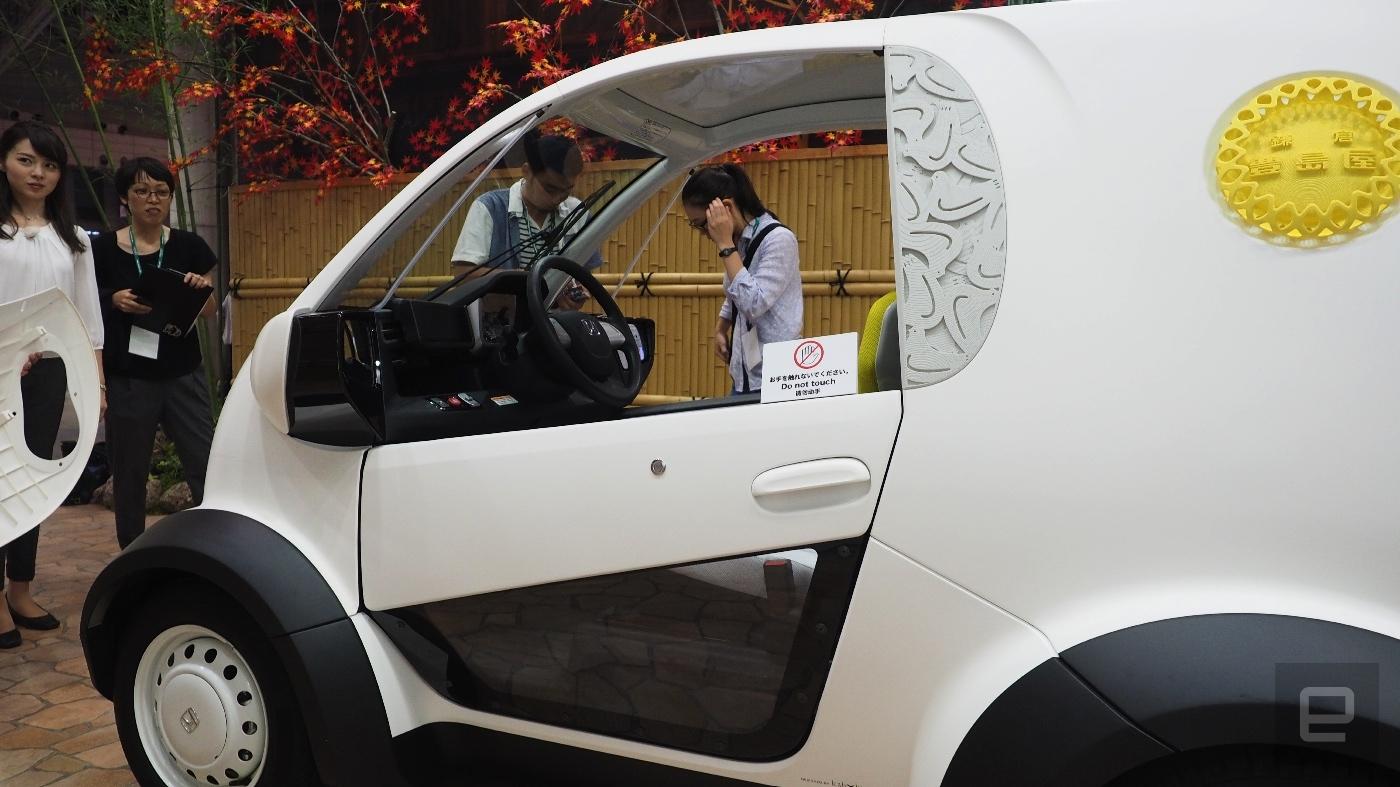
Honda’s motorcycle division had a lot to do with the design and engineering of the car, which has a frame of pipes similar to the a motorcycle, giving it a lightweight but strong structure beneath the 3D printed panels. Japanese design firm Kabuku and their Rinkak Mass Customization Solution also helped with the design of the car, which is where the personalized aspects really started to come in. The particular model shown at CEATEC was designed for Toshimaya, a Japanese cookie company whose claim to fame is a butter cookie in the shape of a bird. Kabuku took that bird shape and turned it into a repeating motif across the outside panel of the hatchback trunk, as well as around the windows and on the seats.
[Image: Engadget]
[Image: Tim Stevens/Roadshow / CNET]
The electric Micro Commuter has a range of about 80 km (50 miles) maximum, with removable battery packs for quick charging. While the car as a whole is still in the early stages, Toshimaya’s model is fully functional, and they will reportedly begin using it for deliveries in the spring. After that, who knows – we may begin seeing fish-shaped cars and other bizarre but convenient personalized vehicles on the road before too long. Discuss further in the 3D Printed Electric Honda forum over at 3DPB.com.
[Image: Engadget]
Subscribe to Our Email Newsletter
Stay up-to-date on all the latest news from the 3D printing industry and receive information and offers from third party vendors.
Print Services
Upload your 3D Models and get them printed quickly and efficiently.













You May Also Like
Prusa Core One L+: A Worthy Upgrade?
Disclosure: The Core One L+ was provided to me by Prusa3d free of charge for the purpose of this review. I have not received any other compensation. All opinions expressed...
Building Profiles in the Additive Print Services Market – Market Research Beyond AI Scraping
AM Research New market research: AM Research is building its new Additive Manufacturing Services Market 2.0 model. View the report and preorder here → In case you haven’t heard, at...
3D Printing Services Near $2.5B as AM Market Shifts Beyond Hardware
The additive manufacturing market may be growing again, but one of the more interesting numbers behind that recovery has little to do with selling 3D printers. AM services generated nearly...
Bambu Lab and SUSAN FANG 3D Print for London Fashion Week
At London Fashion Week, some of the more unusual pieces on the runway came from 3D printers. Chinese fashion designer SUSAN FANG presented her Spring/Summer 2027 Air-Illusion collection at the...
























































