Incredible Scaled Model of Ducati 1199 Superbike 3D Printed on Ultimaker in 40 Pieces


If you are a sports bike or superbike enthusiast, then you have likely heard of the Ducati 1199. The Italian made machine weighs just 362 pounds, and packs a whopping 171.8 horsepower into its 1,198 cc engine. It can accelerate from 0-60 mph in under 3 seconds flat, and certainly isn’t hard on the eye either.

Jacky Wan (aka Valcrow)
If you were to create a 3D model, and then print out a scaled replica of any object in the world, this bike would probably rank up there as one of the most difficult. The tiny parts, suspended pieces, intricate chain, and small attachment points would be a formidable task for even the most experienced of designers. Obviously it was not daunting enough for Jacky Wan (aka Valcrow) from Redicubricks.com. Jacky, who writes monthly guest blog posts for Ultimaker.com, decided to take on the challenge.
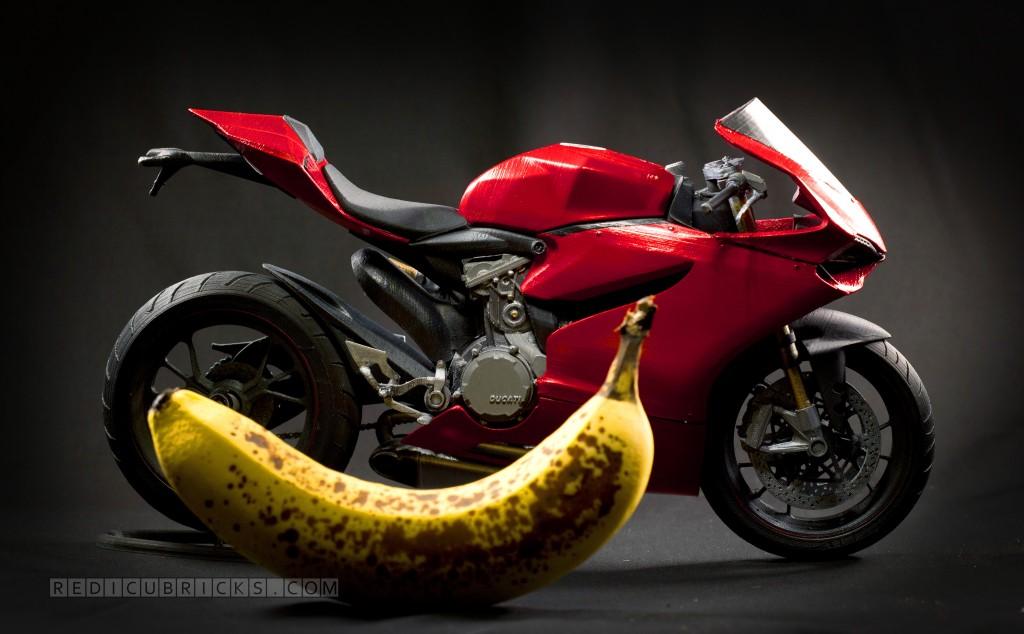
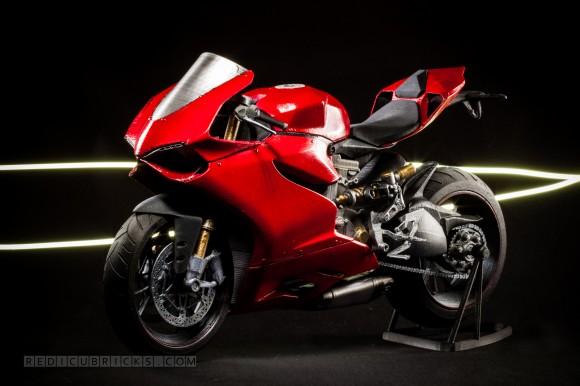
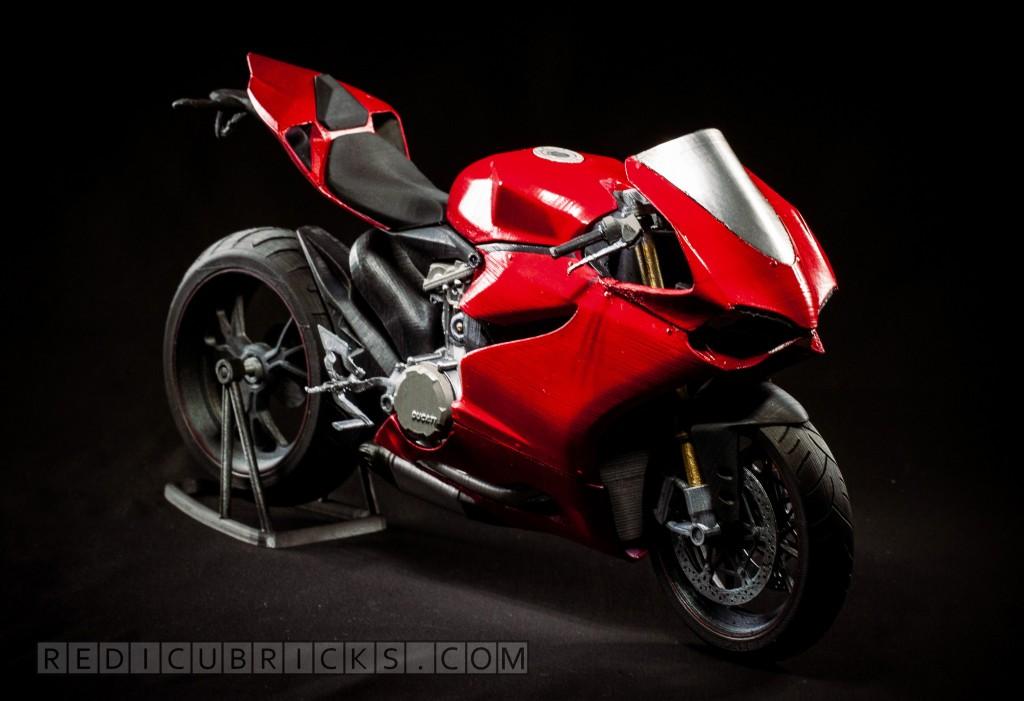
3D printed model of the Ducati 1199 on the Ultimaker Oiginal 3D Printer
“The Ducati Superbike project was an ambitious one. It is perhaps the most complex FDM printing challenge I’ve tackled in the shortest amount of time with the most unknowns,” stated Jacky. “On the onset, this project didn’t seem that different. But the challenges readily became apparent during the design process.”
Before he got started he agreed to a set of self-imposed guidelines for his model, which were as follows:
- Be as true as possible to the original design on the exterior.
- Printable on my Ultimaker Original with no supports (where possible)
- Snap fit so that it could be easily glued.
- No excess seams or grooves
To get started, Jacky began by slowly creating a 3D model of the entire bike with the correct dimensions, but initially ignored any possible printing issues that the model may have thrown at him. Jacky said that once this step was complete, it 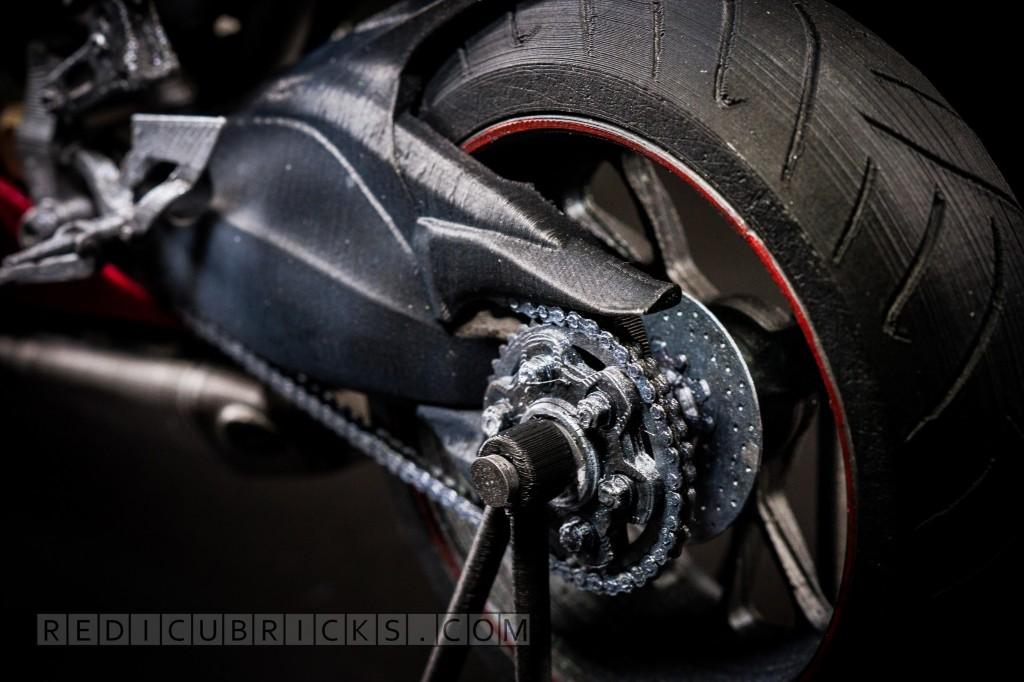 acted as a confidence booster for the more daunting tasks about to be tackled.
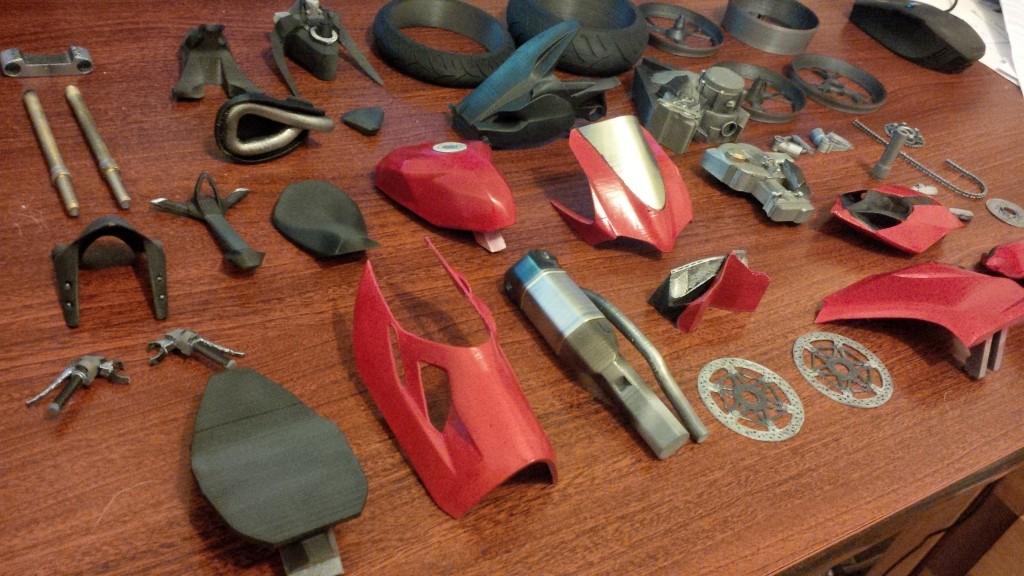
The model next had to be separated into 40 different pieces, which all snapped together. Then the optimization had to take place. What’s the best print direction for each piece? Are all the pieces watertight and free of STL errors? All these questions had to be thoroughly answered before the printing process could begin.
To meet his time constraints, he would perfect one piece of the model, and as that piece was printing move on to the next. Piece by piece the Ducati 1199 began to come together.
“Having this many parts created unique challenges as I had to design components to be forward compatible with any interconnects I was planning to make,” explained Jacky. “So
in my mind, I was a few pieces ahead of my designing, which was ahead of modeling, which was ahead of my printing. It was a lot to keep track of.”
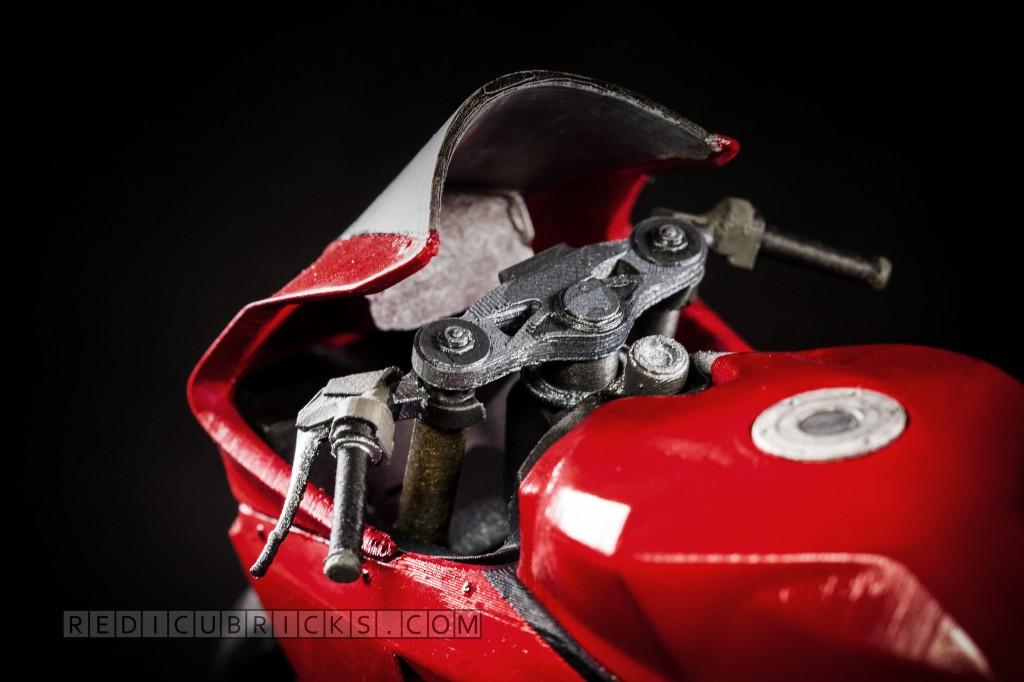
Because of the rounded shape of the front windshield of the bike, Jacky was forced to have to use supports, breaking one of the guidelines he originally set for himself. One of the things that surprised Jacky the most was how well the tiny, intricate chain turned out on his Ultimaker 3D printer. The chain wasn’t the only thing that came out looking incredible though. After all the parts were painted with enamels, acrylics and lacquer paints, the thing looked spectacular. What’s even cooler, is that you too can create your very own scaled model of the Ducati 1199. Jacky has made all the design files publicly available at YouMagine for free!
If you do happen to undertake this complex project like Jacky did, please feel free to post your experience and photos in the 3D printed Ducati 1199 forum thread on 3DPB.com. Check out some more incredible images of the model below.
Subscribe to Our Email Newsletter
Stay up-to-date on all the latest news from the 3D printing industry and receive information and offers from third party vendors.
Print Services
Upload your 3D Models and get them printed quickly and efficiently.













You May Also Like
Apple’s 3D Printed Hinge Cover & the Inauguration of the Ternus Era
Marc Andreessen notwithstanding, it turns out that hardware is, in fact, eating the world. Perhaps after being starved for so long, the hardware side of tech innovation is now overcompensating,...
The Exploration Company Raises $450M to Rival SpaceX
The space industry is currently worth about $650 billion globally, growing nearly 50 percent since 2020, which is certainly impressive. But over the next decade, the total market opportunity in...
3D Printing News Briefs, September 10, 2026: Tax Credits, Polymer Research, Microneedles, & More
We’re starting off this week’s 3D Printing News Briefs with a little business from Axtra3D and Beehive Industries, before moving on to a scientific collaboration agreement between Roboze and a...
The Formlabs Shuffle
For the latest development on 8/31/26, please see an update at the end of this article. Formlabs is doing a management shuffle, pointing the firm even more surely towards an...